Outros
Foram encontrados 6274 produtos de "Outros"
Ordenar por
Pureza (%)
0
100
|
0
|
50
|
90
|
95
|
100
4-Nitrophenyl β-D-galactofuranoside
CAS:<p>Chromogenic substrate for beta-galactofuranosidase</p>Fórmula:C12H15NO8Pureza:Min. 98 Area-%Cor e Forma:White PowderPeso molecular:301.25 g/molNitrocefin
CAS:<p>Chromogenic cephalosporin substrate for the detection of beta-lactamase activity</p>Fórmula:C21H16N4O8S2Pureza:Min. 90 Area-%Cor e Forma:Yellow Orange PowderPeso molecular:516.51 g/molAldol® 484 β-D-glucopyranoside, Biosynth Patent: EP 2427431 and US 8940909
CAS:<p>Aldol® 484 beta-D-glucopyranoside is a chromogenic and fluorogenic enzyme substrate used for detection of ?-glucosidase activity. The colorless enzyme substrate is cleaved by bacteria producing ?-glucosidase in liquid or solid media, yielding intense red color and green fluorescent signal. Aldol® 484 beta-D-glucopyranoside can be used under aerobic and anaerobic conditions.</p>Fórmula:C26H24ClFN2O7Pureza:Min. 95.0 Area-%Peso molecular:530.93 g/molNaphthol AS-E phosphate, 60%
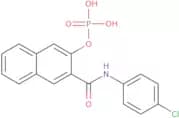
CAS:<p>Histochemical substrate for alkaline phosphatase</p>Fórmula:C17H13ClNO5PPureza:(%) Min. 60%Cor e Forma:SolidPeso molecular:377.72 g/molNaphthol AS nonanoate
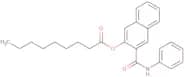
CAS:<p>Modified naphtol AS substrate used in histochemical and cytochemical staining</p>Fórmula:C26H29NO3Pureza:Min. 95%Cor e Forma:PowderPeso molecular:403.51 g/mol5-Iodo-3-indoxyl-β-D-galactopyranoside
CAS:<p>5-Iodo-3-indoxyl-beta-D-galactopyranoside is a chromogenic substrate for beta-galactosidase.</p>Fórmula:C14H16INO6Pureza:Min. 99 Area-%Peso molecular:421.19 g/molN-α-CBZ-L-citrulline-p-nitroanilide
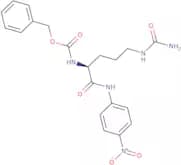
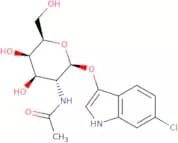
CAS:<p>Nalpha-CBZ-L-Citrulline-p-nitroanilide is a synthetic chromogenic enzyme substrate used in protease enzymatic stutides. After hydrolysis, p-nitroaniline is released, which produces a yellow color detectable spectrophotometrically at 405 nm.</p>Fórmula:C20H23N5O6Pureza:Min. 95%Peso molecular:429.43 g/mol6-Chloro-3-indolyl 2-acetamido-2-deoxy-b-D-galactopyranoside
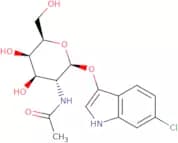
CAS:<p>6-Chloro-3-indolyl 2-acetamido-2-deoxy-b-D-galactopyranoside is a chromogenic substrate for N-acetyl-beta-galactosaminidase. It produces a salmon-pink color after enzymatic cleavage.</p>Pureza:Min. 95%Cor e Forma:White PowderPeso molecular:370.78 g/mol6-Bromo-2-naphthyl 2-acetamido-2-deoxy-b-D-glucopyranoside
CAS:<p>6-Bromo-2-naphthyl 2-acetamido-2-deoxy-b-D-glucopyranoside is a chromogenic substrate used for the detection of chitinase activity. Upon hydrolysis by chitinase, it releases a yellow-brown color, which is easily detected by spectrophotometry. This substrate has been used to study chitinases in various organisms, including bacteria, fungi, and insects. It can also be used to quantitate chitinase activity in various biological samples.</p>Fórmula:C18H20BrNO6Pureza:Min 97%Cor e Forma:White PowderPeso molecular:426.26 g/molAldol® 515 L-alanine amide, hydrochloride, Biosynth Patent: EP 2427431 and US 8940909
CAS:<p>Aldol® 515 L-alanine amide is a chromogenic and fluorogenic enzyme substrate used for detection of L-alanine aminopeptidase activity. The colorless enzyme substrate is cleaved by L-alanine aminopeptidase produced by microorganisms, grown in liquid or solid media yielding red color. In addition, red fluorescence is generated when a fluorescence enhancer or a suitable matrix is present. Aldol® 515 L-alanine amide can be used under aerobic and anaerobic conditions.</p>Fórmula:C26H27ClN4O2Pureza:Min. 95.0 Area-%Peso molecular:462.97 g/mol5-Bromo-4-chloro-3-indolyl b-D-mannopyranoside
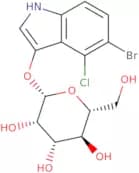
CAS:<p>5-Bromo-4-Chloro-3-Indolyl b-D-Mannopyranoside, also known as X-Man, is an enzyme substrate commonly used for detecting mannosidase enzymes. Upon hydrolysis by the enzyme, it produces a blue-green colored compound that can be detected visually or measured spectrophotometrically. This substrate is useful in characterizing the activity of mannosidases involved in glycoprotein processing and quality control.</p>Fórmula:C14H15BrClNO6Cor e Forma:White Off-White PowderPeso molecular:408.63 g/mol1-Methyl 2-(4-methyl-2-oxo-2H-1-benzopyran-7-yl)ethanedioate
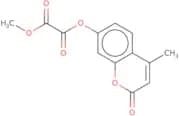
CAS:<p>Inorganic phosphate targeted colorimetric probe</p>Fórmula:C13H10O6Pureza:Min. 95%Peso molecular:822.35 g/mol3,4-Cyclohexenoesculetine phosphate disodium
<p>Chromogenic substrate for phosphatase</p>Pureza:Min. 95%3,3'-Diaminobenzidine tetrahydrochloride hydrate
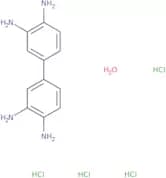
CAS:<p>3,3'-Diaminobenzidine (DAB) is an organic compound derived from benzidine. DAB is water-soluble as the tetrahydrochloride salt and is used in immunohistochemical staining of nucleic acids and proteins. Within research in Alzheimer's disease, Aβ protein amyloid plaques are targeted by a primary antibody, and subsequently by a secondary antibody, which is conjugated with a peroxidase enzyme. This will bind DAB as a substrate and oxidize it, producing an easily observable brown colour. 3,3’-Diaminobenzidine tetrahydrochloride hydrate is also available as the tetrahydrochloride salt and as the free base.</p>Fórmula:C12H14N4·4HCl·xH2OPureza:Min. 97 Area-%Cor e Forma:PowderPeso molecular:360.11 g/mol4-Nitrophenyl a-L-arabinopyranoside
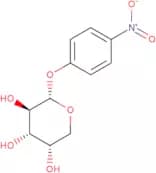
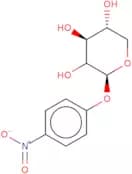
CAS:<p>Substrate for a-L-arabinopyranosidase</p>Fórmula:C11H13NO7Pureza:Min. 98 Area-%Cor e Forma:White PowderPeso molecular:271.22 g/mol4-Nitrophenyl b-L-arabinopyranoside
CAS:<p>4-Nitrophenyl beta-L-arabinopyranoside is a chromogenic substrate for beta-L-arabinosidase. Upon hydrolysis, para-nitrophenol is released yielding a yellowish colour. 4-Nitrophenyl beta-L-arabinopyranoside is used in different applications such as the Bacterial arabinan degradation assays, gut microbiome analysis</p>Fórmula:C11H13NO7Pureza:Min. 98 Area-%Cor e Forma:White PowderPeso molecular:271.22 g/molAldol® 470 nonanoate, Biosynth Patent: EP 2427431 and US 8940909
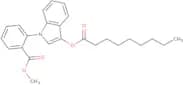
CAS:Produto Controlado<p>Aldol® 470 nonanoate is a chemiluminescent substrate that can be used as a ligand for the detection of C8/C9-esterases, lipases activity, to result in an orange/green color. Aldol® 470 nonanoate has been shown to be active with horseradish peroxidase in a number of different assay systems. The purity and quality of Aldol® 470 nonanoate has been tested with culture media, environmental testing, bioluminescence, staining, fluorogenic substrate, chromogenic substrate, enzyme substrate, food testing and conjugates.</p>Fórmula:C32H35NO5Pureza:Min. 95%Cor e Forma:PowderPeso molecular:513.62 g/molNaphthol AS-MX acetate
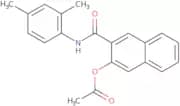
CAS:<p>Modified naphtol AS substrate used in histochemical and cytochemical staining</p>Fórmula:C21H19NO3Pureza:Min. 80%Cor e Forma:White Off-White PowderPeso molecular:333.38 g/molAldol® 458 nonanoate, Biosynth Patent: EP 2427431 and US 8940909
CAS:Produto Controlado<p>Aldol 458 nonanoate is a high quality, chromogenic and fluorogenic substrate for use in enzymatic, chemiluminescent, and immunochemical reactions. Aldol 458 nonanoate is used as a chromogenic substrate for the detection of glucose oxidase activity in culture media and as a fluorogenic substrate for the detection of glucose oxidase activity in environmental testing. This product has CAS number 2484872-52-6.</p>Fórmula:C25H29NO4Pureza:Min. 98.0 Area-%Peso molecular:407.5 g/mol4-Nitrophenyl trans-ferulate
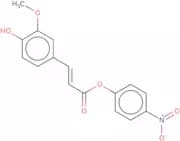
CAS:<p>Substrate for feruloyl esterases</p>Fórmula:C16H13NO6Pureza:Min. 98 Area-%Cor e Forma:PowderPeso molecular:315.28 g/mol3-Indolyl 2-acetamido-2-deoxy-b-D-galactopyranoside
<p>3-Indolyl 2-acetamido-2-deoxy-b-D-galactopyranoside is a fluorogenic substrate that reacts with the enzyme β-galactosidase to produce a blue product. This product can be used to diagnose the presence of β-galactosidase in culture media, as well as in food and environmental testing. 3IAG is also a chromogenic substrate that can be used for detection of β-galactosidase activity.</p>Pureza:Min. 95%Peso molecular:336.34 g/molAldol® 495 phosphate, disodium salt, Biosynth Patent: EP 2427431 and US 8940909
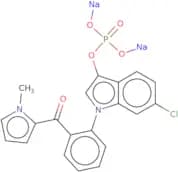
CAS:<p>Aldol® 495 phosphate is a chromogenic and fluorogenic enzyme substrate used for detection of phosphatase activity. The colorless enzyme substrate is cleaved by acid and alkaline phosphatases secreted by bacteria in liquid or solid media, yielding orange color and green fluorescence. Aldol® 495 phosphate can also be used in Western blots and other immunoassay applications with phosphatase-coupled secondary antibodies. Aldol® 495 phosphate can be used under aerobic and anaerobic conditions.</p>Fórmula:C20H14ClN2Na2O5PPureza:Min. 98%Cor e Forma:PowderPeso molecular:474.74 g/mol4-Nitrophenyl b-D-thioglucopyranoside
CAS:<p>4-Nitrophenyl b-D-thioglucopyranoside is a highly sensitive chromogenic substrate designed for the colorimetric detection and quantification of thioglucosidase enzymes. Upon enzymatic cleavage, it releases a highly absorbing 4-nitrophenyl moiety, generating a yellow color that can be readily measured spectrophotometrically. This substrate is widely utilized in the study of enzyme kinetics, substrate specificity, and inhibitor screening for thioglucosidases involved in various metabolic pathways and biological processes.</p>Fórmula:C12H15NO7SPureza:Min. 95%Cor e Forma:White PowderPeso molecular:317.32 g/molAldol® 495 nonanoate solution, 0.75 M in DMSO, Biosynth Patent: EP 2427431 and US 8940909
CAS:Produto Controlado<p>Aldol® 495 nonanoate is a chromogenic and fluorogenic enzyme substrate used for detection of lipase activity. The colorless enzyme substrate is cleaved by C9 esterases, yielding development of an orange coloration. In addition, green fluorescence is generated when Aldol® 355 fluorescence enhancer or a suitable matrix is present. Aldol® 495 nonanoate can be used in enzyme assays and live bacterial cultures. Aldol® 495 nonanoate is suitable for use in liquid and solid media, under aerobic as well as anaerobic conditions.</p>Fórmula:C29H31ClN2O3Pureza:Min. 95%Peso molecular:491.02 g/mol5-Bromo-4-chloro-3-indolyl a-L-rhamnoside
<p>5-Bromo-4-chloro-3-indolyl a-L-rhamnoside is a chromogenic substrate used to detect the specific enzymatic activity of alpha-L-rhamnosidase. After cleavage, 5-bromo-4-chloro-indoxyl is released, resulting in a blue to blue-green color change in bacterial colonies or media. 5-Bromo-4-chloro-3-indolyl a-L-rhamnoside is used in bacterial rhamnose metabolism studies (e.g. E. coli).</p>Fórmula:C14H15BrClNO5Pureza:Min. 95%Cor e Forma:SolidPeso molecular:392.63 g/mol4-Nitrocatechol sulfate dipotassium salt
CAS:<p>Chromogenic sulfatase substrate</p>Fórmula:C6H3NO7SK2Pureza:Min. 98 Area-%Cor e Forma:PowderPeso molecular:311.35 g/mol6-Chloro-3-indoxyl caprylate
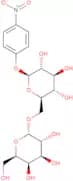
CAS:<p>6-Chloro-3-indoxyl caprylate is a high quality, enzyme substrate, chromogenic substrate, bioluminescence, chemiluminescence ligand, staining and diagnostics reagent. It has CAS No. 159954-35-5 and is used in food testing, culture media and environmental testing. 6-Chloro-3-indoxyl caprylate is also a fluorogenic substrate that is used for high purity applications such as conjugation with other molecules.</p>Fórmula:C16H20ClNO2Peso molecular:293.80 g/mol4-Nitrophenyl 6-O-(a-D-glucopyranosyl)-b-D-glucopyranoside
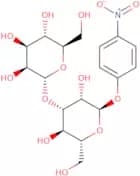
CAS:<p>4-Nitrophenyl 6-O-(alpha-D-glucopyranosyl)-beta-D-glucopyranoside is a chromogenic substrate for beta-glucosidase. Upon hydrolysis, para-nitrophenol is released yielding a yellowish colour. 4-Nitrophenyl 6-O-(alpha-D-glucopyranosyl)-beta-D-glucopyranoside is used in different applications such as the Cellulose metabolism research, biofuel production</p>Pureza:Min. 95%Cor e Forma:PowderPeso molecular:463.39 g/molAldol® 535 myo-inositol-1-phosphate, ammonium salt, Biosynth Patent: EP 2427431 and US 8940909
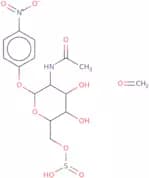
CAS:<p>Aldol® 535 myo-inositol-1-phosphate, ammonium salt is a chromogenic substrate for the enzyme, phosphoglucomutase. This product is used for the detection of phosphoglucomutase by its ability to react with this enzyme and produce a blue or green color. Aldol® 535 myo-inositol-1-phosphate, ammonium salt is also used as a ligand in fluorescence resonance energy transfer (FRET) experiments. It has an EC number of CAS No. 2484872-80-0 and a molecular weight of 345.05 g/mol.</p>Fórmula:C29H32BrClN3O10PPureza:Min. 95.0 Area-%Peso molecular:728.91 g/mol4-Nitrophenyl 2-acetamido-2-deoxy-b-D-glucopyranoside-6-sulfate
<p>4-Nitrophenyl 2-acetamido-2-deoxy-b-D-glucopyranoside is a chemiluminescent substrate that can be used in the detection of various enzymes. This product has been tested for sterility and purity, and it has passed all tests. It is also free of any detectable levels of heavy metals or other contaminants. 4NP2AG6S is a high quality bioluminescent substrate with CAS No. 71498-92-5. It is a fluorescent compound that reacts with an enzyme to produce light. The reaction can be detected by measuring the emitted light intensity at 680 nm (max).</p>Pureza:Min. 95%2-Nitrophenyl-1-thio-β-D-galactopyranoside
CAS:<p>2-Nitrophenyl-1-thio-beta-D-galactopyranoside is a nitroaryl compound that can be synthesized from beta-D-galactopyranosides and nitric acid. It has a molecular conformation that is stabilized by hydrogen bonds, which allows it to form supramolecular assemblies with other molecules. The nitro group in this molecule is responsible for the formation of the nitro group in 1,2,4,5,-tetranitrobenzene.</p>Fórmula:C12H15NO7SPeso molecular:317.32 g/molRef: 3D-N-5100
1gA consultar5gA consultar10gA consultar500mgA consultar2500mgA consultar-Unit-ggA consultar4-Nitrophenyl b-D-arabinopyranoside
CAS:<p>Chromogenic substrate targeting beta-L-arabinofuranosidase</p>Pureza:Min. 95%Peso molecular:271.22 g/mol4-Nitrophenyl decanoate
CAS:<p>4-Nitrophenyl decanoate is a chromogenic substrate for lipase. Upon hydrolysis, para-nitrophenol is released yielding a yellowish colour. 4-Nitrophenyl decanoate is used in different applications such as the Pancreatic insufficiency diagnosis, lipid metabolism studies</p>Fórmula:C16H23NO4Pureza:Min. 97 Area-%Cor e Forma:PowderPeso molecular:293.36 g/molOstazin brilliant red H-3B galactomannan
<p>Ostazin Brilliant Red H-3B Galactomannan is a chemiluminescent substrate used for the detection of β-1,4-galactomannans. It reacts with the glucose residues on the mannan backbone to produce a red fluorescent product. This product can be detected by spectrophotometry at an excitation wavelength of 395 nm and emission wavelength of 510 nm. The Ostazin Brilliant Red H-3B Galactomannan substrate is useful in detecting Staphylococcus aureus, Streptococcus pyogenes, Streptococcus pneumoniae, Group A streptococci, Group B streptococci, Group D streptococci, Group G streptococci, and Group C streptococci.</p>Pureza:Min. 95%4-Nitrophenyl 3-O-(a-D-mannopyranosyl)-a-D-mannopyranoside
CAS:<p>Chromogenic substrate for α-glucanase</p>Fórmula:C18H25NO13Pureza:Min. 97 Area-%Cor e Forma:White PowderPeso molecular:463.39 g/mol2-Naphthyl caprylate
CAS:<p>2-Naphthyl caprylate is a substrate that is employed in an assays for carboxylesterase and lipase and when hydrolyzed, produces 2-naphthol, a compound that can also be identified via fluorescence analysis. By combining it with a diazonium salt, the formation of the corresponding azo dye occurs. In particular, this substrate is used to detect the extracellular lipase of Pseudomonas fluorescens B52.</p>Fórmula:C18H22O2Pureza:Min. 95%Cor e Forma:White PowderPeso molecular:270.37 g/molAldol® 515 nonanoate hydrochloride, Biosynth Patent: EP 2427431 and US 8940909
CAS:<p>Aldol® 515 nonanoate hydrochloride is a chromogenic and fluorogenic enzyme substrate for detection of lipase activity. The colorless product is cleaved by C9 esterases produced by bacteria in liquid or solid media, yielding a red color and red fluorescence when Aldol® 355 fluorescence enhancer or a suitable matrix is present. Aldol® 515 nonanoate can be used under aerobic and anaerobic conditions. Well detectable color/fluorescence of bacterial colonies or liquid cultures is obtained within 24-48 h. In the presence of a purified lipase, color and fluorescence develops within minutes to few hours.</p>Fórmula:C32H36ClN2O3Pureza:Min. 95 Area-%Peso molecular:533.1 g/mol5-Bromo-6-chloro-3-indolyl 2-acetamido-2-deoxy-b-D-glucopyranoside
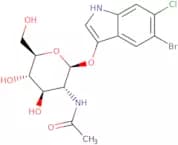
CAS:<p>5-Bromo-6-chloro-3-indolyl 2-acetamido-2-deoxy-b-D-glucopyranoside is a chromogenic substrate that yields a magenta-colored product after cleavage. The chromophore 5-bromo-6-chloro-indoxyl is released, generating the observable color. It is used in mucopolysaccharidosis screening.</p>Fórmula:C16H18BrClN2O6Pureza:Min. 97 Area-%Cor e Forma:PowderPeso molecular:449.68 g/mol2-Chloro-4-nitrophenyl phosphate
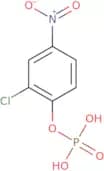
CAS:<p>2-Chloro-4-nitrophenyl phosphate is a chromogenic substrate for phosphatases. Afer cleavage of the substrate, 2-chloro-4-nitrophenol is released, which can be quantified at 405 nm. 2-Chloro-4-nitrophenyl phosphate is used in clinical diagnostics to for prostate cancer, diagnosis of liver and bone diseases.</p>Fórmula:C6H5ClNO6PPureza:Min. 95 Area-%Peso molecular:253.53 g/molBCM® Histamine-producing bacteria Broth
<p>Growth medium for the detection of histamine-producing bacteria in food and water samples. The medium contains an indicator that turns orange/red (absorbance at 555 nm) due to metabolites released by histidine decarboxylase. The BCM® Histamine-producing bacteria Broth contains tryptone (FT09555) and yeast extract, together with the chromogenic agent. High-level histamine-producing bacteria yield orange to red coloration in less than 2 days and even after 24 hours, while cultures of other bacteria remain yellow.</p>Pureza:Min. 95%Aldol® 458 nonanoate solution, 0.75 M in DMSO, Biosynth Patent: EP 2427431 and US 8940909
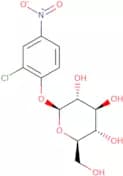
CAS:Produto Controlado<p>Aldol 458 nonanoate solution (0.75 M) is a substrate for enzymes and ligands, which is used in various applications such as food testing, staining, fluorogenic substrate, environmental testing, chromogenic substrate and conjugate. Aldol 458 nonanoate solution (0.75 M) has high purity and is highly stable at pH 2-12. This product can be used as a chemiluminescence or bioluminescence substrate. The CAS number for this product is 2484873-15-4.</p>Fórmula:C25H29NO4Pureza:Min. 95%Cor e Forma:Clear LiquidPeso molecular:407.51 g/mol2-Chloro-4-nitrophenyl β-D-glucopyranoside
CAS:<p>2-Chloro-4-nitrophenyl β-D-glucopyranoside is a chromogenic substrate for beta-glucosidases. In biochemical enzyme assays and in vitro diagnostics analysis, the substrate is used to monitor the glycosyltransferase activity. When 2-chloro-4-nitrophenyl β-D-glucopyranoside is cleaved by beta-glucosidase, 2-chloro-4-nitrophenol is released and quantified.</p>Fórmula:C12H14ClNO8Pureza:Min. 95%Cor e Forma:White PowderPeso molecular:335.69 g/mol6-Chloro-3-indoxyl-N-acetyl-β-D-galactosaminide
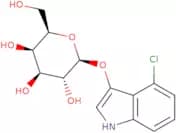
CAS:<p>Chromogenic substrate for N-Acetyl-β-D-galactosaminidase yielding a salmon-colored precipitate.</p>Fórmula:C16H19ClN2O6Pureza:Min. 98.0 Area-%Peso molecular:370.79 g/mol4-Chloro-3-indolyl β-D-galactopyranoside
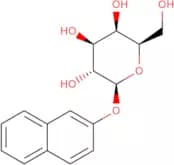
CAS:<p>2-Chloro-4-nitrophenyl b-D-lactoside is a chromogenic enzyme substrate used to study the activity of enzymes. It produces a color when hydrolyzed, which makes it a valuable tool in screening for enzyme activity and studying enzyme kinetics.</p>Fórmula:C14H16ClNO6Pureza:Min. 95%Cor e Forma:SolidPeso molecular:329.73 g/mol2-Naphthyl b-D-galactopyranoside
CAS:<p>2-Naphthyl beta-D-galactopyranoside is a glycoside that is found in the flowers of the plant Eschscholzia californica. It is used as a localizer for bacterial strains and can be hydrolyzed by enzymes to release naphthalene. 2-Naphthyl beta-D-galactopyranoside has been shown to inhibit the growth of corynebacterium and diazonium salt, which may be due to its ability to bind to DNA and disrupt protein synthesis. The potential use of this molecule is for its insolubility, which prevents it from being absorbed by skin cells.</p>Fórmula:C16H18O6Pureza:Min. 99 Area-%Cor e Forma:PowderPeso molecular:306.31 g/molAldol® 470 phosphate, disodium salt, Biosynth Patent: EP 2427431 and US 8940909
CAS:<p>Aldol 470 phosphate is a chromogenic substrate for phosphatases yielding a yellow precipitate. Furthermore it shows some fluorescence (excitationat 320 nm to 490 nm). In contrast to classical indoxyl substrates, Aldolsubstrates work not only under aerobic but also under anaerobic conditions.</p>Fórmula:C23H18NNa2O7PPureza:Min. 95.0 Area-%Peso molecular:497.34 g/molChlorophenol red-β-D-cellotrioside
CAS:<p>Chromogenic substrate for cellulases; red color</p>Fórmula:C37H42Cl2O20SPureza:Min. 95%Cor e Forma:Orange to red solid.Peso molecular:909.69 g/mol4-(Hydroxymethyl)phenyl-α-D-galactopyranoside tetraacetate
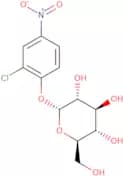
CAS:<p>4-(Hydroxymethyl)phenyl-alpha-D-galactopyranoside tetraacetate is a substrate for enzymes that catalyze the hydroxylation of carbohydrates. It can be used as a substrate for peroxidase and beta-glucosidase, which are important in the production of natural products such as resveratrol, catechins, and lignin. 4-(Hydroxymethyl)phenyl-alpha-D-galactopyranoside tetraacetate is also a chromogenic substrate for chemiluminescence reactions. The product is available as a powder and can be used in diagnostic kits to detect the presence of enzymes or other substances in food or environmental samples.</p>Fórmula:C21H26O11Peso molecular:454.43 g/mol2-Chloro-4-nitrophenyl a-D-glucopyranoside
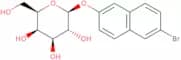
CAS:<p>2-Chloro-4-nitrophenyl a-D-glucopyranoside is an an enzyme-activated irreversible inhibitor of alpha-glucosidase. The substrate 2-Chloro-4-nitrophenyl a-D-glucopyranoside is covalently attached to the enzyme enabling mechanistic studies of glycosidase activity, especificallyt in carbohydrate metabolism studies.</p>Pureza:Max. 97 Area-%Cor e Forma:White Off-White PowderPeso molecular:335.69 g/mol6-Bromo-2-naphthyl β-D-galactopyranoside
CAS:<p>6-Bromo-2-naphthyl β-D-galactopyranoside is a chromogenic substrate commonly used for the detection of the enzymatic activity of β-galactosidase. It can produce a yellow precipitate upon hydrolysis by β-galactosidase, indicating the presence of the enzyme. It is often used in molecular biology applications to detect gene expression or to monitor cloning efficiency.</p>Fórmula:C16H17BrO6Pureza:Min. 98 Area-%Cor e Forma:PowderPeso molecular:385.21 g/mol