Sulfonamidas e Derivados
As sulfonamidas são compostos que contêm um grupo funcional sulfonamida (-SO₂NH₂), onde um átomo de enxofre está ligado a um grupo amino. Foram um dos primeiros antibióticos sintéticos usados na medicina, inibindo a síntese do ácido fólico nas bactérias, o que lhes confere propriedades antimicrobianas. São utilizadas principalmente para tratar infeções bacterianas, embora seu uso tenha diminuído devido à resistência antimicrobiana. Além do uso como antibióticos, as sulfonamidas também têm aplicações no tratamento de doenças como a malária e doenças inflamatórias intestinais.
Na CymitQuimica, oferecemos sulfonamidas e seus derivados com alto grau de pureza para pesquisa em microbiologia e desenvolvimento farmacêutico.
Foram encontrados 2587 produtos de "Sulfonamidas e Derivados"
Ordenar por
Pureza (%)
0
100
|
0
|
50
|
90
|
95
|
100
2-(4-(Benzylamino)-2-ethylbutyl)-5,6-dimethoxy-2,3-dihydroinden-1-one hydrochloride
CAS:<p>2-(4-(Benzylamino)-2-ethylbutyl)-5,6-dimethoxy-2,3-dihydroinden-1-one hydrochloride is a drug product used as an analytical standard for HPLC. It is a natural metabolite from the metabolism of lisinopril and other prodrugs. This impurity is found in drugs that are metabolized by cytochrome P450 enzymes including lisinopril, captopril, enalapril and benazepril. The impurity may be present in drugs with a niche market such as captopril and benazepril or drugs with a high purity such as enalapril. 2-(4-(Benzylamino)-2-ethylbutyl)-5,6-dimethoxy-2,3-dihydroinden-1-one hydrochloride is typically synthesized by the reaction of 4-(benzylamino</p>Fórmula:C24H31NO3•HClPureza:Min. 95 Area-%Cor e Forma:PowderPeso molecular:417.97 g/mol2-Hydroxy-5-[2-[4-[[(6-methyl-2-pyridinyl)amino]sulfonyl]phenyl]diazenyl]benzoic acid
CAS:<p>2-Hydroxy-5-[2-[4-[[(6-methyl-2-pyridinyl)amino]sulfonyl]phenyl]diazenyl]benzoic acid is a synthetic drug product that has not been approved for clinical use. 2-Hydroxy-5-[2-[4-[[(6-methyl-2-pyridinyl)amino]sulfonyl]phenyl]- diazenyl]benzoic acid is a metabolite of the drug product, 3-(2,4,6,-trimethoxybenzoyl)-1-(pyridinium methyl) piperidine. This metabolite was isolated and characterized using high performance liquid chromatography (HPLC), gas chromatography (GC), and nuclear magnetic resonance spectroscopy.</p>Fórmula:C19H16N4O5SPureza:Min. 95%Peso molecular:412.42 g/mol3-[4-(2-Pyridylsulfamoyl)phenyl] sulfasalazine
CAS:<p>3-[4-(2-Pyridylsulfamoyl)phenyl] sulfasalazine is an analytical standard and a metabolite of sulfasalazine. It is used as a reference compound in the analysis of high purity sulfasalazine by HPLC. 3-[4-(2-Pyridylsulfamoyl)phenyl] sulfasalazine is also used as an impurity in the drug product, API, and drug development. The CAS number for 3-[4-(2-Pyridylsulfamoyl)phenyl] sulfasalazine is 1391062-34-2.</p>Fórmula:C29H22N6O7S2Pureza:Min. 95%Peso molecular:630.65 g/mol4-Amino-5,6-dimethoxypyrimidine
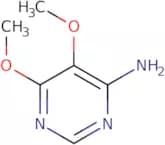
CAS:<p>4-Amino-5,6-dimethoxypyrimidine is a pyrimethamine derivative that has been used as an antimalarial agent. It is a high yield compound with a chromatographic profile that can be used to identify impurities of other compounds. 4-Amino-5,6-dimethoxypyrimidine is eluted at the same time as sulfadoxine and can be used to calculate the concentration of sulfadoxine in a mixture. It can also be used as a reagent for rp-hplc. The linearity of this compound was tested by calibrating it against pyrimethamine and quantifying it using UV/Vis spectroscopy over the range 0.05 to 1 mg/mL.</p>Fórmula:C6H9N3O2Pureza:Min. 95%Peso molecular:155.15 g/mol4-Amino-6-chloro-benzene-1,3-disulfonic acid 1-amide 3-ethylamide
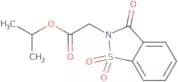
CAS:<p>4-Amino-6-chloro-benzene-1,3-disulfonic acid 1-amide 3-ethylamide is an analytical standard that is used in drug development and as a reference material. It is used to produce the USP/NF standard for HPLC and to develop new drugs. This compound is a metabolite of the drug clonidine hydrochloride. 4-Amino-6-chloro-benzene-1,3-disulfonic acid 1-amide 3-(ethylamide) is also known by its CAS number 166863–9. It has a molecular weight of 328.5 g/mol and it's been approved by the FDA for use in food animals. Impurities found in this compound are: methanol, acetone, formic acid, acetic acid, chloroform and sulfamic acid. This product can be custom synthesized or obtained from natural sources such as plant</p>Fórmula:C8H12ClN3O4S2Pureza:Min. 95%Peso molecular:313.78 g/molSaccharin N-(2-acetic acid isopropyl ester)
CAS:<p>Saccharin is a drug product that consists of saccharin N-isopropyl ester and an impurity standard. Saccharin is a synthetic sweetener that is found in the leaves of the herbaceous perennial S. dulcis, which has been used as a natural sweetener for centuries. Saccharin can be metabolized by humans to form 2-acetic acid and 4-methyl-1,2,3-thiadiazole (MTT) as a byproduct. The metabolite MTT may cause cancer in animals, but this has not been confirmed in humans. The pharmacopoeia specifies the purity of saccharin as 98% or greater. Metabolite standards are also provided for research purposes.</p>Fórmula:C12H13NO5SPureza:Min. 95%Peso molecular:283.3 g/molN-Acetyl zonisamide
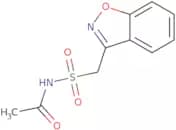
CAS:<p>N-Acetyl zonisamide is a drug that is used in the treatment of epilepsy. It has a broad spectrum of activity and has been shown to be effective against seizures caused by both genetic and acquired conditions. N-Acetyl zonisamide's mechanism of action is not fully understood, but it may involve inhibition of carbonic anhydrase, modulation of serotonergic systems, and antagonism at adenosine receptors. Zonisamide also binds to glutamate and dopamine receptors in the brain, which may contribute to its clinical effects.</p>Fórmula:C10H10N2O4SPureza:Min. 95%Cor e Forma:PowderPeso molecular:254.26 g/molAceclofenac benzyl ester
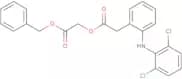
CAS:<p>Aceclofenac is a nonsteroidal anti-inflammatory drug (NSAID) that belongs to the propionic acid derivative group. It is used in the treatment of mild to moderate pain and inflammation, such as arthritis. Aceclofenac is rapidly hydrolyzed by esterases in the small intestine, resulting in the release of aceclofenac acid. Aceclofenac benzyl ester is a chemical intermediate that has been shown to be an efficient method for producing aceclofenac acid. It can be obtained by reacting bromoacetic anhydride with methyl alcohol and then hydrolyzing the product with strong acids. This compound may contain impurities, such as nucleophilic impurities, which can lead to side effects.</p>Fórmula:C23H19Cl2NO4Pureza:Min. 95%Peso molecular:444.31 g/mol4-(Diethylboranyl) pyridine
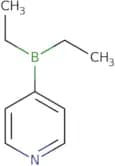
CAS:<p>4-(Diethylboranyl)pyridine is a nucleophilic, anticoagulant drug. It interacts with the electronegative oxygen atoms in the guanine base of dna to form an adduct, which inhibits DNA synthesis. The hexameric cavity of 4-(Diethylboranyl)pyridine contains boron and nitrogen atoms, which are important for its activity. 4-(Diethylboranyl)pyridine also has antibacterial effects against gram-positive bacteria by inhibiting bacterial protein synthesis. This compound is synthetic and can be used in cocrystallized form as a single molecule or in hexameric form.</p>Fórmula:C9H14BNPureza:Min. 95%Peso molecular:147.03 g/mol4-Hydroxy-N-2-pyridinyl-2H-1,2-benzothiazine-3-carboxamide-1,1-dioxide
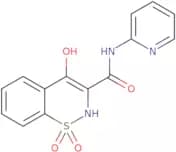
CAS:<p>4-Hydroxy-N-2-pyridinyl-2H-1,2-benzothiazine-3-carboxamide-1,1dioxide is a drug product that is used as an analytical reference material. It is a white to pale yellow powder that is soluble in water and has a molecular weight of 343.4 g/mol. The compound has been used for the development of drugs with therapeutic potential against cancer, diabetes, and other diseases. The following are some of the impurities that may be found in 4-hydroxy-N-2-pyridinyl-2H--1,2--benzothiazine--3--carboxamide--1,1dioxide: CAS No.: 65897 - 46 - 3 Molecular weight: 343.4 g/mol Melting point: Boiling point: Density: 1.7 g/cm</p>Fórmula:C14H11N3O4SPureza:Min. 95%Peso molecular:317.32 g/mol1-Hydroxy-ibuprofen - Mixture of diastereoisomers
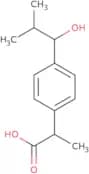
CAS:<p>Ibuprofen is a nonsteroidal anti-inflammatory drug that is used to treat arthritis, rheumatoid arthritis, menstrual cramps and pain. Ibuprofen is a racemic mixture of two enantiomers, ibuprofen and S (+) -ibuprofen. The dextran sulfate method is an analytical method used to determine the concentration of ibuprofen in biological fluids such as human serum or urine. This test can be done by first treating the sample with trifluoroacetic acid (TFA) to convert ibuprofen to its glucuronide conjugate. The glucuronide conjugates are then deproteinized with hydrochloric acid, which converts them into their corresponding carboxylated derivatives. This conversion allows for the separation of ibuprofen from interfering substances using preparative hplc and quantification using mass spectrometry. Toxicity studies have been conducted on bacteria strains and inflammatory bowel</p>Fórmula:C13H18O3Pureza:Min. 95%Cor e Forma:White PowderPeso molecular:222.28 g/molMethyl 2-sulfinobenzoate
CAS:<p>Methyl 2-sulfinobenzoate (MSB) is an analytical, research and development, and drug development impurity that is used as an API impurity and HPLC standard. It is a metabolite of sulfadiazine, which belongs to the family of drugs known as sulfonamides. MSB has been shown to have pharmacopoeia activity for the treatment of bacterial infections. It is a natural product found in plants, such as garlic and onion, or it can be synthesized from benzene and sulfur chloride.</p>Fórmula:C8H8O4SPureza:Min. 95%Peso molecular:200.21 g/molN-(4-Hydroxyphenyl)propanamide
CAS:<p>The N-(4-hydroxyphenyl)propionamide (HPPA) is a synthetic drug that binds to the human liver. It has been shown to be effective in preventing implantation of fertilized eggs, and can be used as a diagnostic agent for determining the presence of HPPA in human liver tissue. HPPA is also used as a diluent for other drugs. The HPPA binds to chromatographic components and can be detected using electrochemical detection, which allows it to be used as a targetable probe for cancer research. HPPA is also used to study iontophoretic transport of ions across reconstituted membranes in vitro.</p>Fórmula:C9H11NO2Pureza:(%) Min. 97%Peso molecular:165.19 g/molHydrochlorothiazide impurity C
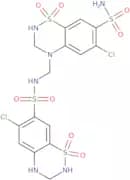
CAS:<p>Hydrochlorothiazide is a sulfonamide that inhibits the activity of the enzyme, angiotensin-converting enzyme (ACE), which is responsible for converting angiotensin I to the potent vasoconstrictor, angiotensin II. It also has antihypertensive effects by blocking the production of aldosterone, which causes sodium retention and leads to high blood pressure. It is a byproduct in reactions with substances such as valsartan. Hydrochlorothiazide may react chemically with other medicines such as ampicillin and cefaclor.</p>Fórmula:C15H16Cl2N6O8S4Pureza:Min. 95%Cor e Forma:White PowderPeso molecular:607.49 g/mol2-(4-Formylphenyl)propionic acid - Racemic
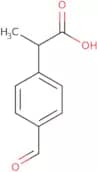
CAS:<p>2-(4-Formylphenyl)propionic acid is a racemic mixture of 2-formylphenylacetic acid and 4-formylphenylacetic acid. This compound is used in the treatment of bacterial infections and inflammation. It is an organic solution that can be injected, administered orally, or applied topically. The 2-(4-formylphenyl)propionic acid has been shown to have anti-inflammatory properties, but also has side effects such as skin irritation when it is applied topically. This drug can also cause nausea, vomiting, and diarrhea when administered orally.</p>Fórmula:C10H10O3Pureza:Min. 95%Cor e Forma:White PowderPeso molecular:178.18 g/molTorasemide EP Impurity D
CAS:<p>Torasemide EP Impurity D is a drug product or impurity. It is an analytical standard for purity testing of torasemide. Torasemide EP Impurity D is also a metabolite of torasemide and can be found in urine as well as other tissues. It is natural, but not naturally occurring. Research and Development studies of this impurity are ongoing to determine its pharmacological activity and niche applications.</p>Fórmula:C17H22N4O3SPureza:Min. 95%Peso molecular:362.45 g/molrac-Ibuprofen amide
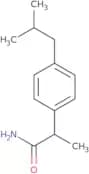
CAS:<p>Ibuprofen amide is a nonsteroidal anti-inflammatory drug that belongs to the class of amides. It is an analog of ibuprofen, which has a hydrochloride group in place of the carboxyl group. Ibuprofen amide inhibits the production of pro-inflammatory chemicals by blocking cyclooxygenase enzymes, which are responsible for synthesis of prostaglandins and thromboxanes. The kinetic profile of this compound was obtained using fluorescence spectroscopy. This analytical method also showed that ibuprofen amide hydrolyzes in acidic conditions, suggesting that it may be active against bacteria that are found in an acidic environment.</p>Fórmula:C13H19NOPureza:Min. 98 Area-%Peso molecular:205.3 g/mol2-(4-Ethylphenyl)-propanoic acid - Racemic
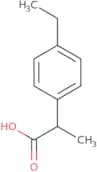
CAS:<p>2-(4-Ethylphenyl)-propanoic acid is a supplement that is used to relieve pain and inflammation. It belongs to the group of non-steroidal anti-inflammatory drugs (NSAIDs). This drug has been shown to be efficacious in the treatment of osteoarthritis, rheumatoid arthritis, and bronchitis. 2-(4-Ethylphenyl)-propanoic acid inhibits both prostaglandin synthesis and leukotriene synthesis by inhibiting cyclooxygenase 1, which converts arachidonic acid into prostaglandins, and 5-lipoxygenase, which converts arachidonic acid into leukotrienes. This drug has also been shown to inhibit COX-2 production in human monocytes. The active form of this drug is metabolized through a number of metabolic transformations including hydrolysis by esterases or glucuronidases, oxidation by cytochrome P450 enzymes,</p>Fórmula:C11H14O2Pureza:Min. 95%Peso molecular:178.23 g/mol2-[(2,6-Dichlorophenyl)amino]benzeneacetic Acid 2-(carboxymethoxy)-2-oxoethyl ester
CAS:<p>2-[(2,6-Dichlorophenyl)amino]benzeneacetic Acid 2-(carboxymethoxy)-2-oxoethyl ester is a drug product that belongs to the class of Custom synthesis. It is a metabolite of loratadine, an antihistamine drug. The compound is a metabolite of loratadine, which is an antihistamine drug used for the treatment of allergies. It is produced by the oxidation of loratadine by cytochrome P450 enzymes and can be detected in urine at concentrations up to 5 ng/mL. 2-[(2,6-Dichlorophenyl)amino]benzeneacetic Acid 2-(carboxymethoxy)-2-oxoethyl ester has been shown to be effective in inhibiting the growth of bacteria that are resistant to penicillin and erythromycin.</p>Fórmula:C18H15Cl2NO6Pureza:Min. 95%Peso molecular:412.22 g/mol3-Oxo-1,2-benzoisothiazoline-2-acetic acid methyl ester 1,1-dioxide
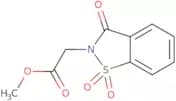
CAS:<p>Meloxicam is a nonsteroidal anti-inflammatory drug that is used in the treatment of osteoarthritis and rheumatoid arthritis. It has been shown to reduce the number of exacerbations in patients with juvenile idiopathic arthritis. Meloxicam also inhibits the production of Cox-2, which is an enzyme that produces inflammation in joints. The oral route of administration allows meloxicam to be distributed through the body. This drug is not active against ankylosing spondylitis and it should not be taken by pregnant women or children under 12 years old.</p>Fórmula:C10H9NO5SPureza:Min. 95%Peso molecular:255.25 g/mol

![2-Hydroxy-5-[2-[4-[[(6-methyl-2-pyridinyl)amino]sulfonyl]phenyl]diazenyl]benzoic acid](/_next/image/?url=https%3A%2Fstatic.cymitquimica.com%2Fproducts%2F3D%2Fthumb-webp%2FIH145662.webp&w=3840&q=75)
![3-[4-(2-Pyridylsulfamoyl)phenyl] sulfasalazine](/_next/image/?url=https%3A%2Fstatic.cymitquimica.com%2Fproducts%2F3D%2Fthumb-webp%2FIP145663.webp&w=3840&q=75)


![2-[(2,6-Dichlorophenyl)amino]benzeneacetic Acid 2-(carboxymethoxy)-2-oxoethyl ester](/_next/image/?url=https%3A%2Fstatic.cymitquimica.com%2Fproducts%2F3D%2Fthumb-webp%2FID156912.webp&w=3840&q=75)