Substratos Cromogénicos
Os substratos cromogênicos são compostos que produzem uma mudança de cor visível quando são metabolizados por enzimas específicas. Esses substratos são amplamente utilizados em ensaios diagnósticos, pesquisa bioquímica e ensaios imunoenzimáticos (ELISA) para detectar e quantificar a atividade enzimática. A mudança de cor permite uma identificação visual fácil e rápida das reações enzimáticas, tornando os substratos cromogênicos ferramentas essenciais na análise laboratorial. Na CymitQuimica, oferecemos uma seleção diversificada de substratos cromogênicos de alta qualidade para apoiar suas aplicações de pesquisa e diagnóstico.
Foram encontrados 712 produtos de "Substratos Cromogénicos"
Ordenar por
Pureza (%)
0
100
|
0
|
50
|
90
|
95
|
100
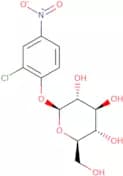
2-Chloro-4-nitrophenyl β-D-glucopyranoside
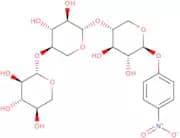
CAS:<p>2-Chloro-4-nitrophenyl β-D-glucopyranoside is a chromogenic substrate for beta-glucosidases. In biochemical enzyme assays and in vitro diagnostics analysis, the substrate is used to monitor the glycosyltransferase activity. When 2-chloro-4-nitrophenyl β-D-glucopyranoside is cleaved by beta-glucosidase, 2-chloro-4-nitrophenol is released and quantified.</p>Fórmula:C12H14ClNO8Pureza:Min. 95%Cor e Forma:White PowderPeso molecular:335.69 g/mol4-Nitrophenyl b-D-xylotrioside
CAS:<p>Chromogenic substrate targeting beta-D-xylosidase. A xylanase substrate.</p>Fórmula:C21H29NO15Pureza:Min. 98 Area-%Cor e Forma:PowderPeso molecular:535.45 g/molNaphthol AS-BI β-L-fucopyranoside
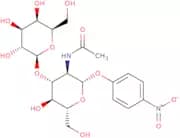
CAS:<p>Substrate for the detection of beta-D-fucosidase</p>Fórmula:C24H24BrNO7Pureza:Min. 95%Peso molecular:518.35 g/mol4-Nitrophenyl 2-acetamido-2-deoxy-3-O-(b-D-galactopyranosyl)-b-D-glucopyranoside
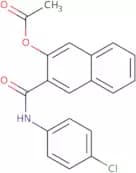
CAS:<p>Chromogenic substrate for fucosyltransferases</p>Fórmula:C20H28N2O13Pureza:Min. 98 Area-%Cor e Forma:White PowderPeso molecular:504.44 g/molNaphthol AS-E acetate
CAS:<p>Modified naphtol AS substrate used in histochemical and cytochemical staining</p>Fórmula:C19H14ClNO3Pureza:Min. 95%Peso molecular:339.77 g/molNaphthol AS-BI-β-D-glucuronic acid
CAS:<p>Naphthol AS-BI-beta-D-glucuronic acid is a β-glucuronidase substrate. The substrate is used in combination with stabilized diazonium salts such as Fast Red Violet LB salt (5-chloro-4-benzamido-2-methylbenzenediazonium chloride). Free Naphthol AS and Fast Red Violet undergo a chemical reaction to yield intensely colored azo-dyes.</p>Fórmula:C24H22BrNO9Pureza:Min. 98 Area-%Peso molecular:548.35 g/mol5-Bromo-6-chloro-3-indolyl a-D-galactopyranoside
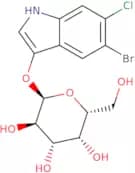
CAS:<p>5-Bromo-6-chloro-3-indolyl a-D-galactopyranoside is a chromogenic substrate that yields a magenta-colored product after cleavage. The chromophore 5-bromo-6-chloro-indoxyl is released, generating the observable color. It is used in glycolipid metabolism studies.</p>Fórmula:C14H15BrClNO6Cor e Forma:White to off-white solid.Peso molecular:408.63 g/molAldol® 455 beta-D-glucopyranoside, Biosynth Patent: EP 2427431 and US 8940909
CAS:<p>Aldol® 455 beta-D-glucopyranoside is a chromogenic and fluorogenic enzyme substrate used for detection of beta-glucosidase activity. The colorless enzyme substrate is cleaved by beta-glucosidase producing bacteria grown in liquid or solid media, yielding a yellow color and green to orange fluorescence. Aldol® 455 beta-D-glucopyranoside can be used under aerobic and anaerobic conditions.</p>Fórmula:C27H24ClNO7Pureza:Min. 95%Cor e Forma:PowderPeso molecular:509.94 g/molSalmon-pal
CAS:<p>6-Chloro-1H-indol-3-yl hexadecanoate is a chromogenic substrate for an enzyme that oxidizes it to produce a blue color. It can be used in the diagnosis of bacterial infections, such as tuberculosis and leprosy. 6CHIH is a ligand for various enzymes, including lactate dehydrogenase, which catalyzes the conversion of pyruvate to lactic acid. This compound reacts with oxygen to produce light in the presence of a catalyst. 6CHIH is also used as a fluorescent tag for protein labeling and detection.<br>6CHIH has been shown to be effective in detecting bacteria in food products and water samples using bioluminescence techniques. The high purity and quality of this compound make it suitable for use in diagnostics, culture media, and environmental testing.</p>Pureza:Min. 95%Peso molecular:406 g/mol3-Indoxyl caprylate
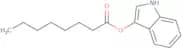
CAS:<p>3-Indoxyl caprylate is a chemiluminescent substrate that is used in the detection of bacteria. It has been shown to be a very sensitive and selective fluorogenic substrate for the detection of bacterial activity, which can be used with an appropriate enzyme reaction. 3-Indoxyl caprylate has also been shown to be a potent quencher of bioluminescence, and can be used as a chromogenic substrate in diagnostic assays. 3-Indoxyl caprylate is often used as a culture media supplement or food additive to enhance its growth properties. It has been found to have high purity and quality levels, making it suitable for use in diagnostics and research.</p>Pureza:Min. 95%Peso molecular:259.34 g/mol2-Naphthyl-α-D-glucopyranoside
CAS:<p>2-Naphthyl-α-D-glucopyranoside is a substrate for α-glucosidase. 2-Naphthol is released upon hydrolyzation. By simultaneous coupling with a suitable staining reagent, such as hexazonium p-rosaniline, the corresponding reddish-brown azo-dye is formed. Naphthols can also be detected by fluorescence analysis.</p>Fórmula:C16H18O6Pureza:Min. 98.0 Area-%Peso molecular:306.32 g/mol4-Nitrophenyl 3-O-(β-D-glucopyranosyl)-α-D-glucopyranoside
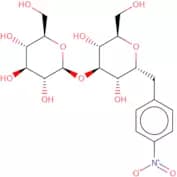
<p>4-Nitrophenyl 3-O-(beta-D-glucopyranosyl)-alpha-D-glucopyranoside is a chromogenic substrate for alpha-glucosidase. Upon hydrolysis, para-nitrophenol is released yielding a yellowish colour. 4-Nitrophenyl 3-O-(beta-D-glucopyranosyl)-alpha-D-glucopyranoside is used in different applications such as the Gaucher disease screening, carbohydrate metabolism studies</p>Fórmula:C18H25NO13Pureza:Min. 95%Peso molecular:463.39 g/mol5-Bromo-4-chloro-3-indolyl b-D-fucopyranoside
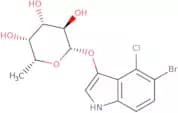
CAS:<p>5-Bromo-4-chloro-3-indolyl b-D-fucopyranoside is a chromogenic substrate used is for the enzyme beta-fucosidase.</p>Fórmula:C14H15BrClNO5Pureza:Min. 98 Area-%Cor e Forma:PowderPeso molecular:392.63 g/mol4-Nitrophenyl b-D-ribofuranoside
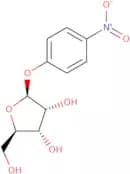
CAS:<p>4-Nitrophenyl β-D-ribofuranoside is a synthetic chromogenic molecule designed to profile phosphorolytic enzyme activity, specifically ribonucleoside-hydrolyzing enzymes. Upon hydrolysis by these enzymes, it releases a 4-nitrophenolic compound, which can be monitored spectrophotometrically at 405-410 nm as a quantitative indicator of enzyme activity. This substrate is suitable for studying ribonucleoside-hydrolyzing enzymes, such as ribo- and deoxyribonucleases, in various biological systems and, in turn, could help advance our understanding of nucleic acid metabolism, gene function, and regulatory processes.</p>Fórmula:C11H13NO7Pureza:Min. 97 Area-%Cor e Forma:White PowderPeso molecular:271.22 g/mol4-Nitrophenyl β-rutinoside
CAS:<p>4-Nitrophenyl beta-rutinoside is a chromogenic substrate for beta-glucosidase. Upon hydrolysis, para-nitrophenol is released yielding a yellowish colour. 4-Nitrophenyl beta-rutinoside is used in different applications such as the Flavonoid glycoside hydrolysis, food industry applications</p>Fórmula:C18H25NO12Pureza:Min. 95%Cor e Forma:PowderPeso molecular:447.39 g/mol6-Chloro-3-indolyl β-D-cellobioside
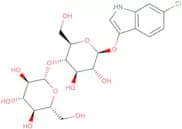
CAS:<p>6-Chloro-3-indolyl b-D-cellobioside is a chromogenic substrate that produces a salmon-pink color after enzymatic cleavage. It is used for detecting the activity of beta-D-cellobiosidase in enzyme assays.</p>Pureza:Min. 95%Cor e Forma:White To Off-White SolidPeso molecular:491.87 g/mol4-Nitrophenyl palmitate
CAS:<p>4-Nitrophenyl palmitate is a lipase-sensitive chromogenic substrate commonly used in the study of lipase and esterase activity. Its hydrolysis by lipases produces a yellow 4-nitrophenol, which can be easily detected spectrophotometrically, offering a quantitative measure of enzyme activity. This substrate is widely utilized in the screening of lipase-producing microorganisms and the optimization of enzyme-catalyzed reactions in various fields, including biotechnology and pharmaceutical research.</p>Fórmula:C22H35NO4Pureza:Min. 95%Cor e Forma:Off-White PowderPeso molecular:377.52 g/mol5-Bromo-3-indolyl 2-acetamido-2-deoxy-b-D-glucopyranoside
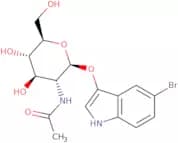
CAS:<p>5-Bromo-3-indolyl 2-acetamido-2-deoxy-b-D-glucopyranoside is a lapis substrate, a chromogenic substrate that yields a deep blue color after cleavage. It is used in lysosomal storage disorder screening such as for Sanfilippo syndrome.</p>Fórmula:C16H19BrN2O6Pureza:Min. 98 Area-%Cor e Forma:White Off-White PowderPeso molecular:415.24 g/molChitin azure
CAS:<p>Chitin azure is a chromogenic substrate for chitinases. It is one of the few specific substrates for this enzyme that produces chito-oligosaccharides from chitin.</p>Cor e Forma:PowderBronze-Gal
<p>Bronze-Gal (Bronze-beta-D-galactopyranoside) is a chromogenic indicator for beta-galactosidase activity. The colorless product is cleaved by lactose-utilizing bacteria in liquid media or on agar plates and yields a bronze colored precipitate. Bronze-Gal can also be used as detecting agent for beta-galactosidase activity in reporter gene assays or for identification of positive transformants on agar plates when using the α-complementation approach. Read more in the Application Notes.</p>Peso molecular:443.57 g/mol