CAS 1128-23-0
:Reduziertes Ascorbat
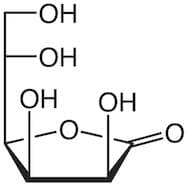
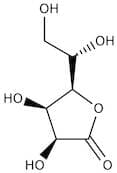
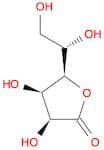
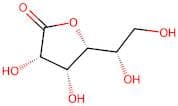
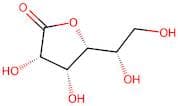
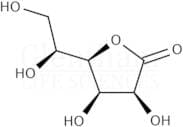
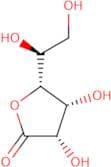
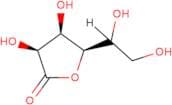
- (3R,4S,5S)-5-[(1S)-1,2-dihydroxyethyl]-3,4-dihydroxydihydrofuran-2(3H)-one (non-preferred name)
- (3S,4R,5R)-5-[(1S)-1,2-dihydroxyethyl]-3,4-dihydroxydihydrofuran-2(3H)-one (non-preferred name)
- <span class="text-smallcaps">L</span>-(+)-Gulonic acid γ-lactone
- <span class="text-smallcaps">L</span>-Gulono-1,4-lactone
- <span class="text-smallcaps">L</span>-Gulono-γ-lactone
- <span class="text-smallcaps">L</span>-Gulonolactone
- Dihydroascorbic acid
- Gulonic acid, γ-lactone, <span class="text-smallcaps">L</span>-
- L(+)-Gulonic acid-γ-lactone
- L(+)-Gulono-1,4-Lactone
- L-Gulonic Gamma-Lactone
- L-Gulonic-G-Lactone
- L-Gulono-Gamma-Lactone
- L-Gulonolactone
- Reduced ascorbate
- Reduced ascorbic acid
- γ-Gulonolactone
- L-Gulono-γ-lactone
- L(+)-Gulonic Acid Gamma-Lactone
- Gulonic acid, γ-lactone, L-
- L-Gulonic Acid Gamma-Lactone
- Weitere Synonyme anzeigen
L-(+)-Gulonic Acid γ-Lactone
CAS:Formel:C6H10O6Reinheit:>98.0%(GC)Farbe und Form:White to Almost white powder to crystalMolekulargewicht:178.14L-Gulonic acid-1,4-lactone, 95%
CAS:This Thermo Scientific Chemicals brand product was originally part of the Alfa Aesar product portfolio. Some documentation and label information may refer to the legacy brand. The original Alfa Aesar product / item code or SKU reference has not changed as a part of the brand transition to Thermo SciFormel:C6H10O6Reinheit:95%Molekulargewicht:178.14L(+)-Gulonic acid γ-lactone
CAS:Formel:C6H10O6Reinheit:97%Farbe und Form:SolidMolekulargewicht:178.1400L-Gulono-1,4-lactone
CAS:Formel:C6H10O6Reinheit:≥ 95%Farbe und Form:White to off-white crystalline powderMolekulargewicht:178.14L-Gulono-1,4-lactone
CAS:L-Gulono-1,4-lactone is a substrate of L-gulono-1,4-lactone oxidoreductase, which catalyzes the last step of the biosynthesis of L-ascorbic (Vitamin) C.Formel:C6H10O6Reinheit:≥95%Farbe und Form:Less Crystals Colorless CrystalsMolekulargewicht:178.14L-Gulono-1,4-lactone
CAS:Kontrolliertes ProduktApplications L-Gulono-1,4-lactone is a precursor in the biosynthesis of ascorbic acid, one of the many forms of Vitamin C.
References Wolucka, B. et al.: J. Biol. Chem., 278, 47483 (2003); Heller, R. et al.: J. Biol Chem., 274, 8254 (1999);Formel:C6H10O6Farbe und Form:White To Off-WhiteMolekulargewicht:178.14L-Gulonic acid-1,4-lactone
CAS:L-Gulonic acid-1,4-lactone is an ascorbic acid derivative that inhibits the production of matrix metalloproteinases (MMPs) and other enzymes. L-Gulonic acid-1,4-lactone has been shown to inhibit the activity of MMPs in hl-60 cells, which may be due to its ability to chelate metal ions, such as zinc and copper. This molecule also has a stabilizing effect on collagen type I because it prevents cross linking between lysine amino acids. The discovery process for this molecule was found by screening clones from a cDNA library with biochemical properties similar to those of ascorbic acid. This molecule has been shown to inhibit the activation of protein kinase C (PKC) and phosphorylation of extracellular signal regulated kinase (ERK). L-Gulonic acid-1,4-lactone is metabolized through plant metabolism
Formel:C6H10O6Reinheit:Min. 95 Area-%Farbe und Form:White PowderMolekulargewicht:178.14 g/molL-Gulono-γ-lactone
CAS:L-Gulono-gamma-lactone is a natural vitamin C metabolite that is synthesized from L-ascorbic acid in the liver. It has been shown to inhibit the oxidase and other enzymes involved in ascorbic acid metabolism, which may be due to its ability to bind to iron. L-Gulono-gamma-lactone also inhibits polymerase chain reactions in rat liver microsomes and inhibits the activities of ascorbic acid and glutathione reductase in rat hepatic tissues. This compound is not active against humans, but it has been shown to have antioxidation properties.
Formel:C6H10O6Molekulargewicht:178.14 g/molRef: 3D-G-8500
-Unit-kgkgNachfragen1kgNachfragen100gNachfragen250gNachfragen500gNachfragen2500gNachfragen(3S,4R,5R)-5-((S)-1,2-Dihydroxyethyl)-3,4-dihydroxydihydrofuran-2(3H)-one
CAS:Formel:C6H10O6Reinheit:97%Farbe und Form:Solid, White to almost white powderMolekulargewicht:178.14L-Gulono-1,4-Lactone extrapure, 98%
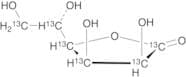
CAS:Formel:C6H10O6Reinheit:min. 98%Farbe und Form:White to off - white, Crystalline powderMolekulargewicht:178.14L-Gulono-1,4-lactone-13C6
CAS:Kontrolliertes ProduktApplications Isotope labelled L-Gulono-1,4-lactone, a precursor in the biosynthesis of ascorbic acid, one of the many forms of Vitamin C. A cleavage product of L-gulonolactone oxidase
References Wolucka, B. et al.: J. Biol. Chem., 278, 47483 (2003); Heller, R. et al.: J. Biol Chem., 274, 8254 (1999);Formel:C6H10O6Farbe und Form:NeatMolekulargewicht:184.1