CAS 115086-54-9
:Imidacloprid-Olefin
Beschreibung:
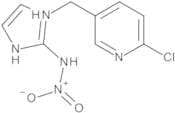
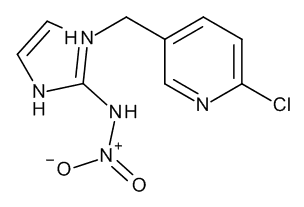
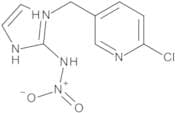
Imidacloprid-Olefin, mit der CAS-Nummer 115086-54-9, ist ein Derivat von Imidacloprid, einem weit verbreiteten Insektizid, das zur Klasse der Neonicotinoide gehört. Diese Verbindung weist typische Merkmale von Neonicotinoiden auf, einschließlich ihres Wirkungsmechanismus als selektiver Agonist der nikotinischen Acetylcholinrezeptoren bei Insekten, was zu Neurotoxizität und schließlich zum Tod der Zielschädlinge führt. Imidacloprid-Olefin ist bekannt für seine Wirksamkeit gegen ein breites Spektrum landwirtschaftlicher Schädlinge, was es in der Pflanzenproduktion wertvoll macht. Die Verbindung zeichnet sich im Allgemeinen durch ihre Stabilität, Löslichkeit in organischen Lösungsmitteln und relativ niedrige Flüchtigkeit aus, was zu ihrer Persistenz in der Umwelt beiträgt. Wie andere Neonicotinoide wirft es jedoch Bedenken hinsichtlich seiner potenziellen Auswirkungen auf Nicht-Zielorganismen, insbesondere Bestäuber wie Bienen, auf. Regulierungsbewertungen konzentrieren sich oft auf sein Umweltverhalten, Toxizitätsprofile und das Potenzial zur Bioakkumulation. Insgesamt dient Imidacloprid-Olefin als wichtiges Werkzeug im integrierten Schädlingsmanagement, aber seine Verwendung muss sorgfältig verwaltet werden, um ökologische Risiken zu mindern.
Formel:C9H8ClN5O2
InChl:InChI=1S/C9H8ClN5O2/c10-8-2-1-7(5-12-8)6-14-4-3-11-9(14)13-15(16)17/h1-5H,6H2,(H,11,13)
InChI Key:InChIKey=TYLCDJYHUVCRBH-UHFFFAOYSA-N
SMILES:C(N1C(NN(=O)=O)=NC=C1)C=2C=CC(Cl)=NC2
Synonyme:- 1-[(6-Chloro-3-pyridinyl)methyl]-N-nitro-1H-imidazol-2-amine
- 1H-imidazol-2-amine, 1-[(6-chloro-3-pyridinyl)methyl]-N-nitro-
- Imidacloprid-olefin
- NTN 33893-olefin
- Ntn 35884
Sortieren nach
Reinheit (%)
0
100
|
0
|
50
|
90
|
95
|
100
6 Produkte gefunden.
IMIDACLOPRID-OLEFIN (IMIDAZOL-1-15N 98%; 2-13C, 99%; 2-AMINO 15N, 98%)
CAS:100 UG/ML IN METHANOL
Reinheit:98%Ref: 3U-CILCNLM1086612
1.2mlNachfragenLC PestiMix 6 10 µg/mL in Acetonitrile
CAS:- 1007-28-9
- 1114-71-2
- 113036-88-7
- 113136-77-9
- 114420-56-3
- 115086-54-9
- 115852-48-7
- 116255-48-2
- 119791-41-2
- 121776-33-8
- 126535-15-7
- 130000-40-7
- 136849-15-5
- 138164-12-2
- 139528-85-1
- 147150-35-4
- 149508-90-7
- 180409-60-3
- 181274-17-9
- 1929-88-0
- 199119-58-9
- 2008-41-5
- 210631-68-8
- 211867-47-9
- 221667-31-8
- 223580-51-6
- 23576-24-1
- 239110-15-7
- 2439-10-3
- 25606-41-1
- 27314-13-2
- 27605-76-1
- 2797-51-5
- 302-27-2
- 321-54-0
- 32889-48-8
- 3337-71-1
- 335104-84-2
- 33820-53-0
- 35367-31-8
- 37019-18-4
- 372137-35-4
- 4151-50-2
- 422556-08-9
- 42609-52-9
- 4849-32-5
- 55861-78-4
- 57160-47-1
- 58011-68-0
- 6119-70-6
- 61432-55-1
- 64-10-8
- 66-81-9
- 69335-91-7
- 69806-50-4
- 74051-80-2
- 74222-97-2
- 76578-12-6
- 8065-36-9
- 81103-11-9
- 81335-77-5
- 82211-24-3
- 838-85-7
- 86811-58-7
- 88678-67-5
- 90982-32-4
- 91-22-5
- 93697-74-6
- 944-22-9
- 951659-40-8
- 96182-53-5
- 96525-23-4
- 97780-06-8
- 97886-45-8
- 99105-77-8
Farbe und Form:MixtureImidacloprid-olefin 100 µg/mL in Acetonitrile
CAS:Kontrolliertes ProduktFormel:C9H10ClN5O2Farbe und Form:Single SolutionMolekulargewicht:254.65Imidacloprid-olefin
CAS:Kontrolliertes ProduktApplications Imidacloprid-olefin is a metabolite of Imidacloprid (I274990) which is an active ingredient in certain neuro-active insecticides.
References Chauzat, M., et al.: Env. Entomol., 38, 514 (2009), Patial, A., et al.: Env. Ecol., 27, 320 (2009), Fernandez-Bayo, J., et al.: J. Agric., Food Chem., 57, 5435 (2009), Tomizawa, M., et al.: J. Med. Chem., 52, 3735 (2009), Chem. and Eng. News 90: 10 (2012)Formel:C9H10ClN5O2Farbe und Form:NeatMolekulargewicht:254.65