CAS 122-84-9
:4-Methoxyphenylaceton
Beschreibung:
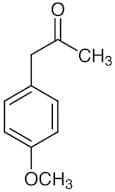
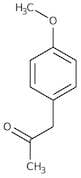
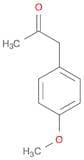
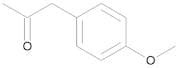
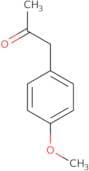
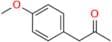
4-Methoxyphenylaceton, auch bekannt als p-Methoxyphenylacetone, ist eine organische Verbindung, die durch ihre aromatische Struktur und die Ketongruppe gekennzeichnet ist. Sie weist eine Methoxygruppe (-OCH3) auf, die an einen Phenylring gebunden ist, der wiederum mit einer Aceton-Gruppe verbunden ist. Diese Verbindung erscheint typischerweise als farblose bis blassgelbe Flüssigkeit mit einem süßen, blumigen Geruch. Sie ist in organischen Lösungsmitteln wie Ethanol und Ether löslich, hat jedoch eine begrenzte Löslichkeit in Wasser. 4-Methoxyphenylaceton wird hauptsächlich in der Synthese verschiedener Arzneimittel und Duftstoffe verwendet, aufgrund ihrer aromatischen Eigenschaften. Darüber hinaus kann sie als Zwischenprodukt in der organischen Synthese dienen. Die Verbindung ist bekannt dafür, typische Reaktionen, die mit Ketonen verbunden sind, durchzuführen, einschließlich nucleophiler Addition und Oxidation. Sicherheitsüberlegungen umfassen den Umgang in einem gut belüfteten Bereich und die Verwendung geeigneter persönlicher Schutzausrüstung, da sie Gesundheitsrisiken darstellen kann, wenn sie eingeatmet oder eingenommen wird. Insgesamt ist 4-Methoxyphenylaceton eine vielseitige Verbindung mit Anwendungen sowohl in industriellen als auch in Forschungsumgebungen.
Formel:C10H12O2
InChl:InChI=1S/C10H12O2/c1-8(11)7-9-3-5-10(12-2)6-4-9/h3-6H,7H2,1-2H3
InChI Key:InChIKey=WFWKNGZODAOLEO-UHFFFAOYSA-N
SMILES:C(C(C)=O)C1=CC=C(OC)C=C1
Synonyme:- (P-Methoxyphenyl)Acetone
- 1-(4-Methoxyphenyl)-2-Propanon
- 1-(4-Methoxyphenyl)-2-propanone
- 1-(4-Methoxyphenyl)Propan-2-One
- 1-(4-Methoxyphenyl)acetone
- 1-(P-Methoxyphenyl)-2-Propanon
- 1-(P-Methoxyphenyl)-2-Propanone
- 1-(Para-methoxyphenyl)-2-propanone
- 1-(p-Anisyl)-2-propanone
- 2-Propanone, (p-methoxyphenyl)-
- 2-Propanone, 1-(4-methoxyphenyl)-
- 2-Propanone, 1-(p-methoxyphenyl)-
- 3-(4-Methoxyphenyl)-2-Propanone
- 3-(4-Methoxyphenyl)propan-2-one
- 4-(P-Methoxyphenyl)Butan-2-One
- 4-Acetonylanisole
- 4-Anisyl Acetone
- 4-Methoxybenzyl methyl ketone
- 4-Methoxyl benzyl methyl ketone
- 4-Methoxyphenoxyacetone
- 4′-Methoxyphenyl-2-propanone
- Anisic ketone
- Anisicketone
- Anisketone
- Anisyl methyl ketone
- Fema 2674
- NSC 22983
- NSC 46101
- P-Anisyl Acetone
- P-Methoxybenzyl Methyl Ketone
- P-methoxy phenylacetone
- Para Methoxy Phenyl Acetone
- Raspberry Ketone Methyl Ether
- p-Acetonylanisole
- p-Anisylacetone
- Weitere Synonyme anzeigen
Sortieren nach
Reinheit (%)
0
100
|
0
|
50
|
90
|
95
|
100
9 Produkte.
4-Methoxyphenylacetone
CAS:Formel:C10H12O2Reinheit:>97.0%(GC)Farbe und Form:Light orange to Yellow to Green clear liquidMolekulargewicht:164.204-Methoxyphenylacetone, 97+%
CAS:This Thermo Scientific Chemicals brand product was originally part of the Alfa Aesar product portfolio. Some documentation and label information may refer to the legacy brand. The original Alfa Aesar product / item code or SKU reference has not changed as a part of the brand transition to Thermo SciFormel:C10H12O2Reinheit:97+%Farbe und Form:Clear colorless to yellow to yellow-green, LiquidMolekulargewicht:164.202-Propanone, 1-(4-methoxyphenyl)-
CAS:Formel:C10H12O2Reinheit:98%Farbe und Form:LiquidMolekulargewicht:164.20114-Methoxyphenylacetone
CAS:4-Methoxyphenylacetone is a ketone containing a phenyl group, widely used in biochemical experiments and drug synthesis research.Formel:C10H12O2Reinheit:98.21%Farbe und Form:SolidMolekulargewicht:164.21-(4-Methoxyphenyl)propan-2-one
CAS:Kontrolliertes ProduktFormel:C10H12O2Farbe und Form:NeatMolekulargewicht:164.204-Methoxyphenylacetone
CAS:Formel:C10H12O2Reinheit:96%Farbe und Form:Liquid, ClearMolekulargewicht:164.2044-Methoxyphenylacetone
CAS:Kontrolliertes Produkt4-Methoxyphenylacetone is an amine that has potent antibacterial activity and has been shown to be active against gram-positive bacteria, such as Staphylococcus aureus. It also inhibits oxidative DNA damage by catalysis and is chemically stable. 4-Methoxyphenylacetone is used in the asymmetric synthesis of a number of compounds, including drugs for the treatment of tuberculosis. The reaction mechanism for this compound is not well understood, but it is thought that it may be due to acidic conditions or the formation of radical intermediates. The sample preparation process is important for obtaining accurate results when using chromatography. This chemical can be detected using liquid chromatography and its profile can be characterized using chromatographic science.Formel:C10H12O2Reinheit:90%Farbe und Form:Colorless Clear LiquidMolekulargewicht:164.2 g/mol4-Methoxyphenylacetone
CAS:Kontrolliertes ProduktFormel:C10H12O2Farbe und Form:NeatMolekulargewicht:164.2