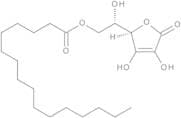
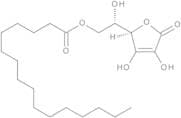
CAS 137-66-6
:Ascorbylpalmitat
- 6-Hexadecanoyl-<span class="text-smallcaps">L</span>-ascorbic acid
- 6-Hexadecanoyl-L-ascorbic acid
- 6-Monopalmitoyl-<span class="text-smallcaps">L</span>-ascorbate
- 6-Monopalmitoyl-L-ascorbate
- 6-O-Palmitoyl-<span class="text-smallcaps">L</span>-ascorbic acid
- 6-O-Palmitoylascorbinsaure
- 6-O-hexadecanoyl-L-threo-hex-1-enofuranos-3-ulose
- 6-O-hexadecanoylhex-1-enofuranos-3-ulose
- 6-O-palmitoylascorbic acid
- 6-Palmitate-<span class="text-smallcaps">L</span>-ascorbic acid
- 6-Palmitate-L-ascorbic acid
- 6-Palmitoylascorbic acid
- <span class="text-smallcaps">L</span>-Ascorbic acid, 6-hexadecanoate
- <span class="text-smallcaps">L</span>-Ascorbic acid, 6-palmitate
- <span class="text-smallcaps">L</span>-Ascorbyl 6-palmitate
- <span class="text-smallcaps">L</span>-Ascorbyl monopalmitate
- <span class="text-smallcaps">L</span>-Ascorbyl palmitate
- Acide 6-O-palmitoylascorbique
- Acido 6-0-Palmitoilascorbico
- Ascorbic Acid (L), 6-Hexadecanoate
- Ascorbic acid 6-palmitate
- Ascorbic acid palmitate
- Ascorbic palmitate
- Ascorboyl palmitate
- Ascorbyl 6-palmitate
- Ascorbyl Palmitate
- Ascorbyl monopalmitate
- Ascorbylpalmitate
- Ascorbylpalmitic acid
- Cetyl ascorbate
- E 304
- E 304 (i)
- Grindox 562
- L-Ascorbic acid 6-hexadecanoate
- L-Ascorbic acid 6-palmitate
- L-Ascorbic acid-6-phlmitate
- L-Ascorbyl 6-Palmitate
- L-Ascorbyl Dipalmitate
- L-Ascorbyl monopalmitate
- L-Ascorbyl palmitate
- Nsc 402451
- Ondascora
- Palmitate, Ascorbyl
- Palmitic acid, 6-ester with ascorbic acid
- Palmitoyl <span class="text-smallcaps">L</span>-ascorbic acid
- Palmitoyl L-ascorbic acid
- Quicifal
- Vcp 10
- Vcpal
- Vitamin C Palmitate
- [2-(4,5-DIHYDROXY-3-OXO-2-FURYL)-2-HYDROXY-ETHYL] HEXADECANOATE
- ascorbicpalmitate
- 6-hexadecanoyl-l-ascorbicacid
- 6-O-PALMITOYL-L-ASCORBIC ACID
- 6-o-palmitoylascorbicacid
- 6-O-HEXADECANOYL-L-ASCORBIC ACID
- L-ASCORBIC ACID PALMITATE
- ascorbicacidpalmitate(ester)
- Weitere Synonyme anzeigen
6-O-Palmitoyl-L-ascorbic Acid
CAS:Formel:C22H38O7Reinheit:>97.0%(T)Farbe und Form:White to Orange to Green powder to crystalMolekulargewicht:414.54L-Ascorbic acid 6-palmitate, 99%
CAS:L-Ascorbyl palmitate (Asc-6P) is used along with other fatty acid ascorbates such as L-ascorbyl oleate and L-ascorbyl linoleate to protect cells and membranes from oxidative damage. Fatty acid ascorbate molecules have increased solubility in non-polar (lipophilic) environments. It is applied as hume
Formel:C22H38O7Reinheit:99%Molekulargewicht:414.54Ascorbyl Palmitate
CAS:Vitamin c (ascorbic acid) and its derivativesFormel:C22H38O7Farbe und Form:White Yellow PowderMolekulargewicht:414.53Ascorbyl palmitate
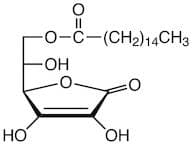
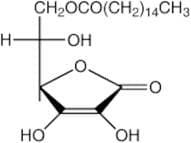
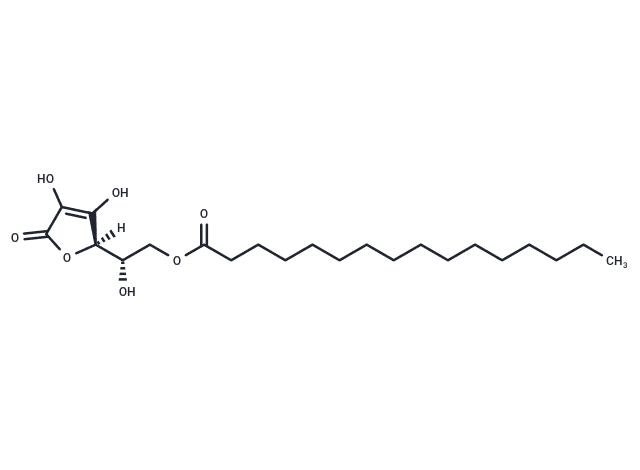
CAS:Ascorbyl palmitate (L-Ascorbic acid 6-hexadecanoate), an ester formed from ascorbic acid and palmitic acid, produces a fat-soluble form of vitamin C.
Formel:C22H38O7Reinheit:99.52%Farbe und Form:White Or Yellowish White Powder White Or Yellowish-White Powder With A Citrus-Like OdourMolekulargewicht:414.53L-Ascorbyl 6-palmitate
CAS:L-Ascorbyl 6-palmitateFormel:C22H38O7Reinheit:95%Farbe und Form: white solidMolekulargewicht:414.53g/mol6-O-Palmitoyl-L-ascorbic acid
CAS:Formel:C22H38O7Reinheit:95.0 - 100.5 %Farbe und Form:White to light-yellow powderMolekulargewicht:414.52Ascorbyl palmitate
CAS:Kontrolliertes ProduktFormel:C22H38O7Farbe und Form:NeatMolekulargewicht:414.53Ascorbyl Palmitate
CAS:Applications Ascorbyl Palmitate is an ester formed from ascorbic acid (A786990) and palmitic acid (P144500) creating a fat soluble form of vitamin C. Ascorbyl Palmitate is also used as an antioxidant food additive.
References Adhikari, P., et al.: J. Am. Oil. Chemist. Soc., 89, 1961 (2012); Kong, J., et al.: J. Food. Sci., 77, S211 (2012);Formel:C22H38O7Farbe und Form:Off-WhiteMolekulargewicht:414.53Ascorbyl palmitate
CAS:Ascorbyl palmitate is an ester of ascorbic acid and palmitic acid. It is a water-soluble antioxidant that has been shown to be safe for oral ingestion at doses of up to 3 grams per day. Ascorbyl palmitate is used in topical formulations to provide protection against sun damage, and also has been shown to have anti-inflammatory properties, which may be due to its inhibitory effect on the mcl-1 protein. Ascorbyl palmitate has a phase transition temperature at about 41°C. This compound can be used in pharmaceuticals for the treatment of infectious diseases caused by bacteria such as tuberculosis or herpes simplex virus type 1 (HSV-1). This chemical also has been shown to have physiological effects on bowel disease and toxicity studies show that it does not cause any adverse reactions in rats or rabbits when given orally.
Formel:C22H38O7Reinheit:Min 98%Farbe und Form:White PowderMolekulargewicht:414.53 g/mol