CAS 137339-65-2
:ser-leu-leu-arg-asn-pro-asn-asp-*lys-tyr-glu-
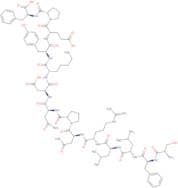
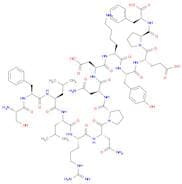
- Ser-Phe-Leu-Leu-Arg-Asn-Pro-Asn-Asp-Lys-Tyr-Glu-Pro-Phe
TRAP-14
CAS:Cloning and expression of a functional human thrombin receptor have revealed a protein with seven transmembrane domains and a large extracellular amino-terminal extension. Thrombin cleaves within this extension, thereby creating a new receptor amino-terminus that functions as a tethered ligand and activates the receptor. A 14-amino acid peptide mimicking this new amino-terminus has been found to be a potent thrombin receptor activator as well as an effective agonist for platelet activation.Formel:C81H118N20O23Reinheit:98.1%Farbe und Form:WhiteMolekulargewicht:1739.95H-Ser-Phe-Leu-Leu-Arg-Asn-Pro-Asn-Asp-Lys-Tyr-Glu-Pro-Phe-OH
CAS:Hypertension is a common condition that affects millions of people worldwide. It is characterized by an elevated blood pressure and the subsequent damage to the heart, kidneys, and other tissues. Metyrapone is a drug that inhibits the synthesis of corticosteroids from cholesterol in the adrenal glands. It was shown to reduce blood pressure in vivo by blocking the formation of cytosolic calcium and subsequent release of vasopressin. The use of metyrapone as a hypertension treatment has been limited due to its side effects on the liver. A new model system using basic fibroblasts (BF) instead of liver cells has been developed to study this drug's effects on hypertension without causing liver lesions. This model has proven successful for other drugs with similar biological properties, such as Hytrinol, which also blocks corticosteroid synthesis from cholesterol but does not cause liver lesions. The BF system can be used for testing new drugs that are selective for PAR1 receptors, which are
Formel:C81H118N20O23Reinheit:Min. 95%Molekulargewicht:1,739.96 g/molTRAP-14 trifluoroacetate salt
CAS:TRAP-14 is a conformationally restricted peptide that binds to the thrombin receptor. TRAP-14 also has a biocompatible polymer backbone that can be used in vivo as an implant. The TRAP-14 peptide has been shown to inhibit thrombin activity and inhibit the expression of basic fibroblast growth factor. In addition, this drug showed an ability to suppress autoimmune diseases in vivo by blocking Ca2+ release from the cytosol. This drug also showed inhibition of polymerase chain reaction (PCR) amplification and increased the specificity of PCR for DNA sequences containing polyvinyl disulfide bonds.Formel:C81H118N20O23Reinheit:Min. 95%Molekulargewicht:1,739.92 g/molSER-PHE-LEU-LEU-ARG-ASN-PRO-ASN-ASP-LYS-TYR-GLU-PRO-PHE
CAS:Formel:C81H118N20O23Reinheit:97%Farbe und Form:SolidMolekulargewicht:1739.9238