CAS 16941-32-5
:Glukagon
- Glucagon (1-29) (human, bovine, porcine)
- Glucagon, human recombinant
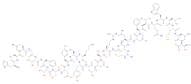
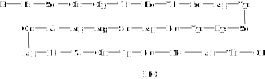
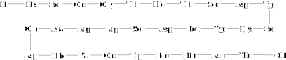
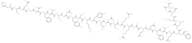
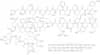
- H-His-Ser-Gln-Gly-Thr-Phe-Thr-Ser-Asp-Tyr-Ser-Lys-Tyr-Leu-Asp-Ser-Arg-Arg-Ala-Gln-Asp-Phe-Val-Gln-Trp-Leu-Met-Asn-Thr-OH
- L-histidyl-L-seryl-L-glutaminylglycyl-L-threonyl-L-phenylalanyl-L-threonyl-L-seryl-L-alpha-aspartyl-L-tyrosyl-L-seryl-L-lysyl-L-tyrosyl-L-leucyl-L-alpha-aspartyl-L-seryl-L-arginyl-L-arginyl-L-alanyl-L-glutaminyl-L-alpha-aspartyl-L-phenylalanyl-L-valyl-L-glutaminyl-L-tryptophyl-L-leucyl-L-methionyl-L-asparaginyl-L-threonine
- Glucagon Hydrochloride(Human)
Glucagon (1-29) (human, rat, porcine)
CAS:Bachem ID: 4088814.
Formel:C153H225N43O49SReinheit:96.4%Farbe und Form:White LyophilisateMolekulargewicht:3482.8Glucagon (1-29) (human, rat, porcine)
CAS:Glucagon is a 29 amino acid containing peptide hormone processed from proglucagon. As a counterregulatory hormone for insulin, glucagon plays a critical role in maintaining glucose homeostasis in vivo in both animals and humans. Not surprisingly, glucagon and glucagon receptor have been pursued extensively as potential targets for the therapeutic treatment of diabetes. As Aβ peptides and IAPP, glucacon tends to form gel-like fibrillar aggregates. These fibrils were found to be toxic through the activation of apoptotic signaling pathways. Hence the aggregation behavior of glucagon has been studied extensively.Formel:C153H225N43O49SReinheit:100.0%Farbe und Form:White PowderMolekulargewicht:3482.8Glucagon (HUMAN)
CAS:Polypeptide, protein and glycoprotein hormones, their derivatives and structural analogues, nesoiFormel:C153H225N43O49SFarbe und Form:White PowderMolekulargewicht:3480.6157Ref: IN-DA0039VM
10MGNachfragen5mg91,00€1mg122,00€10mg126,00€50mg174,00€25mg177,00€100mg284,00€250mg638,00€Glucagon
CAS:Formel:C153H225N43O49SReinheit:(HPLC) ≥ 95.0%Farbe und Form:White powderMolekulargewicht:3482.75Glucagon Hydrochlide
CAS:Formel:C153H225N43O49SReinheit:95%~99%Farbe und Form:White to Off-white PowderMolekulargewicht:3482.75Glucagon (1-29), bovine, human, porcine
CAS:Corynoxine B (Cory B) is a naturally occurring alkaloid isolated from Uncaria rhynchophylla (Miq. ) and is an autophagy inducer.Formel:C153H225N43O49SReinheit:99.56% - 99.91%Farbe und Form:SolidMolekulargewicht:3482.75Glucagon tifluoroacetic acid
CAS:Please enquire for more information about Glucagon tifluoroacetic acid including the price, delivery time and more detailed product information at the technical inquiry form on this pageFormel:C153H225N43O49S•(CF3CO2H)xMolekulargewicht:3,482.75 g/molGlucagon (Human)
CAS:Glucagon (Human) is a recombinant peptide hormone, which is synthesized to mimic the natural glucagon produced by alpha cells in the pancreas. This biopharmaceutical is derived from a DNA recombinant technology source, offering a high level of purity and consistency. Its mode of action involves binding to glucagon receptors on liver cells, stimulating glycogenolysis and gluconeogenesis. This results in the rapid conversion of glycogen into glucose, thereby raising blood sugar levels.Glucagon (Human) is primarily utilized in the treatment of severe hypoglycemia, especially in diabetic patients unable to consume oral glucose due to unconsciousness or confusion. Its application is critical in acute settings where rapid intervention is necessary to prevent neurological damage from prolonged hypoglycemia. Additionally, the research and clinical use of glucagon extend to investigating its potential in counteracting beta-blocker and calcium channel blocker overdoses, where it acts to increase cardiac output. This hormone's pharmaceutical development has provided a crucial tool in both emergency response and broader therapeutic research contexts.
Formel:C153H225N43O49SReinheit:Min. 95%Molekulargewicht:3,482.7 g/molGlucagon (1-29), bovine, human, porcine
CAS:Glucagon (1-29), bovine, human, porcine, is a peptide hormone, which is derived from bovine, human, and porcine sources. It comprises 29 amino acids and functions as a crucial regulator of glucose metabolism by promoting the increase of blood glucose levels. The mode of action involves binding to receptors on liver cells, activating adenylate cyclase, and subsequently increasing intracellular cyclic AMP. This cascade triggers glycogenolysis and gluconeogenesis, leading to elevated blood glucose.In scientific research, Glucagon (1-29), bovine, human, porcine, is utilized to study metabolic pathways and the regulation of glucose homeostasis. Its applications extend to diabetes research, where it serves as a model for understanding glucagon's role in insulin resistance and pancreatic beta-cell dysfunction. Furthermore, this product is employed in the development of therapeutic strategies for hypoglycemic events experienced by diabetic patients. It also serves as a tool in pharmacological studies to elucidate receptor-ligand interactions and signaling mechanisms in different species.Formel:C153H225N43O49SReinheit:Min. 95%Molekulargewicht:3,482.78 g/molGlucagon (1-29) trifluoroacetate salt, human
CAS:A peptide hormone that plays a role in maintaining glucose homeostasis This Thermo Scientific Chemicals brand product was originally part of the Alfa Aesar product portfolio. Some documentation and label information may refer to the legacy brand. The original Alfa Aesar product / item code or SKU reference has not changed as a part of the brand transition to Thermo Scientific Chemicals.
Farbe und Form:White, Lyophilized powderGlucagon Hydrochloride
CAS:Please enquire for more information about Glucagon Hydrochloride including the price, delivery time and more detailed product information at the technical inquiry form on this page
Formel:C153H225N43O49SMolekulargewicht:3,482.82 g/mol