CAS 498-07-7
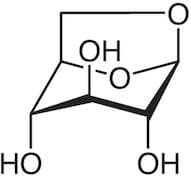
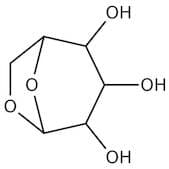
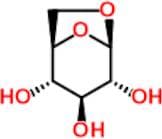
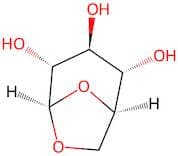
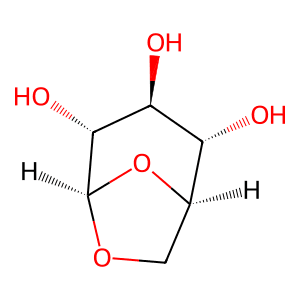
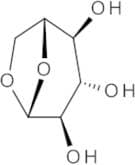
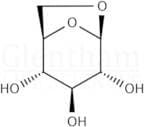
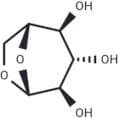
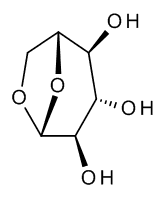
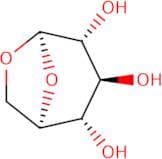
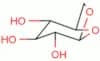
:1,6-Anhydro-β-D-Glucose
- 1,6-Anhydro-<span class="text-smallcaps">D</span>-glucopyranoside
- 1,6-Anhydro-<span class="text-smallcaps">D</span>-glucose
- 1,6-Anhydro-Beta-D-Glucopyranose
- 1,6-Anhydro-D-glucopyranoside
- 1,6-Anhydro-D-glucose
- 1,6-Anhydro-β-<span class="text-smallcaps">D</span>-glucopyranose
- 1,6-Anhydro-β-<span class="text-smallcaps">D</span>-glucose
- 1,6-Anhydro-β-D-glucopyranose
- 1,6-Anhydroglucose
- 1,6-anhidro-β-D-glucosa
- 6,8-Dioxabicyclo[3.2.1]octane, β-<span class="text-smallcaps">D</span>-glucopyranose deriv.
- <span class="text-smallcaps">D</span>-Glucose, 1,6-anhydro-
- D-Glucose, 1,6-anhydro-
- GLUCOPYRANOSE (,beta.-D), 1,6-ANHYDRO-
- Leucoglucosan
- Levoglucosan
- Nsc 46243
- β-<span class="text-smallcaps">D</span>-Glucopyranose, 1,6-anhydro-
- β-D-Glucopyranose, 1,6-anhydro-
- 6,8-Dioxabicyclo[3.2.1]octane, β-D-glucopyranose deriv.
- (-)-1,6-ANHYDRO-B-D-GLUCOPYRANOSE FOR SY
- 1,6-Anhydro-beta-D-glucopyranose, 99+%
- 1,6-Anhydro-β-D-glucose ,98%
- 1,6-Anhydro-?-glucopyranose
- 1,6-anhydro-á-d-glucopyranose
- 1,6-ANHYDRO-SS-D-GLUCOPYRANOSE, 99% MIN., HPLC
- 1,6-anhydro-β-d-[1-2H]glucose
- beta-D-Glucopyranose, 1,6-anhydro-
- Laevoglucosan
- 1,6-Anhydro-beta-D-glucopyranose (levoglucosan)
- 1,6-Anhydro-D-glucopyranose, 99℉
- 1,6-Anhydro-
- 1,6-Anhydro-β-D-glucose,Levoglucosan
- (-)-1,6-Anhydro--D-glucopyranose for synthesis
- 1,6-Anhydro-beta-D-glucopyranose min. 98%
- 1,6-Anhydro-β-D-glycopyranose
- 1,6-Anhydro-beta-D-glucose 99%
- 1,6-ANHYDRO-BETA-D-GLUCOSE (LEVOGLUCOSAN)
- 1,6-ANHYDRO-SS-D-GLUCOPYRANOSE
- 1,6-anhydro-beta-glucopyranose
- 1,6-ANHYDRO-BETA-D-GLUCOPYRA
- 1,6-ANHYDRO-BETA-D-GLUCOSE
- 1,6-anhydro-β-d-[UL-2H7]glucose
- 1,6-anhydro-beta-d-glucopyranos
- 1,6-anhydro-D-glucose (50 mg)
- 1,6-Dideoxy-1,6-epoxy-β-D-glucopyranose
- 1,6-Anhydro-β-glucopyranose
- 1,6-ANHYDRO-B-D-GLUCOSE
- Weitere Synonyme anzeigen
1,6-Anhydro-β-D-glucose
CAS:Formel:C6H10O5Reinheit:>99.0%(GC)Farbe und Form:White to Light yellow powder to crystalMolekulargewicht:162.141,6-Anhydro-β-D-glucopyranose, 99%
CAS:1,6-Anhydro-beta-D-glucopyranose is used for the preparation of biologically important and structurally diverse products such as rifamycin S, indanomycin, thromboxane B2, (+)-biotin, tetrodotoxin, quinone, macrolide antibiotics and modified sugars. It is used as a chemical tracer for biomass burningFormel:C6H10O5Reinheit:99%Farbe und Form:Powder or crystals or crystalline powder, WhiteMolekulargewicht:162.141,6-anhydro-D-glucose
CAS:Heterocyclic compounds with oxygen hetero-atom(s) only, nesoiFormel:C6H10O5Farbe und Form:White Beige PowderMolekulargewicht:162.05282b-D-Glucopyranose, 1,6-anhydro-
CAS:Formel:C6H10O5Reinheit:95%Farbe und Form:SolidMolekulargewicht:162.14061,6-Anhydro-β-D-glucopyranose
CAS:1,6-Anhydro-β-D-glucopyranoseFormel:C6H10O5Reinheit:98%Farbe und Form: white to off white crystalline solidMolekulargewicht:162.14g/mol1,6-Anhydro-β-D-glucopyranose
CAS:Formel:C6H10O5Reinheit:(HPLC) ≥ 99.0%Farbe und Form:White crystalline powderMolekulargewicht:162.14Levoglucosan
CAS:Levoglucosan is a byproduct of carbohydrate pyrolysis, used in chiral polymer synthesis, and increases in urine post-caramel consumption.Formel:C6H10O5Reinheit:99.92% - ≥95%Farbe und Form:SolidMolekulargewicht:162.141,6-Anhydro-β-D-glucopyranose
CAS:1,6-Anhydro-β-D-glucopyranoseReinheit:98%Farbe und Form:SolidMolekulargewicht:162.14g/mol1,6-Anhydro-β-D-glucopyranose
CAS:Stability Hygroscopic
Applications 1,6-Anhydrohexopyranoses have proven to be valuable synthons for the preparation of biologically important and structurally diverse products (e.g. rifamycin S, indanomycin, thromboxane B2, (+)-biotin, tetrodotoxin, quinone, and macrolide antibiotics) as well as for modified sugars.The chemical/physical/toxicological properties have not been thoroughly investigated. Since it is known to be a minor component of certain food materials it may be regarded as of relatively low toxicity.
References Fraser-Reid, B., et al. J. Am. Chem. Soc. 106, 731 (1984); Edwards, M.P., et al. J. Org. Chem. 49, 3503 (1984); Kelly, A.G., and Roberts, J.S. J. Chem. Soc., Chem. Commun. 228, (1980); Ogawa, T., et al. Carbohydr. Res. 57, C31 (1977); Isobe, M., et al. Tetrahedron Lett. 28, 6485 (1987); Fresnos, J.N. and Swenton, J.S. , J. Chem. Soc., Chem. Commun. 658, (1985); Kochetkov, N.K. et al., Tetrahedron Lett. 22, 4315, 4319 (1981); Georges, M. et al., Carbohydr. Res. 130, 115 (1984); Paulsen, et al., Chem. Ber. 114, 322 (1981).Formel:C6H10O5Farbe und Form:NeatMolekulargewicht:162.141,6-Anhydro-beta-D-glucopyranose
CAS:Used for preparation of biologically active compoundsFormel:C6H10O5Reinheit:Min. 98 Area-%Farbe und Form:White PowderMolekulargewicht:162.14 g/mol1,6-Anhydro-β-d-glucose
CAS:Formel:C6H10O5Reinheit:95%Farbe und Form:Solid, Light beige powderMolekulargewicht:162.053