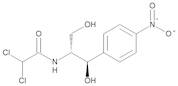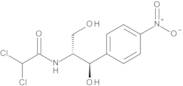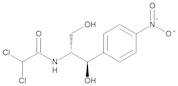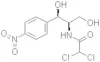
CAS 56-75-7
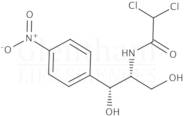
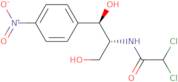
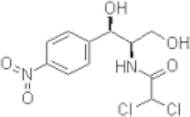
:(-)-Chloramphenicol
- 2,2-Dichloro-N-(2-Hydroxy-1-(Hydroxymethyl)-2-(4-Nitrophenyl)Ethyl)-Acetamid
- 2,2-Dichloro-N-[(1R,2R)-2-hydroxy-1-(hydroxymethyl)-2-(4-nitrophenyl)ethyl]acetamide
- 2,2-Dichloro-N-[2-Hydroxy-1-(Hydroxymethyl)-2-(4-Nitrophenyl)Ethyl]Acetamide
- 2,2-dichloro-N-[(1R)-2-hydroxy-1-(hydroxymethyl)-2-(4-nitrophenyl)ethyl]acetamide
- 2,2-dichloro-N-[(1R,2S)-1,3-dihydroxy-1-(4-nitrophenyl)propan-2-yl]acetamide
- 2,2-dichloro-N-[(1S,2R)-1,3-dihydroxy-1-(4-nitrophenyl)propan-2-yl]acetamide
- Ak-Chlor
- Alficetyn
- Amphenicol
- Amphicol
- Amseclor
- Anacetin
- Aquamycetin
- Austracol
- Bradyoxetin
- CAF
- CAM
- CAP
- CPh
- Catilan
- Chemicetin
- Chemicetina
- Chlomycol
- Chloramex
- Chloramphenicol
- Chloramsaar
- Chlorasol
- Chlorcetin
- Chloricol
- Chlorocaps
- Chlorocid
- Chlorocide
- Chlorocin
- Chloromycetin
- Chloronitrin
- Chloroptic
- Ciplamycetin
- Cloramfen
- Cloramfenicol
- Cloramficin
- Cloramicol
- Clorocyn
- Cloromisan
- Cylphenicol
- D-(-)-Chloramphenicol
- D-(-)-Threo-2,2-Dichloro-N-[Beta-Hydroxy-Alpha-(Hydroxy-Methyl)-P-Nitrophenethyl]Acetamide
- D-(-)-threo-1-(4-Nitrophenyl)-2-dichloroacetamido-1,3-propanediol
- D-(-)-threo-1-p-Nitrophenyl-2-dichloracetamido-1,3-propanediol
- D-(-)-threo-1-p-Nitrophenyl-2-dichloroacetylamino-1,3-propanediol
- D-(-)-threo-2-Dichloroacetamido-1-p-nitrophenyl-1,3-propanediol
- D-(-)-threo-Chloramphenicol
- D-threo-(1R,2R)-1-p-Nitrophenyl-2-dichloroacetamido-1,3-propanediol
- D-threo-N-Dichloroacetyl-1-p-nitrophenyl-2-amino-1,3-propanediol
- Detreomycin
- Embacetin
- Enicol
- Enteromycetin
- Farmicetina
- Fenicol
- Globenicol
- Gloveticol
- Halcetin
- Intramycetin
- Ismicetina
- Juvamycetin
- Kamaver
- Kemicetine
- Klorita
- Leukomyan
- Leukomycin
- Levocin
- Levomicetina
- Levomitsetin
- Levomycetin
- Levoplast
- Levosin
- Levovetin
- Loromisin
- Mastiphen
- Micloretin
- Micoclorina
- Microcetina
- Mychel
- Mychel-Vet
- Mycinol
- Myclocin
- Mycochlorin
- Novomycetin
- Ocuphenicol
- Opclor
- Ophthochlor
- Pantovernil
- Paraxin
- Quemicetina
- Ronphenil
- Septicol
- Sintomicetin
- Sintomicetina
- Soluthor
- Stanomycetin
- Synthomycetin
- Synthomycin
- Tevcocin
- Tifomycine
- Treomicetina
- Unimycetin
- Veticol
- Viceton
- [R-(R*,R*)]-2,2-Dichloro-N-[2-hydroxy-1-(hydroxymethyl)-2-(4-nitrophenyl)ethyl]acetamide
- D,L-chloramphenicol
- Acetamide, 2,2-dichloro-N-[2-hydroxy-1-(hydroxymethyl)-2-(4-nitrophenyl)ethyl]-, [R-(R*,R*)]-
- nitrophenyl)ethyl]acetamide
- Acetamide, 2,2-dichloro-N-[(1R,2R)-2-hydroxy-1-(hydroxymethyl)-2-(4-nitrophenyl)ethyl]-
- Acetamide, 2,2-dichloro-N-[β-hydroxy-α-(hydroxymethyl)-p-nitrophenethyl]-, D-threo-(-)-
- 2,2-dichloro-N-[(1R)-2-hydroxy-1-(hydroxymethyl)-2-(4-
- D-THREO-2,2-DICHLORO-N-[BETA-HYDROXY-ALPHA-(HYDROXYMETHYL)-4-NITROPHENETHYL]ACETAMIDE
- D-THREO-(-)-2,2-DICHLORO-N-[BETA-HYDROXY-ALPHA-HYDROXYMETHYL-P-NITROPHENETHYL]ACETAMIDE
- D-THREO-2,2-DICHLORO-N-[BETA-HYDROXY-ALPHA-(HYDROXYMETHYL)-4-NITROPHENYL] ACETAMIDE
- D-THREO-2-DICHLOROACETAMIDO-1-(4-NITROPHENYL)-1,3-PROPANEDIOL
- D-2-DICHLOROACETAMIDO-1-P-NITRO-PHENYL-1,3-PROPANEDIOL
- [R-(R*,R*)]-2,2-dichloro-N-[2-hydroxy-1-(hydroxymethyl)-2-(4-nitrophenyl)ethyl]ethanamide
- D(-)-THREO-2,2-DICHLORO-N-[BETA-HYDROXY-ALPHA-(HYDROXYMETHYL)-BETA-(4-NITROPHENYL)ETHYL]ACETAMIDE
- D(-)-THREO-2,2-DICHLORO-N-[BETA-HYDROXY-ALPHA-(HYDROXY-METHYL)-P-NITROPHENYLETHYL]ACETAMIDE
- D-(-)-THREO-2-DICHLOROACETAMIDO-1-(4-NITROPHENYL)-1,3-PROPANEDIOL
- CHLORAMPHENICOLUM
- D-(-)-THREO-2-DICHLOROACETAMIDO-1-[P-NITRO-PHENYL]-1,3-PROPANEDIOL
- ,[theta-(theta,theta)]-
- D-THREO-2,2-DICHLORO-N-[BETA-HYDROXY-ALPHA(HYDROXYMETHYL)-BETA-(4-NITROPHENYL)ETHYL]ACETAMIDE
- Weitere Synonyme anzeigen
- Niedrigster Preis
- Höchster Preis
- Niedrigste Reinheit
- Höchste Reinheit
- Schnellste Lieferung
Chloramphenicol 100 µg/mL in Ethyl acetate
CAS:Kontrolliertes ProduktFormel:C11H12Cl2N2O5Farbe und Form:Single SolutionMolekulargewicht:323.13Chloramphenicol-d5 (100 µg/mL in Acetonitrile)
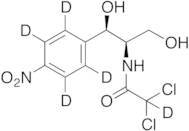
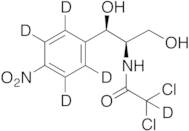
CAS:Kontrolliertes ProduktFormel:C11H7D5Cl2N2O5Farbe und Form:ColourlessMolekulargewicht:328.16Chloramphenicol
CAS:Kontrolliertes ProduktApplications Broad spectrum antibiotic obtained from cultures of the soil bacterium Streptomyces venezuelae. It has a broad spectrum of activity against Gram-positive and gram-negative bacteria. Antibacterial; antirickettsial.
References Bartz, et al.: J. Biol. Chem., et al.: 172, 445 (1948), Gottlieb, et al.: J. Bacteriol., 55, 409 (1948), Szulczewski, D., et al.: Anal. Profiles Drug Subs., 4, 47 (1975), Price, A., et al.: J. Antibiot., 43, 118 (1981), Shalit, I., et al.: Drugs, 28, 281 (1984),Formel:C11H12Cl2N2O5Farbe und Form:NeatMolekulargewicht:323.13Chloramphenicol-d5
CAS:Kontrolliertes ProduktApplications Chloramphenicol-d5, is the labeled analogue of Chloramphenicol (C325030), which has a broad spectrum of activity against Gram-positive and gram-negative bacteria. It is also antibacterial, and antirickettsial.
References Bartz, et al.: J. Biol. Chem., et al.: 172, 445 (1948), Gottlieb, et al.: J. Bacteriol., 55, 409 (1948), Szulczewski, D., et al.: Anal. Profiles Drug Subs., 4, 47 (1975), Price, A., et al.: J. Antibiot., 43, 118 (1981), Shalit, I., et al.: Drugs, 28, 281 (1984),Formel:C11H7D5Cl2N2O5Farbe und Form:NeatMolekulargewicht:328.16Chloramphenicol (10mg/ml)
CAS:Chloramphenicol (10mg/ml)Formel:C11H12Cl2N2O5Farbe und Form:LiquidMolekulargewicht:323.12937Chloramphenicol, USP grade
CAS:Formel:C11H12Cl2N2O5Reinheit:97.0 - 103.0 %Farbe und Form:White to light-yellow crystalline powderMolekulargewicht:323.14Chloramphenicol
CAS:ChloramphenicolFormel:C11H12Cl2N2O5Reinheit:98%Farbe und Form:Light red. Solid-PowderMolekulargewicht:323.12938Chloramphenicol
CAS:Chloramphenicol is produced by Streptomyces venezuelae. It is a broad-spectrum antibiotic with bacteriostatic properties. It interferes with bacterial protein synthesis by reversibly binding to the 50S ribosome unit. Used as substrate in the CAT (chloramphenicol acetyl transferase) assay, where the CAT gene expression is monitored by the ability of a system to transform chloramphenicol into acetyl chloramphenicol, which can be followed by simple thin layer chromatography. It is employed in VTM to prevent bacterial growth during specimen storage and transportation.Formel:C11H12Cl2N2O5Reinheit:Min. 98 Area-%Farbe und Form:PowderMolekulargewicht:323.13 g/molChloramphenicol in Methanol
CAS:MethanolFormel:C11H12Cl2N2O5Farbe und Form:SolidMolekulargewicht:323.13Chloramphenicol in Methanol
CAS:MethanolFormel:C11H12Cl2N2O5Farbe und Form:SolidMolekulargewicht:323.13Chloramphenicol (CMP), 98-102%
CAS:Formel:C11H12Cl2N2O5Reinheit:min. 98-102%Farbe und Form:White to pale yellow, Crystalline powder, ClearMolekulargewicht:323.1Chloramphenicol (CMP) ExiPlus, Multi-Compendial, 98.0-102%
CAS:Formel:C11H12Cl2N2O5Reinheit:98.0-102%Farbe und Form:White to pale yellow, Crystalline powder or fine crystals, ClearMolekulargewicht:323.1Chloramphenicol (CMP) for tissue culture, 98-102%
CAS:Formel:C11H12Cl2N2O5Reinheit:98 - 102%Farbe und Form:White to pale yellow, Crystalline powder, ClearMolekulargewicht:323.1Chloramphenicol cell culture, 99%, Endotoxin (BET) 0.2 EU/mg
CAS:Formel:C11H12Cl2N2O5Reinheit:min.99%Farbe und Form:White to pale yellow, Crystalline powder or fine crystals, ClearMolekulargewicht:323.1