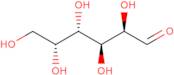
CAS 59-23-4
:Galaktose
Beschreibung:
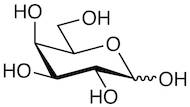
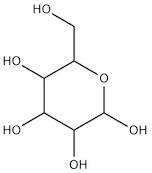
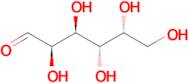
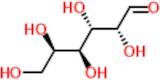
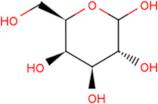
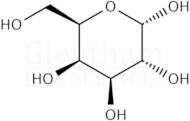
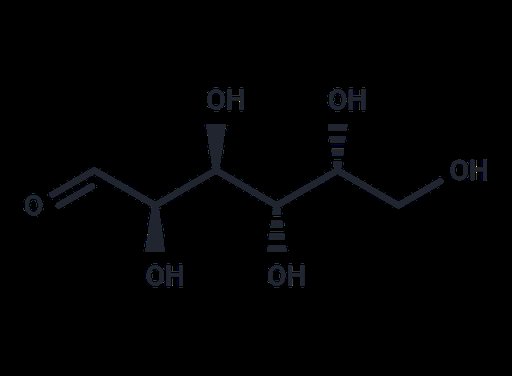
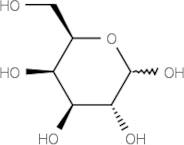
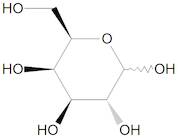
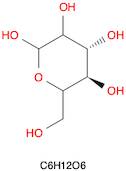
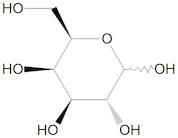
Galaktose ist ein Monosaccharid, ein Einfachzucker, der ein wichtiger Kohlenhydrat in der Biologie ist. Es ist ein Aldohexose, was bedeutet, dass es sechs Kohlenstoffatome und eine Aldehydgruppe enthält. Galaktose kommt typischerweise in Milchprodukten vor und ist ein Bestandteil von Laktose, dem Zucker, der in Milch vorhanden ist. Es existiert in zwei anomeren Formen, Alpha und Beta, die sich in der Orientierung der Hydroxylgruppe am ersten Kohlenstoff unterscheiden. Galaktose ist ein weißes, kristallines Feststoff, das in Wasser löslich ist und einen süßen Geschmack hat, obwohl es weniger süß ist als Glukose. Es spielt eine entscheidende Rolle in verschiedenen biologischen Prozessen, einschließlich der Synthese von Glykoproteinen und Glykolipiden, die für die Zellidentifikation und Signalgebung unerlässlich sind. Im menschlichen Körper wird Galaktose hauptsächlich in der Leber metabolisiert, wo es in Glukose zur Energiegewinnung umgewandelt werden kann. Seine CAS-Nummer ist 59-23-4, die diese Verbindung in chemischen Datenbanken eindeutig identifiziert. Insgesamt ist Galaktose für zahlreiche physiologische Funktionen von entscheidender Bedeutung und ist ein Schlüsselbestandteil verschiedener Biomoleküle.
Formel:C6H12O6
InChl:InChI=1S/C6H12O6/c7-1-3(9)5(11)6(12)4(10)2-8/h1,3-6,8-12H,2H2/t3-,4+,5+,6-/m0/s1
InChI Key:InChIKey=GZCGUPFRVQAUEE-KCDKBNATSA-N
SMILES:[C@@H]([C@@H]([C@H](C=O)O)O)([C@@H](CO)O)O
Synonyme:- 2,3,4,5,6,-Pentahydroxy-hexanal
- <span class="text-smallcaps">D</span>-(+)-Galactose
- D(+)Galactose anhydrous
- D(+)galactose sigmaultra
- Gal
- Galactosa
- Galactose
- Galactose, <span class="text-smallcaps">D</span>-
- Galactose, D-
- Galactose, Pure
- alpha-D-galactopyranose
- alpha-Galactose(D)
- D-Glactose
- D-(+)-Galactose
- D(+)-Galactose
- D-(+)-Galactose
- D-Galactose
- Weitere Synonyme anzeigen
Filtern nach
Reinheitsanteil
0
100
|
0
|
50
|
90
|
95
|
100
- Niedrigster Preis
- Höchster Preis
- Niedrigste Reinheit
- Höchste Reinheit
- Schnellste Lieferung
D-(+)-Galactose Anhydrous
CAS:Formel:C6H12O6Reinheit:>98.0%(HPLC)Farbe und Form:White powder to crystalMolekulargewicht:180.16D-(+)-Galactose, 98%
CAS:D(+)-galactose, 56-40-6, also known as aldehydo-D-galacto-hexose, is a monosaccharide and a component of glycolipids and glycoproteins. Learn more at Thermo Fisher Scientific.Formel:C6H12O6Reinheit:98%Farbe und Form:White, Powder or crystalline powderMolekulargewicht:180.16Galactose
CAS:Sugars, chemically pure, other than sucrose, lactose, maltose, glucose and fructose; sugar ethers and sugar esters, and their salts, nesoiFormel:C6H12O6Farbe und Form:White Crystals PrismsMolekulargewicht:180.06339D(+)-Galactose (Ph. Eur.) pure, pharma grade
CAS:D(+)-Galactose (Ph. Eur.) pure, pharma gradeFormel:C6H12O6Molekulargewicht:180.16D-Galactose
CAS:D-Galactose (Alpha-D-galactose) is an aldohexose that exists naturally in the D-form in lactose, cerebrosides, gangliosides, and mucoproteins.Formel:C6H12O6Reinheit:99.29% - 99.98%Farbe und Form:White SolidMolekulargewicht:180.16D-Galactose
CAS:D-GalactoseFormel:C6H12O6Reinheit:99% (Typical Value in Batch COA)Farbe und Form:White Solid-PowderMolekulargewicht:180.15588D-(+)-Galactose, Ph. Eur. grade
CAS:Formel:C6H12O6Reinheit:≥ 98.0%Farbe und Form:White to almost white, crystalline or finely granulated powderMolekulargewicht:180.16D-(+)-Galactose, non-animal origin
CAS:Formel:C6H12O6Reinheit:≥ 98.0%Farbe und Form:White to almost white crystalline powderMolekulargewicht:180.16D-Galactose (Standard)
CAS:D-Galactose (Standard) is the standard substance of D-Galactose, and it is applicable for quantitative analysis, quality control, and related research in biochemical experiments. D-Galactose is a naturally occurring hexose and a C-4 epimer of glucose. It can combine with glucose to form lactose and is commonly used to establish animal models of aging.Formel:C6H12O6Farbe und Form:SolidMolekulargewicht:180.16D-(+)-Galactose
CAS:D-(+)-Galactose analytical standardFormel:C6H12O6Reinheit:(HPLC) ≥95%Farbe und Form:PowderMolekulargewicht:180.17D-Galactose
CAS:Applications A C-4 epimer of Glucose (G595000) found in milk and sugar beets as well as being synthesized by the body. Potential use in oral therapy for nephrotic syndrome in focal and segmental glomerulosclerosis.
References De Smet, E. et al.: Nephrol. Dial. Transplant., 24, 2938 (2009); Kivele, R. et al.: Carb. Pol., 85, 645 (2011);Formel:C6H12O6Farbe und Form:NeatMolekulargewicht:180.16D-Galactose
CAS:(2R,3S,4S,5R)-2,3,4,5,6-PentahydroxyhexanalFormel:C6H12O6Reinheit:95%Molekulargewicht:180.16D-(+)-Galactose
CAS:Formel:C6H12O6Reinheit:≥ 99.0%Farbe und Form:White to off-white crystalline powderMolekulargewicht:180.16D-Galactose non-animal origin
CAS:Galactose from plant origin, animal free productionFormel:C6H12O6Reinheit:Min. 99.0 Area-%Farbe und Form:White PowderMolekulargewicht:180.16 g/mol