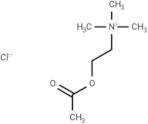
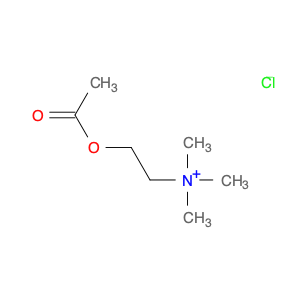
CAS 60-31-1
:Acetylcholinchlorid
- (2-Hydroxyethyl)trimethylammonium chloride acetate
- 2-(Acetyloxy)-N,N,N-trimethylethanium chloride
- 2-Acetoxyethyltrimethylammonium chloride
- ACh chloride
- Acecholin
- Acecoline
- Acetylcholinchlorid
- Acetylcholinium chloride
- Arterocoline
- Chlorure d'acetylcholine
- Choline acetate (ester), chloride
- Cloruro De Acetilcolina
- Ethanaminium, 2-(acetyloxy)-N,N,N-trimethyl-, chloride
- Ethanaminium, 2-(acetyloxy)-N,N,N-trimethyl-, chloride (1:1)
- Miochol
- O-Acetylcholine chloride
- Ovisot
- Trimethyl(2-acetoxyethyl)ammonium chloride
- 2-(ACETYLOXY)-N,N,N-TRIMETHYLETHANAMINIUM CHLORIDE
- acetylcholinehydrochloride
- acetylcholiniumchloride
- (2-Hydroxyethyl)trimethylammoniumchlorideacetate
- ARTEROCHOLINE
- achchloride
- ammonium,(2-hydroxyethyl)trimethyl-,chloride,acetate
- ACETYLCHOLINI CHLORIDUM
- N-(2-HYDROXYETHYL)TRIMETHYLAMMONIUM CHLORIDE ACETATE
- choline,chlorideacetate
- ACH
- cholineacetate(ester),chloride
- ACETYLCHOLINE CHLORIDE
- Weitere Synonyme anzeigen
- Niedrigster Preis
- Höchster Preis
- Niedrigste Reinheit
- Höchste Reinheit
- Schnellste Lieferung
Acetylcholine Chloride
CAS:Formel:C7H16ClNO2Reinheit:>98.0%(T)Farbe und Form:White powder to crystalMolekulargewicht:181.66Acetylcholine chloride, 98+%
CAS:Acetylcholine chloride acts as an endogenous neurotransmitter at cholinergic synapses. The compound has been shown to have ophthalmological uses and can be broken down quickly by choliesterases. Acetylcholine influences many basic cells functions, such as mitosis, cells differentiation, cytoskeletalFormel:C7H16ClNO2Reinheit:98+%Farbe und Form:White, Crystals or powder or crystalline powder and/or fused/lumpy solidMolekulargewicht:181.66ACETYLCHOLINE CHLORIDE CRS
CAS:ACETYLCHOLINE CHLORIDE CRSFormel:C7H16ClNO2Farbe und Form:Crystalline Powder. Powder.Molekulargewicht:181.6604Acetylcholine Chloride
CAS:Quaternary ammonium salts and hydroxides, whether or not chemically defined, otherFormel:C7H16ClNO2Farbe und Form:White Crystalline PowderMolekulargewicht:181.08696Acetylcholine chloride
CAS:Acetylcholine Chloride is the chloride salt form of acetylcholine, a synthetic, quaternary amino alcohol with cholinergic properties.Formel:C7H16ClNO2Reinheit:98.02% - ≥95%Farbe und Form:White SolidMolekulargewicht:181.66Acetylcholine chloride
CAS:Acetylcholine chlorideFormel:C7H16ClNO2Reinheit:98%Molekulargewicht:181.66Acetylcholine chloride
CAS:Acetylcholine chlorideFormel:C7H16ClNO2Reinheit:98%Molekulargewicht:181.66Acetylcholine chloride
CAS:Formel:C7H16ClNO2Reinheit:≥ 98.0%Farbe und Form:White to almost white crystalline powderMolekulargewicht:181.66Acetylcholine-1,1,2,2-d4Chloride
CAS:Formel:CH3COOCD2CD2N(CH3)3ClReinheit:99 atom % DFarbe und Form:White CrystalsMolekulargewicht:185.11206Acetylcholine-d9 Chloride(N,N,N-trimethyl-d9)
CAS:Formel:CH3COOCH2CH2N(CD3)3ClReinheit:99 atom % DFarbe und Form:White CrystalsMolekulargewicht:190.143452-Acetoxy-N,N,N-trimethylethanaminium chloride
CAS:Formel:C7H16ClNO2Reinheit:95%Farbe und Form:SolidMolekulargewicht:181.6604Acetylcholine Chloride
CAS:Kontrolliertes ProduktApplications Acetylcholine Chloride is a cholinergic.
References Molitor, H., et al.: J. Pharmacol. Exp. Ther., 58, 337 (1936),Formel:C7H16NO2·ClFarbe und Form:NeatMolekulargewicht:181.66Acetylcholine chloride
CAS:Acetylcholine chloride (AChCl) is a chemical compound that is used as a neurotransmitter in the brain. It is involved in many important functions, such as memory and learning. Acetylcholine chloride can be detected by a chemiluminescent method using Sephadex G-100. Acetylcholine chloride has been shown to have significant effects on bowel disease and also has been shown to stimulate the contraction of smooth muscle tissue in the digestive tract. Acetylcholine chloride also binds to nicotinic acetylcholine receptors and causes the release of calcium ions from intracellular stores, which leads to an increase in intracellular calcium levels. This can lead to activation of other enzymes or proteins that are sensitive to changes in calcium levels. AChCl was first synthesized in 1878 by German chemists Otto Loewi and Henry Dale, who were studying the effects of electricity on frog nerves. The researchers found that when
Formel:C7H16NO2ClReinheit:Min. 95%Farbe und Form:PowderMolekulargewicht:181.66 g/mol2-Acetoxy-N,N,N-trimethylethanaminium chloride
CAS:2-Acetoxy-N,N,N-trimethylethanaminium chlorideFormel:C7H16ClNO2Reinheit:95%Molekulargewicht:181.66Acetylcholine Chloride extrapure, 99%
CAS:Formel:C7H16ClNO2Reinheit:min. 99%Farbe und Form:White, Crystalline hygroscopic compound, Clear, ColourlessMolekulargewicht:181.67