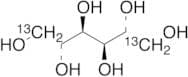
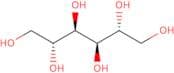
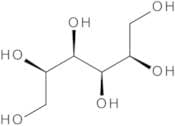
CAS 69-65-8
:Mannit
Beschreibung:
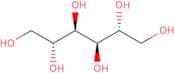
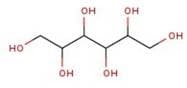
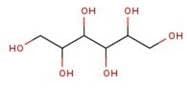
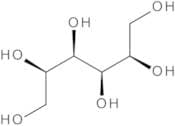
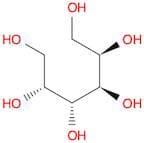
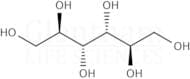
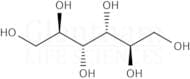
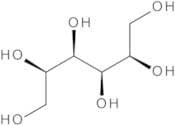
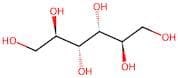
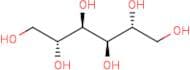
Mannit, mit der CAS-Nummer 69-65-8, ist ein Zuckeralkohol, der als Polyol klassifiziert wird. Es handelt sich um ein weißes, kristallines Pulver, das süß schmeckt und in Wasser löslich ist. Mannit wird häufig als kalorienarmer Süßstoff verwendet und ist oft in zuckerfreien Produkten zu finden. Seine chemische Formel ist C6H14O6, und es hat ein Molekulargewicht von etwa 182,17 g/mol. Mannit ist bekannt für seine osmotischen diuretischen Eigenschaften, was es in medizinischen Anwendungen nützlich macht, insbesondere bei der Behandlung von erhöhtem intrakraniellen Druck und zum Nierenschutz während der Operation. Darüber hinaus wird es in der pharmazeutischen Industrie als Füllstoff und Stabilisator für Proteine und Impfstoffe verwendet. Mannit wird von den Regulierungsbehörden allgemein als sicher (GRAS) anerkannt, aber übermäßiger Konsum kann zu gastrointestinalen Beschwerden führen. Seine Stabilität unter verschiedenen Bedingungen und der niedrige glykämische Index machen es zu einer wertvollen Zutat sowohl in Lebensmittel- als auch in pharmazeutischen Formulierungen.
Formel:C6H14O6
InChl:InChI=1S/C6H14O6/c7-1-3(9)5(11)6(12)4(10)2-8/h3-12H,1-2H2/t3-,4-,5-,6-/m1/s1
InChI Key:InChIKey=FBPFZTCFMRRESA-KVTDHHQDSA-N
SMILES:[C@H]([C@@H]([C@@H](CO)O)O)([C@@H](CO)O)O
Synonyme:- (2R,3R,4R,5R)-Hexane-1,2,3,4,5,6-hexaol
- <span class="text-smallcaps">D</span>-(-)-Mannitol
- <span class="text-smallcaps">D</span>-Mannit
- Ai3-19511
- Brightmoon
- Bronchitol
- Cerestar 16700
- Cordycepic acid
- D-Mannit
- D-Mannitol
- D-manitol
- DL-Mannitol
- Diosmol
- E 421
- Granitol S
- Granutol F
- Granutol R
- Granutol S
- Hexahydroxyhexane
- Hexitol
- Isotol
- L-altritol
- M 100
- Manicol
- Maniton S
- Manna sugar
- Mannidex
- Mannidex 16700
- Mannigen
- Mannistol
- Mannit
- Mannit 60
- Mannit P
- Mannit Q
- Mannit S
- Mannite
- Mannitol 300DC
- Mannitol 35
- Mannitol 60
- Mannitol P 60
- Mannitol SD 200
- Mannitol, <span class="text-smallcaps">D</span>-
- Mannitol, D-
- Mannitol, Powder
- Mannitolum
- Mannogem 2080
- Mannogem EZ
- Marine Crystal
- Nonpareil 108
- Nonpareil 108(200)
- Nsc 9256
- Orocell 200
- Osmitrol
- Osmosal
- Parteck 300
- Parteck Delta M
- Parteck M 100
- Parteck M 200
- Parteck M 300
- Partek M
- Pearlitol
- Pearlitol 100
- Pearlitol 100SD
- Pearlitol 160C
- Pearlitol 2005D
- Pearlitol 200SD
- Pearlitol 25C
- Pearlitol 50C
- Pearlitol SD 100
- Perlitol SD 200
- Perteck M
- PharmMannidex
- PharmMannidex 16701
- Weitere Synonyme anzeigen
Sortieren nach
Reinheit (%)
0
100
|
0
|
50
|
90
|
95
|
100
37 Produkte.
D-Mannitol
CAS:Formel:C6H14O6Reinheit:>99.0%(T)Farbe und Form:White powder to crystalMolekulargewicht:182.17D-Mannitol, 97+%
CAS:<p>D-Mannitol is used in the determination of glomerular filtration rate. It is used as an inert osmotic control substance. Further, it is used in the treatment of oliguric renal failure. It is also used as a sweetener for people with diabetes, in chewing gums and acts as an adulterant for heroin, meth</p>Formel:C6H14O6Reinheit:97+%Farbe und Form:Powder, WhiteMolekulargewicht:182.17D-Mannitol, ACS
CAS:<p>D-Mannitol is used with boric acid to make dry electrolytic condensers for radio applications, artificial resins and plasticizers. It is used as excipient for chewable tablets due to its pleasant taste. It is used in volumetric analysis of boric acid in analytical chemistry. It is also used in the f</p>Formel:C6H14O6Molekulargewicht:182.17Mannitol
CAS:Mannitol (mannite)Formel:C6H14O6Farbe und Form:White Off-White Crystalline Powder GranularMolekulargewicht:182.07904Ref: IN-DA00354N
25g20,00€100g20,00€25kg351,00€500g27,00€1000g43,00€100kgNachfragen250kgNachfragen500kg13.180,00€D-Mannitol
CAS:<p>D-Mannitol (Mannitol) is a diuretic and renal diagnostic aid related to sorbitol.</p>Formel:C6H14O6Reinheit:99.66% - 99.68%Farbe und Form:Orthorhombic Needles From Alc (Ntp 1992)Molekulargewicht:182.17D-Mannitol, EP, USP grade
CAS:Formel:C6H14O6Reinheit:98.0 - 102.0 % (anhydrous substance)Farbe und Form:White or almost white crystals or powderMolekulargewicht:182.17D-Mannitol
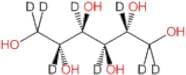
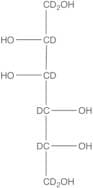
CAS:Formel:C6H14O6Reinheit:98.0 - 102.0 % (dried basis)Farbe und Form:White powderMolekulargewicht:182.17D-Mannitol-1,1,2,3,4,5,6,6-d8
CAS:Formel:HOCD2CD(OH)CD(OH)CD(OH)CD(OH)CD2OHReinheit:99 atom % DFarbe und Form:White SolidMolekulargewicht:190.12925D-Mannitol
CAS:Formel:C6H14O6Reinheit:95.0%Farbe und Form:Solid, Crystalline PowderMolekulargewicht:182.172D-Mannitol low endotoxin (Ph. Eur., BP, USP, JP)
CAS:<p>D-Mannitol low endotoxin (Ph. Eur., BP, USP, JP)</p>Formel:C6H14O6Farbe und Form:SolidMolekulargewicht:182.17g/molD(-)-Mannitol (USP, BP, Ph. Eur.) pure
CAS:<p>D(-)-Mannitol (USP, BP, Ph. Eur.) pure</p>Formel:C6H14O6Reinheit:Pharma GradeFarbe und Form:SolidMolekulargewicht:182.17g/molD-Mannitol-1,1'-d2
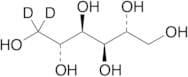
CAS:Kontrolliertes Produkt<p>Applications Labeled D-Mannitol is widespread in plants and plant exudates; obtained from manna and seaweeds. D-Mannitol is used in the food industry as anticaking and free-flow agent, flavoring agent, lubricant and release agent, stabilizer and thickener and nutritive sweetener.<br>References Pigman, W., et al.: The Carbohydrates, 249 (1957), Makkee, M., et al.: Chem. Commun., 930 (1980),<br></p>Formel:C6D2H12O6Farbe und Form:NeatMolekulargewicht:184.184D-Mannitol
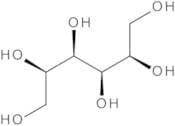
CAS:Kontrolliertes Produkt<p>Applications D-Mannitol is widespread in plants and plant exudates; obtained from manna and seaweeds. D-Mannitol is used in the food industry as anticaking and free-flow agent, flavoring agent, lubricant and release agent, stabilizer and thickener and nutritive sweetener.<br>References Pigman, W., et al.: The Carbohydrates, 249 (1957), Makkee, M., et al.: Chem. Commun., 930 (1980),<br></p>Formel:C6H14O6Farbe und Form:NeatMolekulargewicht:182.17D-Mannitol-1,2-13C2
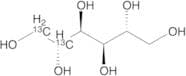
CAS:Kontrolliertes Produkt<p>Applications Labeled D-Mannitol is widespread in plants and plant exudates; obtained from manna and seaweeds. D-Mannitol is used in the food industry as anticaking and free-flow agent, flavoring agent, lubricant and release agent, stabilizer and thickener and nutritive sweetener.<br>References Pigman, W., et al.: The Carbohydrates, 249 (1957); Makkee, M., et al.: Chem. Commun., 930 (1980);<br></p>Formel:C413C2H14O6Farbe und Form:NeatMolekulargewicht:184.16D-Mannitol-d8
CAS:Kontrolliertes Produkt<p>Applications Labelled D-Mannitol (M165000). D-Mannitol is widespread in plants and plant exudates; obtained from manna and seaweeds. D-Mannitol is used in the food industry as anticaking and free-flow agent, flavoring agent, lubricant and release agent, stabilizer and thickener and nutritive sweetener.<br>References Pigman, W., et al.: The Carbohydrates, 249 (1957), Makkee, M., et al.: Chem. Commun., 930 (1980),<br></p>Formel:C6D8H6O6Farbe und Form:NeatMolekulargewicht:190.22D-Mannitol-UL-13C6
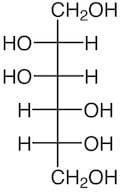
CAS:<p>Applications Labeled D-Mannitol is widespread in plants and plant exudates; obtained from manna and seaweeds. D-Mannitol is used in the food industry as anticaking and free-flow agent, flavoring agent, lubricant and release agent, stabilizer and thickener and nutritive sweetener.<br>References Pigman, W., et al.: The Carbohydrates, 249 (1957), Makkee, M., et al.: Chem. Commun., 930 (1980),<br></p>Formel:C6H14O6Farbe und Form:White SolidMolekulargewicht:188.13D-Mannitol-[1-13C;1,1'-d2]
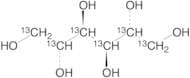
CAS:Kontrolliertes Produkt<p>Applications Labeled D-Mannitol is widespread in plants and plant exudates; obtained from manna and seaweeds. D-Mannitol is used in the food industry as anticaking and free-flow agent, flavoring agent, lubricant and release agent, stabilizer and thickener and nutritive sweetener.<br>References Pigman, W., et al.: The Carbohydrates, 249 (1957), Makkee, M., et al.: Chem. Commun., 930 (1980),<br></p>Formel:CC5H12D2O6Farbe und Form:NeatMolekulargewicht:185.18D-Mannitol
CAS:<p>Mannitol is a sugar alcohol occurring widely in plants and they are exudates, for example, in olive and plane trees (Collins, 2006). It is produced commercially by the catalytic hydrogenation of fructose (Zelin, 2019). Mannitol is used extensively in food and pharmaceutical industries because of its unique functional properties. It is about 50% as sweet as sucrose and has a desirable cooling effect often used to mask bitter tastes. Mannitol is non-cariogenic and has a low caloric content. Mannitol is an osmotic diuretic that is metabolically inert in humans and is used for: the promotion of diuresis before irreversible renal failure becomes established, the promotion of urinary excretion of toxic substances, as an Antiglaucoma agent, and as a renal function diagnostic aid (OâNeil, 2013). Additonally, in 2020, mannitol was approved by the FDA as add-on maintenance therapy for the control of pulmonary symptoms associated with cystic fibrosis in adult patients (McKenna, 2020).</p>Formel:C6H14O6Reinheit:Min. 95%Farbe und Form:White PowderMolekulargewicht:182.17 g/molD-Mannitol extrapure, 98.5%
CAS:Formel:C6H14O6Reinheit:min.98.5%Farbe und Form:White, Crystalline Powder, Clear, ColourlessMolekulargewicht:182.17D-Mannitol Sterile (γ Irradiated)
CAS:Reinheit:98.5%Farbe und Form:White, Crystalline powder, Clear, colourless solutionD-Mannitol ACS, 99%
CAS:Formel:C6H14O6Reinheit:min. 99%Farbe und Form:Crystalline powder, White, Clear, ColourlessMolekulargewicht:182.17D-Mannitol ACS, ExiPlus, Multi-Compendial, 99%
CAS:Formel:C6H14O6Reinheit:min.99.0%Farbe und Form:White, Crystalline powder, Clear, ColourlessMolekulargewicht:182.17D-Mannitol-1,6-13C2
CAS:Kontrolliertes Produkt<p>Applications Labeled D-Mannitol is widespread in plants and plant exudates; obtained from manna and seaweeds. D-Mannitol is used in the food industry as anticaking and free-flow agent, flavoring agent, lubricant and release agent, stabilizer and thickener and nutritive sweetener.<br>References Pigman, W., et al.: The Carbohydrates, 249 (1957), Makkee, M., et al.: Chem. Commun., 930 (1980),<br></p>Formel:C413C2H15O6Farbe und Form:NeatMolekulargewicht:184.16D-Mannitol - EP
CAS:<p>Mannitol is a sugar alcohol occurring widely in plants and they are exudates, for example, in olive and plane trees (Collins, 2006). It is produced commercially by the catalytic hydrogenation of fructose (Zelin, 2019). Mannitol is used extensively in food and pharmaceutical industries because of its unique functional properties. It is about 50% as sweet as sucrose and has a desirable cooling effect often used to mask bitter tastes. Mannitol is non-cariogenic and has a low caloric content. Mannitol is an osmotic diuretic that is metabolically inert in humans and is used for: the promotion of diuresis before irreversible renal failure becomes established, the promotion of urinary excretion of toxic substances, as an Antiglaucoma agent, and as a renal function diagnostic aid (OâNeil, 2013). Additonally, in 2020, mannitol was approved by the FDA as add-on maintenance therapy for the control of pulmonary symptoms associated with cystic fibrosis in adult patients (McKenna, 2020).</p>Formel:C6H14O6Reinheit:Min. 97 Area-%Farbe und Form:White PowderMolekulargewicht:182.17 g/molD-Mannit 1000 µg/mL in Methanol
CAS:Kontrolliertes ProduktFormel:C6H14O6Farbe und Form:Single SolutionMolekulargewicht:182.17
















![D-Mannitol-[1-13C;1,1'-d2]](/_next/image/?url=https%3A%2Fstatic.cymitquimica.com%2Fproducts%2FTR%2Fthumb%2FM165012.jpg&w=3840&q=75)