CAS 9002-18-0
:Agar
Beschreibung:
Agar, mit der CAS-Nummer 9002-18-0, ist eine gelartige Substanz, die aus roten Algen gewonnen wird, hauptsächlich aus den Gattungen Gelidium und Gracilaria. Sie besteht hauptsächlich aus Agarose und Agaropectin, Polysacchariden, die ein Gel bilden, wenn sie in kochendem Wasser gelöst und anschließend abgekühlt werden. Agar wird in der Mikrobiologie häufig als Festigungsmittel für Nährmedien verwendet, was das Wachstum verschiedener Mikroorganismen ermöglicht. Seine gelierenden Eigenschaften werden auch in Lebensmitteln genutzt, wo es als Verdickungsmittel, Stabilisator und Emulgator dient. Agar ist geruchlos, geschmacklos und hat einen hohen Schmelzpunkt, was es für Anwendungen geeignet macht, die Wärmebeständigkeit erfordern. Darüber hinaus ist es ungiftig und vegan, was es zu einer beliebten Alternative zu Gelatine macht. Die Fähigkeit von Agar, bei niedrigen Konzentrationen Gele zu bilden, und seine einzigartige Textur machen es sowohl in kulinarischen als auch in wissenschaftlichen Bereichen wertvoll. Seine Vielseitigkeit erstreckt sich auch auf die Pharmaindustrie, wo es in der Arzneimittelherstellung und als Medium für die kontrollierte Freisetzung von Wirkstoffen verwendet wird.
Formel:Unspecified
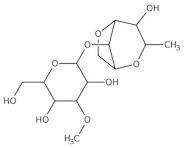
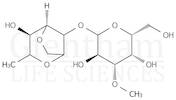
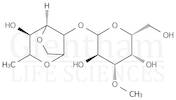
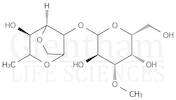
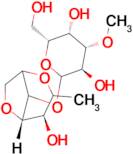
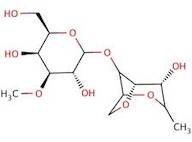
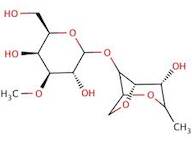
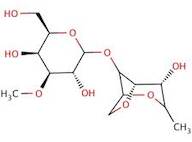
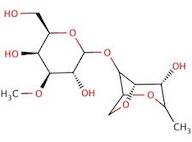
InChl:InChI=1S/C14H24O9/c1-5-8(16)13-11(7(21-5)4-20-13)23-14-10(18)12(19-2)9(17)6(3-15)22-14/h5-18H,3-4H2,1-2H3/t5?,6-,7?,8-,9+,10-,11?,12+,13+,14?/m1/s1
InChI Key:GYYDPBCUIJTIBM-DYOGSRDZSA-N
SMILES:CC1[C@H]([C@H]2C(C(O1)CO2)OC3[C@@H]([C@H]([C@H]([C@H](O3)CO)O)OC)O)O
Synonyme:- Agar-Agar
- Agargel
- Azazoon
- Bacto-agar
- Cs-16A
- Gelose
- Kantenmatsu
- Karikorikan
- Max
- Phytagar
- SDA
- Ultra-Agar
- Bengal isinglass
- Agar
- Bengal gelatin
- Weitere Synonyme anzeigen
Filtern nach
Reinheitsanteil
0
100
|
0
|
50
|
90
|
95
|
100
17 Produkte gefunden.
- Niedrigster Preis
- Höchster Preis
- Niedrigste Reinheit
- Höchste Reinheit
- Schnellste Lieferung
Agar powder
CAS:Agar is the most suited solidifying agent for scientific applications that require incubation temperatures closer to human body temperature. Agar is used as a medium in bacteriology and plant biology, impression material in dentistry, biofertilizer in organic farming, and salt bridges in electrochemFormel:C14H24O9Farbe und Form:White to cream or pale yellow to pale brown, PowderMolekulargewicht:336.34Agar, low gel strength, suitable for microbiology
CAS:Formel:(C12H18O9)nFarbe und Form:Off-white to cream or light-brown powderMolekulargewicht:-Agar, low gel strength
CAS:Formel:(C12H18O9)nFarbe und Form:Off-white to cream or light-brown powderMolekulargewicht:-Agar, high gel strength, suitable for microbiology
CAS:Formel:(C12H18O9)nFarbe und Form:Off-white to cream or light-brown powderAgar, high gel strength
CAS:Formel:(C12H18O9)nFarbe und Form:Off-white to cream, yellowish or light-brown powderMolekulargewicht:-Agar
CAS:Agar is a gelatinous substance from algae, widely used in food, tissue culture, and microbiology.Formel:C14H24O9Farbe und Form:White SolidMolekulargewicht:336.34Agar powder for tissue culture
CAS:Formel:(C12H28O9)nFarbe und Form:White to pale yellow, Powder, Almost clear, Pale yellowAgar powder BactoBio for microbiology
CAS:Farbe und Form:Off white to light beige, Granular, free flowing powder, Clear to very slightly turbid, Colourless to pale yellowAgar powder Bacto grade
CAS:Farbe und Form:White to off-white, Powder, Clear, Colourless to pale yellowAgar powder regular grade for bacteriology
CAS:Farbe und Form:Off - white to pale yellow, Powder, Almost clear to slight hazyAgar
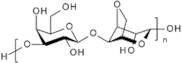
CAS:The major gel forming component in agar, agarose, consists of a linear chain of sequences of 1,3 linked β-D-galactopyranosyl units and 1,4 linkages to 3,6-anhydro-α-L-galactopyranosyl units. Gelation is done via the formation of double helices (Arnott, 1974). Agar's properties are similar to gelatin as it is primarily used as a plating gel for microbial cultures (Lahaye, 1991). However, agar is a good substitute for animal-based gelatin in vegetarian foods and is easy to use in food gels in a similar way to the carrageenans. Common food applications of agar include: puddings, custards, and soft candies. Agar improves the texture of processed cheese and frozen desserts, and is also added to baked goods to inhibit staling. A creative food application uses agar-based gel cubes that are infused with fruit extract or wine to make a vegetable-based aspic (Armisén, 2009). Agar contains two polysaccharides Agarobiose and Agaropectin. Both Gelidium latifolium and Gelidium amansii are sources of both Agar and Agarose. The images were kindly provided by Prof Mike Guiry from Cork who runs ‘The Seaweed Site’. Agaropectin Agaropectin is a sulphated non-gelling galactan comprising about 30% of Agar. Half ester sulphate is present in varying amounts plus D-glucuronic acid and small amounts of pyruvic acid. As with Agarose the main chain has alternating residues of D-galactose and L-galactose heavily modified with acidic side-groups which are usually sulfate, glucuronate, and pyruvate. Pyruvic acid is possibly attached in an acetal form to the D-galactose residues of the agarobiose skeleton. No formal structure of Agaropectin appears to have been published. Agarose Agarose is a linear gelling polysaccharide of (1-3) linked β-D-galactopyranose residues linked to 3,6-anhydro-α-L-galactopyranose via 1-4 bonds. Agar contains about 60% Agarose.Reinheit:Min. 95%Farbe und Form:PowderRef: 3D-OA39737
Ausgelaufenes produkt