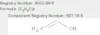
CAS 9002-89-5
:Poly(vinylalkohol)
Beschreibung:
Poly(vinylalkohol) (PVA) ist ein synthetisches Polymer, das durch seine Wasserlöslichkeit, Biokompatibilität und filmformenden Eigenschaften gekennzeichnet ist. Es wird durch die Hydrolyse von Poly(vinylacetat) hergestellt und ist bekannt für seine hervorragende Haftung, Flexibilität und Beständigkeit gegen Öle und Fette. PVA wird typischerweise in verschiedenen Anwendungen eingesetzt, einschließlich Klebstoffen, Beschichtungen und Folien, aufgrund seiner Fähigkeit, starke Wasserstoffbrücken mit Wassermolekülen zu bilden, was seine Löslichkeit erhöht. Der Grad der Hydrolyse und das Molekulargewicht können seine Eigenschaften wie Viskosität und mechanische Festigkeit erheblich beeinflussen. PVA ist auch biologisch abbaubar, was es zu einer umweltfreundlichen Option in vielen Anwendungen macht. Darüber hinaus zeigt es eine gute thermische Stabilität und kann modifiziert werden, um seine Eigenschaften für spezifische Anwendungen zu verbessern, wie in biomedizinischen Anwendungen oder als Bestandteil in Verbundmaterialien. Insgesamt ist PVA ein vielseitiges Polymer mit einer breiten Palette von industriellen und kommerziellen Anwendungen.
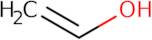
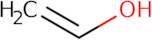
Formel:(C2H4O)x
InChl:InChI=1S/C2H4O/c1-2-3/h2-3H,1H2
InChI Key:InChIKey=IMROMDMJAWUWLK-UHFFFAOYSA-N
SMILES:C(=C)O
Synonyme:- 100-27H
- 100-37H
- 100-40H
- 1799S
- 1R2110
- 22-99H
- 9P75R
- 9X75Rs
- 9X75Sr
- Alvyl
- Bijam+
- Bovlon
- CST
- Claria
- Clinicel
- Covol
- Duslo
- Elvanol
- Fiberol
- Fibrilbond
- Fsam-H
- Gelutol
- Gelvatol
- Gh-Jy
- Gohsenol
- Kuragel
- Lemol
- LentiKats
- Liquifilm
- Merocel
- Microbreath
- Mowibase
- Mowiol
- PPL
- PVA
- PVS
- Polydesis
- Polyvinol
- Polyvinylalkohol
- Polyviol
- Poval
- PualCob
- Pva-Cst
- Pva-Ec
- Pva-H
- Pva-Hc
- Pva-Ld
- Pva-Sm
- Pva-Sn
- Pva-Uv
- Pvoh
- Px-CVG
- Px-CVR
- Rhodoviol
- SI
- TTF
- Vf-Hp
- Vf-Lh
- Vf-Pm
- Vf-Ps
- Vf-Px
- Vf-Xh
- Vf-Xs
- Vinalak
- Vinarol
- Vinol
- Wash-A-Way
- Winacol
- Lemol 5-98
- Vinyl alcohol, polymers
- Lemol 5-88
- Ethenol, homopolymer
- Weitere Synonyme anzeigen
Filtern nach
Reinheitsanteil
0
100
|
0
|
50
|
90
|
95
|
100
- Niedrigster Preis
- Höchster Preis
- Niedrigste Reinheit
- Höchste Reinheit
- Schnellste Lieferung
Polyvinyl alcohol,Mw~67,000
CAS:Polyvinyl alcohol is a polymer that is used as a coating material, adhesive, and in the manufacture of certain plastics. It has been shown to have anti-inflammatory properties and may be effective for bowel disease. Polyvinyl alcohol can be prepared by hydrolysis of polyvinyl acetate using sodium carbonate or zirconium oxide as catalysts. The enzyme activities of polyvinyl alcohol are dependent on the molecular weight, which is usually between 67,000 and 1 million. Polyvinyl alcohol can be manufactured by esterification of vinyl acetate with anhydrous ethanol followed by hydrolysis with sodium hydroxide. It has also been shown to inhibit bacterial growth by forming hydrogen bonds with the bacterial cell wall.Formel:(C2H4O)xReinheit:Min. 95%Farbe und Form:PowderPolyvinyl alcohol, Mw 146000-186000 hydrolyzed
CAS:Reinheit:Mw 146000-186000Farbe und Form:SolidMolekulargewicht:61.084Poly(vinyl alcohol), average Mw 150,000 - 200,000
CAS:Please enquire for more information about Poly(vinyl alcohol), average Mw 150,000 – 200,000 including the price, delivery time and more detailed product information at the technical inquiry form on this page
Formel:(C2H4O)xReinheit:(Hydrolysis) 98.0 To 99.9 Mol-%Polyvinyl alcohol,Mw 9000-10000
CAS:Please enquire for more information about Polyvinyl alcohol,Mw 9000-10000 including the price, delivery time and more detailed product information at the technical inquiry form on this pageFormel:(C2H4O)xReinheit:Min. 95%Polyvinyl alcohol - Mw 67,300 - 90,000
CAS:Polyvinyl alcohol is a water-soluble polymer that can be synthesized by the hydrolysis of polyvinyl acetate. It has been used as a model system to study the reaction mechanism and enzymatic activity of polyvinyl alcohol. The hydrolysis of polyvinyl acetate yields vinyl acetate, which then reacts with water to form polyvinyl alcohol. Polyvinyl alcohol can be synthesized by the addition of benzalkonium chloride or x-ray diffraction data. Polyvinyl alcohol is also present in many autoimmune diseases, such as lupus erythematosus. It is often used for wound dressings due to its ability to absorb fluids and promote healing. Polyvinyl alcohols are also used in laser ablation because they do not burn easily and are low cost.Formel:C2H4OnReinheit:(Hydrolysis) 98.0 To 99.9 Mol-%Farbe und Form:PowderRef: 3D-FP30595
Ausgelaufenes produkt