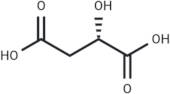
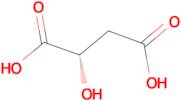
CAS 97-67-6
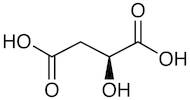
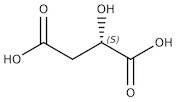
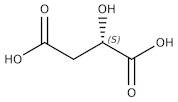
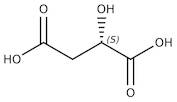
:L-Malinsäure
Beschreibung:
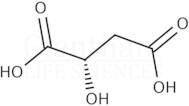
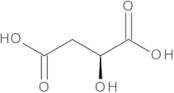
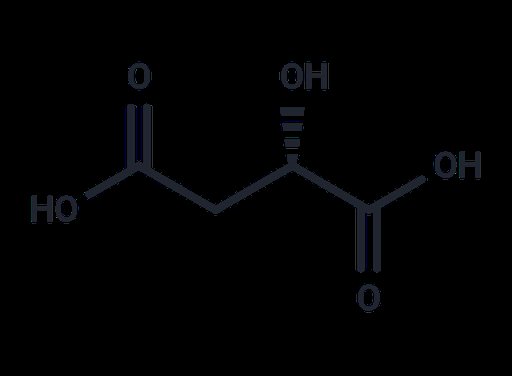
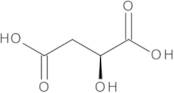
L-Malinsäure, mit der CAS-Nummer 97-67-6, ist eine natürlich vorkommende organische Verbindung, die als Dicarbonsäure klassifiziert wird. Es handelt sich um einen farblosen, geruchlosen kristallinen Feststoff, der in Wasser löslich ist und einen leicht säuerlichen Geschmack hat, der häufig in verschiedenen Früchten, insbesondere Äpfeln, vorkommt. L-Malinsäure spielt eine entscheidende Rolle im Krebs-Zyklus, einem wichtigen Stoffwechselweg zur Energieproduktion in lebenden Organismen. Seine chemische Formel ist C4H6O5, und es weist zwei Carboxylgruppen (-COOH) auf, die zu seiner Säure und Reaktivität beitragen. L-Malinsäure wird in der Lebensmittelindustrie als Aromastoff und Säuerungsmittel verwendet, um den Geschmack von Getränken und Süßigkeiten zu verbessern. Darüber hinaus hat es Anwendungen in der Kosmetik- und Pharmaindustrie aufgrund seiner Fähigkeit, als pH-Regulator und Chelatbildner zu wirken. Die Verbindung wird allgemein als sicher (GRAS) anerkannt, wenn sie in Lebensmittelprodukten verwendet wird, und ihre biologisch abbaubare Natur macht sie zu einer umweltfreundlichen Option in verschiedenen Anwendungen.
Formel:C4H6O5
InChl:InChI=1S/C4H6O5/c5-2(4(8)9)1-3(6)7/h2,5H,1H2,(H,6,7)(H,8,9)/t2-/m0/s1
InChI Key:InChIKey=BJEPYKJPYRNKOW-REOHCLBHSA-N
SMILES:[C@H](CC(O)=O)(C(O)=O)O
Synonyme:- (-)-(S)-Malic acid
- (-)-<span class="text-smallcaps">L</span>-Malic acid
- (-)-Hydroxysuccinic acid
- (-)-L-Malic acid
- (-)-Malic acid
- (2S)-2-Hydroxybutanedioic acid
- (2S)-2-Hydroxysuccinic acid
- (2S)-Malic acid
- (S)-2-Hydroxysuccinic acid
- <span class="text-smallcaps">L</span>-Apple acid
- Acide L-malique
- Apple acid
- Butanedioic acid, 2-hydroxy-, (2S)-
- Butanedioic acid, hydroxy-, (S)-
- L-Apfelsaure
- Malic Acid, L-
- Malic acid, <span class="text-smallcaps">L</span>-
- Nsc 9232
- S-2-Hydroxybutanedioic acid
- acido L-malico
- L-Hydroxysuccinic acid
- (S)-(-)-Hydroxysuccinic acid
- L-Maleic Acid
- (2S)-2-hydroxybutanedioate
- Butanedioic acid, hydroxy-, (2S)-
- (S)-HYDROXYBUTANEDIOIC ACID
- HYDROXYBUTANEDIOIC ACID
- L-(-)-APPLE ACID
- 1-HYDROXYSUCCINIC ACID
- L-HYDROXYBUTANEDIOIC ACID
- 2-HYDROXYSYCCINIC ACID
- (S)-2-HYDROXYBUTANEDICARBOXYLIC ACID
- L(-)-MALATE
- NATURAL APPLE ACID
- Weitere Synonyme anzeigen
Filtern nach
Reinheitsanteil
0
100
|
0
|
50
|
90
|
95
|
100
- Niedrigster Preis
- Höchster Preis
- Niedrigste Reinheit
- Höchste Reinheit
- Schnellste Lieferung
L-(-)-Malic Acid
CAS:Formel:C4H6O5Reinheit:>98.0%(T)Farbe und Form:White to Almost white powder to crystalMolekulargewicht:134.09L-(-)-Malic acid, 99%
CAS:L-(-)-Malic acid is used as a food additive, Selective -amino protecting reagent for amino acid derivatives. Versatile synthon for the preparation of chiral compounds including -opioid receptor agonists, 1,25-dihydroxyvitamin D3 analogue, and phoslactomycin B. This Thermo Scientific Chemicals brandFormel:C4H6O5Reinheit:99%Farbe und Form:White, Powder or crystals or crystalline powderMolekulargewicht:134.09L-(-)-Malic acid, 97%
CAS:L-(-)-Malic acid is used as Selective -amino protecting reagent for amino acid derivatives. Versatile synthon for the preparation of chiral compounds including -opioid rece. It also acts as active ingredient in many sour or tart foods. It is used as synthesizing disincrustant and fluorescent whiteniFormel:C4H6O5Reinheit:97%Farbe und Form:White, Crystals or powder or crystalline powderMolekulargewicht:134.09L-Malic acid, ≥99%
CAS:Thermo Scientific L-Malic acidFormel:C4H6O5Reinheit:99%Farbe und Form:White crystalline powderMolekulargewicht:134.09L-(-)-Malic acid
CAS:Formel:C4H6O5Reinheit:(Titration) ≥ 99.0%Farbe und Form:White to almost white powder or crystalsMolekulargewicht:134.09(S)-(-)-Malic-2,3,3-d3 Acid93% enantiomeric purity)
CAS:Formel:HOOCCD2CD(OH)COOHReinheit:98 atom % DFarbe und Form:White SolidMolekulargewicht:137.04035(S)-2-Hydroxysuccinic acid
CAS:Formel:C4H6O5Reinheit:98%Farbe und Form:SolidMolekulargewicht:134.0874(S)-Malic acid (Standard)
CAS:(S)-Malic acid (Standard) is a reference standard for the natural fruit acid, used in quantitative analysis and quality control.Formel:C4H6O5Molekulargewicht:134.09L-(-)-Malic Acid
CAS:Applications The naturally occuring isomer is the L-form which has been found in apples and many other fruits and plants. Selective α-amino protecting reagent for amino acid derivatives. Versatile synthon for the preparation of chiral compounds including κ-opioid receptor agonists, 1α,25-dihydroxyvitamin D3 analogue, and phoslactomycin B.
References Rindi, G., et al.: Biochem. J., 80, 214 (1961), Wolfgang, M., et al.: J. Biol. Chem., 281, 37265 (2006), Navarro, D., et al.: Metab. Brain Dis., 23, 115 (2008),Formel:C4H6O5Farbe und Form:NeatMolekulargewicht:134.09L-(-)-Malic acid
CAS:L-(-)-Malic acidFormel:C4H6O5Reinheit:98%Farbe und Form:White SolidMolekulargewicht:134.08743(S)-Malic acid
CAS:(S)-Malic acid ((S)-2-Hydroxysuccinic acid) is a naturally occurring dicarboxylic acid that is the source of the sweet and sour flavour of fruits.Formel:C4H6O5Reinheit:99.72% - 99.98%Farbe und Form:White SolidMolekulargewicht:134.09