CAS 999-81-5
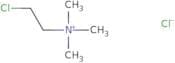
:Chlormequat-Chlorid
Beschreibung:
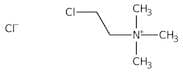
Chlormequat-Chlorid, mit der CAS-Nummer 999-81-5, ist ein Pflanzenwachstumsregulator, der hauptsächlich in der Landwirtschaft eingesetzt wird, um das Wachstum verschiedener Kulturen zu kontrollieren. Er wirkt, indem er die Biosynthese von Gibberellinen hemmt, was zu einer Verringerung der Stängelverlängerung führt und kürzere, stabilere Pflanzen fördert. Diese Eigenschaft ist besonders vorteilhaft bei Kulturen wie Getreide und Zierpflanzen, bei denen übermäßiges Wachstum zu Lodging oder schlechter Qualität führen kann. Chlormequat-Chlorid wird typischerweise als Blattbesprühung angewendet und ist bekannt für seine Wirksamkeit bei der Verbesserung des Ertrags und der Qualität der Kulturen. Die Verbindung ist ein quartäres Ammoniumsalz, das zu seiner Löslichkeit in Wasser und der einfachen Anwendung beiträgt. Es wird allgemein als wenig giftig für Menschen und Tiere angesehen, wenn es gemäß den empfohlenen Richtlinien verwendet wird, obwohl angemessene Sicherheitsmaßnahmen während der Handhabung und Anwendung immer beachtet werden sollten. Die Umweltpersistenz und potenzielle Auswirkungen auf Nicht-Zielorganismen sind ebenfalls wichtige Überlegungen bei seiner Verwendung, was die Einhaltung der regulatorischen Richtlinien erforderlich macht.
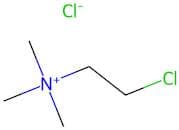
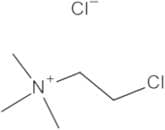
Formel:C5H13ClN·Cl
InChl:InChI=1S/C5H13ClN.ClH/c1-7(2,3)5-4-6;/h4-5H2,1-3H3;1H/q+1;/p-1
InChI Key:InChIKey=UHZZMRAGKVHANO-UHFFFAOYSA-M
SMILES:C([N+](C)(C)C)CCl.[Cl-]
Synonyme:- (2-Chloroethyl)trimethylammonium chloride
- (2-Chloroethyl)trimethylazanium chloride
- (β-Chloroethyl)trimethylammonium chloride
- 2-Chloroethyl-trimethyl ammonium
- 2-chloro-2-hydroxy-N,N,N-trimethylethanaminium chloride
- 2-chloro-N,N,N-trimethylethanaminium
- 2-chloro-N,N,N-trimethylethanaminium chloride
- 60Cs16
- Ammonium, (2-chloroethyl)trimethyl-, chloride
- Antywylegacz
- Antywylegacz Plynny
- Antywylegacz plynny 675SL
- Barleyquat B
- Bercema CCC
- C5 Sun
- CCC
- Chlorcholine chloride
- Chlormequat aqueous solution (50%)
- Chlormequat-Chlorid
- Chlormequatchlorid
- Chlorocholine chloride
- Chlorure de chlormequat
- Cloruro De Clormecuat
- Cycocel
- Cycocel Extra
- Cycogan
- Cysocel
- Ethanaminium, 2-chloro-N,N,N-trimethyl-, chloride
- Ethanaminium, 2-chloro-N,N,N-trimethyl-, chloride (1:1)
- Halloween
- Lihocin
- Microcil
- New 5C Cycocel
- Premix
- Retacel
- Stabilan
- TUR
- Trimethyl-β-chloroethylammonium chloride
- Tuval
- Wr 62
- Weitere Synonyme anzeigen
Sortieren nach
Reinheit (%)
0
100
|
0
|
50
|
90
|
95
|
100
17 Produkte.
Chlorocholine Chloride
CAS:Formel:C5H13Cl2NReinheit:>98.0%(T)Farbe und Form:White to Almost white powder to crystalMolekulargewicht:158.07(2-Chloroethyl)trimethylammonium chloride, 98% (dry wt.)
CAS:This Thermo Scientific Chemicals brand product was originally part of the Alfa Aesar product portfolio. Some documentation and label information may refer to the legacy brand. The original Alfa Aesar product / item code or SKU reference has not changed as a part of the brand transition to Thermo SciFormel:C5H13Cl2NReinheit:98%Farbe und Form:White to pale cream, Crystals or powder or crystalline powderMolekulargewicht:158.07(2-chloroethyl)trimethylazanium chloride
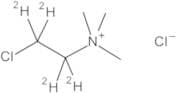
CAS:Formel:C5H13Cl2NReinheit:97%Farbe und Form:SolidMolekulargewicht:158.0694Chlormequat-1,1,2,2-d4Chloride
CAS:Formel:ClCD2CD2N(CH3)3ClReinheit:98 atom % DFarbe und Form:White SolidMolekulargewicht:161.06761Chlormequat chloride
CAS:Kontrolliertes ProduktFormel:C5H13ClN·ClFarbe und Form:NeatMolekulargewicht:158.07Chlormequat-chloride 100 µg/mL in Acetonitrile
CAS:Kontrolliertes ProduktFormel:C5H13ClN·ClFarbe und Form:Single SolutionMolekulargewicht:158.07LC PestiMix 2 10 µg/mL in Acetonitrile
CAS:- 101-42-8
- 103361-09-7
- 105512-06-9
- 111479-05-1
- 111988-49-9
- 113507-06-5
- 114311-32-9
- 116714-46-6
- 120116-88-3
- 122-34-9
- 13360-45-7
- 134098-61-6
- 134605-64-4
- 135158-54-2
- 139-40-2
- 144550-36-7
- 145701-23-1
- 14816-18-3
- 149979-41-9
- 156052-68-5
- 158062-67-0
- 16118-49-3
- 161326-34-7
- 1634-78-2
- 1646-87-3
- 165252-70-0
- 16655-82-6
- 168316-95-8
- 1746-81-2
- 177406-68-7
- 181587-01-9
- 18691-97-9
- 1912-26-1
- 1967-16-4
- 1982-47-4
- 19937-59-8
- 208465-21-8
- 2163-69-1
- 2164-08-1
- 22248-79-9
- 23947-60-6
- 24151-93-7
- 24307-26-4
- 24691-76-7
- 2631-40-5
- 2655-14-3
- 27218-04-8
- 272451-65-7
- 283594-90-1
- 29104-30-1
- 298-01-1
- 298-02-2
- 3060-89-7
- 30614-22-3
- 330-54-1
- 33693-04-8
- 34622-58-7
- 34681-10-2
- 34681-23-7
- 361377-29-9
- 374726-62-2
- 3761-42-0
- 3766-60-7
- 3766-81-2
- 37764-25-3
- 3878-19-1
- 39196-18-4
- 4147-51-7
- 500008-45-7
- 5234-68-4
- 53380-22-6
- 55814-41-0
- 57646-30-7
- 58810-48-3
- 62610-77-9
- 64628-44-0
- 64902-72-3
- 66063-05-6
- 66215-27-8
- 66840-71-9
- 68157-60-8
- 71283-80-2
- 71422-67-8
- 72490-01-8
- 73250-68-7
- 74223-64-6
- 76578-14-8
- 79241-46-6
- 79277-27-3
- 81405-85-8
- 81412-43-3
- 82097-50-5
- 82558-50-7
- 83-79-4
- 83055-99-6
- 865318-97-4
- 93-71-0
- 935545-74-7
- 94125-34-5
- 94593-91-6
- 950-10-7
- 999-81-5
Farbe und Form:MixtureChlorocholine Chloride
CAS:Kontrolliertes ProduktStability Hygroscopic
Applications Chlorocholine Chloride is a plant growth regulator that is primarily used on ornamental plants.
References Pinto, A.C.R. et al.: Acta Horticult., 683, 399 (2005); Gu, Z. et al.: Hun. Nong. Dax. Xueb., 35, 383 (2009); Xing, S. et al.: J. Med. pLant Res., 5, 1962 (2011);Formel:C5H13ClN·ClFarbe und Form:NeatMolekulargewicht:158.07Chlorocholine Chloride-d4
CAS:Kontrolliertes ProduktApplications Labelled analogue of Chlorocholine Chloride, a plant growth regulator that is primarily used on ornamental plants.
References Pinto, A.C.R. et al.: Acta Horticult., 683, 399 (2005); Gu, Z. et al.: Hun. Nong. Dax. Xueb., 35, 383 (2009); Xing, S. et al.: J. Med. pLant Res., 5, 1962 (2011);Formel:C5D4H9ClN·ClFarbe und Form:NeatMolekulargewicht:162.092-Chloro-N,N,N-trimethylethanaminium chloride
CAS:Formel:C5H13Cl2NReinheit:95%Farbe und Form:SolidMolekulargewicht:158.07Chlormequat chloride
CAS:Chlormequat is a plant growth regulator that is used to inhibit the elongation of roots and shoots. It also inhibits the synthesis of cell wall components, causing cell death. Chlormequat has been shown to have a positive effect on plant growth by increasing water and nutrient uptake. The optimum concentration of chlormequat for plant growth varies depending on the type of plant. It can be determined by measuring the amount of phosphorus pentoxide in tissue culture samples. Chlormequat also blocks signal pathways that are activated by bacterial colony-stimulating factors, inhibiting bacterial growth. The analytical method for determining chlormequat concentrations in plants is based on histological analysis.Formel:C5H13ClN•ClReinheit:Min. 95%Farbe und Form:PowderMolekulargewicht:158.07 g/molChlormequat chloride
CAS:Chlormequat chloride (EI 38,555), a plant growth regulator, is widely applied in agriculture because it can promote sturdier growth of the crops.
Formel:C5H13Cl2NReinheit:99.19% - ≥98%Farbe und Form:White Cyrstalline Solid To Be Effective For Cereal Grains Tomatoes And Peppers (Epa 1998)Molekulargewicht:158.07Chlorocholine Chloride (CCC) extrapure, 98%
CAS:Formel:C5H13Cl2NReinheit:min. 98%Farbe und Form:White to off-white, Powder, Clear, Colourless to pale yellowMolekulargewicht:158.07