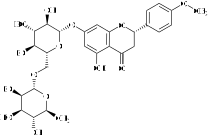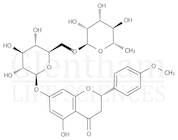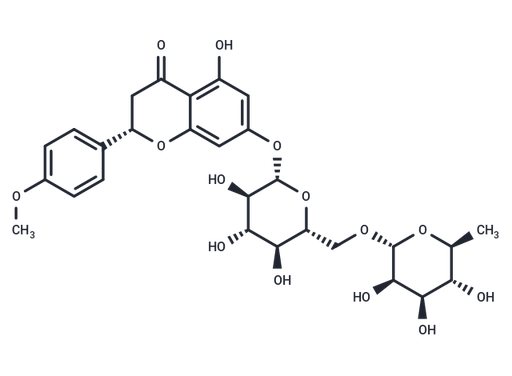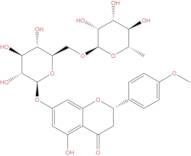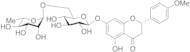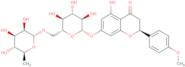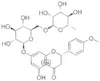
CAS 14259-47-3
:Didimina
Descripción:
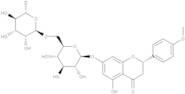
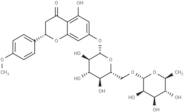
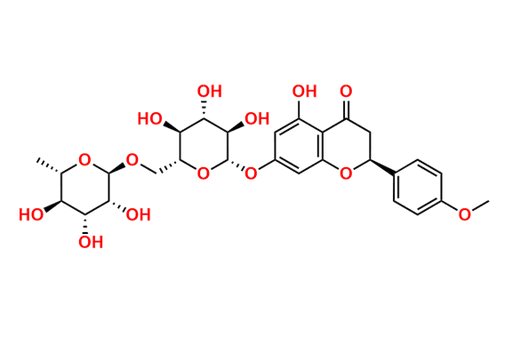
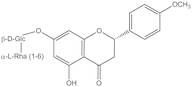
Didimina, con el número CAS 14259-47-3, es un compuesto flavonoide que se encuentra principalmente en frutas cítricas. Es un glucósido del flavonoide diosmina, lo que significa que consiste en una parte flavonoide unida a una molécula de azúcar. Se conoce que Didimina tiene beneficios potenciales para la salud, incluyendo propiedades antioxidantes, que ayudan a neutralizar los radicales libres en el cuerpo. También puede exhibir efectos antiinflamatorios y se ha estudiado por su posible papel en la salud cardiovascular. El compuesto es soluble en disolventes orgánicos, pero tiene una solubilidad limitada en agua, lo que puede afectar su biodisponibilidad. Didimina se investiga a menudo por sus propiedades farmacológicas, particularmente en el contexto de suplementos dietéticos y productos de salud natural. Su perfil de seguridad se considera generalmente favorable, aunque se necesitan más estudios para comprender completamente sus efectos y mecanismos de acción en la salud humana. Al igual que con muchos flavonoides, la bioactividad de Didimina puede verse influenciada por factores como la dosis, la formulación y las diferencias metabólicas individuales.
Fórmula:C28H34O14
InChI:InChI=1S/C28H34O14/c1-11-21(31)23(33)25(35)27(39-11)38-10-19-22(32)24(34)26(36)28(42-19)40-14-7-15(29)20-16(30)9-17(41-18(20)8-14)12-3-5-13(37-2)6-4-12/h3-8,11,17,19,21-29,31-36H,9-10H2,1-2H3/t11-,17-,19+,21-,22+,23+,24-,25+,26+,27+,28+/m0/s1
Clave InChI:InChIKey=RMCRQBAILCLJGU-HIBKWJPLSA-N
SMILES:O=C1C=2C(O[C@@H](C1)C3=CC=C(OC)C=C3)=CC(O[C@@H]4O[C@H](CO[C@H]5[C@H](O)[C@H](O)[C@@H](O)[C@H](C)O5)[C@@H](O)[C@H](O)[C@H]4O)=CC2O
Sinónimos:- (2S)-7-[[6-O-(6-Deoxy-α-<span class="text-smallcaps">L</smallcap>-mannopyranosyl)-β-<smallcap>D</span>-glucopyranosyl]oxy]-2,3-dihydro-5-hydroxy-2-(4-methoxyphenyl)-4H-1-benzopyran-4-one
- (S)-7-((6-O-(6-Deoxy-alpha-L-mannopyranosyl)-beta-D-glucopyranosyl)oxy)-2,3-dihydro-5-hydroxy-2-(4-methoxyphenyl)-4H-benzopyran-4-one
- 4H-1-Benzopyran-4-one, 7-[[6-O-(6-deoxy-α-<span class="text-smallcaps">L</smallcap>-mannopyranosyl)-β-<smallcap>D</span>-glucopyranosyl]oxy]-2,3-dihydro-5-hydroxy-2-(4-methoxyphenyl)-, (2S)-
- 4H-1-Benzopyran-4-one, 7-[[6-O-(6-deoxy-α-<span class="text-smallcaps">L</smallcap>-mannopyranosyl)-β-<smallcap>D</span>-glucopyranosyl]oxy]-2,3-dihydro-5-hydroxy-2-(4-methoxyphenyl)-, (S)-
- 4′-Methoxy-5,7-dihydroxyflavanone 7-O-rutinoside
- 5-hydroxy-2-(4-methoxyphenyl)-4-oxo-3,4-dihydro-2H-chromen-7-yl 6-O-(6-deoxy-L-mannopyranosyl)-beta-D-glucopyranoside
- 5-hydroxy-2-(4-methoxyphenyl)-4-oxo-3,4-dihydro-2H-chromen-7-yl 6-O-(6-deoxyhexopyranosyl)hexopyranoside
- Citrifoliol-7-O-rutinoside
- Didymine
- Flavanone, 5,7-dihydroxy-4′-methoxy-, 7β-rutinoside
- Isosakuranetin 7-rutinoside
- Isosakuranetin-7-O-rutinoside
- Isosakuranetin-7-beta-rutinoside
- Neoponcirin
- Didymin
- 4H-1-Benzopyran-4-one, 7-[[6-O-(6-deoxy-α-L-mannopyranosyl)-β-D-glucopyranosyl]oxy]-2,3-dihydro-5-hydroxy-2-(4-methoxyphenyl)-, (S)-
- (2S)-7-[[6-O-(6-Deoxy-α-L-mannopyranosyl)-β-D-glucopyranosyl]oxy]-2,3-dihydro-5-hydroxy-2-(4-methoxyphenyl)-4H-1-benzopyran-4-one
- Ver más sinónimos
Ordenar por
Pureza (%)
0
100
|
0
|
50
|
90
|
95
|
100
Se han encontrado 14 productos.
(S)-7-[[6-O-(6-Deoxy-α-L-mannopyranosyl)-β-D-glucopyranosyl]oxy]-2,3-dihydro-5-hydroxy-2-(4-methoxyphenyl)-4H-benzopyran-4-one
CAS:Fórmula:C28H34O14Pureza:98%Forma y color:SolidPeso molecular:594.5612Didymin
CAS:Fórmula:C28H34O14Pureza:≥ 98.0%Forma y color:White to yellow powder to crystalline powderPeso molecular:594.57Didymin (Standard)
CAS:Didymin (Standard) is a reference standard for research and analysis in studies involving Didymin. Didymin (Neoponcirin) has antioxidant property. Didymin induces apoptosis by inhibiting N-Myc and upregulating RKIP in neuroblastoma, may used for neuroblastoma therapy. Didymin may be a potential therapeutic molecule for the treatment of neurodegenerative disorders associated with oxidative stress.Fórmula:C28H34O14Forma y color:SolidPeso molecular:594.56Didymin
CAS:Didymin is a citrus-derived natural compound that kills p53 wild-type as well as drug-resistant p53-mutant neuroblastoma cells in culture, it induces apoptosis by inhibiting N-Myc and upregulating RKIP in neuroblastoma. Didymin possesses antioxidant, anti-inflammation and anti-cancer properties.Fórmula:C28H34O14Pureza:95%~99%Forma y color:PowderPeso molecular:594.566Didymin
CAS:Didymin analytical standard provided with w/w absolute assay, to be used for quantitative titration.Fórmula:C28H34O14Pureza:(HPLC) ≥98%Forma y color:PowderPeso molecular:594.57Didymin
CAS:(S)-5-Hydroxy-2-(4-methoxyphenyl)-7-(((2S,3R,4S,5S,6R)-3,4,5-trihydroxy-6-((((2R,3R,4R,5R,6S)-3,4,5-trihydroxy-6-methyltetrahydro-2H-pyran-2-yl)oxy)methyl)tetrahydro-2H-pyran-2-yl)oxy)chroman-4-oneFórmula:C28H34O14Pureza:98%Peso molecular:594.56Didymin
CAS:Didymin, an antioxidant, may treat neuroblastoma and neurodegeneration by blocking N-Myc and boosting RKIP.Fórmula:C28H34O14Pureza:99.12% - 99.87%Forma y color:SolidPeso molecular:594.56Didymin
CAS:Natural glycosideFórmula:C28H34O14Pureza:≥ 95.0 % (HPLC)Forma y color:PowderPeso molecular:594.57Neoponcirin
CAS:Producto controladoApplications Neoponcirin is a flavonoid that was shown to exhibit anticancer properties by inducing apoptosis by inhibiting N-Myc and upregulating RKIP in neuroblastoma.
References Singhai, J., et al.: Cancer. Prev. Res., 5, 473 (2012); Sdiri, S., et al.: Postharv. Biol. Techol., 65, 13, (2012);Fórmula:C28H34O14Forma y color:NeatPeso molecular:594.56Didymin
CAS:Didymin is a flavonoid compound, which is a type of polyphenolic molecule. It occurs naturally in certain citrus fruits and plants, representing a secondary metabolite with bioactive properties. Didymin exhibits antioxidative activity by neutralizing free radicals and reducing oxidative stress, primarily through the modulation of cellular signaling pathways. This mechanism involves the enhancement of endogenous antioxidant defenses and the inhibition of pro-inflammatory mediators.Fórmula:C28H34O14Pureza:Min. 98 Area-%Forma y color:PowderPeso molecular:594.56 g/mol
![(S)-7-[[6-O-(6-Deoxy-α-L-mannopyranosyl)-β-D-glucopyranosyl]oxy]-2,3-dihydro-5-hydroxy-2-(4-methox…](https://static.cymitquimica.com/products/IN/thumb/DA0034PP.jpg)