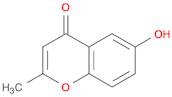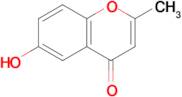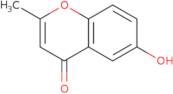
CAS 22105-12-0
:Fórmula:C10H8O3
InChI:InChI=1S/C10H8O3/c1-6-4-9(12)8-5-7(11)2-3-10(8)13-6/h2-5,11H,1H3
Clave InChI:YYURGBCWIOCCFU-UHFFFAOYSA-N
SMILES:CC1=CC(=O)C2=C(O1)C=CC(=C2)O
Filtrar por
Porcentaje de pureza
0
100
|
0
|
50
|
90
|
95
|
100
Se han encontrado 5 productos.
- Precio más bajo
- Precio más alto
- Pureza más baja
- Pureza más alta
- Entrega estimada más rápida
6-Hydroxy-2-methyl-4H-chromen-4-one
CAS:6-Hydroxy-2-methyl-4H-chromen-4-oneFórmula:C10H8O3Pureza:95%Peso molecular:176.176-Hydroxy-2-Methyl-4H-Chromen-4-One
CAS:Fórmula:C10H8O3Pureza:95%Forma y color:SolidPeso molecular:176.16876-Hydroxy-2-methyl-4H-chromen-4-one
CAS:6-Hydroxy-2-methyl-4H-chromen-4-oneFórmula:C10H8O3Pureza:95%Peso molecular:176.176-Hydroxy-2-methyl-4H-chromen-4-one
CAS:Protocetraric acid is a natural product that is found in the bark of Usnea longissima. It can be synthesized by diazotization and oxidation of protocetraric acid with nitrous acid, followed by hydrolysis. Protocetraric acid has been shown to have cytotoxic effects on murine cells and multidimensional structures. The structure of protocetraric acid is similar to that of chromones and flavones, which are also found in Usnea longissima. Protocetraric acid has been shown to inhibit the enzyme catalase, suggesting it may have anti-inflammatory properties.Fórmula:C10H8O3Pureza:Min. 95%Peso molecular:176.17 g/mol