CAS 51-34-3
:hioscina
Descripción:
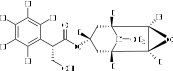
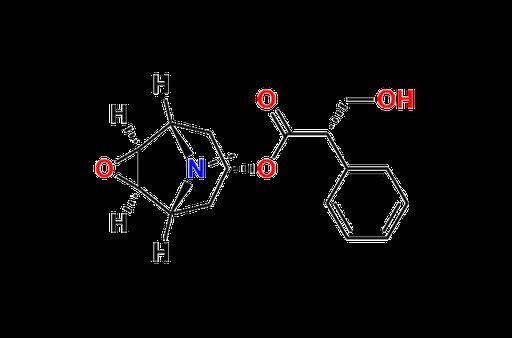
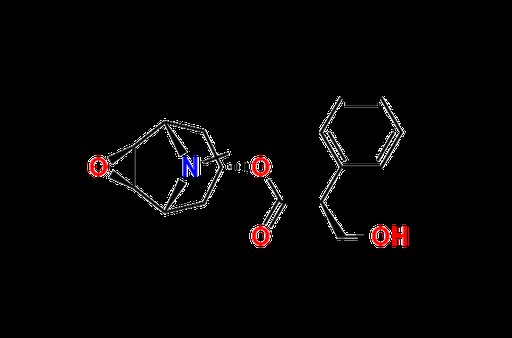
hioscina, también conocido como escopolamina, es un alcaloide tropano con la fórmula química C17H21NO4. Se deriva de plantas de la familia Solanaceae, particularmente de la planta de belladona. hioscina se caracteriza por sus propiedades anticolinérgicas, lo que significa que inhibe la acción de la acetilcolina, un neurotransmisor involucrado en diversas funciones corporales. Este compuesto se utiliza comúnmente en medicina para tratar el mareo por movimiento, las náuseas y para inducir sedación antes de la cirugía. También puede ser utilizado en el manejo de ciertos trastornos gastrointestinales debido a su capacidad para reducir los espasmos musculares. hioscina se administra típicamente en varias formas, incluyendo tabletas, parches e inyecciones. Sus efectos pueden incluir somnolencia, boca seca y visión borrosa, que son efectos secundarios comunes asociados con medicamentos anticolinérgicos. Debido a su potencial de abuso y efectos secundarios, hioscina está regulado en muchos países. En general, hioscina es un compuesto significativo tanto en farmacología como en toxicología, con una variedad de aplicaciones terapéuticas.
Fórmula:C17H21NO4
InChI:InChI=1/C9H10O3.C8H13NO2/c10-6-8(9(11)12)7-4-2-1-3-5-7;1-9-5-2-4(10)3-6(9)8-7(5)11-8/h1-5,8,10H,6H2,(H,11,12);4-8,10H,2-3H2,1H3
Clave InChI:InChIKey=STECJAGHUSJQJN-FWXGHANASA-N
SMILES:CN1[C@@]2([C@]3([C@](O3)([C@]1(C[C@@H](OC([C@H](CO)C4=CC=CC=C4)=O)C2)[H])[H])[H])[H]
Sinónimos:- 1α<span class="text-smallcaps">H</smallcap>,5α<smallcap>H</span>-Tropan-3α-ol, 6β,7β-epoxy-, (-)-tropate (ester)
- 1αH,5αH-Tropan-3α-ol, 6β,7β-epoxy-, (-)-tropate (ester)
- 3-Oxa-9-azatricyclo[3.3.1.0<sup>2,4</sup>]nonane, benzeneacetic acid deriv.
- 6,7-Epoxytropine tropate
- 6β,7β-Epoxy-3α-tropanyl S-(-)-tropate
- 9-Methyl-3-oxa-9-azatricyclo[3.3.1.02,4]nonan-7-ol (-)-tropate
- 9-Methyl-3-oxa-9-azatricyclo[3.3.1.0<sup>2,4</sup>]nonan-7-ol (-)-tropate
- Atrochin
- Atroquin
- Benzeneacetic acid, α-(hydroxymethyl)-, (1α,2β,4β,5α,7β)-9-methyl-3-oxa-9-azatricyclo[3.3.1.02,4]non-7-yl ester, (αS)-
- Benzeneacetic acid, α-(hydroxymethyl)-, (1α,2β,4β,5α,7β)-9-methyl-3-oxa-9-azatricyclo[3.3.1.0<sup>2,4</sup>]non-7-yl ester, (αS)-
- Benzeneacetic acid, α-(hydroxymethyl)-, 9-methyl-3-oxa-9-azatricyclo[3.3.1.02,4]non-7-yl ester, [7(S)-(1α,2β,4β,5α,7β)]-
- Benzeneacetic acid, α-(hydroxymethyl)-, 9-methyl-3-oxa-9-azatricyclo[3.3.1.0<sup>2,4</sup>]non-7-yl ester, [7(S)-(1α,2β,4β,5α,7β)]-
- Hioscina
- Hyoscin
- Murocoll
- Plexonal
- SEE
- Scop
- Scopine (-)-tropate
- Scopoderm
- Scopoderm TTS
- Scopolamine
- Transcop
- Tropic acid ester with scopine
- l-Scopolamine
- transderm-SCOP
- 3-Oxa-9-azatricyclo[3.3.1.02,4]nonane, benzeneacetic acid deriv.
- 1aH,5aH-Tropan-3a-ol, 6b,7b-epoxy-, (-)-tropate (ester) (8CI)
- Scopolamine powder
- (-)-Scopolamin
- Atropine Impurity 6(Atropine EP Impurity F)
- (1R,2R,4S,5S,7s)-9-methyl-3-oxa-9-azatricyclo[3.3.1.02,4]nonan-7-yl (S)-3-hydroxy-2-phenylpropanoate
- Benzeneacetic acid, a-(hydroxymethyl)-, (1a,2b,4b,5a,7b)-9-methyl-3-oxa-9-azatricyclo[3.3.1.02,4]non-7-yl ester, (aS)- (9CI)
- Hyoscine Butylbromide Impurity 1(Hyoscine Butylbromide EP Impurity A)(Hyoscine)
- (S)-α-(Hydroxymethyl)benzeneacetic acid (1β,2α,4α,5β,7α)-9-methyl-3-oxa-9-azatricyclo[3.3.1.02,4]nonan-7-yl ester
- PHLPP
- KIAA0606
- 6,7-Epoxytropine trpate
- PLEKHE1
- ANTI-PHLPP1(N-TERMINAL) antibody produced in rabbit
- Benzeneacetic acid, a-(hydroxyMethyl)-, (1a,2b,4b,5a,7b)-9-Methyl-3-oxa-9-azatricyclo[3.3.1.02,4]non-7-ylester, (aS)-
- Scopolamine (Hyoscine)
- C01851
- Scopolamine-d3 N-butyl bromide
- PHLPP1
- 9-methyl-3-oxa-9-azatricyclo[3.3.1.02,4]nonan-7-yl 3-hydroxy-2-phenylpropanoate
- Scopolamine USP/EP/BP
- Hyoscine Butylbromide EP Impurity A(Hyoscine)
- 9-Methyl-3-oxa-9-azatricyclo[3.3.1.02,4]nonan-7-ol (-)-alpha-(hydroxymethyl)benzeneacetate
- Hyoscyamine EP Impurity D
- HYOSCINE N BUTYL BROMIDE BP USP/EP/BP
- Scopolamine, 98%, from Atropa belladonna L.
- Scopolamine (base and/or unspecified salts)
- Benzeneacetic acid, .alpha.-(hydroxymethyl)-, (1.alpha.,2.beta.,4.beta.,5.alpha.,7.beta.)-9-methyl-3-oxa-9-azatricyclo3.3.1.02,4non-7-yl ester, (.alpha.S)-
- Ver más sinónimos
Filtrar por
Porcentaje de pureza
0
100
|
0
|
50
|
90
|
95
|
100
Se han encontrado 14 productos.
- Precio más bajo
- Precio más alto
- Pureza más baja
- Pureza más alta
- Entrega estimada más rápida
ATROPINE FOR PEAK IDENTIFICATION CRS
CAS:ATROPINE FOR PEAK IDENTIFICATION CRSFórmula:C17H23NO3Forma y color:PowderPeso molecular:289.3694Scopolamine (Hyoscine)
CAS:Fórmula:C17H21NO4Forma y color:Light Yellow Sticky OilPeso molecular:303.36Scopolamine 100 µg/mL in Acetonitrile
CAS:Producto controladoFórmula:C17H21NO4Forma y color:Single SolutionPeso molecular:303.35Scopolamine
CAS:Applications Scopolamine is an acetylcholine antagonist. Used in treatment of motion sickness; antiemetic; antispasmodic; mydriatic; preanesthetic medicant.
Not a dangerous good if item is equal to or less than 1g/ml and there is less than 100g/ml in the package
References Brand, J.J., et al.: Lancet, 2, 232 (1970); Bowles, J.B., et al.: Anaesthesia, 34, 476 (1979); Clissold, S.P., et al.: Drugs, 29, 189 (1985); Muhtadi, F.J., et al.: Anal. Profiles Drug Subs., 19, 477 (1990)Fórmula:C17H21NO4Forma y color:NeatPeso molecular:303.35Scopolamine
CAS:Fórmula:C17H21NO4Pureza:≥ 98.0%Forma y color:Colourless to pale-yellow, viscous liquidPeso molecular:303.35Scopolamine
CAS:Scopolamine is a high-affinity (nanomolar level) muscarinic receptor antagonist that can reversibly inhibit 5-HT₃ receptor responses (IC50 = 2.09 μM). It is commonly used to induce animal models of Alzheimer's disease or memory impairment.Fórmula:C17H21NO4Pureza:99% - 99.95%Peso molecular:303.3529Scopolamine
CAS:Scopolamine is an anticholinergic medication, which is a tropane alkaloid originating from plant sources, notably species within the Solanaceae family such as Datura and Hyoscyamus. It exerts its effects by competitively inhibiting the binding of acetylcholine to muscarinic receptors in the central and peripheral nervous system. This antagonism reduces the transmission of parasympathetic nerve impulses, leading to decreased peristalsis in the gastrointestinal tract and reduced secretion of bodily fluids.Fórmula:C17H21NO4Pureza:Min. 95%Forma y color:White PowderPeso molecular:303.35 g/mol