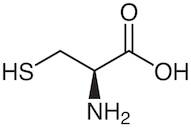
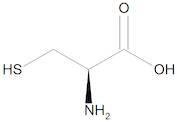
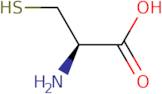
CAS 52-90-4
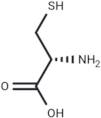
:L-(+)-Cisteína
- (+)-2-Amino-3-mercaptopropionic acid
- (2R)-2-Amino-3-sulfanylpropanoic acid
- (R)-2-Amino-3-mercaptopropanoic acid
- (R)-2-Amino-3-sulfanylpropanoic acid
- (R)-Cysteine
- (S)-(-)-Cysteine
- 11: PN: WO2021055880 SEQID: 12 claimed protein
- 2-Amino-3-mercaptopropanoic acid
- <span class="text-smallcaps">L</span>-(+)-Cysteine
- <span class="text-smallcaps">L</span>-Alanine, 3-mercapto-
- <span class="text-smallcaps">L</span>-Cys
- Cystein
- Cysteine
- Cysteine, <span class="text-smallcaps">L</span>-
- Cysteine, L-
- E 920
- H-Cys-OH
- Half-cystine
- L-Alanine, 3-mercapto-
- L-Cys
- L-Cystein
- L-Cysteine Base
- L-Cysteine Free Base Crystalline
- L-beta-mercaptoalanine
- L-cisteina
- Nsc 8746
- Propanoic acid, 2-amino-3-mercapto-, (R)-
- Thioserine
- α-Amino-β-thiolpropionic acid
- β-Mercaptoalanine
- L-Cysteine
- L-Cysteine
- Ver más sinónimos
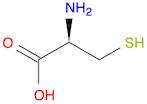
L-Cysteine
CAS:Fórmula:C3H7NO2SPureza:>98.0%(T)Forma y color:White powder to crystalinePeso molecular:121.15H-Cys-OH from animal source
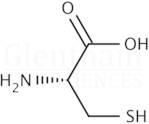
CAS:M03086 - H-Cys-OH from animal source
Fórmula:C3H7NO2SPureza:98%Forma y color:Solid, Crystalline PowderPeso molecular:121.15L-Cysteine, 98+%
CAS:L-Cysteine is used as a precursor in food, pharmaceutical and personal care products. It is actively involved in the production of flavors such as meat flavor obtained by reacting with sugars. Also used for the cleavage of disulfide bonds in the hair's keratin. It plays an important role as a key raFórmula:C3H7NO2SPureza:98+%Forma y color:White, Crystals or powder or crystalline powder or fused solidPeso molecular:121.15L-Cysteine, Cell Culture Reagent
CAS:Non-animal sourced L-cystine is used as a cell culture media component for the commercial biomanufacture of therapeutic recombinant proteins and monoclonal antibodies. L-cystine is used as a cell culture supplement. l-cysteine to media protects against or reverses abnormal growth malignant transforFórmula:C3H7NO2SPeso molecular:121.15Ref: IN-DA00353B
10gA consultar25g20,00€50g23,00€100g27,00€250g37,00€500g55,00€1kg64,00€5kg199,00€50kg802,00€100kg1.602,00€250kg4.188,00€L-Cysteine
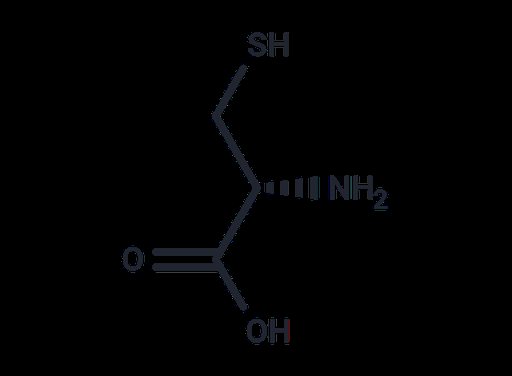
CAS:L-CysteineFórmula:C3H7NO2SPureza:≥95%Forma y color:White Solid-CrystalsPeso molecular:121.15817L-Cysteine
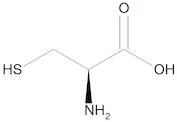
CAS:Fórmula:C3H7NO2SPureza:(Titration) ≥ 98.0%Forma y color:White to almost white powder or crystalsPeso molecular:121.16L-Cysteine, 99%, non-animal origin
CAS:Fórmula:C3H7NO2SPureza:(Titration) 98.5 - 101.0 %Forma y color:White to almost white powder or crystalsPeso molecular:121.16L-Cysteine
CAS:L-CysteineFórmula:C3H7NO2SPureza:97%Forma y color:White Solid-CrystalsPeso molecular:121.15817L-Cysteine (Standard)
CAS:L-Cysteine (Standard) is the standard substance of L-Cysteine, and it is applicable for quantitative analysis, quality control, and related research in biochemical experiments. L-Cysteine (L-(+)-Cysteine) is a non-essential sulfur-containing amino acid in humans. L-Cysteine is important for protein synthesis, detoxification, and diverse metabolic functions. Found in beta-keratin, the main protein in nails, skin, and hair, L-Cysteine is important in collagen production, as well as skin elasticity and texture. Also required in the manufacture of amino acid taurine, L-Cysteine is a component of the antioxidant glutathione, and plays a role in the metabolism of essential biochemicals such as coenzyme A, heparin, and biotin.Fórmula:C3H7NO2SForma y color:SolidPeso molecular:121.16L-Cysteine
CAS:L-Cysteine: non-essential amino acid, aids protein synthesis, detox, collagen production, skin elasticity, and biochemical metabolism.Fórmula:C3H7NO2SPureza:99.70% - 99.89%Forma y color:SolidPeso molecular:121.16N-Acetyl-S-3-Hydroxypropylcysteine-d6
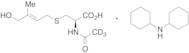
CAS:Fórmula:C8H9D6NO4SForma y color:White To Off-White SolidPeso molecular:227.31N-Acetyl-S-(4-hydroxy-3-methyl-2-trans-buten-1-yl)-L-cysteine-d3 Dicyclohexylammonium Salt
CAS:Producto controladoApplications A labelled derivative of an isoprene metabolite.
References Pecivova, P. et al.: J. Sci. Food Agric., 90, 1681 (2010); Hui, N. et al.: Meat Sci. Appl., 74 (2001); Kiviharju, K. et al.: J. Biotechnol., 117, 299 (2005);Fórmula:C22H37D3N2O4SForma y color:NeatPeso molecular:431.65L-Cysteine
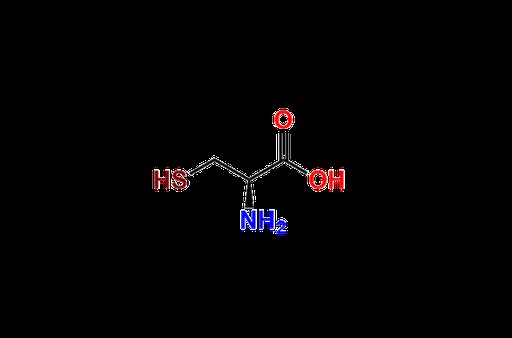
CAS:Impurity Acetylcysteine EP Impurity B
Applications L-Cysteine is a non-essential amino acid that can be synthesized by the human body under normal physiological conditions if a sufficient quantity of methionine is available. L-Cysteine is commonly used as a precursor in the food and pharmaceutical industries. L-Cysteine is used as a processing aid for baking, as an additive in cigarettes, as well as in the preparation of meat flavours. Acetylcysteine EP Impurity B
References Pecivova, P. et al.: J. Sci. Food Agric., 90, 1681 (2010); Hui, N. et al.: Meat Sci. Appl., 74 (2001); Kiviharju, K. et al.: J. Biotechnol., 117, 299 (2005);Fórmula:C3H7NO2SForma y color:NeatPeso molecular:121.16L-Cysteine - non-animal origin
CAS:L-Cysteine is a non-animal derived amino acid that has been shown to help maintain normal iron levels in the body. It also helps reduce oxidative injury and inflammation. L-Cysteine is made naturally by the human body, but can be found in some foods as well. L-Cysteine has been shown to help regulate protein oxidation and injury responses in humans. L-Cysteine plays a role in the immune system by binding to Toll-like receptors, which are proteins on cells that are involved with inflammation and immunity. L-Cysteine also plays a role in the immune system by stimulating antibody production, which is important for fighting infection. Cysteine is an amino acid involved with many biochemical reactions, including synthesis of proteins and DNA molecules. Cysteine also regulates gene expression through response elements that are found in the promoter regions of genes. The rate constant for cysteine is 0.00001s^(-1).Fórmula:C3H7NO2SForma y color:White PowderPeso molecular:121.16 g/mol