CAS 5599-71-3
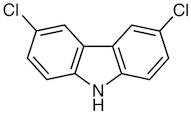
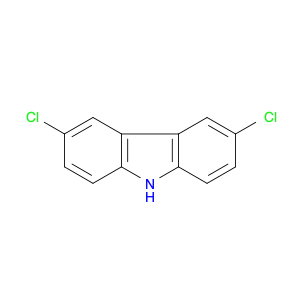
:3,6-dicloro-9H-carbazol
Descripción:
3,6-dicloro-9H-carbazol es un compuesto orgánico caracterizado por su estructura, que presenta un esqueleto de carbazol con sustituyentes de cloro en las posiciones 3 y 6. Este compuesto es típicamente un sólido a temperatura ambiente y exhibe una forma cristalina. Se conoce por su relativamente alta estabilidad térmica y puede ser soluble en disolventes orgánicos como el cloroformo y el diclorometano, pero generalmente es insoluble en agua. La presencia de átomos de cloro mejora sus propiedades electrónicas, lo que lo hace de interés en diversas aplicaciones, incluyendo la electrónica orgánica y como un posible intermedio en la síntesis de colorantes y pigmentos. Además, 3,6-dicloro-9H-carbazol puede exhibir propiedades fotoluminiscentes, lo que puede ser ventajoso en dispositivos optoelectrónicos. Se deben tener en cuenta consideraciones de seguridad, como ocurre con muchos compuestos clorados, debido a la posible toxicidad y el impacto ambiental. Los métodos adecuados de manejo y eliminación son esenciales para mitigar cualquier riesgo asociado con su uso.
Fórmula:C12H7Cl2N
InChI:InChI=1/C12H7Cl2N/c13-7-1-3-11-9(5-7)10-6-8(14)2-4-12(10)15-11/h1-6,15H
Clave InChI:BIMDTNQPZWJKPL-UHFFFAOYSA-N
SMILES:c1cc2c(cc1Cl)c1cc(ccc1[nH]2)Cl
Sinónimos:- 3,6-Dichlorocarbazole
- 9H-carbazole, 3,6-dichloro-
- Carbazole, 3,6-dichloro-
Filtrar por
Porcentaje de pureza
0
100
|
0
|
50
|
90
|
95
|
100
Se han encontrado 6 productos.
- Precio más bajo
- Precio más alto
- Pureza más baja
- Pureza más alta
- Entrega estimada más rápida
3,6-Dichlorocarbazole
CAS:Fórmula:C12H7Cl2NPureza:>96.0%(GC)Forma y color:White to Light yellow to Light orange powder to crystalPeso molecular:236.103,6-Dichlorocarbazole
CAS:3,6-DichlorocarbazoleFórmula:C12H7Cl2NPureza:98%Forma y color:SolidPeso molecular:236.096683,6-Dichloro-9H-carbazole
CAS:3,6-Dichloro-9H-carbazoleFórmula:C12H7Cl2NPureza:98%Peso molecular:236.13,6-Dichloro-9H-carbazole
CAS:3,6-Dichloro-9H-carbazoleFórmula:C12H7Cl2NPureza:98%Peso molecular:236.1