CAS 73-31-4
:Melatonina
Descripción:
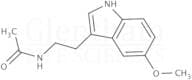
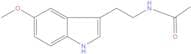
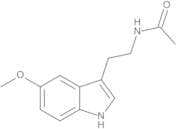
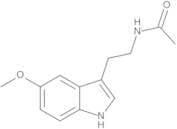
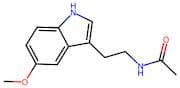
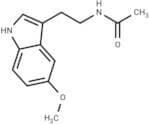
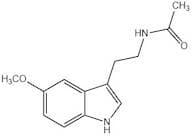
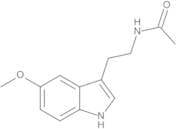
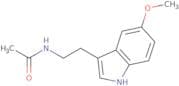
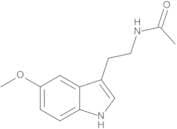
Melatonina, con el número CAS 73-31-4, es una hormona que se produce de forma natural principalmente en la glándula pineal del cerebro. Juega un papel crucial en la regulación de los ritmos circadianos y los ciclos de sueño-vigilia. Químicamente, Melatonina se conoce como N-acetil-5-metoxitriptamina, y su fórmula molecular es C13H16N2O2. Es una molécula pequeña y lipofílica, lo que le permite cruzar fácilmente las membranas celulares y la barrera hematoencefálica. Melatonina exhibe propiedades antioxidantes y se ha estudiado por sus posibles efectos terapéuticos en trastornos del sueño, jet lag y diversas condiciones de salud relacionadas con las interrupciones del ritmo circadiano. En términos de características físicas, Melatonina es típicamente un polvo cristalino blanco a blanco amarillento, soluble en disolventes orgánicos como el etanol y el dimetilsulfóxido, pero menos soluble en agua. Su estabilidad puede verse afectada por la luz y la temperatura, lo que requiere condiciones de almacenamiento cuidadosas. En general, Melatonina es un compuesto significativo tanto en contextos biológicos como farmacológicos, con investigaciones en curso sobre sus implicaciones más amplias para la salud.
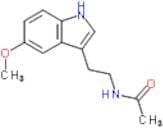
Fórmula:C13H16N2O2
InChI:InChI=1S/C13H16N2O2/c1-9(16)14-6-5-10-8-15-13-4-3-11(17-2)7-12(10)13/h3-4,7-8,15H,5-6H2,1-2H3,(H,14,16)
Clave InChI:InChIKey=DRLFMBDRBRZALE-UHFFFAOYSA-N
SMILES:C(CNC(C)=O)C=1C=2C(NC1)=CC=C(OC)C2
Sinónimos:- 3-(2-Acetamidoethyl)-5-methoxyindole
- 3-N-Acetyl-5-methoxyl tryptamine
- 5-Methoxy-N-acetyltryptamine
- Acetamide, N-(2-(5-methoxyindol-3-yl)ethyl)-
- Acetamide, N-[2-(5-methoxy-1H-indol-3-yl)ethyl]-
- Circadin
- L-Arabinitol
- Melatol
- Melatonin
- Melaxen
- Melovine
- N-(2-(5-Methoxyindol-3-yl)ethyl)acetamid
- N-(2-(5-methoxyindol-3-yl)ethyl)acetamide
- N-(2-(5-methoxyindole-3-yl)ethyl)acetamide
- N-(2-(5-metoxiindol-3-il)etil)acetamida
- N-Acetyl-5-methoxytryptamine
- N-[2-(5-Methoxy-1H-indol-3-yl)ethyl]acetamide
- Nsc 113928
- Nsc 56423
- Regulin
- Slenyto
- Ver más sinónimos
Ordenar por
Pureza (%)
0
100
|
0
|
50
|
90
|
95
|
100
Melatonin
CAS:Fórmula:C13H16N2O2Pureza:>98.0%(HPLC)(N)Forma y color:White to Light yellow to Light orange powder to crystalPeso molecular:232.28Melatonin, 99+%
CAS:Melatonin, 73-31-4, or N-acetyl-5-methoxytryptamine, is a hormone usually produced in the pineal gland which has regulatory roles in multiple biologic pathways. Learn more.Fórmula:C13H16N2O2Pureza:99+%Peso molecular:232.28Melatonin
CAS:MelatoninFórmula:C13H16N2O2Pureza:99.8%Forma y color:Off-White. White. To. Light BrownPeso molecular:232.12118Melatonin
CAS:Hormones, prostaglandins, thromboxanes and leukotrienes, natural or synthetic; derivatives and analogues thereof, etc, nesoiFórmula:C13H16N2O2Forma y color:Off-White White PowderPeso molecular:232.12118N-[2-(5-methoxy-1H-indol-3-yl)ethyl]acetamide
CAS:Fórmula:C13H16N2O2Pureza:98%Forma y color:SolidPeso molecular:232.2783Ref: IN-DA0036K0
5kgA consultar1g25,00€5g25,00€10g28,00€25g31,00€50g50,00€100g67,00€500g182,00€1kg189,00€Melatonin
CAS:Fórmula:C13H16N2O2Pureza:≥ 98.0% (anhydrous basis)Forma y color:White to off-white powderPeso molecular:232.28Melatonin
CAS:Melatonin (Melatonine) is a natural hormone that activates melatonin receptors. Melatonin regulates the biological clock. Cost-effective and quality-assured.Fórmula:C13H16N2O2Pureza:98% - 99.89%Forma y color:Pale Yellow Leaflets From Benzene SolidPeso molecular:232.28Melatonin
CAS:Natural hormonFórmula:C13H16N2O2Pureza:≥ 95.0 % (HPLC)Forma y color:CrystalsPeso molecular:232.28Melatonin
CAS:Producto controladoApplications Melatonin is a hormone produced by the pineal gland (1). Melatonin is highly conserved and functions as a receptor-independent free radical scavenger and a broad-spectrum antioxidant (2). Melatonin is useful in preventing ischemia-reperfusion damage in the liver, brain, myocardium, gut and kidney (1).
References (1) Muñozâ€Casares, F. C. et al.: J. Pineal. Res. (2006) 40:195-203.(2) Tan, D. X. et al.: J. Pineal. Res. (2007) 42: 28-42.Fórmula:C13H16N2O2Forma y color:NeatPeso molecular:232.28Melatonin
CAS:Melatonin is a neurotransmitter produced by the pineal gland that is involved in the regulation of sleep-wake cycles. It can be used to treat several conditions like shift work disorders, insomnia, jet lag, and alterations of the circadian rhythm. Some authors also proposed the use of melatonin against cognitive disorders. In an interesting research conducted on zebrafish, it was found that memory formation occurs better during daytime compared to nighttime, suggesting a role of melatonin in this process. When melatonin was administered during the daytime it caused reduced memory formation. On the contrary, removing the pineal gland or treating the fish with a melatonin antagonist significantly improves nighttime memory formation.Fórmula:C13H16N2O2Pureza:Min. 98 Area-%Forma y color:White Off-White PowderPeso molecular:232.28 g/mol





![N-[2-(5-methoxy-1H-indol-3-yl)ethyl]acetamide](/_next/image/?url=https%3A%2Fstatic.cymitquimica.com%2Fproducts%2FIN%2Fthumb%2FDA0036K0.jpg&w=3840&q=75)