Sustratos fluorogénicos
En esta categoría, encontrará una selección completa de sustratos fluorogénicos diseñados para la catálisis enzimática. Estos sustratos se utilizan con varios tipos de enzimas y son capaces de producir color y fluorescencia al reaccionar. Los sustratos fluorogénicos son herramientas esenciales en la investigación bioquímica y biología molecular, permitiendo la detección y cuantificación de la actividad enzimática con alta sensibilidad y especificidad. Se utilizan ampliamente en ensayos para estudiar la cinética enzimática, la búsqueda de inhibidores enzimáticos y el monitoreo de procesos celulares. En CymitQuimica, ofrecemos sustratos fluorogénicos de alta calidad para apoyar su investigación, asegurando resultados fiables y precisos en sus ensayos enzimáticos.
Se han encontrado 297 productos de "Sustratos fluorogénicos"
Ordenar por
Pureza (%)
0
100
|
0
|
50
|
90
|
95
|
100
Methyl 4-methylumbelliferyl hexyl phosphonate
CAS:<p>Methyl 4-methylumbelliferyl hexyl phosphonate is a lipase suicide inhibitor that is a fluorogenic substrate for lipases which upon enzymatic action, binds irreversibly to the lipase and inactivates it. The substrate can be used for the determination of active sites in lipases and the fluorescent signal can be detected at Ex 363 nm and Em 465 nm.</p>Pureza:Min. 95%Peso molecular:338.343-Carboxyumbelliferyl b-D-glucuronide
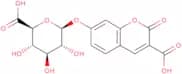
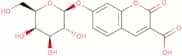
CAS:<p>3-Carboxyumbelliferyl b-D-glucuronide serves as a highly sensitive fluorogenic substrate for detecting b-glucuronidase activity. Upon enzymatic cleavage, it generates a fluorescent product enabling easy and accurate monitoring of enzyme activity in various applications, such as diagnostics, drug discovery, and research.</p>Pureza:Min. 95%Forma y color:White to off-white solid.Peso molecular:382.28 g/mol4-Methylumbelliferyl b-D-celloheptaoside
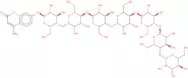
CAS:<p>A fluorogenic MOSCERDAM® substrate targeting cellulases</p>Pureza:Min. 95%Peso molecular:1,311.15 g/mol5-(Pentafluorobenzoylamino)fluoroscein di-b-D-galactopyranoside
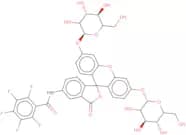
CAS:<p>5-(Pentafluorobenzoylamino)fluoroscein di-b-D-galactopyranoside, commonly referred as PFB-FDG or PFB-FDGal, is a cell-permeable enzyme substrate for β-galactosidase used in live cell imaging assays. After cleavage, 5-(pentafluorobenzoylamino)fluorescein (PFB-F) is released, generating a green fluorescence (Em ~520 nm)) of a higher intensity than fluorescein. Its main use is for bacterial detection (e.g. E. coli LacZ assays), but also for flow cytometry analytical assays.</p>Fórmula:C39H32F2NO16Pureza:Min. 95%Forma y color:PowderPeso molecular:865.67 g/molResorufin benzyl ether
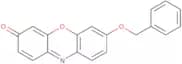
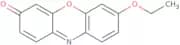
CAS:<p>Resorufin benzyl ether is a chemical compound that can be used as a substrate for cytochrome P450. It has been shown to inhibit the activity of epoxide hydrolase, an enzyme involved in the metabolism of endoperoxides. Resorufin benzyl ether has also been found to inhibit cytochrome P450 enzymes, which are responsible for oxidative metabolism of xenobiotics. This compound has been shown to have a high affinity for mouse monoclonal antibody and is used in immunoassays to detect mouse antibodies. Resorufin benzyl ether is used in biochemical assays and polymerase chain reactions (PCRs) as a fluorescence marker. In addition, this compound is used in model systems to study enzyme activities such as recombinant cytochrome p450 and protein oxidation by reactive oxygen species (ROS).</p>Pureza:Min. 95%Peso molecular:303.31 g/molN-Succinyl-Ala-Phe-Lys 7-amido-4-methylcumarin acetate (salt)
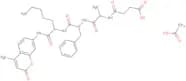
CAS:Producto controlado<p>Fluorogenic substrate targeting plasmin</p>Fórmula:C34H43N5O10Pureza:Min. 95%Peso molecular:681.7 g/molD-Alanine 7-amido-4-methylcoumarin trifluoroacetate salt
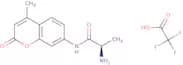
CAS:<p>D-Alanine 7-amido-4-methylcoumarin trifluoroacetate salt is a chromogenic substrate for the enzyme Beta-galactosidase. It is used as a diagnostic tool in the detection of certain bacteria, such as Enterobacteriaceae and Clostridium perfringens. It can also be used to detect the presence of beta galactosidase in food products and environmental samples. D-Alanine 7-amido-4-methylcoumarin trifluoroacetate salt has an applications in chemiluminescence, bioluminescence, and fluorescence. This product is not intended for use as a drug or food additive.</p>Fórmula:C15H15F3N2O5Pureza:Min. 95%Forma y color:White/Off-White SolidPeso molecular:360.29 g/mol4-Methylumbelliferyl-b-D-xylotrioside
CAS:<p>4-Methylumbelliferyl-b-D-xylotrioside is a fluorogenic substrate that reacts with an enzyme in the presence of oxygen to produce light. It is used in diagnostic applications, such as detecting the presence of a specific enzyme or protein. 4-Methylumbelliferyl-b-D-xylotrioside can also be used as a chromogenic substrate for the detection of DNA and RNA. This compound can be conjugated with other molecules for use in immunoassays and other diagnostic applications. 4-Methylumbelliferyl-b-D-xylotrioside has been shown to bind to bacterial cells and activate them, which leads to the production of light through bioluminescence.</p>Pureza:Min. 95%Peso molecular:572.51 g/mol4-Methylumbelliferyl 2-azido-2-deoxy-4,6-O-phenylmethylene-a-D-galactopyranoside
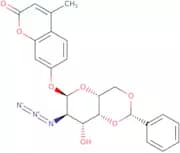
CAS:<p>4-Methylumbelliferyl 2-azido-2-deoxy-4,6-O-phenylmethylene-a-D-galactopyranoside is a fluorogenic substrate that reacts with beta D galactosidase to produce light. This product is useful for diagnostics, conjugate production, and other applications. 4MUF 2 -Gal provides a convenient means of detecting beta D galactosidase activity in cell culture media and can be used as a chromogenic substrate for the detection of enzymes involved in glycosylation reactions. It is also used to detect staining by bioluminescence. The compound can be used in food testing and environmental testing to measure the presence of beta D galactosidase.</p>Fórmula:C23H21N3O7Pureza:Min. 95%Peso molecular:451.43 g/mol4-Methylumbelliferyl 3,4,6-tri-O-acetyl-2-deoxy-2-trifluoroacetamido-b-D-glucopyranoside
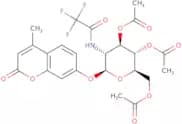
CAS:<p>4-Methylumbelliferyl 3,4,6-tri-O-acetyl-2-deoxy-2-trifluoroacetamido-b-D-glucopyranoside is a fluorogenic substrate specifically designed for the detection and quantification of hexosaminidase enzymes. Upon cleavage by the target enzyme, it generates a bright fluorescent signal facilitating the investigation of enzyme activity, screening of inhibitors, and diagnostics.</p>Pureza:Min. 95%Peso molecular:559.44 g/mol4-Methylumbelliferyl-phosphoethanolamine
<p>4-Methylumbelliferyl-phosphoethanolamine is a phosphorylated substrate that can be used in the detection of enzymes such as alkaline phosphatase, esterase, and lipase. This compound has been shown to be a fluorescent and chromogenic substrate for many diagnostic purposes. 4-Methylumbelliferyl-phosphoethanolamine is also used as a fluorogenic substrate for chemiluminescent reactions that are found in culture media and environmental testing.</p>Pureza:Min. 95%3-HTC
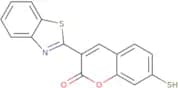
CAS:<p>3-HTC reacts reversibly with thiols and disulfides, and can be used to measure dynamic GSH/GSSH ratios in vitro as well as to monitor the reversible redox status of whole cell lysates.(λmax: 448 nm in its reduced thiolate form, and a λmax 370-410 nm for the oxidized mixed disulfide).</p>Fórmula:C16H9NO2S2Pureza:Min. 95%Peso molecular:311.38 g/mol4-Methylumbelliferyl 3-O-(a-L-fucopyranosyl)-b-D-galactopyranoside
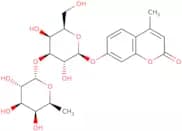
CAS:<p>4-Methylumbelliferyl 3-O-(α-L-fucopyranosyl)-β-D-galactopyranoside is an organic compound that is used as a radioactive marker for DNA. It can be synthesized in the laboratory and its use allows for the tracking of DNA molecules. The production of this marker is achieved by recombinant expression of the gene encoding the enzyme β-D-galactosidase, which hydrolyzes 4-methylumbelliferyl β-D-galactopyranoside to release 4-methylumbelliferone and α-L-fucopyranose. The enzyme uses UDP glucose as a cofactor to catalyse the reaction. This product has been isolated from Corynebacterium glutamicum, with recombinant expression vectors used to produce it in host cells such as Escherichia coli or Corynebacterium glutamicum. It has been found that</p>Fórmula:C22H28O12Pureza:Min. 95%Forma y color:PowderPeso molecular:484.45 g/mol4-Methylumbelliferyl 3,4,6-tri-O-acetyl-2-azido-2-deoxy-a-D-galactopyranoside
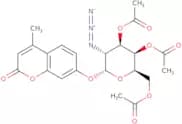
CAS:<p>4-Methylumbelliferyl 3,4,6-tri-O-acetyl-2-azido-2-deoxy-a-D-galactopyranoside is a fluorogenic substrate for the enzyme beta galactosidase. It is used in food testing, environmental testing, and diagnostics. 4MUF3A2DGAL is an enzyme substrate that provides high quality chemiluminescence and bioluminescence signals. This product has a CAS number of 124167-43-7 and is available in both high purity and conjugate forms.</p>Pureza:Min. 95%Peso molecular:489.43 g/mol4-Methylumbelliferyl 2-acetamido-2-deoxy-4-O-(a-L-fucopyranosyl)-b-D-glucopyranoside
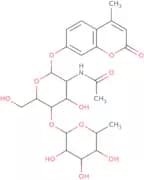
CAS:<p>4-Methylumbelliferyl 2-acetamido-2-deoxy-4-O-(alpha-L-fucopyranosyl)-beta-D-glucopyranoside is a fluorogenic substrate for alpha-L-fucosidase. After enzymatic cleaveage, free 4-methylumbelliferone (also known as hymecromone) is released, exhibiting blue fluorescence upon excitation with UV light. The strongest fluorescence of 4-methylumbelliferone requires deprotonation of the hydroxyl group (thus requires alkaline pH), with a maximal fluorescence intensity obtained with excitation at 350 to 370 nm and emission at 440 to 470 nm. The use of 4-methylumbelliferyl 2-acetamido-2-deoxy-4-O-(alpha-L-fucopyranosyl)-beta-D-glucopyranosideas a substrate for measuring the alpha-L-fucosidase activity is used for fucosidosis diagnosis (deficiency of the enzyme alpha-L-fucosidase) and glycoprotein metabolism disorder detection.</p>Fórmula:C24H31NO12Pureza:Min. 95 Area-%Forma y color:PowderPeso molecular:525.5 g/mol3-Carboxyumbelliferyl b-D-galactopyranoside
CAS:<p>3-Carboxyumbelliferyl b-D-galactopyranoside is a fluorescent probe that can be used to study protein synthesis in live cells. It binds to the active site of the enzyme peptidyl transferase, which catalyzes the covalent linkage of amino acids to form a polypeptide chain. 3CMBG is specific for the amino acid proline and is a substrate for peptidyl transferase. The fluorescence of 3CMBG increases when it is bound to peptidyl transferase, making it useful as a marker for protein synthesis.</p>Pureza:Min. 95%Peso molecular:368.28 g/mol4-Methylumbelliferyl b-L-arabinopyranoside
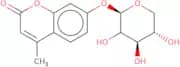
<p>4-Methylumbelliferyl b-L-arabinopyranoside is a chemiluminescent substrate that is used in the detection of various enzymes and other proteins. It can be used as a fluorogenic substrate, chromogenic substrate, or enzyme substrate. 4-Methylumbelliferyl b-L-arabinopyranoside has been shown to be an effective probe for detecting catalase, cytochrome c oxidase, and peroxidase activity. This product also has applications in diagnostics and food testing.</p>Pureza:Min. 95%Peso molecular:308.28 g/mol6,8-Difluoro-4-methylumbelliferyl b-D-glucuronide
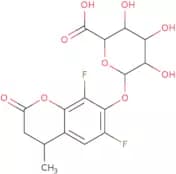
CAS:<p>6,8-Difluoro-4-methylumbelliferyl b-D-glucuronide is a chemiluminescent substrate for the enzyme glucuronidase. The compound has been shown to be stable in the presence of a wide range of pHs and temperatures. It can be used in applications such as diagnostics, culture media and food testing. 6,8-Difluoro-4-methylumbelliferyl b-D-glucuronide has a high purity level and can be used as an indicator for other compounds such as acetaminophen or ibuprofen.</p>Pureza:Min. 95%Forma y color:White To Off-White SolidPeso molecular:388.27 g/mol4-Methylumbelliferyl 2,3,4,6-tetra-O-acetyl-a-D-glucopyranoside
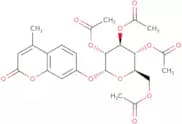
CAS:<p>4-Methylumbelliferyl 2,3,4,6-tetra-O-acetyl-a-D-glucopyranoside is a fluorescent marker for nucleic acid molecules. It can be applied to identify the metabolic pathways of bacteria in an ecosystem by using fluorescence microscopy. 4-Methylumbelliferyl 2,3,4,6-tetra-O-acetyl-a-D-glucopyranoside is also used to measure the activity of some enzymes in vitro. This compound has been shown to be effective against spittlebugs and other pests that feed on plant sap. The toxic effect of this compound is due to its ability to inhibit acetate synthesis and disrupt membrane transport systems.</p>Pureza:Min. 95%Peso molecular:506.46 g/molResorufin oleate
<p>Resorufin oleate is a fluorogenic lipase substrate.</p>Pureza:Min. 95%Forma y color:PowderPeso molecular:477.64 g/molColchicine fluorescein
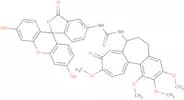
CAS:<p>Colchicine fluorescein is the fluorogenic form of colchicine. It is used for staining assembly of tubulin. Colchicine-site inhibitors (abbrevated as CBSIs) disrupt tubulin polymerization. Colchicine fluorescein serves as a probe to study the binding of colchicine to tubulin, as the colchicine binding site is a promising target for discovering novel antitumour agents.</p>Fórmula:C41H34N2O10SPureza:Min. 90 Area-%Forma y color:Orange PowderPeso molecular:746.78 g/mol6-Chloro-4-(trifluoromethyl)umbelliferyl b-D-cellotetraoside
<p>6-Chloro-4-(trifluoromethyl)umbelliferyl b-D-cellotetraoside is a fluorescent substrate that is used to measure the activity of the enzyme beta-glucuronidase. It is a chemiluminescent compound that emits light when hydrolyzed by an enzyme. 6-Chloro-4-(trifluoromethyl)umbelliferyl b-D-cellotetraoside has been shown to be a high quality and environmentally friendly product, as it does not cause any significant change in pH or turbidity in water samples. It has also been shown to be nontoxic and nonmutagenic at concentrations up to 400 ppm. This product can be used for a variety of purposes, including diagnostic tests for bacterial infections or food testing.</p>Pureza:Min. 95%Peso molecular:913.15 g/mol4-Methylumbelliferyl 2-O-(2,3,4-tri-O-benzoyl-a-L-fucopyranosyl)-b-D-galactopyranoside
<p>4-Methylumbelliferyl 2-O-(2,3,4-tri-O-benzoyl-a-L-fucopyranosyl)-b-D-galactopyranoside is a fluorescent substrate for β–galactosidase. It is used to detect the enzyme in biological samples and as a diagnostic agent. This substrate can be used to develop chemiluminescent, chromogenic, and fluorogenic substrates for use in diagnostics. 4MUF 2OBG can also be conjugated to various ligands for use in bioluminescence assays or as a marker in immunoassays.</p>Pureza:Min. 95%Peso molecular:796.77 g/mol4-Methylumbelliferyl 3,4,6-tri-O-acetyl-2-deoxy-2-trifluoroacetamido-a-D-glucopyranoside
CAS:<p>4-Methylumbelliferyl 3,4,6-tri-O-acetyl-2-deoxy-2-trifluoroacetamido-a-D-glucopyranoside (4MUAA) is a fluorescent dye that is used for the detection of envelopment in cells. This dye binds to cell membranes and can be detected with a fluorescence microscope. 4MUAA can be used to determine the efficiency of an experimental methodology or algorithm by measuring the change in fluorescence intensity as a result of experimental treatment. The use of 4MUAA has been shown to be effective in determining whether or not there is an association between nationwide environmental pollution and cancer rates in Japan.</p>Pureza:Min. 95%Peso molecular:559.44 g/mol4-Methylumbelliferyl a-L-idopyranoside
CAS:<p>4-Methylumbelliferyl alpha-L-idopyranoside is a fluorogenic substrate for alpha-L-iduronidase. After enzymatic cleaveage, free 4-methylumbelliferone (also known as hymecromone) is released, exhibiting blue fluorescence upon excitation with UV light. The strongest fluorescence of 4-methylumbelliferone requires deprotonation of the hydroxyl group (thus requires alkaline pH), with a maximal fluorescence intensity obtained with excitation at 350 to 370 nm and emission at 440 to 470 nm. The use of 4-methylumbelliferyl alpha-L-idopyranosideas a substrate for measuring the alpha-L-iduronidase activity is used for Mucopolysaccharidosis I diagnosis and Hurler syndrome screening.</p>Fórmula:C16H18O8Pureza:Min. 98 Area-%Forma y color:White PowderPeso molecular:338.31 g/mol4-Trifluoromethylumbelliferyl Tetra-O-acetylated α-D-N-Acetylneuraminate Methyl Ester
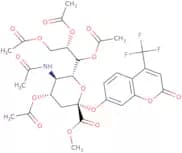
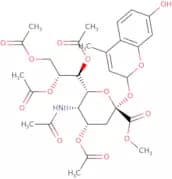
CAS:<p>4-Trifluoromethylumbelliferyl Tetra-O-acetylated alpha-D-N-Acetylneuraminate Methyl Ester is a chemiluminescent substrate that is often used in enzyme and immunoassays. It is a high purity, high quality chemical with a CAS number of 195210-09-4. The 4-Trifluoromethylumbelliferyl Tetra-O-acetylated alpha-D-N-Acetylneuraminate Methyl Ester is used in the detection of bacterial infections and can be used to measure the activity of enzymes such as lysozyme and peroxidase. This product has been tested for its ability to induce bioluminescence in bacteria grown in culture media, as well as for its ability to cause fluorescence or staining in cells or tissues. The 4TUMBTM Tetra O Acetylated</p>Fórmula:C30H32F3NO15Pureza:Min. 95%Peso molecular:703.57 g/mol6-Chloro-4-methylumbelliferyl b-xylobioside
CAS:<p>6-Chloro-4-methylumbelliferyl b-xylobioside is a fluorogenic substrate that can be used for food testing, environmental testing and diagnostics. It is a chromogenic substrate that can be used in enzyme substrates. 6-Chloro-4-methylumbelliferyl b-xylobioside is also a conjugate and has high purity. This product has chemiluminescent properties and can be used for bioluminescence. It is an excellent ligand for fluorescence labeling and has been shown to have high quality. This product can be used in culture media as well as to detect the presence of bacteria.</p>Pureza:Min. 95%Peso molecular:474.84 g/molResorufin phosphate disodium
<p>Resorufin phosphate disodium is a fluorogenic substrate for phosphatase exhibiting a red color after cleavage that can be measured at ~ 585nm.</p>Fórmula:C12H6NNa2O6PPureza:Max. 75 Area-%Forma y color:Brown PowderPeso molecular:337.14 g/molβ-Alanine 7-amido-4-methylcoumarin trifluoroacetate
CAS:<p>Beta-alanine 7-amido-4-methylcoumarin, trifluoroacetate salt is a high purity, ligand, and conjugate. It can be used in the food testing and environmental testing fields. This product has been shown to be a good substrate for enzyme activity and can also function as a fluorescent dye in chemiluminescence assays. Beta-alanine 7-amido-4-methylcoumarin, trifluoroacetate salt is soluble in water and has a CAS number of 201847-54-3.</p>Fórmula:C15H15F3N2O5Peso molecular:360.29 g/molRef: 3D-A-4501
1gA consultar100mgA consultar250mgA consultar500mgA consultar2500mgA consultar-Unit-ggA consultar6-Chloro-7-hydroxy-4-(trifluoromethyl)coumarin
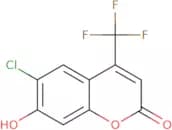
CAS:<p>6-Chloro-7-hydroxy-4-(trifluoromethyl)coumarin is a fungicide that inhibits the growth of fungi by interfering with their DNA synthesis. It does this by inhibiting the activity of two enzymes: the fungal enzyme oxime and the enzyme cinerea, which is found in many fungi. 6-Chloro-7-hydroxy-4-(trifluoromethyl)coumarin has been shown to be effective against Alternaria and Botrytis cinerea. The compound also has an antifungal effect against other types of fungi, such as Penicillium roqueforti, when used in combination with a solvent such as ether.</p>Pureza:Min. 95%Peso molecular:264.58 g/molRhodamine 110 bis-(N-CBZ-L-aspartyl-L-glutamyl-L-valyl-L-aspartic acid amide
<p>For fluorogenic detection of caspase 3</p>Pureza:Min. 95%Peso molecular:974.96 g/molResorufin ethyl ether
CAS:<p>Resorufin ethyl ether is a fluorescent substrate that is used to measure the activity of cytochrome P450 enzymes. It can be used in vitro to study the effects of drugs on enzyme activities and in vivo to study liver lesions. Resorufin ethyl ether is also used as a model system for studying synchronous fluorescence, which is the emission of light by two or more substances at the same time. The nitrogen atoms in resorufin ethyl ether can be substituted with other atoms such as magnesium or zinc, which will affect its activity and fluorescence properties. Resorufin ethyl ether binds to cytochrome P450 enzymes and therefore inhibits their activity. This inhibition is reversible, and it can be reversed by adding a substance that competes with the substrate for binding sites on the enzyme.</p>Pureza:Min. 95%Peso molecular:241.24 g/mol4-Chloromethyl-6,8-difluoroumbelliferyl b-D-galactopyranoside
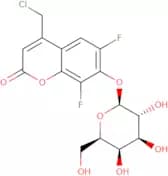
CAS:<p>4-Chloromethyl-6,8-difluoroumbelliferyl b-D-galactopyranoside is a compound commonly used in biochemical research as a fluorescent substrate for the detection of sugar hydrolase enzymes. This compound can be cleaved by enzymes such as β-galactosidase, releasing a fluorescent molecule that can be easily detected using fluorescence spectroscopy. The compound is a member of the family of umbelliferyl glycosides, which have been widely used in the study of various biochemical pathways for many years. The advantage of using this particular substrate is that the fluorescent product has a high quantum yield, which means it produces a strong signal for detection. This substrate has been used in a wide variety of applications, including the study of microbial physiology and in the development of diagnostic assays for detecting bacterial and fungal infections.</p>Pureza:Min. 95%Peso molecular:408.74 g/mol2-Dodecylresorufin
CAS:<p>2-Dodecylresorufin is a fluorescent probe that reacts with the hydroxyl radicals in the cell, which are generated by the enzyme superoxide dismutase. 2-Dodecylresorufin can be used to measure reactive oxygen species (ROS) and ROS-induced cellular damage. It is also used to study oxidative stress in vitro. The chemical structure of 2-dodecylresorufin contains a linker arm that provides a reversible linkage to the cell surface, allowing for extracellular measurements of reactive oxygen species (ROS). This compound has been shown to have high reactivity, making it useful for studying population dynamics and fluorescent techniques.</p>Pureza:Min. 95%Peso molecular:381.51 g/mol4-Methylumbelliferyl 3,4,6-tri-O-acetyl-2-O-(2,3,4-tri-O-benzoyl-a-L-fucopyranosyl)-b-D-galactopyranoside
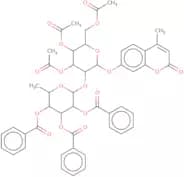
<p>4-Methylumbelliferyl 3,4,6-tri-O-acetyl-2-O-(2,3,4-tri-O-benzoyl-a-L-fucopyranosyl)-b-D-galactopyranoside is a fluorogenic substrate that is used for the detection of β D -galactosidase. β D -Galactosidase is an enzyme that breaks down lactose in milk and is used as a diagnostic tool for identifying lactose intolerance. This substrate can be used as a conjugate in immunoassays to detect antibodies against the enzyme or it can be used to measure the activity of the enzyme in food samples. It also can be used to measure α1,3 galactosyltransferase activity in colorectal cancer cells or bacteria.</p>Pureza:Min. 95%Peso molecular:922.9 g/mol5-Acetamidofluorescein-di-(b-D-galactopyranoside)
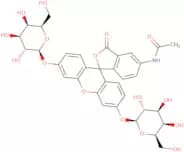
CAS:<p>5-Acetamidofluorescein-di-(b-D-galactopyranoside), also known as C2FDG, is a fluorogenic substrate for beta-galactosidase that generates a green fluorescence after cleavage (Em ~520 nm). It is used in enzyme activity assays and in flow cytometry in animal, bacterial, and yeast cells.</p>Fórmula:C34H35NO16Pureza:Min. 95%Forma y color:Yellow PowderPeso molecular:713.65 g/mol6,8-Difluoro-4-methylumbelliferyl b-D-glucopyranoside
CAS:<p>6,8-Difluoro-4-methylumbelliferyl b-D-glucopyranoside is a versatile fluorogenic substrate suitable for the measurement of various glycosidase enzymes. Its unique structure allows for enhanced sensitivity and selectivity in enzyme assays, making it ideal for studying enzyme kinetics and screening of potential enzyme inhibitors.</p>Pureza:Min. 95%Peso molecular:374.29 g/mol4-Methylumbelliferyl 4-deoxy-b-D-chitobiose peracetate
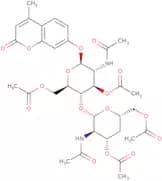
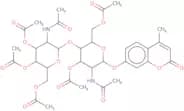
CAS:<p>4-Methylumbelliferyl 4-deoxy-b-D-chitobiose peracetate is a chromogenic substrate used for the detection of β-galactosidase activity. It is an analog of 4-methylumbelliferone that can be hydrolyzed by β-galactosidase to produce fluorescence. This product is supplied as a white crystalline solid and can be stored at room temperature. This substrate has been shown to work well in culture media, food testing, and environmental testing.</p>Pureza:Min. 95%Forma y color:Off-White PowderPeso molecular:734.7 g/molMaltotetraose 2-aminobenzamide
<p>Maltotetraose 2-aminobenzamide is a chemiluminescent substrate that emits light in the presence of certain oxidizing agents. It provides high quality and environmental testing, as well as staining and ligand capability. Maltotetraose 2-aminobenzamide is used in diagnostics to identify bacteria and other microorganisms. Maltotetraose 2-aminobenzamide can be used for the detection of bacterial colonies on agar plates using a fluorogenic substrate, or for the detection of fungi using a chromogenic substrate. Maltotetraose 2-aminobenzamide is also used as an enzyme substrate in food testing or conjugate with enzymes for bioluminescence.</p>Pureza:Min. 95%D-Alanine 7-amido-4-methylcoumarin free base
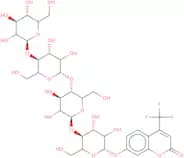
CAS:<p>D-Alanine 7-amido-4-methylcoumarin free base is a chromogenic substrate that is used in diagnostic testing. It is used to identify the presence of beta-lactamase, which catalyzes the hydrolysis of penicillin and cephalosporin antibiotics, by turning the substrate into a bright blue color. D-Alanine 7-amido-4-methylcoumarin free base can also be used as a fluorescent substrate for bioluminescence or chemiluminescence reactions. This product is high quality and has CAS number 201847-51-0.</p>Fórmula:C13H14N2O3Pureza:Min. 95%Peso molecular:246.26 g/mol4-(Trifluoromethyl)umbelliferyl-b-D-cellotetraoside
CAS:<p>4-(Trifluoromethyl)umbelliferyl-b-D-cellotetraoside is a chemiluminescent substrate that can be used in the detection of peroxidase, horseradish peroxidase, and other enzymes. It is a fluorescent product that emits light upon reaction with hydrogen peroxide. This product has been tested for purity and quality and has shown to have no detectable levels of heavy metals or other contaminants. 4-(Trifluoromethyl)umbelliferyl-b-D-cellotetraoside is not cytotoxic and can be used for the detection of enzyme activity in living cells. 4-(Trifluoromethyl)umbelliferyl-b-D-cellotetraoside is also known as TMBECFDA, which stands for Trifluoromethyl)umbelliferone (Cellobiose) (Biot</p>Pureza:Min. 95%Peso molecular:878.7 g/mol4-Methylumbelliferyl phosphate, free acid
CAS:<p>A sensitive fluorogenic substrate for fluorometric and UV-spectrophotometric assays of phosphatases. It is used for the detection of C. perfringens because acid phosphatase is a highly specific indicator for C. perfringens.</p>Fórmula:C10H9O6PPeso molecular:256.15 g/mol4-Methylumbelliferyl 2-acetamido-3,4,6-tri-O-acetyl-2-deoxy-b-D-glucopyranoside
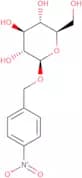
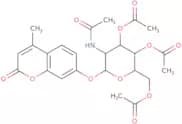
CAS:<p>4-Methylumbelliferyl 2-acetamido-3,4,6-tri-O-acetyl-2-deoxy--bDglucopyranoside is a compound that has been shown to interact with glutamicum and casein kinase. It is also a test compound for corynebacterium glutamicum and interacts with it by functional theory. The compound has been shown to inhibit inflammatory diseases and may be used as a potential treatment for these diseases.</p>Pureza:Min. 95%Peso molecular:505.47 g/mol(4-Nitrophenyl)methyl-b-D-glucopyranoside
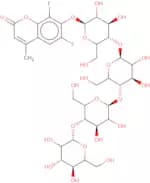
CAS:<p>This product is a fluorogenic substrate that is used in the detection of enzymes in biological systems. It is also used as a ligand to study enzyme activity and can be used to quantify enzyme activity. This product is made from high-purity, high-quality reagents and is often used as an enzyme substrate in diagnostic kits for food testing, environmental testing, and detection of bacteria with the help of chemiluminescence. The CAS number for this product is 700368-52-1. This product can be used for fluorescence staining and bioluminescence.</p>Pureza:Min. 95%Peso molecular:315.28 g/mol6,8-Difluoro-4-methylumbelliferyl b-D-cellotetraoside
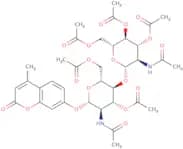
<p>6,8-Difluoro-4-methylumbelliferyl b-D-cellotetraoside is a chemiluminescent substrate for the detection of esterases. It is also used as an enzyme substrate in diagnostic applications and as a fluorogenic substrate in food testing. 6,8-Difluoro-4-methylumbelliferyl b-D-cellotetraoside has been shown to be an excellent ligand for use in immunoassays and can be conjugated to antibodies or antigens. 6,8-Difluoro-4-methylumbelliferyl b-D-cellotetraoside is chemically stable and has high purity and high quality.</p>Pureza:Min. 95%Peso molecular:860.71 g/mol4-Methylumbelliferyl 2-acetamido-3-O-(2,3,4-tri-O-acetyl-a-L-fucopyranosyl)-4-O-(2,3,4,6-tetra-O-acetyl-b-D-galactopyranosyl)-6-O-ac etyl-2-deoxy-b-D-glucopyranoside
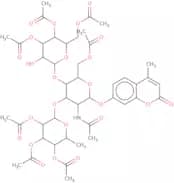
<p>4-Methylumbelliferyl 2-acetamido-3-O-(2,3,4-tri-O-acetyl-a-L-fucopyranosyl)-4-O-(2,3,4,6 -tetra-O-acetylbDgalactopyranosyl)-6-O-acetyldEoxybDglucopyranoside is a chemiluminescent substrate that has been used in the detection of beta galactosidase activity. It is a ligand for beta galactosidases and can be used for the study of enzyme kinetics. This compound also exhibits high purity and is available in CAS number: 916071. 4MUFAGAALF is suitable for use in culture media and environmental testing as well as diagnostics (e.g., bioluminescence), staining (fluorogenic substrate), and chromogenic substrates</p>Pureza:Min. 95%Peso molecular:1,023.94 g/mol4-Methylumbelliferyl 2-azido-2-deoxy-3-O-(tetra-O-acetyl-b-D-galactopyranosyl)-4,6-O-benzylidene-a-D-galactopyranoside
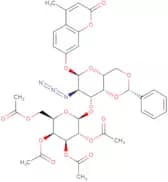
CAS:<p>4-Methylumbelliferyl 2-azido-2-deoxy-3-O-(tetra-O-acetyl-b-D-galactopyranosyl)-4,6-O-benzylidene a D galactopyranoside is a chemiluminescent substrate for detecting ligands. It has been used to detect the presence of bacteria, fungi, and parasites in food samples and as an indicator for enzymatic activity. This product is an excellent fluorescent substrate for the detection of nucleic acids such as DNA. This product is a conjugate with high purity, which makes it suitable for use in various types of applications.</p>Fórmula:C37H39N3O16Pureza:Min. 95%Peso molecular:781.72 g/mol4-Methylumbelliferyl 2-acetamido-3,4,6-tri-O-acetyl-2-deoxy-a-D-glucopyranoside
CAS:<p>4-Methylumbelliferyl 2-acetamido-3,4,6-tri-O-acetyl-2-deoxy-a-D-glucopyranoside is a chromogenic substrate for enzymes that catalyze the hydrolysis of glycosidic bonds. It can be used in diagnostic tests to identify antibodies against certain bacteria and fungi. The fluorogenic form of 4-methylumbelliferyl 2-acetamido-3,4,6-triO acetyl -2 deoxy a D glucopyranoside can be used as a chemiluminescent substrate for detecting bacterial activity. 4 methylumbelliferyl 2 acetamido 3,4,6 triO acetyl -2 deoxy a D glucopyranoside is also useful in bioluminescent assays to detect ATP production in bacteria and other microorganisms. CAS No: 1174287–76–3</p>Pureza:Min. 95%Peso molecular:505.48 g/mol4-Methylumbelliferyl 2-acetamido-2-deoxy-3-O-(a-L-fucopyranosyl)-b-D-glucopyranoside
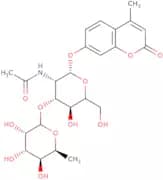
CAS:<p>4-Methylumbelliferyl 2-acetamido-2-deoxy-3-O-(alpha-L-fucopyranosyl)-beta-D-glucopyranoside is a fluorogenic substrate for alpha-L-fucosidase. After enzymatic cleaveage, free 4-methylumbelliferone (also known as hymecromone) is released, exhibiting blue fluorescence upon excitation with UV light. The strongest fluorescence of 4-methylumbelliferone requires deprotonation of the hydroxyl group (thus requires alkaline pH), with a maximal fluorescence intensity obtained with excitation at 350 to 370 nm and emission at 440 to 470 nm. The use of 4-methylumbelliferyl 2-acetamido-2-deoxy-3-O-(alpha-L-fucopyranosyl)-beta-D-glucopyranosideas a substrate for measuring the alpha-L-fucosidase activity is used for fucosidosis diagnosis (deficiency of the enzyme alpha-L-fucosidase) and lysosomal storage disorder screening.</p>Fórmula:C24H31NO12Pureza:Min. 95 Area-%Forma y color:White PowderPeso molecular:525.5 g/mol6-Chloro-4-trifluoromethylumbelliferyl b-D-galactopyranoside
<p>6-Chloro-4-trifluoromethylumbelliferyl b-D-galactopyranoside is a chromogenic substrate that can be used in enzyme assays to measure the activity of beta-glucuronidase. This compound is sold as a conjugate with an enzyme, which will not interfere with the assay. The compound has been tested to have high purity and quality.</p>Pureza:Min. 95%Resorufin maltotriose
<p>Resorufin maltotriose is an alpha-amylase substrate that releases the dye resorufin with red emission (lmax=585 nm) after enzyme reaction.</p>Fórmula:C30H47NO18Pureza:Min. 95%Peso molecular:709.69 g/molCaspase substrate
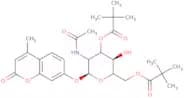
CAS:<p>Caspase substrates are a class of pharmacological agents that regulate apoptosis. Caspases are proteases that cleave specific proteins in the cell, leading to apoptosis. Pro-apoptotic proteins activate caspases, while anti-apoptotic proteins inhibit them. Caspase substrates can be either pro-caspase or anti-caspase, depending on the desired effect. They may also be used to regulate caspases without affecting their activity. The caspase substrate is cleaved by caspases and releases a polypeptide fragment that triggers apoptosis in some cells, but not others. For example, the Hl-60 cell line is resistant to the pro-apoptotic effects of the substrate because it contains an anti-apoptotic protein called Bcl-2. In contrast, myocardial cells contain pro-apoptotic proteins and are sensitive to the pro-apoptotic effects of the substrate. In</p>Pureza:Min. 95%Peso molecular:821.75 g/mol4-Methylumbelliferyl 2-acetamido-2-deoxy-3,6-di-O-pivaloyl-b-D-galactopyranoside
CAS:<p>4-Methylumbelliferyl 2-acetamido-2-deoxy-3,6-di-O-pivaloyl-b-D-galactopyranoside is a chemiluminescent substrate that reacts with an enzyme to produce light. It is used in the detection of ATPase activity and in the diagnosis of diseases. This product has been tested for quality and environmental safety, and it does not contain any hazardous substances. It is highly pure and can be used for testing food, diagnosing diseases, or staining cells.</p>Pureza:Min. 95%Peso molecular:547.59 g/mol4-Trifluoromethylumbelliferyl a-D-N-acetylneuraminic acid
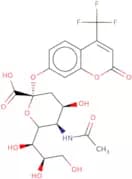
CAS:<p>4-Trifluoromethylumbelliferyl a-D-N-acetylneuraminic acid is a fluorescent chemiluminescent substrate that is used in the detection of beta-galactosidase activity. Beta-galactosidase catalyzes the hydrolysis of 4-trifluoromethylumbelliferyl a-D-N-acetylneuraminic acid to form 4-trifluoromethylumbelliferone and D-galactose, which emits light at approximately 480 nm. This reaction can be detected by fluorescence spectrophotometry using a fluorometer or photometer. 4TFUNA is not toxic, does not inhibit enzymes, and has been tested for toxicity and mutagenicity using bacteria and mammalian cells.</p>Pureza:Min. 95%Peso molecular:521.39 g/mol6,8-Difluoro-4-methylumbelliferyl b-D-cellotrioside
<p>6,8-Difluoro-4-methylumbelliferyl b-D-cellotrioside is a ligand that binds to active sites of enzymes such as beta-glucuronidase and beta-glucosidase. It is used in diagnostics for the detection of bacteria in culture media and food testing where it can be used as a chromogenic or fluorogenic substrate. 6,8-Difluoro-4-methylumbelliferyl b-D-cellotrioside is also used to detect the presence of bacteria and fungi in environmental samples. It has a high purity and conjugate with other molecules for use in fluorescence microscopy.</p>Pureza:Min. 95%Forma y color:White to off-white powder.Peso molecular:698.57 g/mol4-Methylumbelliferyl 2,3-di-O-benzoyl-4,6-O-benzylidene-b-D-galactopyranoside
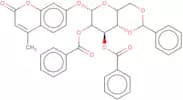
<p>4-Methylumbelliferyl 2,3-di-O-benzoyl-4,6-O-benzylidene-b-D-galactopyranoside is a fluorogenic substrate that is used in the detection of β-galactosidase activity. This product is a white to off white powder that has a purity of 99.2%. It has been given CAS number 53654–95–1 and it can be found in the Diagnostics section of Acros Organics.</p>Pureza:Min. 95%Peso molecular:634.63 g/molFluorescein di-b-D-glucuronide dimethyl ester
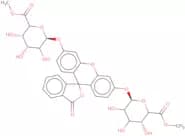
<p>Fluorogenic substrate for beta-glucuronidase</p>Pureza:Min. 95%Forma y color:PowderPeso molecular:712.61 g/mol6'-(O-(Carboxymethyl))-2',7'-dichlorofluoroscein 3'-(O-(N-acetyl-b-D-glucosamide))
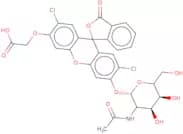
<p>6'-(O-(Carboxymethyl))-2',7'-dichlorofluoroscein 3'-(O-(N-acetyl-b-D-glucosamide)) is a chemiluminescent substrate that can be used in the detection of ligands. This product has a CAS number of 44636-76-8 and is available at a purity level of 98%. It has been tested for bacterial contamination, as well as for adverse effects on culture media and environmental testing. 6'-(O-(Carboxymethyl))-2',7'-dichlorofluoroscein 3'-(O-(N-acetyl-b-D-glucosamide)) is an enzymatic substrate that can be used in diagnostic applications such as the detection of fluorescence, staining, and bioluminescence. It has also been shown to be useful in food testing.</p>Pureza:Min. 95%Peso molecular:662.44 g/mol6-Chloro-4-methylumbelliferyl b-D glucuronide
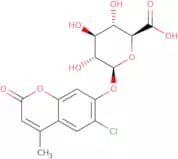
CAS:<p>6-Chloro-4-methylumbelliferyl b-D glucuronide is a fluorogenic substrate for beta-glucuronidase that exhibits longer absorption/emission maxima (~385/500 nm) than typical 4MU-derived substrates.</p>Fórmula:C16H15ClO9Pureza:Min. 97 Area-%Forma y color:White PowderPeso molecular:386.74 g/mol6-Chloro-4-(trifluoromethyl)umbelliferyl b-D-galactopyranoside
<p>6-Chloro-4-(trifluoromethyl)umbelliferyl b-D-galactopyranoside is a chromogenic substrate for the enzyme β-galactosidase, which hydrolyzes the substrate to produce a fluorescent product. This fluorogenic substrate can be used in chemiluminescent detection of β-galactosidase activity as well as in immunochemical and immunohistochemical analysis of glycoproteins. 6-Chloro-4-(trifluoromethyl)umbelliferyl b-D-galactopyranoside is also used for staining of glycoprotein substrates with periodic acid Schiff reagent or Alcian blue, and it can be used in the diagnosis of glycogen storage diseases.</p>Pureza:Min. 95%Peso molecular:426.73 g/mol4-Methylumbelliferyl 4,6-O-benzylidene-b-D-galactopyranoside
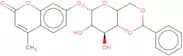
<p>4-Methylumbelliferyl 4,6-O-benzylidene-b-D-galactopyranoside is a fluorogenic substrate that is used in the detection of galactosidases. It has been shown to be a potent inhibitor of these enzymes and can be used to study the activity of various galactosidases. This substrate is used in the measurement of carbohydrate metabolism, including glycolysis and glycogenolysis. 4-Methylumbelliferyl 4,6-O-benzylidene-b-D-galactopyranoside has been shown to produce chemiluminescence when reacted with horseradish peroxidase and hydrogen peroxide. It also produces bioluminescence when exposed to luciferase and adenosine triphosphate (ATP).</p>Pureza:Min. 95%Peso molecular:426.42 g/molHordenine
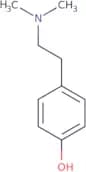
CAS:<p>Produces a fluorogenic signal in the presence of peroxidase</p>Fórmula:C10H15NOPureza:Min. 95%Forma y color:Brown PowderPeso molecular:165.23 g/mol4-Methylumbelliferyl N,N',N'',N'''-tetraacetyl-b-D-chitotetraoside
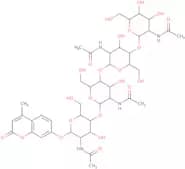
CAS:<p>4-Methylumbelliferyl N,N',N'',N'''-tetraacetyl-beta-D-chitotetraoside is a fluorogenic substrate for chitinase. After enzymatic cleaveage, free 4-methylumbelliferone (also known as hymecromone) is released, exhibiting blue fluorescence upon excitation with UV light. The strongest fluorescence of 4-methylumbelliferone requires deprotonation of the hydroxyl group (thus requires alkaline pH), with a maximal fluorescence intensity obtained with excitation at 350 to 370 nm and emission at 440 to 470 nm. The use of 4-methylumbelliferyl N,N',N'',N'''-tetraacetyl-beta-D-chitotetraosideas a substrate for measuring the chitinase activity is used for fungal infection detection and Gaucher disease screening.</p>Fórmula:C42H60N4O23Pureza:Min. 95%Forma y color:PowderPeso molecular:988.94 g/mol4-Methylumbelliferyl N-acetyl-4,7,8,9-tetra-O-acetyl-a-D-neuraminic acid methyl ester
CAS:<p>4-Methylumbelliferyl N-acetyl-4,7,8,9-tetra-O-acetyl-a-D-neuraminic acid methyl ester (4MU) is a chemiluminescence substrate. It is used in the detection of an enzyme involved in the synthesis of glycoproteins and glycolipids. The enzyme conjugates 4MU with a sugar molecule to form a fluorescent product. This product can be detected by its emission of light at 560 nm when illuminated with light at 450 nm.</p>Pureza:Min. 95%Peso molecular:649.6 g/molL-Citrulline-p-nitroanilide hydrobromide
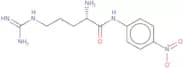
CAS:<p>L-Citrulline-p-nitroanilide hydrobromide is a substrate for enzymes such as beta-galactosidase, beta-glucuronidase, and alkaline phosphatase. It is used in biochemical assays for the detection of microorganisms and in medical diagnostics. This compound has been shown to be useful in fluorescence microscopy and bioluminescence. It also has applications in food testing, environmental testing, and high purity research.</p>Fórmula:C12H20Br2N6O3Pureza:Min. 95%Peso molecular:453.996364-Methylumbelliferyl 2,3,6-tri-O-benzoyl-b-D-galactopyranoside
CAS:<p>4-Methylumbelliferyl 2,3,6-tri-O-benzoyl-b-D-galactopyranoside is a fluorogenic substrate that can be used in food testing. This compound is also a chromogenic substrate that can be used for environmental testing. This product is a ligand and chemiluminescent reagent that can be used in diagnostics. It is also an enzyme substrate that has high purity and high quality.</p>Pureza:Min. 95%Peso molecular:650.63 g/molFluorescein dibutyrate
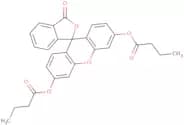
CAS:<p>Fluorogenic substrate targeting esterase and lipase</p>Pureza:Min. 95%Peso molecular:472.49 g/molResorufin a-D-mannopyranoside
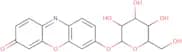
CAS:<p>Resorufin alpha-D-glucopyranoside is a sensitive fluorogenic substrate that generates a red fluorescent product (resorufin) upon interaction with alpha-glucosidase.</p>Pureza:Min. 95%Forma y color:Brown PowderPeso molecular:375.33 g/mol4-Methylumbelliferyl-b-D-cellobiose heptaacetate
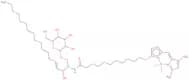
CAS:<p>4-Methylumbelliferyl-beta-D-cellobioside heptaacetate is a fluorogenic substrate for beta-D-glucosidase and can be used to detect this enzyme in the presence of other glycosidases. It is also used as a chromogenic substrate for beta-galactosidase, alpha-mannosidase, alpha-fucosidase, and alpha-N-acetylgalactosaminidase. 4MMB Cellobiose Haptaacetate is a conjugate that can be used to measure the activity of beta-glucuronidase and beta-xylosidase. This product is suitable for use in diagnostics, ligands, food testing, environmental testing, and culture media.</p>Pureza:Min. 95%Peso molecular:794.71 g/molN-(4,4-Difluoro-5,7-dimethyl-4-bora-3a,4a-diaza-s-indacene-3-dodecanoyl)sphingosyl 1-b-D-galactopyranoside
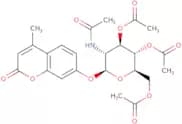
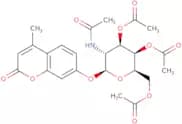
<p>N-(4,4-Difluoro-5,7-dimethyl-4-bora-3a,4a-diaza-s-indacene-3-dodecanoyl)sphingosyl 1bDgalactopyranoside is a fluorescent reagent. It has been used to detect the presence of boron in biological samples and as a substrate for enzymes. This product is also used in the diagnosis of tuberculosis and other bacterial infections. N-(4,4-Difluoro-5,7-dimethyl-4bora3a,4adiazasindacene 3dodecanoyl)sphingosyl 1bDgalactopyranoside is not intended for use in humans or animals and should be handled with care. This product is not available for sale in the state of California.</p>Pureza:Min. 95%Peso molecular:861.95 g/mol4-Methylumbelliferyl 2-acetamido-3,4,6-tri-O-acetyl-2-deoxy-b-D-galactopyranoside
CAS:<p>4-Methylumbelliferyl 2-acetamido-3,4,6-tri-O-acetyl-2-deoxy-b-D-galactopyranoside is a fluorescent marker that is used to measure the enzymatic activity of corynebacterium glutamicum. The enzyme catalyzes the conversion of 4-methylumbelliferyl glucopyranoside to 4-methylumbelliferone glucuronide. The production of 4 methylumbelliferone glucuronide can be quantified using fluorescence spectroscopy. This product can be used in research involving chronic inflammatory diseases and cancer.</p>Pureza:Min. 95%Peso molecular:505.47 g/mol3-Carboxyumbelliferyl b-D-galactoside BSA conjugate
<p>3-Carboxyumbelliferyl b-D-galactoside BSA conjugate is a fluorogenic substrate that is used in chemiluminescent enzyme assays. The reaction of this compound with the enzyme β-galactosidase leads to an increase in the intensity of light emitted by the compound, which can be measured using a luminometer. This product is often used in diagnostics, such as food testing and environmental testing, as well as high quality research.</p>Pureza:Min. 95%7-((4'-L-Alaninamido)-rac-(3'-octanoyloxy)butyloxy) coumarin trifluoroacetate salt
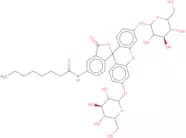
CAS:<p>This Clips-O substrate 7-(4'-L-Alaninamido)-rac-(3'-octanoyloxy)butyloxy) coumarin allows the detection of three enzymatic activities (L-alanine aminopeptidase, C8-esterase and oxidation of 4-amino-3-hydroxybutyloxy either enzymatically or by exposure to sodium periodate) with one single substrate and give a positive fluorescent signal only in presence of all activities. The main virtues of Clips-O substrates are an increased stability towards non-enzymatic hydrolysis that results in a reduced background and high sensitivity.</p>Fórmula:C26H35F3N2O8Pureza:Min. 95.0 Area-%Peso molecular:560.56 g/mol5-Octanoylaminofluoroscein di-b-D-glactopyranoside
<p>5-Octanoylaminofluoroscein di-b-D-glactopyranoside is a chemiluminescent substrate that can be used for the detection of peroxidase activity. It is a bifunctional substrate, which means it has two reactive groups: one at the 5 position and one at the 8 position. The 5-octanoylaminofluorescein reacts with hydrogen peroxide in a 1:1 ratio, emitting light at 490 nm. The 8-position amine reacts with 2,2'-azino-bis(3-ethylbenzthiazoline)6 sulphonic acid (ABTS) to produce an orange color product that acts as a chromogen. The substrate can be used in diagnostics, food testing, and enzyme substrates.</p>Pureza:Min. 95%Peso molecular:797.8 g/mol4-Methylumbelliferyl acetate - 95%
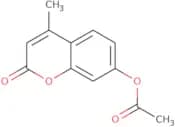
CAS:<p>4-Methylumbelliferyl acetate is a fluorescent compound that can be used to measure the activity of cytochrome P450 enzymes. The fluorescence intensity of 4-methylumbelliferyl acetate increases when it reacts with substrates and inhibitors in vitro. This chemical has been shown to inhibit the enzyme cyclooxygenase in rat liver microsomes, which may lead to blood disorders. It also inhibits coumarin derivatives and human pathogens, such as erythromycin-resistant Staphylococcus aureus (MRSA). 4-Methylumbelliferyl acetate is used as a substrate for polymerase chain reaction (PCR) analysis because it is not susceptible to hydrolysis by esterases.</p>Fórmula:C12H10O4Pureza:Min. 95%Forma y color:PowderPeso molecular:218.21 g/mol4-Methylumbelliferyl 3,4,6-tri-O-acetyl-b-D-galactopyranoside
<p>4-Methylumbelliferyl 3,4,6-tri-O-acetyl-b-D-galactopyranoside is a fluorescent compound that can be used as a substrate for the following enzymes: β-galactosidase, α-galactosidase, and β-glucuronidase. This product is used in diagnostics to measure the activity of these enzymes. It can also be used to detect bacteria in culture media and food testing. 4MUF3,4,6TABG is a high quality product that has been shown to have a high purity level by liquid chromatography. CAS number: 61440-03-2</p>Pureza:Min. 95%Peso molecular:464.42 g/mol4-Methylumbelliferyl 2,3,4-tri-O-benzoyl-b-D-galactopyranoside-6-sulfate
<p>4-Methylumbelliferyl 2,3,4-tri-O-benzoyl-b-D-galactopyranoside-6-sulfate is a fluorogenic substrate for β-galactosidase and a chromogenic substrate for β-glucuronidase. It is used in food testing, environmental testing, and diagnostics.</p>Pureza:Min. 95%Peso molecular:730.69 g/molResorufin pentyl ether
CAS:<p>Resorufin pentyl ether is a drug transporter that can be used as an experimental model for studying the effects of chemical pesticides on humans. Resorufin pentyl ether inhibits energy metabolism and inhibits hepatic p450 activity and polymerase chain reaction in hepatocyte-like cells in vitro. It has been shown to inhibit the enzyme activities of rat liver p450s and human cytochrome P450 3A4 (CYP3A4) at physiological levels. Resorufin pentyl ether has also been shown to be toxic in mice, with toxicity studies showing an LD50 of 4.5 mg/kg after oral administration. This drug is not active against bacteria or fungi, but it is able to inhibit protein synthesis in model systems containing mouse monoclonal antibodies or calf thymus DNA.</p>Pureza:Min. 95%Peso molecular:283.32 g/molResorufin methyl ether
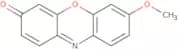
CAS:<p>Fluorogenic substrate used to differentiate cytochrome P450 monooxygenases</p>Fórmula:C13H9NO3Pureza:Min. 95%Forma y color:PowderPeso molecular:227.22 g/mol4-Methylumbelliferyl N-acetyl-a-D-neuraminic acid ammonium
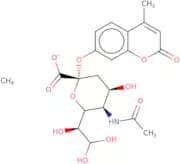
CAS:<p>4-Methylumbelliferyl N-acetyl-alpha-D-neuraminic acid ammonium is a fluorogenic substrate for neuraminidase. After enzymatic cleaveage, free 4-methylumbelliferone (also known as hymecromone) is released, exhibiting blue fluorescence upon excitation with UV light. The strongest fluorescence of 4-methylumbelliferone requires deprotonation of the hydroxyl group (thus requires alkaline pH), with a maximal fluorescence intensity obtained with excitation at 350 to 370 nm and emission at 440 to 470 nm. The use of 4-methylumbelliferyl N-acetyl-alpha-D-neuraminic acid ammoniumas a substrate for measuring the neuraminidase activity is used for detecting the glycoproteins on the surface of influenza A and B viruses, as well as for sialidosis diagnosis.</p>Fórmula:C21H28N2O11Pureza:Min. 95%Forma y color:PowderPeso molecular:471.44 g/mol4-Methylumbelliferyl b-D-chitobiose heptaacetate
CAS:<p>4-Methylumbelliferyl b-D-chitobiose heptaacetate is a fluorogenic substrate that is widely used in diagnostic and research applications. It can be used as a substrate for enzymes such as alkaline phosphatase, β-glucuronidase, β-galactosidase, β-glucosidase, α-amylase, α-glucosidase, α-mannosidase, and α-fucosidase. 4MUBH can also be used in the detection of bacterial growth. 4MUBH reacts with NADPH to produce light through chemiluminescence. This product has been shown to have a high purity and quality and should not be stored in UV light or strong acids. CAS No. 55900-34-0</p>Pureza:Min. 95%Peso molecular:792.74 g/molRhodamine 110 bis-(L-aspartic acid amide) trifluoroacetic acid salt
CAS:<p>Fluorogenic substrate targeting caspases 3 and 7</p>Pureza:Min. 95%Peso molecular:788.56 g/mol4-Methylumbelliferyl b-D-gentiotrioside
CAS:<p>4-Methylumbelliferyl beta-D-gentiotrioside is a fluorogenic substrate for beta-glucosidase. After enzymatic cleaveage, free 4-methylumbelliferone (also known as hymecromone) is released, exhibiting blue fluorescence upon excitation with UV light. The strongest fluorescence of 4-methylumbelliferone requires deprotonation of the hydroxyl group (thus requires alkaline pH), with a maximal fluorescence intensity obtained with excitation at 350 to 370 nm and emission at 440 to 470 nm. The use of 4-methylumbelliferyl beta-D-gentiotriosideas a substrate for measuring the beta-glucosidase activity is used for Gaucher disease screening.</p>Fórmula:C28H38O18Pureza:Min. 98 Area-%Forma y color:PowderPeso molecular:662.59 g/molL-Glutamic acid γ-(7-amido-4-methylcoumarin)
CAS:<p>Substrate for aminopeptidase a or the assay of γ-glutamyl transferase yielding a blue fluorescent solution upon cleavage.</p>Fórmula:C15H16N2O5Pureza:Min. 99 Area-%Peso molecular:304.31 g/molRef: 3D-G-3850
1gA consultar50mgA consultar250mgA consultar500mgA consultar2500mgA consultar-Unit-ggA consultarFluorescein diphosphate tetraammonium salt
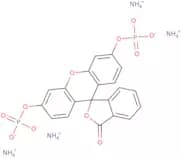
CAS:<p>Fluorogenic substrate targeting phosphatase</p>Fórmula:C20H14O11P2•(NH3)4Pureza:Min. 90 Area-%Forma y color:Yellow PowderPeso molecular:560.39 g/mol6-Hexanoylamino-4-methylumbelliferyl b-D-galactopyranoside
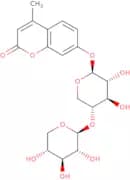
<p>6-Hexanoylamino-4-methylumbelliferyl b-D-galactopyranoside is a chromogenic substrate for beta-galactosidase.</p>Pureza:Min. 95%4-Methylumbelliferyl b-D-xylobioside
CAS:<p>4-Methylumbelliferyl beta-D-xylobioside is a fluorogenic substrate for xylanase. After enzymatic cleaveage, free 4-methylumbelliferone (also known as hymecromone) is released, exhibiting blue fluorescence upon excitation with UV light. The strongest fluorescence of 4-methylumbelliferone requires deprotonation of the hydroxyl group (thus requires alkaline pH), with a maximal fluorescence intensity obtained with excitation at 350 to 370 nm and emission at 440 to 470 nm. The use of 4-methylumbelliferyl beta-D-xylobiosideas a substrate for measuring the xylanase activity is used for detecting bacterial infection and gut microbiome analysis.</p>Fórmula:C20H24O11Pureza:Min. 95 Area-%Forma y color:White PowderPeso molecular:440.4 g/mol6,8-Difluoro-4-methylumbelliferyl β-D-galactopyranoside
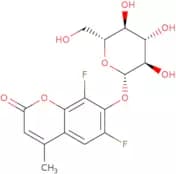
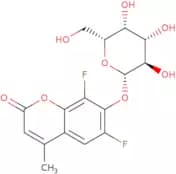
CAS:<p>6,8-Difluoro-4-methylumbelliferyl b-D-galactopyranoside, commonly known as DiFMUG, is a fluorogenic substrate to detect beta-galactosidase. It has higher sensitivity than the common MUG (4-methylumbelliferyl beta-D-galactopyranoside) subtrate.</p>Fórmula:C16H16F2O8Pureza:Min. 95%Forma y color:PowderPeso molecular:374.29 g/mol4-Methylumbelliferyl β-D-glucopyranoside
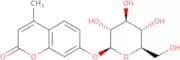
CAS:<p>Fluorogenic substrate for β-glucosidase</p>Fórmula:C16H18O8Pureza:Min. 98 Area-%Forma y color:PowderPeso molecular:338.31 g/molRef: 3D-EM05983
Producto descatalogado4-Methylumbelliferyl b-D-galactopyranoside
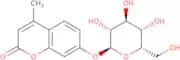
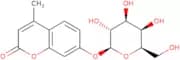
CAS:<p>Fluorogenic substrate for β-galactosidase</p>Fórmula:C16H18O8Pureza:Min. 95%Forma y color:White PowderPeso molecular:338.31 g/mol4-Methylumbelliferyl-β-D-xylopyranoside
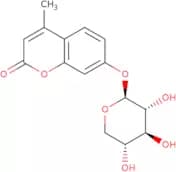
CAS:<p>4-Methylumbelliferyl-β-D-xylopyranoside is a fluorescent probe that has been used to visualize the enzyme activities of glycosidases, such as endoglycosidase H and α-amylase. It is also used as a tool in structural analysis of oligosaccharides. 4-Methylumbelliferyl-β-D-xylopyranoside has been shown to inhibit collagenase activity in mice, which may be due to its ability to inhibit protein synthesis and cell division.</p>Fórmula:C15H16O7Pureza:Min. 99.0 Area-%Peso molecular:308.29 g/mol4-Methylumbelliferyl α-L-idopyranosiduronic acid 2-sulfate disodium salt
CAS:<p>4-Methylumbelliferyl alpha-L-idopyranosiduronic acid 2-sulfate disodium salt is a chromogenic substrate that is used in the detection of glycosidases. It reacts with enzymes such as alpha-amylase, beta-galactosidase, and beta-glucosidase to produce a fluorescent product. This product can be detected using a fluorometer or spectrophotometer. The CAS number for 4-methylumbelliferyl alpha-L-idopyranosiduronic acid 2-sulfate disodium salt is 1045020-74-3.</p>Fórmula:C16H14Na2O12SPureza:Min. 99.0 Area-%Peso molecular:476.32 g/mol4-Methylumbelliferyl b-D-xylopyranoside
CAS:<p>Please enquire for more information about 4-Methylumbelliferyl b-D-xylopyranoside including the price, delivery time and more detailed product information at the technical inquiry form on this page</p>Fórmula:C15H16O7Pureza:Min. 98 Area-%Forma y color:PowderPeso molecular:308.28 g/mol4-Methylumbelliferyl 2-acetamido-2-deoxy-b-D-galactopyranoside
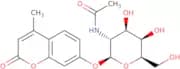
CAS:<p>Please enquire for more information about 4-Methylumbelliferyl 2-acetamido-2-deoxy-b-D-galactopyranoside including the price, delivery time and more detailed product information at the technical inquiry form on this page</p>Fórmula:C18H21NO8Pureza:Min. 98 Area-%Forma y color:White PowderPeso molecular:379.36 g/molRef: 3D-EM06390
Producto descatalogado4-Methylumbelliferyl b-D-glucuronide hydrate
CAS:<p>4-Methylumbelliferyl beta;-D-glucuronide (MUG) is commonly used as a substrate for detecting beta;-glucuronidase. MUG is used for identifying E. coli contamination in food, drinkingwater, clinical samples and for rapid bacterial identification in blood cultures. It is recommended in international normatives (ISO, DIN) as a fluorogenic substrate for detection of E. coli. MUG is also a tool assaying the glucuronidase gene in plants.</p>Fórmula:C16H18O10Pureza:(%) Min. 99%Forma y color:White PowderPeso molecular:352.29 g/mol2'-(4-Methylumbelliferyl)-α-D-N-acetylneuraminic acid, sodium salt
CAS:<p>2'-(4-Methylumbelliferyl)-alpha-D-N-acetylneuraminic acid, sodium salt is a fluorogenic substrate for alpha-galactosidase. It is used in the analysis of cultured media and as a conjugate for enzyme substrates. This product has been shown to be useful in food testing, diagnostics, and environmental testing. 2'-(4-Methylumbelliferyl)-alpha-D-N-acetylneuraminic acid, sodium salt has been used as a chromogenic substrate for the detection of alpha-galactosidase activity. This product is also used as a bioluminescent substrate for the detection of bioluminescence.</p>Fórmula:C21H24NNaO11Pureza:Min. 96.5 Area-%Peso molecular:489.42 g/mol