Ferroptosis
La ferroptosis es una forma de muerte celular regulada caracterizada por la acumulación de peróxidos lipídicos y el estrés oxidativo dependiente de hierro. A diferencia de la apoptosis, la ferroptosis no está impulsada por caspasas, sino por el fallo de las defensas antioxidantes celulares, lo que conduce a la muerte celular. Los inhibidores e inductores de la ferroptosis son fundamentales para estudiar esta vía única de muerte celular, que está implicada en diversas enfermedades, como el cáncer, la neurodegeneración y el daño por isquemia-reperfusión. En CymitQuimica, ofrecemos una amplia gama de moduladores de la ferroptosis de alta calidad para apoyar su investigación en mecanismos de muerte celular, estrés oxidativo y patología de enfermedades.
Se han encontrado 234 productos para "Ferroptosis".
Ordenar por
Pureza (%)
0
100
|
0
|
50
|
90
|
95
|
100
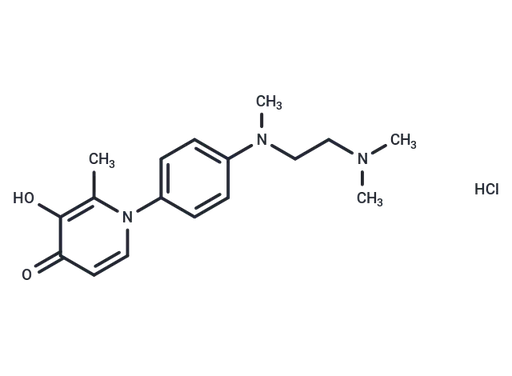
Ferroptosis-IN-4
CAS:Ferroptosis-IN-4 (compound 6k), an inhibitor of ferroptosis, exhibits an EC50 of 20 μM and lacks significant cytotoxicity. It demonstrates a protective role in glycerol-induced RM-AKI mice by alleviating kidney dysfunction [1].Fórmula:C17H24ClN3O2Peso molecular:337.84JST-TfR09
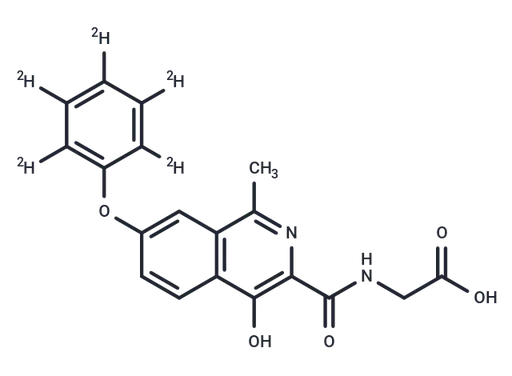
JST-TfR09 (PPMX-T003) is a human monoclonal antibody (mAb) targeting CD71. It reduces ferritin levels in ATLL cell lines to induce ferroptosis, increases the production of ferrous ions and reactive oxygen species (ROS), and induces lipid peroxidation through malondialdehyde. JST-TfR09 is applicable in leukemia research. Recommended isotype control: Human IgG1 kappa, Isotype Control.Forma y color:Odour LiquidRoxadustat-D5
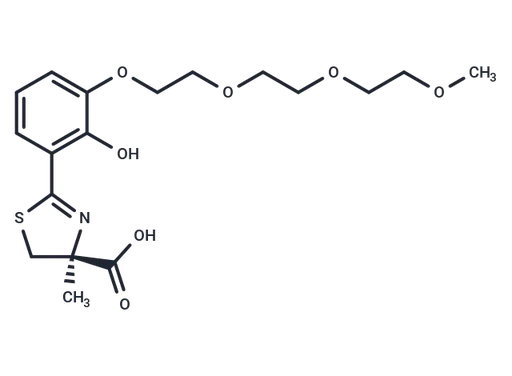
CAS:Roxadustat-d5 is a reference standard for GC/LC-MS quantification of a HIF-PH inhibitor, distinct from other dioxygenases.Fórmula:C19H11D5N2O5Forma y color:SolidPeso molecular:357.37Deferitazole
CAS:Deferitazole (FBS 0701) is a novel and orally active, selective and high affinity iron chelator.Fórmula:C18H25NO7SPureza:99.48%Forma y color:SolidPeso molecular:399.46FA16
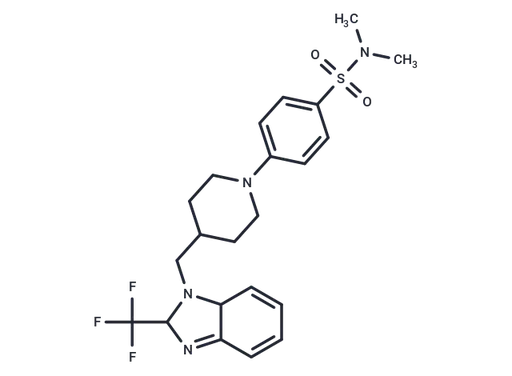
FA16 is a selective, metabolically stable ferroptosis inducer with an IC50 value of 1.26 μM.FA16 is a derivative of 2-(trifluoromethyl)benzimidazole.FA16Fórmula:C22H27F3N4O2SPureza:99.44%Forma y color:SolidPeso molecular:468.54Utreloxastat
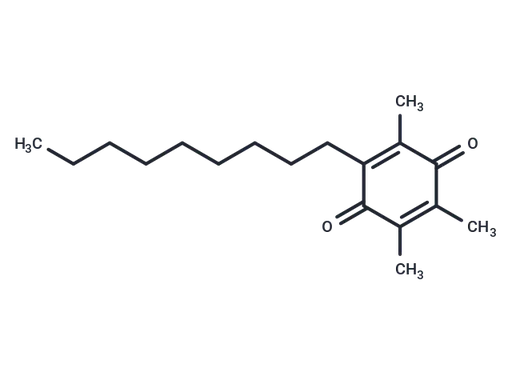
CAS:Utreloxastat (PTC857) is a novel 15-lipoxygenase inhibitor that can be used to study amyotrophic lateral sclerosis .Fórmula:C18H28O2Pureza:99.81%Forma y color:Yellow SolidPeso molecular:276.41Ref: TM-T60507
1mg96,00€5mg205,00€1mL*10mM (DMSO)224,00€10mg295,00€25mg505,00€50mg745,00€100mg1.305,00€200mg1.755,00€BCP-T.A
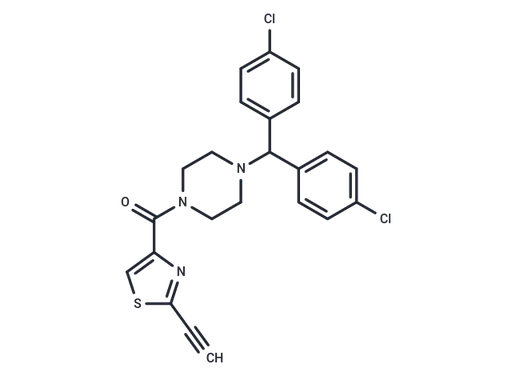
CAS:BCP-T.A is an iron death inducer that acts by binding to GPX4.Fórmula:C23H19Cl2N3OSPureza:99.94%Forma y color:White SolidPeso molecular:456.39HBED
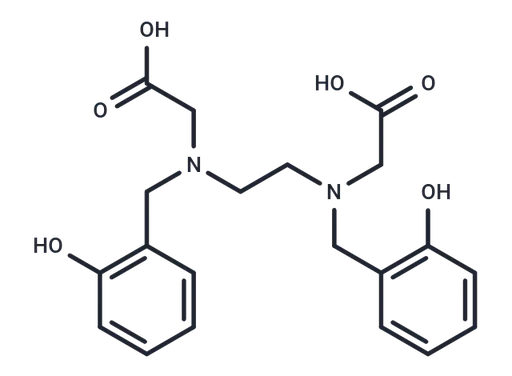
CAS:HBED (CHELII) is an iron chelator and can be used in research on the treatment of chronic iron overload and acute iron poisoning.Fórmula:C20H24N2O6Pureza:97.35% - 98.58%Forma y color:SolidPeso molecular:388.41Erastin2
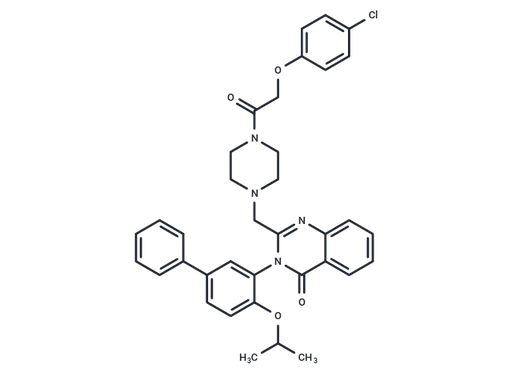
CAS:Erastin2 is an iron death inducer that induces cell death by binding to the lipophilic free radical trapping antioxidant ferrostatin-1 or the iron chelator DFO.Fórmula:C36H35ClN4O4Pureza:99.87%Forma y color:SolidPeso molecular:623.14Ref: TM-T35994
1mg70,00€5mg152,00€1mL*10mM (DMSO)202,00€10mg236,00€25mg356,00€50mg465,00€100mg602,00€Ogremorphin
CAS:Ogremorphin (GPR68-IN-1) is a potent inhibitor of GPR68, exhibiting an EC50 of 170 nM.it is utilized in the study of autoimmune chronic inflammatory diseases [1Fórmula:C21H17N3OSPureza:99.65% - 99.65%Forma y color:SolidPeso molecular:359.44viFSP1
CAS:viFSP1, a species-independent FSP1 inhibitor, effectively induces ferroptosis in FSP1-dependent cells by targeting the highly conserved NAD(P)H binding pocket of FSP1, directly inhibiting its activity. This action results in lipid peroxidation and exhibits anticancer activity [1].Fórmula:C16H17N3O3SForma y color:SolidPeso molecular:331.39Docebenone
CAS:Docebenone is a selective and orally active inhibitor of 5-LO.Fórmula:C21H26O3Forma y color:SolidPeso molecular:326.43CP-24879 hydrochloride
CAS:CP-24879 HCl, a Δ5D/Δ6D dual-inhibitor, reduces liver lipid buildup and inflammation.Fórmula:C11H18ClNOPureza:98.08%Forma y color:SolidPeso molecular:215.72Cerivastatin
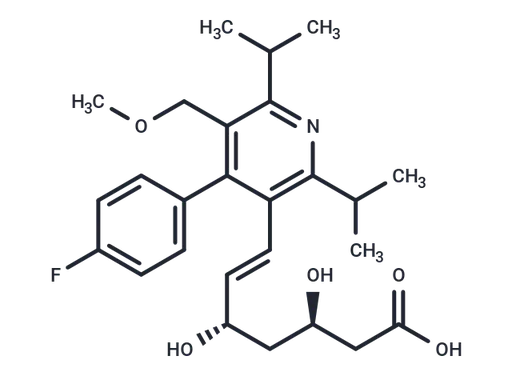
CAS:Cerivastatin is an HMG-CoA reductase inhibitor with anticancer and lipid-lowering effects and can be used to study primary hyperlipidemia.Fórmula:C26H34FNO5Pureza:97.80% - 99.56%Forma y color:SolidPeso molecular:459.55Ferroptosis inducer-5
CAS:Ferroptosisinducer-5 (compound 20a) is an inducer of ferroptosis.Fórmula:C15H14N2O4SForma y color:SolidPeso molecular:318.35FerroLOXIN-1
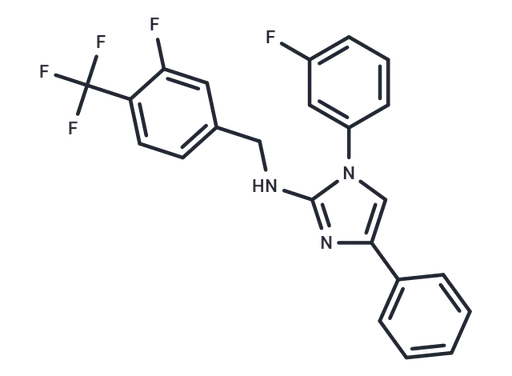
CAS:FerroLOXIN-1 is a potent inhibitor of 15LOX-2, selectively blocking the production of ferroptosis-promoting HOO-ETE-PE and preventing RSL3-induced ferroptosis (ferroptosis). It interacts closely and specifically with 15LOX-2, particularly engaging with Y154, N155, and W158.Fórmula:C23H16F5N3Forma y color:SolidPeso molecular:429.39DL-Buthionine-(S,R)-sulfoximine hydrochloride
DL-Buthionine-(S,R)-sulfoximine hydrochloride (Buthionine sulfoximine hydrochloride) is a potent and specific glutamylcysteine synthetase biosynthesis inhibitorFórmula:C8H19ClN2O3SForma y color:SolidPeso molecular:258.77Ferroptosis-IN-6
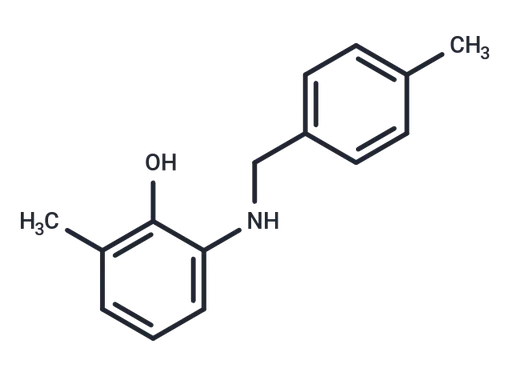
CAS:Ferroptosis-IN-6 is an efficient ferroptosis inhibitor, protecting cells from cell death induced by ferroptosis inducers, and inhibiting STY-BODIPY oxidation.Fórmula:C15H17NOPureza:99.84%Forma y color:Blue SolidPeso molecular:227.3Ferroptosis-IN-21
CAS:Ferroptosis-IN-21 is an inhibitor of ferroptosis that combats renal ischemia-reperfusion injury by directly scavenging peroxy free radicals to prevent cell death. It demonstrates broad-spectrum, nanomolar-level inhibitory potency against various ferroptosis inducers in renal tubular epithelial cells and effectively suppresses the accumulation of lipid reactive oxygen species (ROS). Additionally, Ferroptosis-IN-21 significantly alleviates renal ischemia-reperfusion injury in mice, as evidenced by improved histological damage and functional impairment, reduced expression of inflammatory cytokines, and decreased levels of lipid peroxidation biomarkers such as 4-hydroxynonenal. Ferroptosis-IN-21 is a potential candidate in research for developing ferroptosis-targeted therapeutics.Fórmula:C9H11NOPeso molecular:149.1897GPX4-IN-3
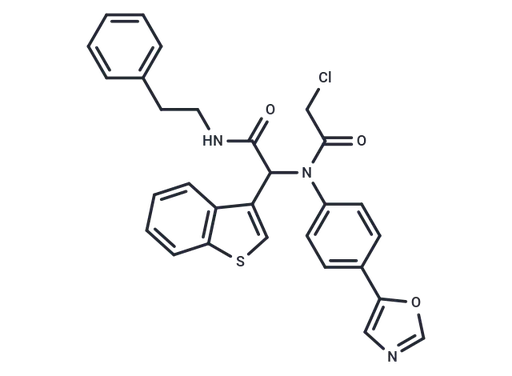
CAS:GPX4-IN-3 is a selective GPX4 inhibitor inducing ferroptosis (71.7% inhibition at 1 μM).Fórmula:C29H24ClN3O3SPureza:99.91%Forma y color:White SolidPeso molecular:530.04