Receptor de andrógenos
El receptor de andrógenos (AR) es un receptor hormonal nuclear que se activa al unirse a andrógenos, como la testosterona y la dihidrotestosterona. Este receptor juega un papel crucial en el desarrollo y mantenimiento de las características masculinas, así como en la regulación de varios procesos fisiológicos, incluyendo el crecimiento muscular, la libido y la densidad ósea. Los inhibidores del receptor de andrógenos son ampliamente estudiados en el contexto del cáncer de próstata, donde la señalización del AR a menudo está sobreexpresada. En CymitQuimica, ofrecemos una gama de moduladores del receptor de andrógenos de alta calidad para apoyar su investigación en endocrinología, biología del cáncer y regulación hormonal.
Se han encontrado 229 productos de "Receptor de andrógenos"
Ordenar por
Pureza (%)
0
100
|
0
|
50
|
90
|
95
|
100
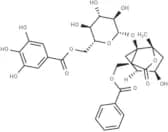
Galloylalbiflorin
CAS:Galloylalbiflorin, an AR antagonist with IC50 53.3μM, is sourced from Paeonia lactiflora roots, exhibiting anti-androgenic properties.Fórmula:C30H32O15Forma y color:SolidPeso molecular:632.57MTX-23
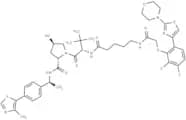
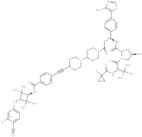
CAS:MTX-23, an AR-targeted Proteolysis Targeting Chimera (PROTAC), effectively degrades both AR-V7 and AR-FL, inhibiting the proliferation of CaP cells and inducingFórmula:C43H53F2N7O7S2Forma y color:SolidPeso molecular:882.05K2-B4-5e
K2-B4-5e is a PROTAC compound designed to target the degradation of BRD4 and androgen receptor (AR) through a KLHDC2-based E3 ligase mechanism. It effectively induces rapid and potent degradation of BET family proteins and AR within cells.Fórmula:C52H49ClN8O6SPeso molecular:948.3184317β-hydroxy Exemestane
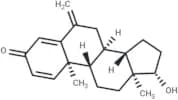
CAS:17β-hydroxy Exemestane is the primary active metabolite of exemestane .Fórmula:C20H26O2Forma y color:SolidPeso molecular:298.42Gridegalutamide
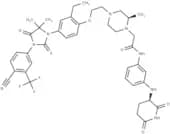
CAS:Gridegalutamide exhibits anti-androgen and anti-tumor activities.Fórmula:C41H45F3N8O5SForma y color:SolidPeso molecular:818.91PROTAC AR Degrader-4 TFA
PROTAC AR Degrader-4: IAP ligand, linker, AR binder; it's a SNIPER that degrades AR non-genetically.Fórmula:C45H68F3N3O11Forma y color:SolidPeso molecular:884.03ARD-69
ARD-69, a potent PROTAC, degrades AR in prostate cancer, with low DC50 values in AR+ cell lines, and suppresses AR gene expression.Fórmula:C62H74ClFN8O7SForma y color:SolidPeso molecular:1129.83Dipropyl phthalate
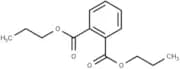
CAS:Dipropyl phthalate is a weak androgen receptor inhibitor, and can be used in biochemical experiments and drug synthesis.Fórmula:C14H18O4Pureza:98.62%Forma y color:SolidPeso molecular:250.29PROTAC AR Degrader-9
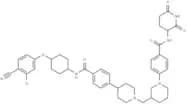
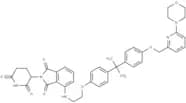
PROTAC AR Degrader-9 (Compound c6) is a PROTAC-based degrader specifically targeting the androgen receptor. It effectively degrades the androgen receptor in human dermal papilla cells (HDPC) with a DC50 of 262.38 nM. Additionally, this compound enhances the expression of paracrine factors, such as TGF-β1 and β-catenin, thereby promoting hair regeneration in mouse models. [Pink: ligand for target protein AR ligand-38; Black: linker; Blue: ligand for E3 ligase Cereblon]Fórmula:C43H49ClN6O5Forma y color:SolidPeso molecular:765.339Faznolutamide
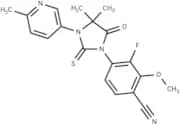
CAS:Faznolutamide is an antiandrogen agent [1] [2] .Fórmula:C19H17FN4O2SForma y color:SolidPeso molecular:384.43PROTAC AR Degrader-8
CAS:PROTAC AR Degrader-8 (Compound NP18) functions as a PROTAC degrader targeting the androgen receptor (AR) and effectively degrades AR-FL in both 22Rv1 and LNCaP cells with DC50 values of 0.018 μM and 0.14 μM, respectively. It also degrades AR-V7 in 22Rv1 cells with a DC50 of 0.026 μM. Additionally, PROTAC AR Degrader-8 inhibits the proliferation of 22Rv1 and LNCaP cancer cells, exhibiting IC50 values of 0.038 μM and 1.11 μM. It induces cell cycle arrest at the G2/M phase and triggers apoptosis in 22Rv1 cells (apoptosis). Demonstrating anticancer efficacy, PROTAC AR Degrader-8 shows activity in both mouse and zebrafish models. [Pink: ligand for target protein AR ligand-33; Black: linker; Blue: ligand for E3 ligase Cereblon]Fórmula:C40H41N5O7Forma y color:SolidPeso molecular:703.7833-Cl-Pyridine-amide-acrylaldehyde-piperazine
3-Cl-Pyridine-amide-acrylaldehyde-piperazine serves as a synthetic intermediate for LO-4-25. LO-4-25 is a ligand for the androgen receptor (AR) DNA binding domain and is linked to a truncated fumaramide handle via a connector. In 22Rv1 cells, LO-4-25 demonstrates potent degradation of both AR and AR-V7.Forma y color:Odour SolidARD-2051
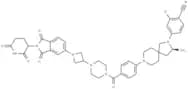
CAS:ARD-2051 is a potent, orally active proteolysis-targeting chimera degrader of the androgen receptor (AR), exhibiting DC50 values of 0.6 nM in degrading ARFórmula:C43H45ClN8O5Pureza:98%Forma y color:SolidPeso molecular:789.32Lambertianic acid
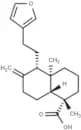
CAS:Lambertianic acid is a bioactive chemical that has anti-allergic and antibacterial effects.Fórmula:C20H28O3Pureza:98%Forma y color:SolidPeso molecular:316.4419,10-Dihydrophenanthrene
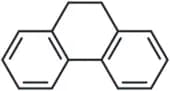
CAS:9,10-Dihydrophenanthrene has inhibitory activity against the androgen receptor and can be used in related research in the field of life sciences.Fórmula:C14H12Pureza:98.76%Forma y color:SolidPeso molecular:180.25Linuron
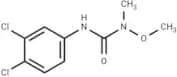
CAS:Linuron herbicide disrupts photosynthesis and acts as an androgen receptor antagonist.Fórmula:C9H10Cl2N2O2Pureza:99.08%Forma y color:White Crystalline Solid Linuron Is A Colorless Crystals Non Corrosive Used As An HerbicidePeso molecular:249.09LO-4-25
LO-4-25 is a covalent degrader targeting the androgen receptor (AR) and its splice variant AR-V7. It covalently binds to the E3 ubiquitin ligase CUL4 DCAF16, facilitating the ubiquitination of both AR and AR-V7, which are then recognized and degraded by the proteasome, leading to reduced protein levels of AR and AR-V7 in cells. LO-4-25 is promising for research on androgen-independent prostate cancer.Forma y color:Odour SolidCl-4AS-1
CAS:steroidal androgen receptor agonistFórmula:C26H33ClN2O2Pureza:98%Forma y color:SolidPeso molecular:441.01PROTAC AR Degrader-10
PROTACAR Degrader-10 is a protein degrader targeting androgen receptors (AR) with a DC50 value of ≤100 nM, and can be used in prostate cancer research.6-Amino-5-bromoquinoxaline
CAS:Compound PDK0245, with CAS No. 50358-63-9, is a fragment molecule that serves as an important scaffold for molecular linking, expansion, and modification. Compound PDK0245 provides a structural basis and research tool for the design and screening of novel drug candidates, and is commonly used in drug discovery, drug synthesis, and related research.Fórmula:C8H6BrN3Peso molecular:224.05