Enzima
Los inhibidores enzimáticos son moléculas que se unen a las enzimas y disminuyen su actividad. Estos inhibidores se utilizan ampliamente en la investigación para estudiar la cinética enzimática, la regulación y el papel de enzimas específicas en las vías metabólicas. Los inhibidores enzimáticos también son cruciales en el desarrollo de fármacos, ya que muchos agentes terapéuticos funcionan inhibiendo enzimas involucradas en procesos patológicos. Al dirigirse a las enzimas, estos inhibidores pueden modular las vías bioquímicas y ofrecer tratamientos potenciales para diversas enfermedades. En CymitQuimica, ofrecemos una amplia selección de inhibidores enzimáticos de alta calidad para apoyar su investigación en bioquímica, farmacología y descubrimiento de fármacos.
Subcategorías de "Enzima"
- Anhídrido carbónico(177 productos)
- Hidroxilasa(30 productos)
- MPO(2 productos)
- Reductasa(52 productos)
- Tirosinasa(67 productos)
Se han encontrado 3586 productos de "Enzima"
Ordenar por
Pureza (%)
0
100
|
0
|
50
|
90
|
95
|
100
Nucleoside phosphorylase from microorganisms
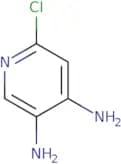
CAS:<p>Nucleoside phosphorylase (Purine nucleoside phosphorylase, PNP, PNPase, inosine phosphorylase, inosine-guanosine phosphorylase; EC 2.4.2.1) is an enzyme that catalyzes the following reaction: purine nucleoside + Pi ⇌ purine + alpha-D-ribose 1-phosphate One unit of nucleoside phosphorylase will phosphorylate 1.0 micromole of inosine to hypoxanthine and alpha-D-ribose 1-phosphate per min at pH 7.4 and 25°C.</p>Fórmula:C5H6ClN3Pureza:Min. 95%Peso molecular:143.57 g/molhCAI/II-IN-6
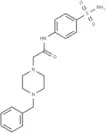
CAS:<p>hCAI/II-IN-6 is a selective and orally active inhibitor of human carbonic anhydrase (CA).</p>Fórmula:C19H24N4O3SPureza:97.07%Forma y color:SolidPeso molecular:388.48Cocarboxylase hydrochloride
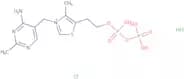
CAS:<p>Cocarboxylase hydrochloride is a coenzyme derivative, which is primarily sourced from thiamine (vitamin B1). It plays a crucial role in biochemical processes by facilitating the enzymatic decarboxylation of alpha-keto acids within the cellular environment. This action is fundamental in energy production as it aids in the conversion of pyruvate to acetyl-CoA, subsequently entering the citric acid cycle. Cocarboxylase hydrochloride’s involvement in carbohydrate metabolism is especially vital for tissues with high metabolic rates, such as the heart and brain.</p>Fórmula:C12H19N4O7P2S·ClHClPureza:Min. 95%Peso molecular:497.23 g/molSialic acid aldolase
<p>E. coli recombinant sialic acid aldolase (EC 4.1.3.3) from Pasteurella multocida. One unit is defined as the amount of enzyme that catalyses the formation of 1 umol Neu5Ac from ManNAc and Pyruvate per minute at 37 ℃.Activity: 9U/mg</p>Tyrosinase-IN-2
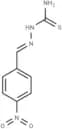
CAS:<p>Tyrosinase-IN-2, a potent tyrosinase inhibitor, may help in skin lightening and food preservation research.</p>Fórmula:C8H8N4O2SPureza:99.78%Forma y color:SolidPeso molecular:224.24α-Glucosidase from bacillus stearothermophilus, lyophilized powder, 250 Units
CAS:<p>α-Glucosidase is a glycoside hydrolase enzyme that hydrolyzes α-1,4-linked D-glucose residues to produce α-D-glucose. This enzyme has been isolated from Bacillus stearothermophilus and is used as an industrial catalyst in the production of glucose syrups. One Unit of α-Glucosidase will release 1.0 µmole of p-nitrophenol from the chromogenic substrate mimic 4-nitrophenyl α-D-glucopyranoside per minute under optimum conditions.</p>Forma y color:PowderSuperoxide dismutase - >3000 units/mg
CAS:<p>Superoxide dismutase is an enzyme that catalyzes the conversion of harmful superoxide into hydrogen peroxide and oxygen.</p>Forma y color:PowderPeso molecular:203.16 g/molMaltose phosphorylase (from bacteria), ammonium sulphate suspension
CAS:<p>Maltose phosphorylase (systematic name maltose:phosphate 1-beta-D-glucosyltransferase; EC 2.4.1.8) is an enzyme that catalyzes the following reaction: maltose + Pi ⇌ D-glucose + beta-D-glucose 1-phosphate One unit of maltose phosphorylase will produce 1.0 μmole of D-Glucose from maltose per minute at pH 7.0 and 30°C.</p>Pureza:Min. 95%Peso molecular:0 g/molLyticase
CAS:<p>Lyticase is a lysing enzyme that is designed to lyse cells in a biological sample. It contains an optimized wild-type guanine nucleotide-binding protein and has been shown to have high enzyme activities. Lyticase has also been shown to be active against opportunistic fungal strains, such as Candida glabrata, by disrupting their cell membranes. Lyticase is classified as a signal peptide with nuclear DNA, which allows it to be used in wastewater treatment applications. The enzyme can also be used for the analysis of the Toll-like receptor (TLR) response of microbes due to its electrochemical impedance spectroscopy properties.</p>Pureza:Min. 95%Carboxypeptidase Y from baker's yeast
CAS:<p>Carboxypeptidase Y (EC 3.4.16.1) is an exopeptidase enzyme. It hydrolyzes peptide bonds of C-terminal residues and it remains active in the presence of urea at low to moderate concentrations. One unit of the Carboxypeptidase Y will hydrolyze 1.0 μmole of a chromogenic peptide substrate, releasing C-terminal alanine and generating a light-absorbing product.</p>Pureza:Min. 95%Bupicomide
CAS:<p>Bupicomide is a dopamine β-hydroxylase inhibitor with antihypertensive and vasodilatory activity and may be used in the study of hypertension.</p>Fórmula:C10H14N2OPureza:99.84% - >99.99%Forma y color:SolidPeso molecular:178.23Choline oxidase
CAS:<p>Choline oxidase (EC 1.1.3.17) is an enzyme that catalyzes the following reaction: choline + O2 + H20 ⇌ betaine aldehyde + H2O2One unit of choline oxidase will form 1 μmole of H2O2 by oxidizing choline to betaine aldehyde per min at pH 8.0 and 37 °C. You can remove the build-up of hydrogen peroxide using catalase.</p>Pureza:Min. 95%Glucose dehydrogenase
CAS:<p>Glucose Dehydrogenase is an enzyme, which is typically derived from microbial sources such as bacteria and fungi. It functions by catalyzing the oxidation of glucose to gluconolactone, concurrently reducing a cofactor such as NAD⁺ or PQQ. This biochemical reaction is critical in various analytical applications due to its specificity and efficiency in glucose detection.Glucose Dehydrogenase is widely employed in the development of biosensors and diagnostic assays. Its primary application is in blood glucose monitoring devices, where its ability to accurately quantify glucose levels is crucial for managing diabetes. Additionally, it is utilized in research and development settings for biochemical assays that require precise glucose measurements. The enzyme's rapid and specific action on glucose molecules makes it an indispensable tool in both clinical and laboratory environments, contributing to advancements in biosensing technologies and metabolic studies.</p>Lysozyme - Enzyme activity min 40000 FIP/mg
CAS:<p>Lysozyme is a bacteriolytic enzyme, which is primarily derived from hen egg whites. It functions by hydrolyzing the β-1,4-glycosidic linkages in the peptidoglycan layer of bacterial cell walls, particularly in Gram-positive bacteria. This enzymatic activity results in the lysis and subsequent death of the bacterial cells, providing a potent antimicrobial effect.</p>Forma y color:PowderUrokinase
CAS:<p>Urokinase (urokinase-type plasminogen activator, uPA; EC 3.4.21.73) is as serine protease. Its physiological substrate is plasminogen. Urokinase converts plasminogen into an active enzyme, plasmin, which is also a serine protease. In its active form plasmin plays an important role in dissolving blood clots. Despite its name, Urokinase is not a kinase.</p>Fórmula:C21H25BrN2O3Pureza:(%) Min. 85%endo-β-1,4-Mannanase
CAS:<p>Endo-β-1,4-Mannanase (other names Mannan endo-1,4-β-mannosidase, endo-β-1,4-mannase, β-mannanase B, β-1, 4-mannan 4-mannanohydrolase, endo-β-mannanase, β-D-mannanase, 1,4-β-D-mannan mannanohydrolase; EC 3.2.1.78) is an enzyme, catalyzing the hydrolysis of -1, 4-mannosidic linkages in mannans, glucomannans and galactomannans. One unit of Endo-β-1,4-Mannanase will release 1.0 µmole of mannose reducing-sugar per minute from a 3mg/ml mannan solution at pH 5.5 and 37degC. Expressed in U/g.</p>Butyrylcholinesterase human
CAS:<p>Butyrylcholinesterase is an enzyme made in the liver and found mainly in blood plasma. Butyrylcholinesterase (EC 3.1.1.8), also known as BChE or BuChE, is a nonspecific cholinesterase enzyme that hydrolyses choline-based esters. One unit of Butyrylcholinesterase will hydrolyze 1.0 μmole of butyrylcholine to choline and butyrate per minute at pH 8.0 and 37 °C.</p>Forma y color:PowderCarnitine acetyltransferase
CAS:<p>From pigeon breast muscle - Carnitine acetyltransferase (EC 2.3.1.7, also Carnitine O-acetyltransferase) is an enzyme that catalyzes the following chemical reaction: acetyl-CoA + carnitine ⇌ CoA + acetylcarnitine</p>Invertase
CAS:<p>Invertase is an enzyme that catalyzes the hydrolysis of sucrose to glucose and fructose and can be found in plants and microorganisms</p>Forma y color:Beige PowderhCAII-IN-9
CAS:<p>hCAII-IN-9 inhibits hCA II/IX/XII with IC50s of 1.18, 0.17, 2.99 μM; not BBB permeable.</p>Fórmula:C15H16ClN3O5S2Pureza:98.63%Forma y color:SolidPeso molecular:417.89