Enzima
Los inhibidores enzimáticos son moléculas que se unen a las enzimas y disminuyen su actividad. Estos inhibidores se utilizan ampliamente en la investigación para estudiar la cinética enzimática, la regulación y el papel de enzimas específicas en las vías metabólicas. Los inhibidores enzimáticos también son cruciales en el desarrollo de fármacos, ya que muchos agentes terapéuticos funcionan inhibiendo enzimas involucradas en procesos patológicos. Al dirigirse a las enzimas, estos inhibidores pueden modular las vías bioquímicas y ofrecer tratamientos potenciales para diversas enfermedades. En CymitQuimica, ofrecemos una amplia selección de inhibidores enzimáticos de alta calidad para apoyar su investigación en bioquímica, farmacología y descubrimiento de fármacos.
Subcategorías de "Enzima"
- Anhídrido carbónico(196 productos)
- Hidroxilasa(36 productos)
- MPO(2 productos)
- Reductasa(50 productos)
- Tirosinasa(71 productos)
Se han encontrado 3619 productos de "Enzima"
Ordenar por
Pureza (%)
0
100
|
0
|
50
|
90
|
95
|
100
Catalase ECAT01™, EUCODIS® Patent: US 9951306 and EP2861715
CAS:<p>A proprietary potent and stable alternative to chemical neutralizers such as pyruvate - for the utilization in environmental monitoring applications. Use of catalase as a supplement in media plates offers a more effective and reliable solution for safe and secure environmental monitoring of sterilization in clean rooms, isolators or production facilities by also removing remaining traces and spots of high concentration of H2O2. Currently, agar plates for monitoring disinfection or sterilization are supplemented with pyruvate, which is consumed during the neutralization of hydrogen peroxide. One of the main benefits of this catalase is its high stability in agar media at 50°C, which allows easy preparation of media and processing into plates. Due to the high stability no special storage conditions are needed and a shelf-life of > 6 months at 4-25°C can be guaranteed.<br>Key features are:</p>Laccase from Trametes versicolor
CAS:<p>Multi-copper oxidase from the family of polyphenol oxidades. It can be also found in many plants and bacteria. Laccase catalyses the oxidation of phenolic compounds such as lignin. It can oxidase non phenolic groups too with the use of mediators, chemical agents involved in the transfer of the electrons during the reaction. In some cases, laccase can also oxidise halogenated compounds. This enzyme is used for enzymatic assays, lignol screening tests and for waste water treatment to remove biodegrdable pollutants.</p>Forma y color:PowderLacBuster™-S 2000 (β-lactamase)
CAS:<p>LacBuster™-S 2000 is an enzyme preparation, specifically a beta-lactamase, which is derived from bacterial sources known for their capacity to degrade beta-lactam antibiotics. Through hydrolytic cleavage of the beta-lactam ring, this enzyme neutralizes the efficacy of beta-lactam antibiotics, thereby rendering them inactive.</p>Endopeptidase, liquid, food grade
CAS:<p>Endopeptidase, liquid, food grade is an enzymatic product that functions as a crucial component in the hydrolysis of protein substrates. This enzyme is typically derived from microbial sources, such as bacteria or fungi, and is cultivated under controlled fermentation processes to ensure high purity and activity levels. The primary mode of action of endopeptidases involves the cleavage of peptide bonds within protein molecules, effectively breaking down long protein chains into smaller peptides and amino acids.</p>ApStar Taq DNA Polymerase, 1250 units
<p>ApStar Taq DNA Polymerase is a thermostable DNA polymerase, originally derived from the thermophilic bacterium Thermus aquaticus. It operates by synthesizing new strands of DNA through the extension of primers in the 5' to 3' direction, utilizing a DNA template. This enzyme is specifically engineered to withstand high temperatures, making it ideal for the denaturation phases of PCR.</p>EUCODIS® Peroxidase 12, from bacterial, fungal and plant origin, recombinant - EP012
CAS:<p>Peroxidase 12 recombinantly expressed in P. pastoria comes in a freeze-dried formulation. It has its pH optimum at 5-8 and temp. optimum at 20-40°C. Peroxidases can be utilized as enzymes catalyzing e.g. aromatic ring hydroxylation, epoxidation, halogenation, N- or S-oxidation, ether cleavage and alcohol/aldehyde oxidation reactions. Peroxidase 12 was shown to act on styrene, veratryl alcohol, vanillyl alcohol, n-methyl anthranilate and thioanisole.</p>Forma y color:PowderGlucosyltransferase227-freeze dried
CAS:<p>Glucosyltransferase227-freeze dried is an enzyme-derived product, originating from microbial sources known for its role in catalyzing the transfer of glucose moieties from a donor molecule to specific acceptor molecules. The enzyme operates by facilitating covalent bond formation between glucose and target substrates, displaying specificity that can be exploited in various biochemical pathways.</p>Penase, 3300 IU, β-lactamase I, lyophilized - EBL051.2
<p>Freeze-dried powder with 3300 IU beta-lactamase I activity per vial against all relevant penicillins. Our penase (penicillinase) posesses a specific substrate range solely against all relevant penicillins.</p>Forma y color:PowderPhospholipase D 040, concentrated (100 U/mg), spray-dried, recombinant, of prokaryotic origin
CAS:<p>Phospholipase D 040, concentrated (100 U/mg), spray-dried, recombinant, of prokaryotic origin, is an enzyme preparation designed for advanced biochemical applications. This enzyme is derived from a prokaryotic source through recombinant DNA technology, allowing for high purity and activity. Phospholipase D functions by catalyzing the hydrolysis of phospholipids to produce phosphatidic acid and free head groups, which is a crucial reaction in both lipid signaling and membrane dynamics.</p>Pureza:Min. 95%Pancreatin from porcine pancreas, powder
CAS:<p>Pancreatin is an enzyme preparation, which is derived from the porcine pancreas. This product contains a mixture of several digestive enzymes, including amylase, lipase, and protease. It is typically obtained through the extraction and purification of these enzymes from the pancreas of pigs, providing a natural and effective source for enzymatic activity.</p>Proteinase K, high-quality, freeze-dried, recombinant
CAS:<p>A proteolytic enzyme; degrades protein contaminants in nucleic acid preparations</p>Ribokinase, liquid
CAS:<p>Please enquire for more information about Ribokinase, liquid including the price, delivery time and more detailed product information at the technical inquiry form on this page</p>ALPK1 Protein, Human, Recombinant (His & Myc)
<p>ALPK1 Protein, Human, Recombinant (His & Myc) is expressed in Baculovirus.</p>Forma y color:Lyophilized PowderPeso molecular:29.9 kDa (predicted)Glucosyltransferase 206-freeze dried
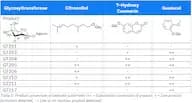
CAS:<p>Glucosyltransferase (GTase) is the enzyme that transfers glucose to another organic molecule (aglycon), establishing glycosidic linkage. UDP-glucose dependent GTases are part of the enzyme family of glucosyltransferases, they are versatile tools in glucosylation reactions. Different GTases have different substrate specificities. For the specificity of GT206 Glucosyltransferase, please see Table 1 that lists the available GTases with GT206 highlighted.Color: beigeForm: lyophilisateProtein content: 0.5 mg/mgThe glucosyltransferase was tested in a glucosylation reaction of a preferred substrate. High conversion after up to 24 h reaction time was observed.<br>Not sure which GTase to choose? Consider our Glucosyltransferase kit, which contains all 8 Glucosyltransferases.</p>Glucosyltransferase Kit
CAS:<p>The kit contains 8 different Glucosyltransferases (GTases), which are enzymes that transfer glucose to another organic molecule (aglycon), establishing glycosidic linkage. UDP-glucose dependent GTases are part of the enzyme family of glucosyltransferases, they are versatile tools in glucosylation reactions. Different GTases have different substrate specificities, as shown on Table 1. The kit is especially designed for screening and finding the most well-suited GTase for your specific process. All GTases in the kit are also available individually for bulk purchase.</p>EUCODIS® Nitrilhydratase 21, recombinant enzyme - ENH021
<p>Nitrile hydratase 21 recombinantly expressed in E. coli comes in a freeze-dried formulation. Nitrile hydratases can be utilized to convert nitriles into their corresponding amides, e.g. to produce acrylamide from acrylonitrile. Additional applications include the removal of nitriles from industrial wastewater. Our nitrile hydratases have been tested for hydrolysis of the following substrates:cyclohexanecarbonitrile, cinnamonitrile, benzonitrile, methacrylonitrile, pivalonitrile.</p>L-Methionine γ-lyase
CAS:<p>A pyridoxal phosphate-containing enzyme that converts L-methionine to α-ketobutyrate, ammonia and methyl mercaptan. Recombinant from e.coli source. <br>EC 4.4.1.11</p>Pureza:Min. 95%Protease
CAS:<p>A protease enzyme from bacillus subtilis which catalyzed proteolysis, a process that breaks down proteins and peptides to small polypeptides or amino acids</p>Ref: 3D-EP183488
Producto descatalogadoCholine oxidase
CAS:<p>Choline oxidase (EC 1.1.3.17) is an enzyme that catalyzes the following reaction: choline + O2 + H20 ⇌ betaine aldehyde + H2O2One unit of choline oxidase will form 1 μmole of H2O2 by oxidizing choline to betaine aldehyde per min at pH 8.0 and 37 °C. You can remove the build-up of hydrogen peroxide using catalase.</p>Pureza:Min. 95%