Enzima
Subcategorías de "Enzima"
- Anhídrido carbónico(197 productos)
- Hidroxilasa(36 productos)
- MPO(2 productos)
- Reductasa(51 productos)
- Tirosinasa(71 productos)
Se han encontrado 3621 productos de "Enzima"
SOD2 Protein, Human, Recombinant (E. coli, His)
Superoxide Dismutase (SOD2) is a number of the iron/manganese superoxide dismutase family.Forma y color:Lyophilized PowderPeso molecular:25 KDa (reducing condition)Ref: TM-TMPJ-00104
5µg113,00€10µg178,00€20µg284,00€50µg523,00€100µg759,00€200µg1.103,00€500µg1.765,00€1mg2.535,00€PPIH Protein, Human, Recombinant (His)
Peptidyl-Prolyl Cis-Trans Isomerase H (PPIH) belongs to the Cyclophilin-type PPIase family that accelerate the folding of proteins.Forma y color:Lyophilized PowderPeso molecular:24 KDa (reducing condition)Ref: TM-TMPJ-00676
5µg113,00€10µg178,00€20µg284,00€50µg523,00€100µg759,00€200µg1.103,00€500µg1.765,00€1mg2.535,00€UROIIIS Protein, Human, Recombinant (His)
Uroporphyrinogen-III Synthase is an enzyme which belongs to the uroporphyrinogen-III synthase family.Forma y color:Lyophilized PowderPeso molecular:29 KDa (reducing condition)Ref: TM-TMPJ-00830
5µg113,00€10µg178,00€20µg284,00€50µg523,00€100µg759,00€200µg1.103,00€500µg1.765,00€1mg2.535,00€GSH-S Protein, Human, Recombinant (His)
Glutathione Synthetase belongs to the eukaryotic GSH synthase family.Forma y color:Lyophilized PowderPeso molecular:55 KDa (reducing condition)Ref: TM-TMPJ-00979
5µg113,00€10µg178,00€20µg284,00€50µg523,00€100µg759,00€200µg1.103,00€500µg1.765,00€1mg2.535,00€Carbonic Anhydrase 1 Protein, Human, Recombinant (His)
Carbonic Anhydrase 1 (CA1) is a cytosolic enzyme, belonging to the alpha-carbonic anhydrase family.Forma y color:Lyophilized PowderPeso molecular:25-35 KDa (reducing condition)Ref: TM-TMPJ-00731
5µg52,00€10µg80,00€20µg116,00€50µg216,00€100µg408,00€200µg751,00€500µg1.765,00€1mg2.535,00€UBE2G2 Protein, Human, Recombinant (GST)
Ubiquitin-Conjugating Enzyme E2 G2 (UBE2G2) is an important cellular mechanism for targeting abnormal or short-lived proteins for degradation, which belong toForma y color:Lyophilized PowderPeso molecular:43 KDa (reducing condition)UBE2R2 Protein, Human, Recombinant (His)
Ubiquitin-Conjugating Enzyme E2 R2 (UBE2R2) is a modification enzyme that belongs to the ubiquitin-conjugating enzyme family.Forma y color:Lyophilized PowderPeso molecular:37 KDa (reducing condition)TSTA3 Protein, Human, Recombinant (His)
GDP-L-Fucose Synthase is a NADP(H)-binding protein.Forma y color:Lyophilized PowderPeso molecular:40 KDa (reducing condition)Ref: TM-TMPJ-01111
5µg113,00€10µg178,00€20µg284,00€50µg523,00€100µg759,00€200µg1.103,00€500µg1.765,00€1mg2.535,00€KHK Protein, Human, Recombinant (His)
Ketohexokinase, also known as Hepatic fructokinase, is a member of the carbohydrate kinase PfkB family.Forma y color:Lyophilized PowderPeso molecular:30 KDa (reducing condition)Ref: TM-TMPJ-00479
5µg80,00€10µg117,00€20µg181,00€50µg343,00€100µg558,00€200µg928,00€500µg1.765,00€1mg2.535,00€DHS Protein, Human, Recombinant (His)
Human Deoxyhypusine Synthase (DHS) is vital for the first step of hypusine biosynthesis.Pureza:99.22% - 99.22%Forma y color:Lyophilized PowderPeso molecular:42 KDa (reducing condition)Ref: TM-TMPJ-00982
5µg90,00€10µg130,00€20µg193,00€50µg381,00€100µg600,00€200µg947,00€500µg1.765,00€1mg2.535,00€UROD Protein, Human, Recombinant (His)
Uroporphyrinogen decarboxylase (UROD), is an enzyme of the heme biosynthetic pathway which belongs to the uroporphyrinogen decarboxylase family.Forma y color:Lyophilized PowderPeso molecular:40 KDa (reducing condition)Ref: TM-TMPJ-00788
5µg113,00€10µg178,00€20µg284,00€50µg523,00€100µg759,00€200µg1.103,00€500µg1.765,00€1mg2.535,00€UBE2K Protein, Human, Recombinant (GST)
UBE2K Protein, Human, Recombinant (GST) is expressed in E.Forma y color:Lyophilized PowderPeso molecular:45 KDa (reducing condition)FKBP2 Protein, Human, Recombinant (His)
Peptidyl-prolyl cis-trans isomerase FKBP2(FKBP2 for short), also named 13 kDa FK506-binding protein, FK506-binding protein 2, Immunophilin FKBP13, Rotamase, isForma y color:Lyophilized PowderPeso molecular:17 KDa (reducing condition)Ref: TM-TMPJ-00919
5µg90,00€10µg130,00€20µg193,00€50µg381,00€100µg600,00€200µg947,00€500µg1.765,00€1mg2.535,00€SGSH Protein, Human, Recombinant (His)
N-Sulphoglucosamine Sulphohydrolase (SGSH) is an important member of the sulfatase family which is involved in the degradation of heparin sulfate.Forma y color:Lyophilized PowderPeso molecular:63 KDa (reducing condition)Ref: TM-TMPJ-01002
5µg113,00€10µg178,00€20µg284,00€50µg523,00€100µg759,00€200µg1.103,00€500µg1.765,00€1mg2.535,00€dUTPase Protein, Human, Recombinant (His)
dUTPase Protein, Human, Recombinant (His) is expressed in E.Forma y color:Lyophilized PowderPeso molecular:20 KDa (reducing condition)Ref: TM-TMPJ-00941
5µg113,00€10µg178,00€20µg284,00€50µg523,00€100µg759,00€200µg1.103,00€500µg1.765,00€1mg2.758,00€PHS Protein, Human, Recombinant (His)
Pterin-4-α-Carbinolamine Dehydratase (PCBD1) is the founding member of the Pterin-4-α-Carbinolamine Dehydratase Family.Forma y color:Lyophilized PowderPeso molecular:14 KDa (reducing condition)Ref: TM-TMPJ-01043
5µg113,00€10µg178,00€20µg284,00€50µg523,00€100µg759,00€200µg1.103,00€500µg1.765,00€1mg2.535,00€PIP4K2A Protein, Human, Recombinant (His)
Phosphatidylinositol 5-phosphate 4-kinase type-2 alpha (PIP4K2A) is a member of the phosphatidylinositol-4-phosphate 5-kinase family.Forma y color:Lyophilized PowderPeso molecular:52-58 KDa (reducing condition)Ref: TM-TMPJ-00978
5µg113,00€10µg178,00€20µg284,00€50µg523,00€100µg759,00€200µg1.103,00€500µg1.765,00€1mg2.758,00€POMGNT1 Protein, Human, Recombinant (His)
Protein O-Linked-Mannose β-1 2-N-Acetylglucosaminyltransferase 1 (POMGNT1) belongs to the Glycosyltransferase 13 family.Forma y color:Lyophilized PowderPeso molecular:74 KDa (reducing condition)Ref: TM-TMPJ-01251
5µg113,00€10µg178,00€20µg284,00€50µg523,00€100µg759,00€200µg1.103,00€500µg1.765,00€1mg2.535,00€SULT4A1 Protein, Human, Recombinant
Sulfotransferase 4A1 (ST4A1) is a member of the Sulfotransferase 1 family.Forma y color:Lyophilized PowderPeso molecular:34 KDa (reducing condition)Ref: TM-TMPJ-01296
5µg113,00€10µg178,00€20µg284,00€50µg523,00€100µg779,00€200µg1.142,00€500µg1.923,00€1mg2.758,00€RRM2 Protein, Human, Recombinant (His)
Ribonucleoside-Diphosphate Reductase Subunit M2 (RRM2) belongs to the ribonucleoside diphosphate reductase small chain family.Forma y color:Lyophilized PowderPeso molecular:47 KDa (reducing condition)Ref: TM-TMPJ-00937
5µg113,00€10µg178,00€20µg284,00€50µg523,00€100µg759,00€200µg1.103,00€500µg1.765,00€1mg2.535,00€dUTPase Protein, Human, Recombinant
dUTPase Protein, Human, Recombinant is expressed in E. coli expression system. The predicted molecular weight is 17 KDa and the accession number is P33316-2.Forma y color:Lyophilized PowderPeso molecular:17 KDa (reducing condition)Ref: TM-TMPJ-00940
5µg80,00€10µg117,00€20µg181,00€50µg343,00€100µg558,00€200µg928,00€500µg1.765,00€1mg2.535,00€SULT1C2 Protein, Human, Recombinant (His)
Sulfotransferase 1C2 (SULT1C2) is a cytosolic enzyme member of the Sulfotransferase 1 family.Forma y color:Lyophilized PowderPeso molecular:30-37 KDa (reducing condition)Ref: TM-TMPJ-00656
5µg80,00€10µg117,00€20µg172,00€50µg303,00€100µg510,00€200µg882,00€500µg1.765,00€1mg2.535,00€GGACT Protein, Human, Recombinant (His)
Gamma-Glutamylaminecyclotransferase is an enzyme that converts gamma-glutamylamines to free amines and 5-oxoproline which belongs to the gamma-Forma y color:Lyophilized PowderPeso molecular:18 KDa (reducing condition)Ref: TM-TMPJ-01301
5µg113,00€10µg178,00€20µg284,00€50µg523,00€100µg759,00€200µg1.103,00€500µg1.765,00€1mg2.535,00€TGM2 Protein, Mouse, Recombinant (His)
Protein-glutamine gamma-glutamyltransferase 2 (TGM2) is a 78-kDa, calcium dependent enzyme,It belongs to the transglutaminase superfamily and transglutaminaseForma y color:Lyophilized PowderPeso molecular:70-90 KDa (reducing condition)Ref: TM-TMPJ-00900
5µg113,00€10µg178,00€20µg284,00€50µg523,00€100µg810,00€200µg1.238,00€500µg2.192,00€1mg3.520,00€UBE2J2 Protein, Human, Recombinant (GST)
Ubiquitin-Conjugating Enzyme E2 J2 (UBE2J2) belongs to the ubiquitin-conjugating enzyme family.Forma y color:Lyophilized PowderPeso molecular:30&36 KDa (reducing condition)Ref: TM-TMPJ-01221
5µg113,00€10µg178,00€20µg284,00€50µg523,00€100µg759,00€200µg1.103,00€500µg1.765,00€1mg2.535,00€MECR Protein, Human, Recombinant (His)
Trans-2-Enoyl-CoA Reductase Mitochondrial (MECR) belongs to the zinc-containing alcohol dehydrogenase family.Forma y color:Lyophilized PowderPeso molecular:39 KDa (reducing condition)Ref: TM-TMPJ-00460
5µg113,00€10µg178,00€20µg284,00€50µg523,00€100µg759,00€200µg1.103,00€500µg1.765,00€1mg2.535,00€GALK1 Protein, Human, Recombinant (His)
Galactokinase belongs to the GHMP kinase family and GalK subfamily.Forma y color:Lyophilized PowderPeso molecular:45 KDa (reducing condition)Ref: TM-TMPJ-00997
5µg113,00€10µg178,00€20µg284,00€50µg523,00€100µg759,00€200µg1.103,00€500µg1.765,00€1mg2.535,00€PBLD Protein, Human, Recombinant (His)
Phenazine Biosynthesis-Like Domain-Containing protein (PBLD) belongs to the phenazine biosynthesis-like protein (PhzF) family, which is expressed in mostForma y color:Lyophilized PowderPeso molecular:30 KDa (reducing condition)Ref: TM-TMPJ-00932
5µg113,00€10µg178,00€20µg284,00€50µg523,00€100µg759,00€200µg1.103,00€500µg1.765,00€1mg2.535,00€MGAT2 Protein, Human, Recombinant (His)
Mannoside Acetylglucosaminyltransferase 2 (MGAT2) is a single-pass type II membrane protein that contains the typical glycosyltransferase domains: a short N-Forma y color:Lyophilized PowderPeso molecular:50 KDa (reducing condition)Ref: TM-TMPJ-01092
5µg113,00€10µg178,00€20µg284,00€50µg523,00€100µg759,00€200µg1.103,00€500µg1.765,00€1mg2.535,00€ADH7 Protein, Human, Recombinant (His)
Alcohol dehydrogenase class 4 mu/sigma chain (ADH7) is a cytoplasm enzyme which is a member of the alcohol dehydrogenase family.Forma y color:Lyophilized PowderPeso molecular:44 KDa (reducing condition)Ref: TM-TMPJ-00953
5µg113,00€10µg178,00€20µg284,00€50µg523,00€100µg759,00€200µg1.103,00€500µg1.765,00€1mg2.535,00€BLVRA Protein, Human, Recombinant (His)
Human Biliverdin reductase A (BLVRA) is belonged to the Gfo/Idh/MocA family and Biliverdin reductase subfamily.Forma y color:Lyophilized PowderPeso molecular:35-45 KDa (reducing condition)Ref: TM-TMPJ-01009
5µg90,00€10µg130,00€20µg193,00€50µg381,00€100µg600,00€200µg947,00€500µg1.765,00€1mg2.535,00€SENP8 Protein, Human, Recombinant (His)
Sentrin-Specific Protease 8 (SENP8) mediates the reversible covalent modification of proteins by NEDD8.Forma y color:Lyophilized PowderPeso molecular:22 KDa (reducing condition)UBE2D4 Protein, Human, Recombinant (GST)
Ubiquitin-Conjugating Enzyme E2 D4 (UBE2D4) is a ligase that belongs to the Ubiquitin-Conjugating Enzyme family.Forma y color:Lyophilized PowderPeso molecular:40 KDa (reducing condition)SMAD1 Protein, Human, Recombinant (GST)
SMAD Family Member 1 (SMAD1) is a member of the dwarfin/SMAD family.Forma y color:Lyophilized PowderPeso molecular:58-80 KDa (reducing condition)Ref: TM-TMPJ-01129
5µg113,00€10µg178,00€20µg284,00€50µg523,00€100µg759,00€200µg1.103,00€500µg1.765,00€1mg2.535,00€INPP1 Protein, Human, Recombinant (His)
Inositol Polyphosphate 1-Phosphatase (INPP1) is a member of the inositol monophosphatase family.Forma y color:Lyophilized PowderPeso molecular:40-50 KDa (reducing condition)Ref: TM-TMPJ-00984
5µg113,00€10µg178,00€20µg284,00€50µg523,00€100µg759,00€200µg1.103,00€500µg1.765,00€1mg2.535,00€PFKFB1 Protein, Human, Recombinant (His)
6-phosphofructo-2-kinase/fructose-2,6-bisphosphatase 1 is an enzyme that in humans is encoded by the PFKFB1 gene.Forma y color:Lyophilized PowderPeso molecular:60 KDa (reducing condition)Ref: TM-TMPJ-00868
5µg113,00€10µg178,00€20µg284,00€50µg523,00€100µg759,00€200µg1.103,00€500µg1.765,00€1mg2.758,00€PPIC Protein, Human, Recombinant (Trx & His)
Cyclophilin C is an enzyme (EC 5.2.1.8) found in both prokaryotes and eukaryotes that interconverts the cis and trans isomers of peptide bonds with the aminoForma y color:Lyophilized PowderPeso molecular:34 KDa (reducing condition)Ref: TM-TMPJ-00971
5µg113,00€10µg178,00€20µg284,00€50µg523,00€100µg759,00€200µg1.103,00€500µg1.765,00€1mg2.535,00€PFKFB3 Protein, Human, Recombinant (His)
Fructose-2,6-biphosphatase 3, also known as 6-phosphofructo-2-kinase or PFK2 or PFKFB3, involved in both the synthesis and degradation of fructose-2,6-Pureza:Greater than 95% as determined by reducing SDS-PAGE. - Greater than 95% as determined by reducing SDS-PAGE.Forma y color:Lyophilized PowderPeso molecular:57-62 KDa (reducing condition)Ref: TM-TMPJ-00319
5µg83,00€10µg119,00€20µg184,00€50µg346,00€100µg562,00€200µg930,00€500µg1.765,00€1mg2.675,00€Esterase D Protein, Human, Recombinant (His)
Human Esterase D is a cytoplasmic serine hydrolase that belongs to the esterase D family.Forma y color:Lyophilized PowderPeso molecular:31 KDa (reducing condition)Ref: TM-TMPJ-00459
5µg90,00€10µg130,00€20µg193,00€50µg381,00€100µg600,00€200µg947,00€500µg1.765,00€1mg2.535,00€HRSP12 Protein, Human, Recombinant (His)
Heat-Responsive Protein 12 (HRSP12) is an endoribonuclease that belongs to the Rut family.Forma y color:Lyophilized PowderPeso molecular:16 KDa (reducing condition)Ref: TM-TMPJ-01007
5µg68,00€10µg98,00€20µg150,00€50µg264,00€100µg470,00€200µg833,00€500µg1.765,00€1mg2.535,00€MDP1 Protein, Human, Recombinant (His)
MDP1, which is short for nesium-dependent phosphatase 1, is a 176 aa.Forma y color:Lyophilized PowderPeso molecular:18 KDa (reducing condition)GAMT Protein, Human, Recombinant (His)
GAMT is a methyltransferase which belongs to the class I-like SAM-binding methyltransferase superfamily.Forma y color:Lyophilized PowderPeso molecular:27-32 KDa (reducing condition)Ref: TM-TMPJ-01114
5µg80,00€10µg117,00€20µg181,00€50µg343,00€100µg558,00€200µg928,00€500µg1.765,00€1mg2.535,00€ATG4A Protein, Human, Recombinant (His)
Cysteine Protease ATG4A (ATG4A) is a cytoplasmic protein that belongs to the peptidase C54 family.Forma y color:Lyophilized PowderPeso molecular:40-55 KDa (reducing condition)Ref: TM-TMPJ-01250
5µg113,00€10µg178,00€20µg284,00€50µg523,00€100µg779,00€200µg1.142,00€500µg1.923,00€1mg2.758,00€BLK Protein, Human, Recombinant (His)
Tyrosine-Protein Kinase Blk (BLK) contains one protein kinase domain, one SH2 domain and one SH3 domain.Forma y color:Lyophilized PowderPeso molecular:50-65 KDa (reducing condition)Ref: TM-TMPJ-00307
5µg90,00€10µg130,00€20µg193,00€50µg381,00€100µg600,00€200µg947,00€500µg1.765,00€1mg2.535,00€PRL-2 Protein, Human, Recombinant (His)
PTP4A2, also known as PRL2 or PTPCAAX2, is short for Protein tyrosine phosphatase type IVA 2.Forma y color:Lyophilized PowderPeso molecular:18 KDa (reducing condition)Ref: TM-TMPJ-00053
5µg80,00€10µg117,00€20µg172,00€50µg303,00€100µg510,00€200µg882,00€500µg1.765,00€1mg2.535,00€BPGM Protein, Human, Recombinant (His)
Bisphosphoglycerate Mutase (BPGM) is a member of the Phosphoglycerate Mutase family and BPG-Dependent PGAM subfamily.Forma y color:Lyophilized PowderPeso molecular:30 KDa (reducing condition)Ref: TM-TMPJ-00800
5µg80,00€10µg117,00€20µg181,00€50µg343,00€100µg558,00€200µg928,00€500µg1.765,00€1mg2.535,00€Thrombomodulin Protein, Mouse, Recombinant (His)
Thrombomodulin is also known as CD141 antigen and blood dendritic cell antigen 3 (BDCA3), which is encoded by the THBD gene.Forma y color:Lyophilized PowderPeso molecular:85-90 KDa (reducing condition)Ref: TM-TMPJ-00857
5µg113,00€10µg178,00€20µg284,00€50µg523,00€100µg779,00€200µg1.142,00€500µg1.923,00€1mg2.758,00€PCSK9 Protein, Human, Recombinant (Avi), Biotinylated
PCSK9 Protein, Human, Recombinant (Avi), Biotinylated is expressed in HEK293 mammalian cells with C-Avi tag.Forma y color:Lyophilized PowderPeso molecular:19&65 KDa (reducing condition)HER3/ERBB3 Protein, Human, Recombinant (aa 20-643, His & Avi), Biotinylated
HER3/ERBB3 Protein, Human, Recombinant (aa 20-643, His & Avi), Biotinylated is expressed in HEK293 mammalian cells with C-6xHis-Avi tag.Forma y color:Lyophilized PowderPeso molecular:90-120 KDa (reducing condition)UPB1 Protein, Human, Recombinant (His)
β-Ureidopropionase is a cytoplasmic protein which belongs to the CN hydrolase family of BUP subfamily.Forma y color:Lyophilized PowderPeso molecular:42 KDa (reducing condition)Ref: TM-TMPJ-01374
5µg113,00€10µg178,00€20µg284,00€50µg523,00€100µg759,00€200µg1.103,00€500µg1.765,00€1mg2.535,00€CPA2 Protein, Human, Recombinant (His)
Carboxypeptidase A2 (CPA) is a secreted pancreatic procarboxy-peptidase that cleaves the C-terminal amide or ester bond of peptides that have a free C-terminalForma y color:Lyophilized PowderPeso molecular:50 KDa (reducing condition)Ref: TM-TMPJ-00602
5µg113,00€10µg178,00€20µg284,00€50µg523,00€100µg759,00€200µg1.103,00€500µg1.765,00€1mg2.535,00€ANG2 Protein, Mouse, Recombinant (hFc)
ANG2 Protein, Mouse, Recombinant (hFc) is expressed in HEK293 mammalian cells with C-Fc tag.Forma y color:Lyophilized PowderPeso molecular:90-120 KDa (reducing condition)Ref: TM-TMPJ-00303
5µg65,00€10µg91,00€20µg147,00€50µg271,00€100µg484,00€200µg890,00€500µg1.941,00€1mg2.907,00€UBE2H Protein, Human, Recombinant (GST)
Ubiquitin-Conjugating Enzyme E2 H (UBE2H) belongs to the E2 Ubiquitin-Conjugating Enzyme family.Forma y color:Lyophilized PowderPeso molecular:50 KDa (reducing condition)UBE2Z Protein, Human, Recombinant (His)
Ubiquitin-Conjugating Enzyme E2 Z (ZUBE2Z) is a member of the E2 ubiquitin-conjugating enzyme family.Forma y color:Lyophilized PowderPeso molecular:32 KDa (reducing condition)LMW-PTP Protein, Human, Recombinant (His)
Low Molecular Weight Phosphotyrosine Protein Phosphatase (LMW-PTP) is a member of the low molecular weight phosphotyrosine protein phosphatase family.Forma y color:Lyophilized PowderPeso molecular:18 KDa (reducing condition)Ref: TM-TMPJ-00908
5µg90,00€10µg130,00€20µg193,00€50µg381,00€100µg600,00€200µg947,00€500µg1.765,00€1mg2.535,00€VCP Protein, Human, Recombinant (His)
Valosin-Containing Protein (VCP) is a nuclear protein that belongs to the AAA ATPase family.Forma y color:Lyophilized PowderPeso molecular:75 KDa (reducing condition)Ref: TM-TMPJ-01013
5µg113,00€10µg178,00€20µg284,00€50µg523,00€100µg779,00€200µg1.142,00€500µg1.923,00€1mg2.758,00€TRIM5 Protein, Human, Recombinant (His)
Tripartite motif-containing Motif 5 is a protein that in humans is encoded by the TRIM5 gene.It is a 493 amino acids protein that belongs to the TRIM/RBCCForma y color:Lyophilized PowderPeso molecular:30-36 KDa (reducing condition)Ref: TM-TMPJ-01310
5µg113,00€10µg178,00€20µg284,00€50µg523,00€100µg759,00€200µg1.103,00€500µg1.765,00€1mg2.758,00€PMM1 Protein, Human, Recombinant (His)
Phosphomannomutase 1 (PMM1) blongs to the eukaryotic PMM family.Forma y color:Lyophilized PowderPeso molecular:49 KDa (reducing condition)Ref: TM-TMPJ-01257
5µg113,00€10µg178,00€20µg284,00€50µg523,00€100µg759,00€200µg1.103,00€500µg1.765,00€1mg2.535,00€Dtk Protein, Human, Recombinant (His)
Axl (Ufo, Ark), Dtk (Sky, Tyro3, Rse, Brt) and Mer (human and mouse homologues of chicken cEyk)constitute a new receptor tyrosine kinase subfamily.Forma y color:Lyophilized PowderPeso molecular:55-70 KDa (reducing condition)Ref: TM-TMPJ-01081
5µg60,00€10µg95,00€20µg119,00€50µg178,00€100µg280,00€200µg438,00€500µg791,00€1mg1.132,00€FGFRL1 Protein, Human, Recombinant (His)
Fibroblast Growth Factor Receptor-Like 1 (FGFRL1) is a single-pass type I membrane protein that belongs to the FGF receptor family.Forma y color:Lyophilized PowderPeso molecular:65 KDa (reducing condition)Ref: TM-TMPJ-01224
5µg60,00€10µg95,00€20µg137,00€50µg253,00€100µg457,00€200µg818,00€500µg1.765,00€1mg2.535,00€Dtk Protein, Mouse, Recombinant (hFc)
Dtk Protein, Mouse, Recombinant (hFc) is expressed in HEK293 mammalian cells with C-Fc tag.Forma y color:Lyophilized PowderPeso molecular:90-120 KDa (reducing condition)EXTL2 Protein, Mouse, Recombinant (His)
Exostosin-like 2 (EXTL2) is a member of the exostosin (EXT)-related family which contains five members: EXT1, EXT2, EXTL1, EXTL2, and EXTL3.Forma y color:Lyophilized PowderPeso molecular:35 KDa (reducing condition)Ref: TM-TMPJ-01317
5µg90,00€10µg130,00€20µg193,00€50µg381,00€100µg600,00€200µg947,00€500µg1.765,00€1mg2.535,00€ACE2/ACEH Protein, Human, Recombinant (HEK293, His & Avi), Biotinylated
Angiotensin-Converting Enzyme 2 (ACE-2) is an integral membrane protein and a zinc metalloprotease of the ACE family, the ACE family includes somatic andForma y color:Lyophilized PowderPeso molecular:110-140 KDa (reducing condition)Dtk Protein, Mouse, Recombinant (mFc)
Dtk Protein, Mouse, Recombinant (mFc) is expressed in HEK293 mammalian cells with C-mFc tag.Forma y color:Lyophilized PowderPeso molecular:60-90 KDa (reducing condition)Ref: TM-TMPJ-01018
5µg48,00€10µg68,00€20µg93,00€50µg130,00€100µg214,00€200µg373,00€500µg773,00€1mg1.247,00€FBPase1 Protein, Human, Recombinant (His, E. coli)
Fructose-1,6-Bisphosphatase 1 (FBPase 1) is a member of the FBPase class 1 family.Forma y color:Lyophilized PowderPeso molecular:38 KDa (reducing condition)Ref: TM-TMPJ-00815
5µg68,00€10µg98,00€20µg150,00€50µg265,00€100µg473,00€200µg834,00€500µg1.765,00€1mg2.535,00€SEPHS1 Protein, Human, Recombinant (His)
Selenophosphate synthetase 1 (SEPHS1) belongs to the selenophosphate synthase 1 family, Class II subfamily.Forma y color:Lyophilized PowderPeso molecular:42 KDa (reducing condition)Ref: TM-TMPJ-00988
5µg113,00€10µg178,00€20µg284,00€50µg523,00€100µg759,00€200µg1.103,00€500µg1.765,00€1mg2.758,00€ARG2 Protein, Human, Recombinant (His)
Arginase-2 (ARG2) is a member of the arginase family.Forma y color:Lyophilized PowderPeso molecular:33 KDa (reducing condition)Ref: TM-TMPJ-01058
5µg90,00€10µg130,00€20µg193,00€50µg381,00€100µg600,00€200µg947,00€500µg1.765,00€1mg2.535,00€Kallikrein 1/KLK1 Protein, Human, Recombinant (aa 19-262, His)
Kallikrein-1 (KLK1) is a member of human tissue Kallikrein family.Forma y color:Lyophilized PowderPeso molecular:38-55 KDa (reducing condition)Ref: TM-TMPJ-00475
5µg113,00€10µg178,00€20µg284,00€50µg523,00€100µg759,00€200µg1.103,00€500µg1.765,00€1mg2.535,00€Phi29 DNA polymerase, 10U/μL buffer solution
Phi29 DNA polymerase is a polymerase enzyme which has strong strand displacement activity, making it suitable for use in a range of displacement DNA amplification proceduresAlteplase
CAS:Alteplase is human plasminogen activator (EC 3.4.21.68, that cleaves plasminogen into enzymatically active form, plasmin), recombinantly expressed in CHO cells. Alteplase belongs to the group of thrombolytic agents, and it has shown to be effective in restoring blood flow by breaking down clots.
Fórmula:C300H465N95O89S7Peso molecular:7,050.95 g/molChondroitinase abc from proteus vulgaris
CAS:Chondroitinase ABC is a bacterial enzyme, which is derived from Proteus vulgaris with the ability to degrade glycosaminoglycans, specifically targeting chondroitin sulfate, dermatan sulfate, and hyaluronic acid. This enzyme's mode of action involves the enzymatic cleavage of β-1,4 linkages between N-acetylgalactosamine and glucuronic acid residues in chondroitin sulfate, resulting in the breakdown of these polyanionic molecules into disaccharides.Glucosyltransferase 227-freeze dried
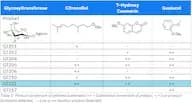
CAS:Glucosyltransferase (GTase) is the enzyme that transfers glucose to another organic molecule (aglycon), establishing glycosidic linkage. UDP-glucose dependent GTases are part of the enzyme family of glucosyltransferases, they are versatile tools in glucosylation reactions. Different GTases have different substrate specificities. For the specificity of GT227 Glucosyltransferase, please see Table 1 that lists the available GTases with GT227 highlighted.Color: beigeForm: lyophilisateProtein content: 0.8 mg/mgThe glucosyltransferase was tested in a glucosylation reaction of a preferred substrate. High conversion after up to 24 h reaction time was observed. Not sure which GTase to choose? Consider our Glucosyltransferase kit, which contains all 8 Glucosyltransferases.Glucosyltransferase 211-freeze dried
CAS:Glucosyltransferase (GTase) is the enzyme that transfers glucose to another organic molecule (aglycon), establishing glycosidic linkage. UDP-glucose dependent GTases are part of the enzyme family of glucosyltransferases, they are versatile tools in glucosylation reactions. Different GTases have different substrate specificities. For the specificity of GT211 Glucosyltransferase, please see Table 1 that lists the available GTases with GT211 highlighted.Color: beigeForm: lyophilisateProtein content 0.7 mg/mgThe glucosyltransferase was tested in a glucosylation reaction of a preferred substrate. High conversion after up to 24 h reaction time was observed.
Not sure which GTase to choose? Consider our Glucosyltransferase kit, which contains all 8 Glucosyltransferases.Glucosyltransferase 206-freeze dried
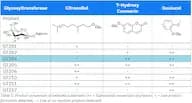
CAS:Glucosyltransferase (GTase) is the enzyme that transfers glucose to another organic molecule (aglycon), establishing glycosidic linkage. UDP-glucose dependent GTases are part of the enzyme family of glucosyltransferases, they are versatile tools in glucosylation reactions. Different GTases have different substrate specificities. For the specificity of GT206 Glucosyltransferase, please see Table 1 that lists the available GTases with GT206 highlighted.Color: beigeForm: lyophilisateProtein content: 0.5 mg/mgThe glucosyltransferase was tested in a glucosylation reaction of a preferred substrate. High conversion after up to 24 h reaction time was observed.
Not sure which GTase to choose? Consider our Glucosyltransferase kit, which contains all 8 Glucosyltransferases.Glucosyltransferase 201-freeze dried
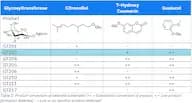
CAS:Glucosyltransferase (GTase) is the enzyme that transfers glucose to another organic molecule (aglycon), establishing glycosidic linkage. UDP-glucose dependent GTases are part of the enzyme family of glucosyltransferases, they are versatile tools in glucosylation reactions. Different GTases have different substrate specificities. For the specificity of GT201 Glucosyltransferase, please see Table 1 that lists the available GTases with GT201 highlighted.Color: beigeForm: lyophilisateProtein content: 0.5 mg/mgThe glucosyltransferase was tested in a glucosylation reaction of a preferred substrate. High conversion after up to 24 h reaction time was observed. Not sure which GTase to choose? Consider our Glucosyltransferase kit, which contains all 8 Glucosyltransferases.Glucosyltransferase 205-freeze dried
CAS:Glucosyltransferase (GTase) is the enzyme that transfers glucose to another organic molecule (aglycon), establishing glycosidic linkage. UDP-glucose dependent GTases are part of the enzyme family of glucosyltransferases, they are versatile tools in glucosylation reactions. Different GTases have different substrate specificities. For the specificity of GT205 Glucosyltransferase, please see Table 1 that lists the available GTases with GT205 highlighted.Color: beigeForm: lyophilisateProtein content: 0.5 mg/mgThe glucosyltransferase was tested in a glucosylation reaction of a preferred substrate. High conversion after up to 24 hr reaction time was observed.
Not sure which GTase to choose? Consider our Glucosyltransferase kit, which contains all 8 Glucosyltransferases.Glucosyltransferase 204-freeze dried
CAS:Glucosyltransferase (GTase) is the enzyme that transfers glucose to another organic molecule (aglycon), establishing glycosidic linkage. UDP-glucose dependent GTases are part of the enzyme family of glucosyltransferases, they are versatile tools in glucosylation reactions. Different GTases have different substrate specificities. For the specificity of GT204 Glucosyltransferase, please see Table 1 that lists the available GTases with GT204 highlighted.Color: beigeForm: lyophilisateProtein content: 0.5 mg/mgThe glucosyltransferase was tested in a glucosylation reaction of a preferred substrate. High conversion after up to 24 h reaction time was observed. Not sure which GTase to choose? Consider our Glucosyltransferase kit, which contains all 8 Glucosyltransferases.Glucosyltransferase 203-freeze dried
CAS:Glucosyltransferase (GTase) is the enzyme that transfers glucose to another organic molecule (aglycon), establishing glycosidic linkage. UDP-glucose dependent GTases are part of the enzyme family of glucosyltransferases, they are versatile tools in glucosylation reactions. Different GTases have different substrate specificities. For the specificity of GT203 Glucosyltransferase, please see Table 1 that lists the available GTases with GT203 highlighted.Color: beigeForm: lyophilisateProtein content: 0.5 mg/mgThe glucosyltransferase was tested in a glucosylation reaction of a preferred substrate. High conversion after up to 24 h reaction time was observed.
Not sure which GTase to choose? Consider our Glucosyltransferase kit, which contains all 8 Glucosyltransferases.NEK9 Protein, Human, Recombinant (His)
Expression system: E. coli
Length: 52-308, Partial
Activity: Not TestedPureza:85%Forma y color:SoildPeso molecular:36.5 kDa (Predicted); 37 kDa (Reducing conditions)Glucosyltransferase 210-freeze dried
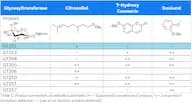
CAS:Glucosyltransferase (GTase) is the enzyme that transfers glucose to another organic molecule (aglycon), establishing glycosidic linkage. UDP-glucose dependent GTases are part of the enzyme family of glucosyltransferases, they are versatile tools in glucosylation reactions. Different GTases have different substrate specificities. For the specificity of GT210 Glucosyltransferase, please see Table 1 that lists the available GTases with GT210 highlighted.Color: beigeForm: lyophilisateProtein content: 0.8 mg/mg The glucosyltransferase was tested in a glucosylation reaction of a preferred substrate. High conversion after up to 24 h reaction time was observed. Not sure which GTase to choose? Consider our Glucosyltransferase kit, which contains all 8 Glucosyltransferases.Glutamic pyruvic transaminase
CAS:Glutamic pyruvic transaminase (also Alanine transaminase, alanine aminotransferase; E.C. 2.6.1.2) is an enzyme that catalyzes the following reaction: L-alanine + α-ketoglutarate ⇌ pyruvate + L-glutamate One unit of Glutamic pyruvic transaminase will catalyze the conversion of 1.0 µmole per minute of L-alanine and α-ketoglutarate to L-glutamate and pyruvate, at 37°C and pH 7.4.Forma y color:PowderPeso molecular:272.25 g/molEUCODIS® Nitrilhydratase 14, recombinant enzyme - ENH014
Nitrile hydratase 14 recombinantly expressed in E. coli comes in a freeze-dried formulation. Nitrile hydratases can be utilized to convert nitriles into their corresponding amidese, e.g. to produce acrylamide from acrylonitrile. Additional applications include the removal of nitriles from industrial wastewater. Our nitrile hydratases have been tested for hydrolysis of the following substrates:cyclohexanecarbonitrile, cinnamonitrile, benzonitrile, methacrylonitrile, pivalonitrile.Sucrose phosphorylase, recombinant, expressed in E. coli, ≥45 units/mg
CAS:Sucrose phosphorylase (sucrose glucosyltransferase, disaccharide glucosyltransferase, systemic name Sucrose:orthophosphate α-D-glucosytransferase; EC 2.4.1.7) is an enzyme that catalyzes the following reaction: sucrose + Pi ⇌ D-fructose + α-D-glucose-1-phosphate One unit of Sucrose phosphorylase will produce 1.0 μmole of D-fructose per minute in the presence of sucrose and phosphate at pH 7.6 and 25 °C.EUCODIS® Nitrilhydratase 05, recombinant enzyme - ENH005
Nitrile hydratase 05 recombinantly expressed in E. coli comes in a freeze-dried formulation. Nitrile hydratases can be utilized to convert nitriles into their corresponding amides, e.g. to produce acrylamide from acrylonitrile. Additional applications include the removal of nitriles from industrial wastewater. Our nitrile hydratases have been tested for hydrolysis of the following substrates:cyclohexanecarbonitrile, cinnamonitrile, benzonitrile, methacrylonitrile, pivalonitrile.Beta Lactamase Kit, 6 enzymes of 200 mg, recombinant - EBL_Kit01
Beta lactamase kit consisting of six different beta-lactamases with individual substrate specificity profiles against a broad range of beta-lactam antibiotics including penicilins, cephalosporins as well as carbapenems. The kit is especially designed for screening and finding the most well suited beta-lactamase for your specific process. Each vial contains at least 1000 IU beta I activity. Our beta-lactamases have been optimized for sterility testing and environmental monitoring in the manufacture and dosage formulation of beta-lactam antibiotics and for specific diagnostic purposes.Kit components:Pureza:Min. 95%Heparinase I from flavobacterium heparinum
CAS:Heparinase I (heparin lyase I, heparin eliminase; EC 4.2.2.7) in an enzyme that specifically cleaves oligosaccharides to remove heparan sulfate residues. One unit will form 1.0 μmole of unsaturated uronic acid per minute at pH 7.5 and 25 °C.
Pureza:Min. 95%L-Glutamic dehydrogenase (nadp) from proteus sp.
CAS:L-Glutamic dehydrogenase (NADP+ dependent, from proteus sp., EC 1.4.1.4) is an enzyme that catalyzes the following reaction: L-glutamate + H2O + NADP+ ⇌ 2-oxoglutarate + NH3 + NADPH + H+ One unit of L-Glutamic dehydrogenase will generate 1.0 μmole of 2-oxoglutarate from L-glutamate per min at pH 8.3, 30 °C and the presence of NADPH and ammonium. NADP+ is available here and NADPH is available here, depending on whether you require the reaction to proceed from left to right or from righ to left, respectively.
Pureza:Min. 95%Peso molecular:300 g/molCarboxypeptidase A from bovine pancreas
CAS:Carboxypeptidase A (EC 3.4.17.1) is an exopeptidase enzyme. It hydrolyzes peptide bonds of C-terminal residues with aliphatic or aromatic side-chains. One unit of Carboxypeptidase A will hydrolyze 1.0 μmole of hippuryl-L-phenylalanine per min at pH 7.5 and 25 °C.Thioglucosidase from Sinapis alba (white mustard) seed
CAS:Thioglucosidase (thioglucoside glucohydrolase, Myrosinase, sinigrinase, sinigrase; EC 3.2.1.147) is an enzyme that cleaves thio-linked glucosides:a thioglucoside + H2O ⇌ a sugar + a thiol (the thiol formed is usually unstable and undergoes spontaneous re-arrangement into a isothiocyanate through a loss of a sulfate group)One unit will produce 1.0 μmole glucose per min from sinigrin (a thio-linked glucoside) at pH 6.0 and 25 °C.EUCODIS® Nitrilhydratase 10, recombinant enzyme - ENH010
Nitrile hydratase 10 recombinantly expressed in E. coli comes in a freeze-dried formulation. Nitrile hydratases can be utilized to convert nitriles into their corresponding amides, e.g. to produce acrylamide from acrylonitrile. Additional applications include the removal of nitriles from industrial wastewater. Our nitrile hydratases have been tested for hydrolysis of the following substrates:cyclohexanecarbonitrile, cinnamonitrile, benzonitrile, methacrylonitrile, pivalonitrile.LacBuster® - S 2000 IU, beta-lactamase I & II, lyophilized, gamma irradiated - EBL023.2
LacBuster®-S 2000 is a solid and Gamma-irradiated, freeze-dried, broad range beta-lactamase formulation with 2000 IU beta-lactamase II and 20000 IU beta-lactamase I activity per vial.EUCODIS® Nitrilhydratase 19, recombinant enzyme - ENH019
Nitrile hydratase 19 recombinantly expressed in E. coli comes in a freeze-dried formulation. Nitrile hydratases can be utilized to convert nitriles into their corresponding amides, e.g. to produce acrylamide from acrylonitrile. Additional applications include the removal of nitriles from industrial wastewater. Our nitrile hydratases have been tested for hydrolysis of the following substrates:cyclohexanecarbonitrile, cinnamonitrile, benzonitrile, methacrylonitrile, pivalonitrile.
Poly(ADP-ribose) glycohydrolase
CAS:Poly(ADP-ribose) glycohydrolase is an enzyme, which is derived from various organisms, including eukaryotic cells. It plays a crucial role in the regulation of poly(ADP-ribose) (PAR) metabolism. This enzyme functions by hydrolyzing the glycosidic bonds in poly(ADP-ribose) chains, thereby regulating the cellular levels of PAR by converting it back to ADP-ribose units.
Enteropeptidase
CAS:Enteropeptidase (historic name entorokinase; EC 3.4.21.9) is a proteolytic enzyme (proteinase) that activates trypsinogen into its active form, trypsin. One unit of enteropeptidase will produce 1.0 nmole of trypsin from trypsinogen per min at pH 5.6 and 25 °C.Pureza:Min. 95%Neuraminidase from Vibrio Chloerae
CAS:Neuraminidase (Exo-α-sialidase, sialidase, systematic name acetylneuraminyl hydrolase; EC 3.2.1.18) is an enzyme that catalyzes hydrolysis of glycosidic linkages of neuraminic acids. As it is exo-hydrolase, it hydrolyzes terminal N- or O- acylneuramic acid units, that are linked by α2,3-, α2,6-, and α2,8- glycosidic bonds. One unit of neuraminidase will hydrolyze 1 μmol N-acetyl-neuraminosyl-D-lactose under optimal conditions.Fórmula:C21H25NO11Pureza:(Activity U/Ml) ≥ 0.00Peso molecular:467.42 g/molGlutaminase from escherichia coli
CAS:Glutaminase (glutaminase I, L-glutaminase, glutamine aminohydrolase; EC 3.5.1.2) is an enzyme that catalyzes the following reaction: L-glutamine + H2O → L-glutamate + NH4+ One unit of glutaminase will convert 1.0 μmole of L-glutamine into L-glutamate per min at pH 4.9 and 37 °C.Pureza:Min. 95%ODC1 Protein, Human, Recombinant (His)
Ornithine decarboxylase (ODC1) is an enzyme which belongs to the Orn/Lys/Arg decarboxylase class-II family.Forma y color:Lyophilized PowderPeso molecular:25 &58 KDa (reducing condition)Ref: TM-TMPJ-00839
5µg90,00€10µg130,00€20µg193,00€50µg381,00€100µg600,00€200µg947,00€500µg1.765,00€1mg2.535,00€EUCODIS® Nitrilhydratase 01, recombinant enzyme - ENH001
Nitrile hydratase 01 recombinantly expressed in E. coli comes in a freeze-dried formulation. Nitrile hydratases can be utilized to convert nitriles into their corresponding amidese, e.g. to produce acrylamide from acrylonitrile. Additional applications include the removal of nitriles from industrial wastewater. Our nitrile hydratases have been tested for hydrolysis of the following substrates:cyclohexanecarbonitrile, cinnamonitrile, benzonitrile, methacrylonitrile, pivalonitrile.Nitrilhydratase Kit, 10 recombinant enzymes with different substrate specificities - ENH Kit
Kit of 10 unique, nitrile hydratases recombinantly expressed in E. coli for screening. Nitrile hydratases can be utilized to convert nitriles into their corresponding amides, e.g. to produce acrylamide from acrylonitrile. Additional applications include the removal of nitriles from industrial wastewater. Please note, that the kit enzymes can also be supplied as whole cell biocatalysts in large scale.Carbonodithioic Acid O-(Octahydro-4,7-methano-1H-inden-5-yl) Ester Potassium Salt
CAS:Producto controladoFórmula:C11H15KOS2Forma y color:NeatPeso molecular:266.464α-N-Acetylglucosaminidase
CAS:α-N-Acetylglucosaminidase (recombinant Human NAGLU Protein), degrades heparan sulfate by hydrolysis of terminal GlcNAc resides in N-acetyl-alpha-D-glucosaminides of heparan sulfate.Activity is measured by its ability to hydrolyse 4-Nitrophenyl 2-acetamido-2-deoxy-a-D-glucopyranoside EN03208 or EM31027. The specific activity is >900 pmol/min/μg, as measured under the decribed conditions.Pureza:(Sds-Page) Min. 95%Glutathione peroxidase
CAS:Glutathione peroxidase (EC 1.11.1.9) is an enzyme that reduces peroxides to limit oxidative damage, by catalyzing the following reaction: 2 GSH + H2O2 → GS–SG + 2 H2O One unit of glutathione peroxidase will catalyze the conversion of 1.0 µmole of H2O2 per minute at pH 7.0 and 25 °C in the presence of reduced glutathione. Reduced glutahione is available here.Pureza:Min. 95%Peso molecular:84,500 g/molC. rugosa Lipase 03, CRL 3 from Candida rugosa - ELCR03
Lipases belong to the family of esterases and naturally act on triglycerides at lipid-water interfaces. Lipases/esterases can be used as versatile tools in hydrolytic reactions, esterifications and transesterification reactions in industrial and food applications. The Lipase 03 from the yeast Candida rugosa has a temperature optimum in the 30 - 50 °C range and pH optimum between pH 7 and 8.C. rugosa Lipase 01, CRL 1 from Candida rugosa - ELCR01
Lipases belong to the family of esterases and naturally act on triglycerides at lipid-water interfaces. Lipases/esterases can be used as versatile tools in hydrolytic reactions, esterifications and transesterification reactions in industrial and food applications. The Lipase 01 from the yeast Candida rugosa has a temperature optimum in the 30 - 50 °C range and pH optimum between pH 7 and 8.Carboxypeptidase Y, from S. cerevisiae, recombinant, lyophilized - ECPY001
CAS:Carboxypeptidase Y (EC 3.4.16.1) is an exopeptidase enzyme. It hydrolyzes peptide bonds of C-terminal residues and it remains active in the presence of urea at low to moderate concentrations. One unit of the Carboxypeptidase Y will hydrolyze 1.0 μmole of a chromogenic peptide substrate, releasing C-terminal alanine and generating a light-absorbing product. Carboxypeptidase Y has been obtained from yeast S. cerevisiae, has a broad substrate specificity and can therefore be used in sequence analysis of proteins. Carboxypeptidase Y has a temperature optimum in the 20 – 30 °C range and pH optimum between pH 6 and 7.Glutathione Reductase, baker's yeast
CAS:Glutathione Reductase, baker's yeast, is an enzyme derived from the yeast species *Saccharomyces cerevisiae*. This enzyme is sourced from baker's yeast, providing a renewable and consistent product for various biochemical applications. Its mode of action involves catalyzing the reduction of glutathione disulfide (GSSG) to the sulfhydryl form glutathione (GSH), using NADPH as an electron donor. This reaction is crucial for maintaining the intracellular redox balance by regenerating GSH, the primary cellular antioxidant.Proteinase, Bacillus subtilis, sutilain
CAS:Proteinase, Bacillus subtilis, sutilain is a proteolytic enzyme, which is derived from the bacterium Bacillus subtilis. This enzyme exhibits a serine-type mechanism of action, characterized by its ability to cleave peptide bonds in proteins efficiently. It catalyzes the hydrolysis of proteins into peptides and amino acids, facilitating the breakdown of complex proteins into simpler, soluble forms.Pureza:Min. 95%Forma y color:PowderProtease from Streptomyces griseus
CAS:Protease enzymes break down proteins and are essential for many biological processes, including digestion, cellular regulation and blood clotting. They are also used in many industrial and biotechnological applications for example in food processing and in detergents.
Pureza:Min. 95%Forma y color:PowderRibonuclease A
CAS:Ribonuclease A (RNase A) is widely used to break down RNA in DNA purification. RNase A catalyzes the endonucleolytic cleavage of phosphodiester bonds of RNA.C. rugosa Lipase 02, CRL 2 from Candida rugosa - ELCR02
Lipases belong to the family of esterases and naturally act on triglycerides at lipid-water interfaces. Lipases/esterases can be used as versatile tools in hydrolytic reactions, esterifications and transesterification reactions in industrial and food applications. The Lipase 02 from the yeast Candida rugosa has a temperature optimum in the 30 - 50 °C range and pH optimum between pH 7 and 8.Chymase
CAS:Chymase (alternative names mast cell protease 1, mast cell serine proteinase, skeletal muscle protease, EC 3.4.21.39) is a serine protease, found in mast cells and basophil granulocytes.Pureza:Min. 95%Asparaginase, from E.coli, recombinant, lyophilized - EASP001
Asparaginase (EC 3.5.1.1) is an enzyme that catalyzes the following reaction: Asparagine + H2O → Aspartate + NH4+ Industrially, asparaginase is used to reduce the formation of acrylamide in starch-containing food ingredients and products during production processes. Asparaginase has a temperature optimum in the 30 – 50 °C range and pH optimum between pH 8 and 9. One unit will yield 1.0 μmole of ammonia from asparagine per min.Chloroperoxidase, aqueous suspension
CAS:Chloroperoxidase (also known as chloride peroxidase, systemic name chloride:hydrogen-peroxide oxidoreductase, EC 1.11.1.10) is an enzyme that catalyzes chlorination of organic compounds. Overall reaction is the following:R-H + Cl− + H2O2 + H+ → R-Cl + 2 H2O; reaction intermediate is hypochlorous acid (HOCl). One unit of chloroperoxidase will convert 1.0 μmole of substrate per minute.
Forma y color:PowderSphingomyelinase from bacillus cereus
CAS:Sphingomyelinase (SMase, Sphingomyelin phosphodiesterase, systematic name sphingomyelin cholinephosphohydrolase; EC 3.1.4.12) is an enzyme that hydrolyses sphingomyelin into phosphocholine and ceramide. One unit of sphingomyelinase will hydrolyze 1.0 µmole of chromogenic substrate analogue per minute at pH 7.4 and 37 °C.Pureza:Min. 95%Phosphorylase B from rabbit muscle
CAS:Phosphorylase B is an enzymatic protein, specifically an isoform of glycogen phosphorylase, derived from rabbit muscle. This enzyme plays a critical role in glycogen metabolism by catalyzing the phosphorolytic cleavage of α(1→4) glycosidic bonds in glycogen, releasing glucose-1-phosphate. The rabbit muscle source provides a well-studied model due to its high enzyme activity and availability, facilitating in-depth biochemical and structural analysis.
Pureza:Min. 95%Cellulose catalase
Cellulose catalase is an enzyme-based product, designed specifically to act as a catalyst in the oxidative processes associated with cellulose applications. It is derived from a microbial source, where bacilli or fungi are employed to produce robust catalase enzymes in a fermentation process. The mode of action involves the catalase enzyme’s ability to facilitate the decomposition of hydrogen peroxide into water and oxygen, thereby reducing oxidative damage during cellulose processing.
Deoxycytidine Kinase, human, recombinant
Deoxycytidine kinase (dCK, EC 2.7.1.74) is an enzyme that catalyzes the following reaction: dC + ATP → dCMP + ADP It can also use UTP as a donor of the phosphate group, and it can phosphorylate other deoxyribonucleosides (e.g. dA, dG) as well as nucleoside analogues (like clofarabine). One unit of dCK will convert 1.0 µmole of dC and ATP to dCMP and ADP per minute at pH 7.5 and 37°C.Pureza:Min. 95%Amidase, from Rhodococcus sp., recombinant, lyophilized - EAM02
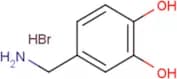
CAS:Amidase (EC 3.5.1.4) is a hydrolase acting on carbon-nitrogen bonds in linear amides and can be used in the hydrolysis of amides to acids. Amidase 02 is of bacterial origin (R. erythropolis and has been produced in E.coli).3,4-Dihydroxybenzylamine hydrobromide
CAS:3,4-Dihydroxybenzylamine hydrobromide inhibits DNA polymerase and melanoma growth, varying with tyrosinase activity.Fórmula:C7H10BrNO2Pureza:98.49%Forma y color:Light Beige Crystalline PowderPeso molecular:220.06Immobilized Lipase Kit, 7 unique immobilized EUCODIS® Lipases, immobilized by adsorption and covalent binding - ELIM Kit
Lipases belong to the family of esterases and naturally act on triglycerides at lipid-water interfaces. Lipases/esterases can be used as versatile tools in hydrolytic reactions, esterifications and transesterification reactions in industrial and food applications. The immobilized Lipase kit contains 7 different lipases, immobilised on a hydrophobic carrier either by adsorption or covalent linkage. Immobilized lipases can be utilized in various reaction types, and are optimal for all reactions in organic solvents or solvent-free systems.Adenylate Kinase 1, human, recombinant
Adenylate kinase 1 (EC 2.7.4.3) catalyzes interconversion between ATP, ADP and AMP by catalyzing the following reaction: ATP + AMP ⇔ 2 ADP One unit of Adenylate kinase 1 will convert 1.0 µmol ATP and 1.0 µmol AMP to 2.0 µmol ADP per min at optimum conditions.Pureza:Min. 95%Lipoxidase
CAS:Lipoxidase is an enzyme, which is typically sourced from various plant tissues, animals, and some microorganisms. It functions by catalyzing the oxidation of polyunsaturated fatty acids in the presence of oxygen. This enzymatic action results in the formation of lipid hydroperoxides, which are key intermediates in various biochemical pathways, including those involved in cell signaling and the modulation of gene expression.Pureza:Min. 95%Acid phosphatase
CAS:One unit will hydrolyse 1.0μmol of 4-nitrophenyl phosphate per minute at 37°C and pH 4.8. Substrate for enzyme analysis is the 4-nitrophenyl phosphate disodium hexahydrate (EN08508).Fórmula:C6H10O2Pureza:Min. 95%Peso molecular:114.14 g/molCitrate lyase from klebsiella pneumonia ≥0.20 unit/mg solid
CAS:Citrate lyase (also known as ATP citrate synthase, EC 2.3.3.8) is an enzyme that catalyzes the following reaction:citrate + ATP + CoA → oxaloacetate + Acetyl-CoA + ADP + PiEnzymatic activity: One unit will convert 1.0 micromole of citrate to oxalacetate per minute at pH 7.6 and 25 °C in the presence of required cofactors. Citrate lyase is supplied lyophylized, with activity ≥0.20 unit/mg solid.Pureza:Min. 95%Nitrilase
CAS:Nitrilase (nitrile aminohydrolase; EC 3.5.5.1) in an enzyme that catalyzes hydrolysis of nitriles to carboxilic acids and ammonia: R-CN + 2 H2O → R-COO- + NH4+ One unit of nitrilase will yield 1.0 μmol of ammonia per minute under optimal reaction conditions using acrylonitrile as a substrate.
Pureza:Min. 95%alpha Amylase enzyme
Alpha Amylase (Amylase, α-Amylase, 1,4-α-D-glucan glucanohydrolase, glycogenase, systematic name 4-α-D-glucan glucanohydrolase; EC 3.2.1.1, CAS Number [9000-90-2]) is an enzyme that catalyses hydrolysis of large polysacharides into smaller fragments. Alpha amylase targets alpha bonds of 1→4 glycosidic linkages of poly- and oligosaccharides with three or more D-glucose units. One unit of Alpha Amylase will catalyze the hydrolysis of 1.0 μmol of 2-chloro-4-nitrophenyl-α-D-maltotrioside to yield 2-chloro-4-nitrophenol per minute at 37°C. Human pancreatic Alpha Amylase is supplied as clear, colorless to light yellow liquid solution at ≥400U/mL, specific activity ≥100 U/mg protein.Store at 2-8 °C on arrival.Pureza:Min. 95%Urate oxidase (from Yeast)
CAS:Urate Oxidase, also known as uricase, catalizes the following reaction: Uric acid + O2 + H2O → 5-hydroxyisourate + H2O2.Fórmula:C18H26N5O14PPureza:Min. 95%Peso molecular:567.4 g/molTransglutaminase from guinea pig liver
CAS:Transglutaminase (2.3.2.13) is an enzyme that catalyzes formation of isopeptide bonds between the γ-carboxamide groups ( -(C=O)NH2 ) of glutamine side chains and amino groups. The donor of the amino group is usually (but not always) an ε-amino group ( -NH2 ) of lysine residue. The reaction also releases ammonia: Gln-(C=O)NH2 + NH2-Lys → Gln-(C=O)NH-Lys + NH3One unit of transglutaminase will catalyze the formation of 1.0 μmole transglutamination product per min at pH 6.0 and 37 °C.Pureza:Min. 95%Chitinase
CAS:Chitinase (systematic name (1→4)-2-acetamido-2-deoxy-β-D-glucan glycanohydrolase, EC 3.2.1.14) is a hydrolase that breaks down glycosidic bonds in chitin. One unit of chitinase will yield 1.0 mg of N-acetyl-D-glucosamine from chitin per hour at pH 6.0 and 25 °C.Fórmula:C17H16N8ZnPureza:Min. 95%Peso molecular:397.74 g/molβ-1,4-Galactosyltransferase 1
β-1,4-Galactosyltransferase 1 is an enzyme that catalyzes the synthesis of the glycosaminoglycan-protein linkage in proteoglycans.Cathepsin B from human placenta
CAS:Cathepsin B is a lysosomal proteolytic enzyme of the cysteine protease family. It is present in all mammalian cells. It is essential for the intracellular protein turnover. Cathepsin B may be a useful tool in Alzheimer′s research, as it may have a role in the natural defense against the disease.Pureza:Min. 95%Lactase - >300U/mg
CAS:beta-Galactosidase (EC 3.2.1.23, shortly beta-Gal, also know as lactase) catalyses the hydrolysis of beta-d-galactoside in the presence of water to galactose and alcohol, or lactose into glucose and galactose. beta-Gal has a molecular weight of 540,000 and is composed of four identical subunits of MW 135,000, each with an independent active site. The enzyme has divalent metals as cofactors, with chelated Mg2+ ions required to maintain active site conformation. The molecule contains numerous sulfhydryl groups and is glycosylated.L-Asparaginase
CAS:L-Asparaginase (EC 3.5.1.1) is an enzyme that catalyzes the following reaction: L-Asparagine + H2O → L-Aspartate + NH4+ One unit will yield 1.0 μmole of ammonia from L-asparagine per min at pH 8.6 and 37 °C.Pureza:Min. 95%α-Mannosidase
CAS:α-Mannosidase (α-D-mannopyranosidase, 1,2-α-mannosidase, 1,2-α-D-mannosidase, exo-α-mannosidase, α-D-mannosidase, systematic name α-D-mannoside mannohydrolase; EC 3.2.1.24) is an enzyme that cleaves α-mannose to produce glucose. One unit of α-Mannosidase will hydrolyze 1.0 µmole of chromogenic phosphate mimic p-nitrophenyl-α-p-mannoside to p-nitrophenol in 1 minute at pH 5.0 and 37°C.
Peso molecular:65.4 g/molFormaldehyde Dehydrogenase
CAS:Formaldehyde dehydrogenase (EC 1.2.1.46) is an enzyme that catalyzes the following reaction: formaldehyde + NAD+ + H2O ⇌ formate + NADH + H+ One unit of formaldehyde dehydrogenase will convert 1.0 µmole of formaldehyde to formic acid per minute at pH 7.5 and 37°C in the presence of NAD+.NAD+ is available here.β-Glucanase 2, thermostable
CAS:Thermostable β-Glucanase 2 is an enzyme that hydrolases β-Glucans into glucose. One unit of β-Glucanase 2 will produce 1.0 μmole of glucose from β-glucan per minute at pH 5.8 and 70 °C.Pureza:Min. 95%PNPase
Specific activity: >500 units/mg-protein.Unit definition: One unit will polymerize 1.0 micro mole of ADP, releasing 1.0 micro mole of inorganic phosphate in 15 minutes at pH 9.1 at 37 °C.
Aminoacyl tRNA synthetase-IN-1
CAS:Enzyme involved in protein translation and catalyzes the aminoacylation reactionFórmula:C16H25N7O7SPureza:Min. 95%Forma y color:PowderPeso molecular:459.48 g/molSuperoxide dismutase PEG
Superoxide dismutase coupled to polyethylene glycol. Superoxide dismutase (EC 1.15.1.1) is an enzyme that catalyzes the following reaction: 2 H+ + 2 O2− → O2 + H2O2 thus converting an extremely reactive and cytotoxic superoxide radical into oxygen and (significantly less reactive) hydrogen peroxide.
Oxalate Oxidase, freeze-dried, from Wheat
CAS:Oxalate Oxidase, freeze-dried, from Wheat is an enzyme preparation which is derived from wheat and functions through the oxidative degradation of oxalate. This enzyme catalyzes the conversion of oxalate into carbon dioxide and hydrogen peroxide, utilizing oxygen as a co-substrate in the process. The activity of Oxalate Oxidase is crucial in biological and biochemical applications where oxalate degradation is required.Ref: 3D-ETS012.6
25U551,00€10U711,00€50U914,00€0.1KU1.020,00€100U1.044,00€0.25KU1.802,00€0.5KU2.925,00€1KU4.680,00€1000U5.429,00€2KU8.189,00€2000U9.481,00€Ubiquitin Conjugating enzyme E2C Human Recombinant
Ubiquitin Conjugating enzyme E2C (other names UBE2C, UBCH10, dJ447F3.2, ubiquitin conjugating enzyme E2 C; EC 2.3.2.24) is an essential mediator of mitotic destruction events and cell cycle progression. It catalyzes the destruction of cyclins A and B in conjunction with the anaphase-promoting complex, and therefore, plays an important role in the control of the cell exit from mitosis This activity is essential at then end of mitosis for the inactivation of their partner kinase Cdc2 and exit from mitosis into G1 of the next cell cycle. In addition, UBE2C bears homology to yeast PAS2, a gene that is essential for biogenesis of peroxisomes. UBE2C is useful for in vitro ubiquitinylation reactions.Butyrylcholinesterase
Butyrylcholinesterase (BCHE, BuChE, PCHE, pseudocholinesterase, plasma cholinesterase, Acylcholine acyl-hydrolase, Choline esterase; EC 3.1.1.8, CAS No [9001-08-5]) is an enzyme that made in the liver and found mainly in blood plasma. It catalyzes the following reaction: Acylcholine + H2O → choline + carboxylic acidOne unit of Butyrylcholinesterase will change absorbance by 0.2 milliunits (mA) per minute at optimal buffer conditions and 37 ̊C. Equine serum butyrylcholinesterase is supplied as white to pale grey-green powder with activity of ≥50U/mg and specific activity of ≥300U/mg protein. It can be dissolved at 5 mg/mL concentration in 50 mM Tris-HCl pH 7.3 - 7.5, giving colorless to slightly green solution. Equine serum butyrylcholinesterase is activated by Ca2+, optimum pH 7-8, KM=18 µM (butyrylthiocholine at 25°C). Store at -20°C on arrival.Casein Kinase 2
Casein kinase 2 (CK2, CSNK2; EC 2.7.11.1) is a constitutively active serine and threonine protein kinase. It plays a role in a range of cellular processes, including DNA repair, cell cycle control, metabolic regulation, circadian rhythms and more. Its known substrates include hundreds of proteins. One unit of CK2 will phosphorylate of 1 pmol of of peptide substrate in 1 minute at 30°C and presence of ATP.Fórmula:C45H73N19O24Pureza:Min. 95%Peso molecular:1,264.17 g/molProtein phosphatase 2C
CAS:Protein phosphatase 2C is a key enzyme, which is a serine/threonine-specific phosphatase, derived from various organisms including humans, plants, and bacteria. This enzyme plays a pivotal role in cellular signaling by removing phosphate groups from serine and threonine residues on target proteins, a process known as dephosphorylation. This action is crucial for the regulation of diverse cellular functions, including stress responses, cell division, and apoptosis.Alcohol Oxidase - vacuum-dried powder, >0.6 units/mg solid
CAS:Alcohol oxidase (EC 1.1.3.13) is an enzyme that catalyzes the following chemical reaction: a primary alcohol + O2 + H2O ⇌ an aldehyde + H2O2 One unit of alcohol oxidase will oxidize 1.0 µmole of methanol to formaldehyde per min at pH 7.5 and 25 °C.Luciferase from Vibrio fischeri
CAS:Luciferase enzymes sourced from Vibrio fischeriForma y color:PowderSecreted Phospholipase A2-IIA, human, recombinant
The secreted phospholipase A2-IIA (sPLA2-IIA, PLA2, systematic name phosphatidylcholine 2-acylhydrolase; EC 3.1.1.4) is an enzyme that catalyses the hydrolysis of glycerophospholipids at the sn2 position, yielding 1-acylglycerophosphocholine and a fatty acid. One unit of secreted phospholipase A2-IIA will hydrolyze 1.0 μmole of substrate per min under optimal conditions.Pureza:Min. 95%Diaphorase (from Clostridium kluyveri)
CAS:Diaphorase (lipoyl dehydrogenase, EC 1.8.1.4) is an NAD+/NADH-dependent oxidoreductase. One unit of diaphorase will convert 1.0 μmole NADH into NAD+ the presence of substrate at pH 7.5 and 25 °C.Pureza:Min. 95%Plasmin
CAS:Plasmin, human is a serin protease which present in the blood and is involved in the cleavage of cross-linked fibrin, a process known as fibrinolysis.One unit will produce one micromole of P-Nitroanilide from D-Val-Leu-Lys-P-Nitroanilide per minute at pH 7.5 at 37°CSerratiopeptidase
CAS:Serratiopeptidase (serratio peptidase, serratia peptidase, serrapeptidase, serratia E-15 protease, serralysin, serrapeptase; EC 3.4.24.40) is a proteolitic enzyme (proteinase) that is produced by Serratia marcescens.Pureza:Min. 95%Forma y color:PowderAminopeptidase I from streptomyces griseus
CAS:Aminopeptidase I is a specialized proteolytic enzyme derived from the actinobacterium Streptomyces griseus. This enzyme functions by catalyzing the cleavage of amino acids from the N-terminus of peptides, which plays a pivotal role in protein metabolism and regulation. The source of this enzyme, Streptomyces griseus, is well-regarded for producing a variety of bioactive compounds owing to its rich genetic and biochemical repertoire.EUCODIS® Nitrilhydratase 23, recombinant enzyme - ENH023
Nitrile hydratase 23 recombinantly expressed in E. coli comes in a freeze-dried formulation. Nitrile hydratases can be utilized to convert nitriles into their corresponding amides, e.g. to produce acrylamide from acrylonitrile. Additional applications include the removal of nitriles from industrial wastewater. Our nitrile hydratases have been tested for hydrolysis of the following substrates:cyclohexanecarbonitrile, cinnamonitrile, benzonitrile, methacrylonitrile, pivalonitrile.
Creatinase from pseudomonas sp.
CAS:Creatinase (EC 3.5.3.3) is an enzyme that catalyzes the fellowing reaction: creatine + H2O ⇌ sarcosine + ureaOne unit of creatinase will hydrolyze 1.0 µmole of creatine into sarcosine and urea per min at pH 7.5 and 37 °C.Pureza:Min. 95%Aminopeptidase, Aeromonas proteolytica
CAS:One unit of Aminopeptidase (3.4.11.10) will hydrolyze 1.0 μmole of L-leucine p-nitroanilide to p-nitroaniline and L-leucine per min at pH 8.0 and 25 °C.Cytochrome C oxidase
CAS:Cytochrome C oxidase (originally assigned EC 1.9.3.1, now re-assigned EC 7.1.1.9) is an enzyme that catalyzes the following reaction: 4 Fe2+ – cytochrome c + 4 H+ + O2 → 4 Fe3+ – cytochrome c + 2 H2OPyruvate kinase (from Rabbit muscle), ammonium sulfate suspension
CAS:Pyruvate kinase (from Rabbit muscle), ammonium sulfate suspension is an enzyme product, which is a purified protein extracted from the muscle tissue of rabbits. This enzyme plays a crucial role in glycolysis, specifically catalyzing the transphosphorylation of phosphoenolpyruvate (PEP) to pyruvate, generating ATP from ADP in the process. This step is a key regulatory point in the glycolytic pathway, which is essential for cellular energy production.
Pureza:Min. 95%Malate dehydrogenase,buffered aqueous glycerol solution, 600-1000 units/mg protein (biuret)
CAS:Malic dehydrogenase is a mitochondrial isozyme and an important catalyst in the tricarboxylic acid cycle. The enzyme catalyzes the following reaction: Oxaloacetate + β-NADH → L-Malate + β-NADOne unit will convert 1.0 μmole of oxalacetate and β-NADH to L-malate and β-NAD per min at pH 7.5 at 25 °C.Pureza:Min. 95%Lipoprotein lipase
CAS:Lipoprotein lipase is a critical enzyme used to modulate lipid processing, primarily sourced from mammalian tissues. It functions by hydrolyzing triglycerides present in circulating chylomicrons and very low-density lipoproteins. This enzymatic process liberates free fatty acids, which can subsequently be utilized as energy by peripheral tissues or stored in adipose tissue. Lipoprotein lipase is pivotal in lipid metabolism, participating in maintaining homeostasis of plasma lipid levels.Pureza:Min. 95%EUCODIS® CalB01 IA, engineered variant of Candida antarctica Lipase B, immobilized by adsorption on hydrophobic carrier - ELCB01IA
Lipases belong to the family of esterases and naturally act on triglycerides at lipid-water interfaces. Lipases/esterases can be used as versatile tools in hydrolytic reactions, esterifications and transesterification reactions in industrial and food applications. The CalB01 IA lipase has been immobilized on a hydrophobic carrier by adsorption. The immobilized CalB01 lipase has a temperature optimum in the 40 - 50 °C range and pH optimum between pH 5 and 8.Mannitol dehydrogenase from leuconostoc mesenteroides
CAS:Mannitol dehydrogenase (MDH, mannitol 2-dehydrogenase, EC 1.1.1.67) is an enzyme that catalyzes the following reaction: D-mannitol + NAD+ ⇌ D-fructose + NADH + H+ One unit of mannitol dehydrogenase will generate 1.0 μmole of D-fructose per min in the presence of NAD+ at pH 8.6 and 40°C. NAD+ is available here and NADH is available here, depending on whether you require the reaction to proceed from left to right or from righ to left, respectively.
Pureza:Min. 95%Ubiquitin thiolesterase UCHL1
CAS:Ubiquitin thiolesterase UCHL1 (Ubiquitin carboxy-terminal hydrolase L1; EC 3.1.2.15) is an enzyme that hydrolyses small C-terminal ubiquitin adducts to regenerate ubiquitin.eXrase DNA Endonuclease, research-grade
CAS:eXrase DNA endonuclease from enGenes is a recombinant endonuclease from Serratia marcescens produced in E. coli. Effectively and efficiently degrades all forms of DNA and RNA, reducing sample viscosity without proteolytic activity. As effective and efficient as other nucleases on the market, eXrase DNA endonuclease is the most cost-effective way to improve proteins yields and improve sample handing. Presented as a ready to use colourless liquid, formulated in Tris buffer at pH 8.0 with 50 % glycerol (v/v). This research grade eXrase has low endotoxin, max 0.25 EU/kU.eXrase DNA endonuclease is suitable for the effective breakdown of nucleic acids in numerous biotech settings: • Removal of residual host DNA from biotechnological products to meet regulatory standards • Reduction of viscosity and streamlined purification in downstream processing of fermentation procedures. • Reduction of viscosity in in upstream fermentation processes • Extraction and/or synthesis of flavouring nucleotides • Enhanced bioavailability of nucleotides in specific feed products • DNA degradation for the removal or prevention of biofilm formationeXrase DNA endonuclease from enGenes is made by a proprietary microbial fermentation process utilizing Escherichia coli cells. This enzyme facilitates the hydrolysis of phosphodiester bonds in various forms of DNA and RNA, including single-stranded, double-stranded, linear, circular, or supercoiled configurations, yielding smaller oligonucleotides typically composed of 2-4 base pairs. Unit-Definition: One unit (U) of the enzyme is defined as the amount required to digest calf thymus DNA, yielding acid-soluble oligonucleotides equivalent to a ΔA260nm of 1.0 within a 30-minute timeframe at pH 8.0 and 37°C. This standardization allows for consistent measurement of enzymatic activity across different batches.
eXrase DNA Endonuclease, tech-grade
CAS:eXrase DNA endonuclease from enGenes is a recombinant endonuclease from Serratia marcescens produced in E. coli. Effectively and efficiently degrades all forms of DNA and RNA, reducing sample viscosity without proteolytic activity. As effective and efficient as other nucleases on the market, eXrase DNA endonuclease is the most cost-effective way to improve proteins yields and improve sample handing. Presented as a ready to use colourless liquid, formulated in Tris buffer at pH 8.0 with 50 % glycerol (v/v). This tech grade version is our most cost effective endonuclease for R&D applications. eXrase DNA endonuclease is suitable for the effective breakdown of nucleic acids in numerous biotech settings: • Removal of residual host DNA from biotechnological products to meet regulatory standards • Reduction of viscosity and streamlined purification in downstream processing of fermentation procedures. • Reduction of viscosity in in upstream fermentation processes • Extraction and/or synthesis of flavouring nucleotides • Enhanced bioavailability of nucleotides in specific feed products • DNA degradation for the removal or prevention of biofilm formationeXrase DNA endonuclease from enGenes is made by a proprietary microbial fermentation process utilizing Escherichia coli cells. This enzyme facilitates the hydrolysis of phosphodiester bonds in various forms of DNA and RNA, including single-stranded, double-stranded, linear, circular, or supercoiled configurations, yielding smaller oligonucleotides typically composed of 2-4 base pairs. Unit-Definition: One unit (U) of the enzyme is defined as the amount required to digest calf thymus DNA, yielding acid-soluble oligonucleotides equivalent to a ΔA260nm of 1.0 within a 30-minute timeframe at pH 8.0 and 37°C. This standardization allows for consistent measurement of enzymatic activity across different batches.Protein disulfide isomerase from bovine liver
CAS:An enzyme that catalyzes the formation and breakage of disulfide bonds in the folding of proteinsFórmula:C7H5Cl2NO5SPureza:Min. 95%Peso molecular:286.09 g/molCarbonic anhydrase inhibitor 13
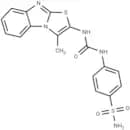
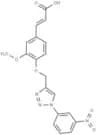
CAS:Carbonic anhydrase inhibitor 13 (compound 7) is a potent inhibitor of carbonic anhydrase (CA).Fórmula:C17H15N5O3S2Forma y color:SolidPeso molecular:401.46hCAIX-IN-7
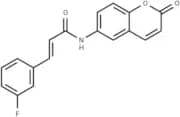
CAS:hCAIX-IN-7 (6c) selectively inhibits tumor-related isoform hCAIX (KI: 410.6 nM) and weakly affects hCAI/II (KI: >10000 nM).Fórmula:C18H12FNO3Forma y color:SolidPeso molecular:309.29hCAIX-IN-8
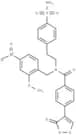
CAS:hCAIX-IN-8, a selective hCAIX inhibitor, IC50: 0.024 μM. Also affects CAII, CAVA (IC50s: 1.99, 1.10 μM), limits cell migration, and induces apoptosis.Fórmula:C19H16N4O6Forma y color:SolidPeso molecular:396.35hCAIX/XII-IN-6
hCAIX/XII-IN-6: Oral carbonic anhydrase inhibitor, targets hCA I/II/IV/IX/XII, aids rheumatoid arthritis research. Ki: 6697/2950/4093/4.1/7.7 nM.Fórmula:C26H23N3O6S4Forma y color:SolidPeso molecular:601.74hCA IX-IN-2
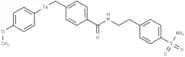
hCA IX-IN-2 is a highly potent and selective inhibitor of hCA IX, exhibiting an inhibition constant (K I) value of 32.1 nM and demonstrating anti-proliferativeFórmula:C23H24N2O4STeForma y color:SolidPeso molecular:552.11hCAII-IN-1
CAS:hCAII-IN-1 (7f) inhibits CA II/IX with Kis 1.2 nM/113.6 nM, potential for cancer treatment.Fórmula:C21H21BrN6O4SForma y color:SolidPeso molecular:533.4Fenprinast
CAS:Fenprinast is a tryptophan-like bronchodilator utilized in the study of allergic and exercise-induced asthma. It exhibits oral activity.Fórmula:C16H16ClN5OForma y color:SolidPeso molecular:329.78hCAXII-IN-2
CAS:hCAXII-IN-2 is a potent inhibitor of hCA XII (Ki: 84.2 nM) and hCA IX (Ki: 268.5 nM), with low activity on hCA I/II.Fórmula:C21H18ClN3O4Forma y color:SolidPeso molecular:411.84DTP348
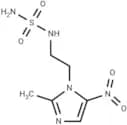
CAS:DTP348: Oral carbonic anhydrase IX inhibitor & hypoxic cell radiosensitizer with sulfamide & 5-nitroimidazole components.Fórmula:C6H11N5O4SForma y color:SolidPeso molecular:249.25(R)-Nepicastat HCl
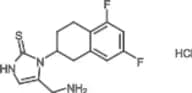
CAS:(R)-Nepicastat HCl (RS-25560-198 HCl), R-enantiomer, inhibits bovine/human dopamine-β-hydroxylase (IC50: 25.1/18.3 nM); not affecting other enzymes/receptors.Fórmula:C14H15F2N3S·HClPureza:98%Forma y color:SolidPeso molecular:331.81CK1 δ/CSNK1D Protein, Human, Recombinant (Baculovirus, His)
Expression system: Baculovirus
Length: 1-415, Full Length
Activity: Not TestedPureza:85%Forma y color:Odour Lyophilized PowderRef: TM-TMPH-03771
5µg947,00€10µg1.598,00€20µg2.712,00€50µg3.520,00€100µg4.337,00€200µg5.358,00€500µg7.113,00€1mg8.803,00€PGDS Protein, Human, Recombinant
Hematopoietic Prostaglandin D Synthase (HPGDS) belongs to the GST superfamily and Sigma family.Forma y color:Lyophilized PowderPeso molecular:26 KDa (reducing condition)Ref: TM-TMPJ-00690
5µg113,00€10µg178,00€20µg284,00€50µg523,00€100µg779,00€200µg1.142,00€500µg1.923,00€1mg2.758,00€Disulfamide
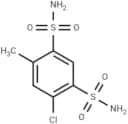
CAS:Disulfamide: Oral carbonic anhydrase inhibitor, IC50 0.07 μM, diuretic by blocking Na+/HCO3- reabsorption.Fórmula:C7H9ClN2O4S2Pureza:98.65%Forma y color:SolidPeso molecular:284.74Tyrosinase-IN-7
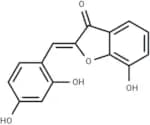
CAS:Tyrosinase-IN-7 is a small-molecule tyrosinase inhibitor (IC50 1.57 μM) that suppresses melanin activity and cell growth with low cytotoxicity.Fórmula:C15H10O5Pureza:99%Forma y color:SolidPeso molecular:270.24hCAIX/XII-IN-3
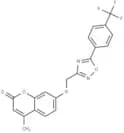
CAS:Compound 6q inhibits hCAIX/CAXII; K i : hCAI >10000 nM, hCAII >10000 nM, hCAIX 66.2 nM, hCAXII 4.4 nM.Fórmula:C20H13F3N2O4Forma y color:SolidPeso molecular:402.32hCAI/II-IN-2
CAS:hCAI/II-IN-2 (2b) inhibits hCA I/II (Ki: 40.97 nM, 15.15 nM) and IX (61.88 nM), fights AMS with anti-hypoxic effects, but has low cellular activity.Fórmula:C12H12N4O5S2Forma y color:SolidPeso molecular:356.38hCAXII-IN-4
CAS:hCAXII-IN-4 is a selective and potent CA XII inhibitor with a Ki value of 6.4 nM for human CA XII.Fórmula:C22H27N5O6SForma y color:SolidPeso molecular:489.54Methazolamide-d6
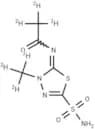
CAS:Methazolamide-d6 is a GC/LC-MS standard for measuring methazolamide, a glaucoma drug that lowers eye pressure and fluid, reduces seizures, and combats ROS.Fórmula:C5H2D6N4O3S2Forma y color:SolidPeso molecular:242.31L-693612 HCl
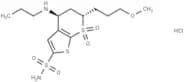
CAS:L-693612 HCl is an inhibitor of carbonic anhydrase.Fórmula:C14H25ClN2O5S3Pureza:98%Forma y color:SolidPeso molecular:433.01HCAIX-IN-2
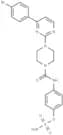
CAS:HCAIX-IN-2 (compound 9d) is a selective inhibitor of carbonic anhydrase and acts on hCA IX (Ki: 24.6 nM) and hCA XII (Ki: 45.3 nM).Fórmula:C19H16N8O4SForma y color:SolidPeso molecular:452.45PPIE Protein, Human, Recombinant (His)
Peptidyl-prolyl cis-trans isomerase E, also known as Cyclophilin E, Cyclophilin-33, Rotamase E, CYP33, PPIE, is an enzyme which belongs to the cyclophilin-typeForma y color:Lyophilized PowderPeso molecular:34 KDa (reducing condition)Ref: TM-TMPJ-01389
5µg113,00€10µg178,00€20µg284,00€50µg523,00€100µg759,00€200µg1.103,00€500µg1.765,00€1mg2.535,00€hCAI/II-IN-4
CAS:hCAI/II-IN-4 inhibits hCA I & II (Ki: 16.95 & 15.22 nM), hCA IX (Ki: 27.04 nM), has anti-hypoxia benefits and is low-toxic for AMS research.Fórmula:C15H15N3O5S2Forma y color:SolidPeso molecular:381.43hCAIX-IN-11
CAS:hCAIX-IN-11 inhibits carbonic anhydrases IX & XII with Ki of 32.7 nM & 623.5 nM, respectively.Fórmula:C21H15ClN4O3Forma y color:SolidPeso molecular:406.82FC11409B
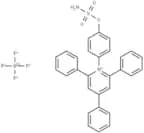
CAS:FC11409B is a CAIX inhibitor, inhibiting breast cancer invasion and metastasis.Fórmula:C29H23BF4N2O3SForma y color:SolidPeso molecular:566.38hCA I-IN-2
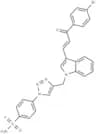
CAS:hCA I-IN-2 (6d) inhibits hCA I (Ki: 18.8 nM) more selectively over II, IX, XII (Ki: 375.1, 1721, 283.9 nM).Fórmula:C26H20BrN5O3SForma y color:SolidPeso molecular:562.44hCAI/II-IN-1
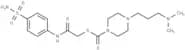
CAS:hCAI/II-IN-1 (Compound 3h) is a human carbonic anhydrase I and II (hCA I/II) inhibitor that acts on hCA I (IC50: 0.047 μM) and hCA II (IC50: 0.024 μM).Fórmula:C18H29N5O3S3Forma y color:SolidPeso molecular:459.65GV2-20
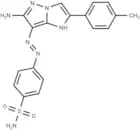
CAS:GV2-20 is an effective carbonic anhydrase 2 inhibitors.Fórmula:C15H13N3O6Pureza:98%Forma y color:SolidPeso molecular:331.28Carbonic anhydrase inhibitor 14
CAS:CA inhibitor 14 blocks hCA I/II/IX/XII (K i of 1203/99.7/9.4/27.7 nM) and CDK2 (IC50: 20.3 μM), showing antitumor effects.Fórmula:C18H17N7O2SForma y color:SolidPeso molecular:395.44QPRTase Protein, Human, Recombinant (His)
Nicotinate-Nucleotide Pyrophosphorylase (QPRT) belongs to the nadC/modD family.Forma y color:Lyophilized PowderPeso molecular:34 KDa (reducing condition)Ref: TM-TMPJ-00473
5µg113,00€10µg178,00€20µg284,00€50µg523,00€100µg759,00€200µg1.103,00€500µg1.765,00€1mg2.535,00€L-693612
CAS:L-693612 is an inhibitor of carbonic anhydrase.Fórmula:C14H24N2O5S3Pureza:98%Forma y color:SolidPeso molecular:396.55AHR-15010
CAS:AHR-15010 is a novel anti-arthritic agent.Fórmula:C10H16N2O8S2Pureza:98%Forma y color:SolidPeso molecular:356.37hCAII-IN-2
CAS:hCAII-IN-2 inhibits human carbonic anhydrases I, II, IX, XII with Ki values of 261.4, 3.8, 19.6, 45.2 nM respectively.Fórmula:C25H18ClN5O4SForma y color:SolidPeso molecular:519.96