Enzima
Subcategorías de "Enzima"
- Anhídrido carbónico(197 productos)
- Hidroxilasa(36 productos)
- MPO(2 productos)
- Reductasa(51 productos)
- Tirosinasa(71 productos)
Se han encontrado 3621 productos de "Enzima"
Carbonodithioic Acid O-(Octahydro-4,7-methano-1H-inden-5-yl) Ester Potassium Salt
CAS:Producto controladoFórmula:C11H15KOS2Forma y color:NeatPeso molecular:266.464L-Asparaginase
CAS:L-Asparaginase (EC 3.5.1.1) is an enzyme that catalyzes the following reaction: L-Asparagine + H2O → L-Aspartate + NH4+ One unit will yield 1.0 μmole of ammonia from L-asparagine per min at pH 8.6 and 37 °C.Pureza:Min. 95%Diaphorase (from Clostridium kluyveri)
CAS:Diaphorase (lipoyl dehydrogenase, EC 1.8.1.4) is an NAD+/NADH-dependent oxidoreductase. One unit of diaphorase will convert 1.0 μmole NADH into NAD+ the presence of substrate at pH 7.5 and 25 °C.Pureza:Min. 95%Serratiopeptidase
CAS:Serratiopeptidase (serratio peptidase, serratia peptidase, serrapeptidase, serratia E-15 protease, serralysin, serrapeptase; EC 3.4.24.40) is a proteolitic enzyme (proteinase) that is produced by Serratia marcescens.Pureza:Min. 95%Forma y color:PowderSecreted Phospholipase A2-IIA, human, recombinant
The secreted phospholipase A2-IIA (sPLA2-IIA, PLA2, systematic name phosphatidylcholine 2-acylhydrolase; EC 3.1.1.4) is an enzyme that catalyses the hydrolysis of glycerophospholipids at the sn2 position, yielding 1-acylglycerophosphocholine and a fatty acid. One unit of secreted phospholipase A2-IIA will hydrolyze 1.0 μmole of substrate per min under optimal conditions.Pureza:Min. 95%β-Glucanase 2, thermostable
CAS:Thermostable β-Glucanase 2 is an enzyme that hydrolases β-Glucans into glucose. One unit of β-Glucanase 2 will produce 1.0 μmole of glucose from β-glucan per minute at pH 5.8 and 70 °C.Pureza:Min. 95%Luciferase from Vibrio fischeri
CAS:Luciferase enzymes sourced from Vibrio fischeriForma y color:PowderPNPase
Specific activity: >500 units/mg-protein.Unit definition: One unit will polymerize 1.0 micro mole of ADP, releasing 1.0 micro mole of inorganic phosphate in 15 minutes at pH 9.1 at 37 °C.
Formaldehyde Dehydrogenase
CAS:Formaldehyde dehydrogenase (EC 1.2.1.46) is an enzyme that catalyzes the following reaction: formaldehyde + NAD+ + H2O ⇌ formate + NADH + H+ One unit of formaldehyde dehydrogenase will convert 1.0 µmole of formaldehyde to formic acid per minute at pH 7.5 and 37°C in the presence of NAD+.NAD+ is available here.Immobilized Lipase Kit, 7 unique immobilized EUCODIS® Lipases, immobilized by adsorption and covalent binding - ELIM Kit
Lipases belong to the family of esterases and naturally act on triglycerides at lipid-water interfaces. Lipases/esterases can be used as versatile tools in hydrolytic reactions, esterifications and transesterification reactions in industrial and food applications. The immobilized Lipase kit contains 7 different lipases, immobilised on a hydrophobic carrier either by adsorption or covalent linkage. Immobilized lipases can be utilized in various reaction types, and are optimal for all reactions in organic solvents or solvent-free systems.Alcohol Oxidase - vacuum-dried powder, >0.6 units/mg solid
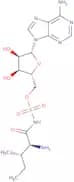
CAS:Alcohol oxidase (EC 1.1.3.13) is an enzyme that catalyzes the following chemical reaction: a primary alcohol + O2 + H2O ⇌ an aldehyde + H2O2 One unit of alcohol oxidase will oxidize 1.0 µmole of methanol to formaldehyde per min at pH 7.5 and 25 °C.Aminoacyl tRNA synthetase-IN-1
CAS:Enzyme involved in protein translation and catalyzes the aminoacylation reactionFórmula:C16H25N7O7SPureza:Min. 95%Forma y color:PowderPeso molecular:459.48 g/molChymase
CAS:Chymase (alternative names mast cell protease 1, mast cell serine proteinase, skeletal muscle protease, EC 3.4.21.39) is a serine protease, found in mast cells and basophil granulocytes.Pureza:Min. 95%Butyrylcholinesterase
Butyrylcholinesterase (BCHE, BuChE, PCHE, pseudocholinesterase, plasma cholinesterase, Acylcholine acyl-hydrolase, Choline esterase; EC 3.1.1.8, CAS No [9001-08-5]) is an enzyme that made in the liver and found mainly in blood plasma. It catalyzes the following reaction: Acylcholine + H2O → choline + carboxylic acidOne unit of Butyrylcholinesterase will change absorbance by 0.2 milliunits (mA) per minute at optimal buffer conditions and 37 ̊C. Equine serum butyrylcholinesterase is supplied as white to pale grey-green powder with activity of ≥50U/mg and specific activity of ≥300U/mg protein. It can be dissolved at 5 mg/mL concentration in 50 mM Tris-HCl pH 7.3 - 7.5, giving colorless to slightly green solution. Equine serum butyrylcholinesterase is activated by Ca2+, optimum pH 7-8, KM=18 µM (butyrylthiocholine at 25°C). Store at -20°C on arrival.Chloroperoxidase, aqueous suspension
CAS:Chloroperoxidase (also known as chloride peroxidase, systemic name chloride:hydrogen-peroxide oxidoreductase, EC 1.11.1.10) is an enzyme that catalyzes chlorination of organic compounds. Overall reaction is the following:R-H + Cl− + H2O2 + H+ → R-Cl + 2 H2O; reaction intermediate is hypochlorous acid (HOCl). One unit of chloroperoxidase will convert 1.0 μmole of substrate per minute.
Forma y color:PowderCasein Kinase 2
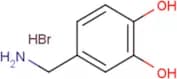
Casein kinase 2 (CK2, CSNK2; EC 2.7.11.1) is a constitutively active serine and threonine protein kinase. It plays a role in a range of cellular processes, including DNA repair, cell cycle control, metabolic regulation, circadian rhythms and more. Its known substrates include hundreds of proteins. One unit of CK2 will phosphorylate of 1 pmol of of peptide substrate in 1 minute at 30°C and presence of ATP.Fórmula:C45H73N19O24Pureza:Min. 95%Peso molecular:1,264.17 g/mol3,4-Dihydroxybenzylamine hydrobromide
CAS:3,4-Dihydroxybenzylamine hydrobromide inhibits DNA polymerase and melanoma growth, varying with tyrosinase activity.Fórmula:C7H10BrNO2Pureza:98.49%Forma y color:Light Beige Crystalline PowderPeso molecular:220.06Lipoxidase
CAS:Lipoxidase is an enzyme, which is typically sourced from various plant tissues, animals, and some microorganisms. It functions by catalyzing the oxidation of polyunsaturated fatty acids in the presence of oxygen. This enzymatic action results in the formation of lipid hydroperoxides, which are key intermediates in various biochemical pathways, including those involved in cell signaling and the modulation of gene expression.Pureza:Min. 95%Superoxide dismutase PEG
Superoxide dismutase coupled to polyethylene glycol. Superoxide dismutase (EC 1.15.1.1) is an enzyme that catalyzes the following reaction: 2 H+ + 2 O2− → O2 + H2O2 thus converting an extremely reactive and cytotoxic superoxide radical into oxygen and (significantly less reactive) hydrogen peroxide.
Oxalate Oxidase, freeze-dried, from Wheat
CAS:Oxalate Oxidase, freeze-dried, from Wheat is an enzyme preparation which is derived from wheat and functions through the oxidative degradation of oxalate. This enzyme catalyzes the conversion of oxalate into carbon dioxide and hydrogen peroxide, utilizing oxygen as a co-substrate in the process. The activity of Oxalate Oxidase is crucial in biological and biochemical applications where oxalate degradation is required.Ref: 3D-ETS012.6
25U551,00€10U711,00€50U914,00€0.1KU1.020,00€100U1.044,00€0.25KU1.802,00€0.5KU2.925,00€1KU4.680,00€1000U5.429,00€2KU8.189,00€2000U9.481,00€Amidase, from Rhodococcus sp., recombinant, lyophilized - EAM02
CAS:Amidase (EC 3.5.1.4) is a hydrolase acting on carbon-nitrogen bonds in linear amides and can be used in the hydrolysis of amides to acids. Amidase 02 is of bacterial origin (R. erythropolis and has been produced in E.coli).Nitrilase
CAS:Nitrilase (nitrile aminohydrolase; EC 3.5.5.1) in an enzyme that catalyzes hydrolysis of nitriles to carboxilic acids and ammonia: R-CN + 2 H2O → R-COO- + NH4+ One unit of nitrilase will yield 1.0 μmol of ammonia per minute under optimal reaction conditions using acrylonitrile as a substrate.
Pureza:Min. 95%alpha Amylase enzyme
Alpha Amylase (Amylase, α-Amylase, 1,4-α-D-glucan glucanohydrolase, glycogenase, systematic name 4-α-D-glucan glucanohydrolase; EC 3.2.1.1, CAS Number [9000-90-2]) is an enzyme that catalyses hydrolysis of large polysacharides into smaller fragments. Alpha amylase targets alpha bonds of 1→4 glycosidic linkages of poly- and oligosaccharides with three or more D-glucose units. One unit of Alpha Amylase will catalyze the hydrolysis of 1.0 μmol of 2-chloro-4-nitrophenyl-α-D-maltotrioside to yield 2-chloro-4-nitrophenol per minute at 37°C. Human pancreatic Alpha Amylase is supplied as clear, colorless to light yellow liquid solution at ≥400U/mL, specific activity ≥100 U/mg protein.Store at 2-8 °C on arrival.Pureza:Min. 95%Adenylate Kinase 1, human, recombinant
Adenylate kinase 1 (EC 2.7.4.3) catalyzes interconversion between ATP, ADP and AMP by catalyzing the following reaction: ATP + AMP ⇔ 2 ADP One unit of Adenylate kinase 1 will convert 1.0 µmol ATP and 1.0 µmol AMP to 2.0 µmol ADP per min at optimum conditions.Pureza:Min. 95%Phosphorylase B from rabbit muscle
CAS:Phosphorylase B is an enzymatic protein, specifically an isoform of glycogen phosphorylase, derived from rabbit muscle. This enzyme plays a critical role in glycogen metabolism by catalyzing the phosphorolytic cleavage of α(1→4) glycosidic bonds in glycogen, releasing glucose-1-phosphate. The rabbit muscle source provides a well-studied model due to its high enzyme activity and availability, facilitating in-depth biochemical and structural analysis.
Pureza:Min. 95%Ubiquitin Conjugating enzyme E2C Human Recombinant
Ubiquitin Conjugating enzyme E2C (other names UBE2C, UBCH10, dJ447F3.2, ubiquitin conjugating enzyme E2 C; EC 2.3.2.24) is an essential mediator of mitotic destruction events and cell cycle progression. It catalyzes the destruction of cyclins A and B in conjunction with the anaphase-promoting complex, and therefore, plays an important role in the control of the cell exit from mitosis This activity is essential at then end of mitosis for the inactivation of their partner kinase Cdc2 and exit from mitosis into G1 of the next cell cycle. In addition, UBE2C bears homology to yeast PAS2, a gene that is essential for biogenesis of peroxisomes. UBE2C is useful for in vitro ubiquitinylation reactions.Deoxycytidine Kinase, human, recombinant
Deoxycytidine kinase (dCK, EC 2.7.1.74) is an enzyme that catalyzes the following reaction: dC + ATP → dCMP + ADP It can also use UTP as a donor of the phosphate group, and it can phosphorylate other deoxyribonucleosides (e.g. dA, dG) as well as nucleoside analogues (like clofarabine). One unit of dCK will convert 1.0 µmole of dC and ATP to dCMP and ADP per minute at pH 7.5 and 37°C.Pureza:Min. 95%Transglutaminase from guinea pig liver
CAS:Transglutaminase (2.3.2.13) is an enzyme that catalyzes formation of isopeptide bonds between the γ-carboxamide groups ( -(C=O)NH2 ) of glutamine side chains and amino groups. The donor of the amino group is usually (but not always) an ε-amino group ( -NH2 ) of lysine residue. The reaction also releases ammonia: Gln-(C=O)NH2 + NH2-Lys → Gln-(C=O)NH-Lys + NH3One unit of transglutaminase will catalyze the formation of 1.0 μmole transglutamination product per min at pH 6.0 and 37 °C.Pureza:Min. 95%Protein phosphatase 2C
CAS:Protein phosphatase 2C is a key enzyme, which is a serine/threonine-specific phosphatase, derived from various organisms including humans, plants, and bacteria. This enzyme plays a pivotal role in cellular signaling by removing phosphate groups from serine and threonine residues on target proteins, a process known as dephosphorylation. This action is crucial for the regulation of diverse cellular functions, including stress responses, cell division, and apoptosis.Proteinase, Bacillus subtilis, sutilain
CAS:Proteinase, Bacillus subtilis, sutilain is a proteolytic enzyme, which is derived from the bacterium Bacillus subtilis. This enzyme exhibits a serine-type mechanism of action, characterized by its ability to cleave peptide bonds in proteins efficiently. It catalyzes the hydrolysis of proteins into peptides and amino acids, facilitating the breakdown of complex proteins into simpler, soluble forms.Pureza:Min. 95%Forma y color:PowderEUCODIS® Nitrilhydratase 23, recombinant enzyme - ENH023
Nitrile hydratase 23 recombinantly expressed in E. coli comes in a freeze-dried formulation. Nitrile hydratases can be utilized to convert nitriles into their corresponding amides, e.g. to produce acrylamide from acrylonitrile. Additional applications include the removal of nitriles from industrial wastewater. Our nitrile hydratases have been tested for hydrolysis of the following substrates:cyclohexanecarbonitrile, cinnamonitrile, benzonitrile, methacrylonitrile, pivalonitrile.
Malate dehydrogenase,buffered aqueous glycerol solution, 600-1000 units/mg protein (biuret)
CAS:Malic dehydrogenase is a mitochondrial isozyme and an important catalyst in the tricarboxylic acid cycle. The enzyme catalyzes the following reaction: Oxaloacetate + β-NADH → L-Malate + β-NADOne unit will convert 1.0 μmole of oxalacetate and β-NADH to L-malate and β-NAD per min at pH 7.5 at 25 °C.Pureza:Min. 95%Sphingomyelinase from bacillus cereus
CAS:Sphingomyelinase (SMase, Sphingomyelin phosphodiesterase, systematic name sphingomyelin cholinephosphohydrolase; EC 3.1.4.12) is an enzyme that hydrolyses sphingomyelin into phosphocholine and ceramide. One unit of sphingomyelinase will hydrolyze 1.0 µmole of chromogenic substrate analogue per minute at pH 7.4 and 37 °C.Pureza:Min. 95%eXrase DNA Endonuclease, research-grade
CAS:eXrase DNA endonuclease from enGenes is a recombinant endonuclease from Serratia marcescens produced in E. coli. Effectively and efficiently degrades all forms of DNA and RNA, reducing sample viscosity without proteolytic activity. As effective and efficient as other nucleases on the market, eXrase DNA endonuclease is the most cost-effective way to improve proteins yields and improve sample handing. Presented as a ready to use colourless liquid, formulated in Tris buffer at pH 8.0 with 50 % glycerol (v/v). This research grade eXrase has low endotoxin, max 0.25 EU/kU.eXrase DNA endonuclease is suitable for the effective breakdown of nucleic acids in numerous biotech settings: • Removal of residual host DNA from biotechnological products to meet regulatory standards • Reduction of viscosity and streamlined purification in downstream processing of fermentation procedures. • Reduction of viscosity in in upstream fermentation processes • Extraction and/or synthesis of flavouring nucleotides • Enhanced bioavailability of nucleotides in specific feed products • DNA degradation for the removal or prevention of biofilm formationeXrase DNA endonuclease from enGenes is made by a proprietary microbial fermentation process utilizing Escherichia coli cells. This enzyme facilitates the hydrolysis of phosphodiester bonds in various forms of DNA and RNA, including single-stranded, double-stranded, linear, circular, or supercoiled configurations, yielding smaller oligonucleotides typically composed of 2-4 base pairs. Unit-Definition: One unit (U) of the enzyme is defined as the amount required to digest calf thymus DNA, yielding acid-soluble oligonucleotides equivalent to a ΔA260nm of 1.0 within a 30-minute timeframe at pH 8.0 and 37°C. This standardization allows for consistent measurement of enzymatic activity across different batches.
eXrase DNA Endonuclease, tech-grade
CAS:eXrase DNA endonuclease from enGenes is a recombinant endonuclease from Serratia marcescens produced in E. coli. Effectively and efficiently degrades all forms of DNA and RNA, reducing sample viscosity without proteolytic activity. As effective and efficient as other nucleases on the market, eXrase DNA endonuclease is the most cost-effective way to improve proteins yields and improve sample handing. Presented as a ready to use colourless liquid, formulated in Tris buffer at pH 8.0 with 50 % glycerol (v/v). This tech grade version is our most cost effective endonuclease for R&D applications. eXrase DNA endonuclease is suitable for the effective breakdown of nucleic acids in numerous biotech settings: • Removal of residual host DNA from biotechnological products to meet regulatory standards • Reduction of viscosity and streamlined purification in downstream processing of fermentation procedures. • Reduction of viscosity in in upstream fermentation processes • Extraction and/or synthesis of flavouring nucleotides • Enhanced bioavailability of nucleotides in specific feed products • DNA degradation for the removal or prevention of biofilm formationeXrase DNA endonuclease from enGenes is made by a proprietary microbial fermentation process utilizing Escherichia coli cells. This enzyme facilitates the hydrolysis of phosphodiester bonds in various forms of DNA and RNA, including single-stranded, double-stranded, linear, circular, or supercoiled configurations, yielding smaller oligonucleotides typically composed of 2-4 base pairs. Unit-Definition: One unit (U) of the enzyme is defined as the amount required to digest calf thymus DNA, yielding acid-soluble oligonucleotides equivalent to a ΔA260nm of 1.0 within a 30-minute timeframe at pH 8.0 and 37°C. This standardization allows for consistent measurement of enzymatic activity across different batches.Ribonuclease A
CAS:Ribonuclease A (RNase A) is widely used to break down RNA in DNA purification. RNase A catalyzes the endonucleolytic cleavage of phosphodiester bonds of RNA.β-1,4-Galactosyltransferase 1
β-1,4-Galactosyltransferase 1 is an enzyme that catalyzes the synthesis of the glycosaminoglycan-protein linkage in proteoglycans.C. rugosa Lipase 01, CRL 1 from Candida rugosa - ELCR01
Lipases belong to the family of esterases and naturally act on triglycerides at lipid-water interfaces. Lipases/esterases can be used as versatile tools in hydrolytic reactions, esterifications and transesterification reactions in industrial and food applications. The Lipase 01 from the yeast Candida rugosa has a temperature optimum in the 30 - 50 °C range and pH optimum between pH 7 and 8.Cathepsin B from human placenta
CAS:Cathepsin B is a lysosomal proteolytic enzyme of the cysteine protease family. It is present in all mammalian cells. It is essential for the intracellular protein turnover. Cathepsin B may be a useful tool in Alzheimer′s research, as it may have a role in the natural defense against the disease.Pureza:Min. 95%Acid phosphatase
CAS:One unit will hydrolyse 1.0μmol of 4-nitrophenyl phosphate per minute at 37°C and pH 4.8. Substrate for enzyme analysis is the 4-nitrophenyl phosphate disodium hexahydrate (EN08508).Fórmula:C6H10O2Pureza:Min. 95%Peso molecular:114.14 g/molProtein disulfide isomerase from bovine liver
CAS:An enzyme that catalyzes the formation and breakage of disulfide bonds in the folding of proteinsFórmula:C7H5Cl2NO5SPureza:Min. 95%Peso molecular:286.09 g/molGlutathione peroxidase
CAS:Glutathione peroxidase (EC 1.11.1.9) is an enzyme that reduces peroxides to limit oxidative damage, by catalyzing the following reaction: 2 GSH + H2O2 → GS–SG + 2 H2O One unit of glutathione peroxidase will catalyze the conversion of 1.0 µmole of H2O2 per minute at pH 7.0 and 25 °C in the presence of reduced glutathione. Reduced glutahione is available here.Pureza:Min. 95%Peso molecular:84,500 g/molC. rugosa Lipase 02, CRL 2 from Candida rugosa - ELCR02
Lipases belong to the family of esterases and naturally act on triglycerides at lipid-water interfaces. Lipases/esterases can be used as versatile tools in hydrolytic reactions, esterifications and transesterification reactions in industrial and food applications. The Lipase 02 from the yeast Candida rugosa has a temperature optimum in the 30 - 50 °C range and pH optimum between pH 7 and 8.Citrate lyase from klebsiella pneumonia ≥0.20 unit/mg solid
CAS:Citrate lyase (also known as ATP citrate synthase, EC 2.3.3.8) is an enzyme that catalyzes the following reaction:citrate + ATP + CoA → oxaloacetate + Acetyl-CoA + ADP + PiEnzymatic activity: One unit will convert 1.0 micromole of citrate to oxalacetate per minute at pH 7.6 and 25 °C in the presence of required cofactors. Citrate lyase is supplied lyophylized, with activity ≥0.20 unit/mg solid.Pureza:Min. 95%Asparaginase, from E.coli, recombinant, lyophilized - EASP001
Asparaginase (EC 3.5.1.1) is an enzyme that catalyzes the following reaction: Asparagine + H2O → Aspartate + NH4+ Industrially, asparaginase is used to reduce the formation of acrylamide in starch-containing food ingredients and products during production processes. Asparaginase has a temperature optimum in the 30 – 50 °C range and pH optimum between pH 8 and 9. One unit will yield 1.0 μmole of ammonia from asparagine per min.α-N-Acetylglucosaminidase
CAS:α-N-Acetylglucosaminidase (recombinant Human NAGLU Protein), degrades heparan sulfate by hydrolysis of terminal GlcNAc resides in N-acetyl-alpha-D-glucosaminides of heparan sulfate.Activity is measured by its ability to hydrolyse 4-Nitrophenyl 2-acetamido-2-deoxy-a-D-glucopyranoside EN03208 or EM31027. The specific activity is >900 pmol/min/μg, as measured under the decribed conditions.Pureza:(Sds-Page) Min. 95%Protease from Streptomyces griseus
CAS:Protease enzymes break down proteins and are essential for many biological processes, including digestion, cellular regulation and blood clotting. They are also used in many industrial and biotechnological applications for example in food processing and in detergents.
Pureza:Min. 95%Forma y color:Powder