Enzima
Subcategorías de "Enzima"
- Anhídrido carbónico(196 productos)
- Hidroxilasa(36 productos)
- MPO(2 productos)
- Reductasa(51 productos)
- Tirosinasa(71 productos)
Se han encontrado 3619 productos de "Enzima"
SARS-CoV-2 main protease
CAS:The main protease Mpro is a key protein in the lifecycle of the SARS-CoV-2 virus. Mpro cleaves the viral polyproteins at the C-terminal end of a glutamine residue in recognition sequences containing Leu-Gln-(Ser, Ala, Gly) motifs (Rut et al, 2020). As SARS-CoV-2 MPro has no closely related homologues in humans, it represents an attractive drug target (Ullrich and Nitsche, 2020). In summary, the Mpro protease is a chymotrypsin-like cysteine protease, requires homodimerisation for proteolytic activity, cleaves the viral polyproteins in 11 distinct sites, exclusively after a glutamine residue. A fluorogenic substrate for Mpro assays is Ac-Abu-Tle-Leu-Gln-AMC.The protein amount or better its concentration in solution is quantified using either A280 (absorption at 280 nm with its specific absorption coefficient) or using the Bradford assay (uses the dye Coomassie Brilliant Blue). Both of these methods quantify the total amount of protein in a sample, no matter what the oligomerization state is.Pureza:(Sds-Page) Min. 80%Forma y color:LyophilisateTrypsin, technical grade, freeze-dried
CAS:Trypsin (EC 3.4.21.4) is a protease that hydrolyses proteins by cleaving the peptide bond at the carboxyl side of the positively charged amino acid (Lysine or Arginine). Trypsin belongs to a family of serine proteases, as it has a serine in its active site. Trypsin can be inhibited by using trypsin inhibitor Alpha 1 Antitrypsin.Pureza:Min. 98%Carboxypeptidase P
CAS:Carboxypeptidase P (EC 3.4.17.16, also Membrane Pro-Xaa carboxypeptidase, microsomal carboxypeptidase) is a C-terminal exopeptidase, that preferentially cuts at C-terminal amino acid next to proline: ~-Pro-X → ~-Pro + X.Fórmula:C8H17N2O5PPeso molecular:252.2 g/molSucrose phosphorylase (from leuconostoc mesenteroides)
CAS:Sucrose phosphorylase (sucrose glucosyltransferase, disaccharide glucosyltransferase, systemic name Sucrose:orthophosphate α-D-glucosytransferase; EC 2.4.1.7) is an enzyme that catalyzes the following reaction:sucrose + Pi ⇌ D-fructose + α-D-glucose-1-phosphateOne unit of Sucrose phosphorylase will produce 1.0 μmole of D-fructose per minute in the presence of sucrose and phosphate under optimum conditions.Pureza:Min. 95%EUCODIS® Lipase 070, screening grade, recombinant, from microbial sources - EL070
Lipase 70 recombinantly expressed in E. coli comes in a spray-dried formulation. It has its pH optimum at 6-8 and temp. optimum at 35-45°C. Lipases belong to the family of esterases and naturally act on triglycerides at lipid-water interfaces catalyzing hydrolytic reactions, esterifications and transesterification reactions in industrial and food applications. Lipase 70 was shown to hydrolyze p-Nitrophenyl esters of butyrate (100 % activity), octanoate (62 %), laurate (15 %), palmitate (4 %), stearate (3 %), arachidate (2 %) and behenate (0.2 %).Immobilized lipase
CAS:Lipases belong to the family of esterases and naturally act on triglycerides at lipid-water interfaces. Lipases/esterases can be used as versatile tools in hydrolytic reactions, esterifications and transesterification reactions in industrial and food applications. Immobilized lipases can be utilized in various reaction types, and are optimal for all reactions in organic solvents or solvent-free systems.
Forma y color:PowderEUCODIS® Lipase 070 immobilized, screening grade, recombinant, from microbial sources, covalent immobilization, or immobilization by absorption - EL070-I
Lipases belong to the family of esterases and naturally act on triglycerides at lipid-water interfaces. Lipases/esterases can be used as versatile tools in hydrolytic reactions, esterifications and transesterification reactions in industrial and food applications. The immobilized Lipase 070 has a temperature optimum at 45 °C and pH optimum between pH 5 and 8, and is covalently immobilized on a polymer resin. Immobilized lipases can be utilized in various reaction types, and are optimal for all reactions in organic solvents or solvent-free systems.LacBuster™-S bulk for plates (β-lactamase)
CAS:This product shows beta-lactamase activity against clinically relevant beta-lactam antibiotics such as penicillins, carbapenems and cephalosporins. This product may be of particular interest for laboratory teams who require the sterility testing of biological specimens or for environmental monitoring applications.
Creatinine deiminase
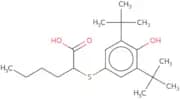
CAS:Creatinine deiminase (EC 3.5.4.21) in an enzyme that catalyzes the following reaction: Creatinine + H2O → N-Methylhydantoin + NH3 One unit of creatinine deiminase will hydrolyze 1.0 µmole of creatinine to N-methylhydantoin and ammonia per minute at pH 7.5 and 37°C.Fórmula:C20H32O3SHypoxanthine phosphoribosyltransferase, liquid
CAS:Please enquire for more information about Hypoxanthine phosphoribosyltransferase, liquid including the price, delivery time and more detailed product information at the technical inquiry form on this pageLacBuster™-S 1000 (β-lactamase)
CAS:LacBuster™-S 1000 is an enzymatic product derived from microbial sources, specifically engineered for precision and efficiency. It is a beta-lactamase, which catalyzes the hydrolysis of the beta-lactam ring found in beta-lactam antibiotics such as penicillins and cephalosporins, rendering them inactive. The enzyme achieves this by breaking the amide bond within the beta-lactam ring, a critical structural component necessary for antibiotic activity.Dextran dextrinase, liquid
CAS:Please enquire for more information about Dextran dextrinase, liquid including the price, delivery time and more detailed product information at the technical inquiry form on this pagePhosphoribosyl pyrophosphate synthase, liquid
CAS:Please enquire for more information about Phosphoribosyl pyrophosphate synthase, liquid including the price, delivery time and more detailed product information at the technical inquiry form on this pageEsterase, from porcine liver, ≥15 units/mg
CAS:Porcine liver esterase (EC 3.1.1.1) is an enzyme that catalyses ester hydrolysis, producing a fatty acid and an alcohol. One unit of esterase will hydrolyze 1.0 μmole of ethyl butyrate to butyric acid and ethanol per min at pH 8.0 and 25 °C. Ethyl butyrate is available here.LacBuster™-S 5000 (β-lactamase)
CAS:LacBuster™-S 5000 is an enzymatic product, specifically a beta-lactamase, which originates from microbial sources known for their ability to produce enzymes that break down antibiotics. This product functions by hydrolyzing the beta-lactam ring of relevant antibiotics, thereby neutralizing their antibacterial activity.Isoamylase 5MU, from Pseudomonase sp., recombinant, lyophilized - EIA01
Isoamylase (also known as debranching enzyme, systemic name glycogen α-1,6-glucanohydrolase; EC 3.2.1.68) is an enzyme from the family of carbohydrolases acting specifically on α-1,6-glucosidic branch linkages in polysaccharides such as amylopectin or glycogen, but rarely hydrolyzes such bonds in pullulan. Isoamylase has been obtained from P. amyloderamosa and has a temperature optimum in the 30 – 40 °C range and pH optimum between pH 3 and 4.Amidase, from Pseudomonase aeruginosa, recombinant, lyophilized - EAM01
CAS:Amidase is a hydrolase acting on carbon-nitrogen bonds in linear amides, and can be used in hydrolysis of amides to acids. Amidase 01 is of bacterial origin (P. aeruginosa) and has been produced in E.coli.Adenosine deaminase, type X, buffered aqueous glycerol solution, >130units/mg
CAS:Adenosine deaminase catalyzes deamination of adenosine, converting it to inosine. It happens by the substituting of the amino group by a keto group. One Unit of the enzyme converts one micromole of adenosine to inosine per minute at 25°C, pH 7.4. Adenosine deaminase is also known by names of adenosine aminohydrolase, and ADA, EC 3.5.4.4.Pureza:Min. 95%Peso molecular:1,000 g/molα-Glucosidase from bacillus stearothermophilus, lyophilized powder, 300000U/g
CAS:α-Glucosidase (EC 3.2.1.20) is a glycoside hydrolase enzyme that hydrolyzes α-1,4-linked D-glucose residues to produce α-D-glucose. This enzyme has been isolated from Bacillus stearothermophilus and is used as an industrial catalyst in the production of glucose syrups. One Unit of α-Glucosidase will release 1.0 µmole of p-nitrophenol from the chromogenic substrate mimic 4-nitrophenyl α-D-glucopyranoside per minute under optimum conditions.Forma y color:PowderTyrosinase
CAS:Copper-containing enzyme that catalyzes the first step in the synthesis of melanin
Forma y color:Powder