TLR
Los receptores tipo Toll (TLR) son una clase de proteínas que desempeñan un papel crítico en el sistema inmunitario innato al reconocer patrones moleculares asociados a patógenos (PAMP) e iniciar respuestas inmunitarias. Los TLR están involucrados en la detección de una amplia gama de patógenos, incluidos bacterias, virus y hongos, y son esenciales para la activación de las vías de señalización inflamatorias. La desregulación de la señalización de los TLR se asocia con enfermedades inflamatorias crónicas, trastornos autoinmunes y cáncer. En CymitQuimica, ofrecemos una variedad de moduladores de TLR de alta calidad para apoyar su investigación en inmunidad innata, inflamación y enfermedades infecciosas.
Se han encontrado 79 productos para "TLR".
Ordenar por
Pureza (%)
0
100
|
0
|
50
|
90
|
95
|
100
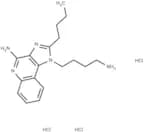
AXC-715 trihydrochloride
CAS:AXC-715 trihydrochloride is a TLR7/8 agonist used to make PD-L1 adjuvanted antibody immunocouplings.Fórmula:C18H28Cl3N5Pureza:99.87%Forma y color:SolidPeso molecular:420.81Ref: TM-T72253
1mg89,00€5mg192,00€1mL*10mM (DMSO)212,00€10mg304,00€25mg492,00€50mg690,00€100mg964,00€CL264
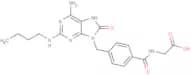
CAS:CL264, a selective agonist of TLR7, can be used in studies about innate immune signals.Fórmula:C19H23N7O4Pureza:98.01% - 99.87%Forma y color:White SolidPeso molecular:413.43Ref: TM-T10833
1mg49,00€5mg110,00€1mL*10mM (DMSO)122,00€10mg182,00€25mg289,00€50mg399,00€100mg530,00€200mg715,00€DSR-6434
CAS:DSR-6434 is a selective agonist of TLR7 with antitumor effect. DSR-6434 exhibits EC50s of 7.2 nM and 4.6 nM for human and mouse.Fórmula:C19H28N8O2Pureza:99.78%Forma y color:SolidPeso molecular:400.48TLR7/8-IN-1
CAS:TLR7/8-IN-1, a crystalline TLR7/TLR8 inhibitor, is a valuable compound for autoimmune disease research.Cost-effective and quality-assured.Fórmula:C29H40N8O2Pureza:99.99%Forma y color:White SolidPeso molecular:532.68SM360320
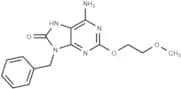
CAS:SM360320 (CL-087) is a selective TLR7 agonist that blocks HCV replication in hepatocytes and aids immunology research.Fórmula:C15H17N5O3Pureza:99.13%Forma y color:SolidPeso molecular:315.33Ref: TM-T19675
1mg110,00€5mg230,00€1mL*10mM (DMSO)255,00€10mg344,00€25mg532,00€50mg740,00€100mg982,00€500mg1.990,00€Rabeximod
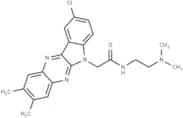
CAS:Rabeximod, an immunomodulator, eases autoimmune diseases, inhibits arthritis, and aids brain recovery post-injury by blocking inflammation.Fórmula:C22H24ClN5OPureza:99.99%Forma y color:Yellow SolidPeso molecular:409.91AT791
CAS:AT791 is an orally available TLR7 and TLR9 inhibitor, suppressing TLR7 and TLR9 signaling, used in autoimmune lupus research.Fórmula:C23H31N3O3Pureza:99.88%Forma y color:SolidPeso molecular:397.51Ref: TM-T61882
1mg69,00€5mg147,00€1mL*10mM (DMSO)164,00€10mg224,00€25mg358,00€50mg512,00€100mg707,00€200mg982,00€BBIQ
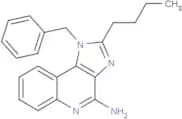
CAS:BBIQ is a powerful vaccine adjuvant that enhances innate immune responses and a potent and selectively toll-like receptor 7 (TLR7) agonist with an EC50 of 59.1Fórmula:C21H22N4Pureza:99.71%Forma y color:SolidPeso molecular:330.43M62812
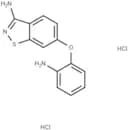
CAS:TLR4 inhibitor blocks LPS-induced NF-κB (IC50=2.4μg/mL), cytokines in PBMCs/HUVECs, and extends life in septic shock mice.Fórmula:C13H13Cl2N3OSPureza:99.07%Forma y color:SolidPeso molecular:330.23TLR7 agonist 23
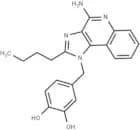
CAS:TLR7 agonist23 (compound 12b) is a potent agonist of Toll-like receptor-7 (TLR7), with an EC50 value of 0.15 uM. It is suitable for research in immune diseases.Fórmula:C21H22N4O2Forma y color:SolidPeso molecular:362.42TLR9-IN-1
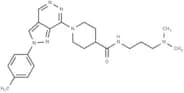
CAS:TLR9-IN-1: selective, potent human TLR9 inhibitor (IC50: 7 nM), useful for researching immune-related diseases.Fórmula:C23H31N7OForma y color:Yellow SolidPeso molecular:421.541Z105
CAS:1Z105, an orally active TLR4/MD2 ligand, facilitates dendritic cell maturation and antigen presentation, thereby preventing arthritis.Fórmula:C25H26N4O2SPureza:99.10%Forma y color:White SolidPeso molecular:446.57CU-CPD107
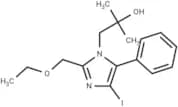
CAS:CU-CPD107 selectively activates TLR8 and ssRNA, inhibits TLR8 with R848 (IC50=13.7 μM), and coactivates with ssRNA.Fórmula:C16H21IN2O2Pureza:98%Forma y color:SolidPeso molecular:400.25ABR-238901
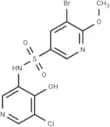
CAS:ABR-238901 is an oral, active S100A8/A9 blocker that inhibits the interaction of S100A8/A9 with its receptors RAGE(receptor for advanced glycation end productsFórmula:C11H9BrClN3O4SPureza:98.71% - 99.04%Forma y color:Yellow SolidPeso molecular:394.63Ref: TM-T39115
1mg116,00€5mg281,00€1mL*10mM (DMSO)310,00€10mg447,00€25mg710,00€50mg973,00€100mg1.333,00€SARM1-IN-4
CAS:SARM1-IN-4 (Compound 7) is an orally active SARM1 inhibitor that reduces plasma neurofilament light chain (NfL) levels in a mouse model following a 50 mg/kg oral dose. By inhibiting the NAD+ hydrolase activity of SARM1, it prevents programmed axon degeneration, making it useful for research in neurodegenerative and neurological diseases such as multiple sclerosis, amyotrophic lateral sclerosis, Parkinson's disease, and peripheral neuropathy.Fórmula:C13H17F2N3O2Forma y color:SolidPeso molecular:285.29LHC-165
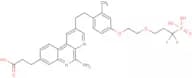
CAS:LHC-165 is an agonist of TLR7. It also has the potential to treat solid tumors.Fórmula:C29H32F2N3O7PPureza:98%Forma y color:SolidPeso molecular:603.55SARM1-IN-5
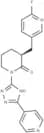
CAS:SARM1-IN-5 (compound 1-23-a) is an inhibitor of SARM1, useful for researching diseases related to axonal degeneration, including Alzheimer's disease, Parkinson's disease, amyotrophic lateral sclerosis (ALS), and multiple sclerosis (MS).Fórmula:C18H17FN6OForma y color:SolidPeso molecular:352.37Creatine ethyl ester
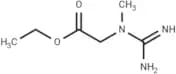
CAS:Creatine ethyl ester (CEE) is a readily available form of creatine commonly used in supplements. It can upregulate TLRs (TLR2, 3, 4, and TLR7) over a short period.Fórmula:C6H13N3O2Forma y color:SolidPeso molecular:159.186TLR7 agonist 28
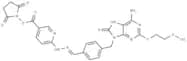
CAS:TLR7 agonist28 (compound 3) is a potent TLR7 agonist. This compound can be combined with anti-tumor monoclonal antibodies (mAb) for use in cancer immunotherapy.Fórmula:C26H25N9O7Forma y color:SolidPeso molecular:575.533