Tintes, colorantes y tinciones
Los colorantes, tintes y tinturas son herramientas esenciales en biología molecular, cruciales para visualizar y estudiar el ADN, los cromosomas y los núcleos celulares. Estos compuestos permiten a los investigadores resaltar componentes celulares específicos, facilitando la observación y el análisis detallados bajo el microscopio. En esta categoría, encontrará una amplia gama de colorantes y tintes de alta calidad utilizados en diversas técnicas de tinción, incluyendo colorantes fluorescentes para análisis de ADN y cromosomas, tintes histológicos para muestras de tejido y tintes específicos para estructuras celulares. Estas herramientas son indispensables en la investigación genética, citología, histología y diagnósticos, proporcionando claridad y contraste en las muestras biológicas. En CymitQuimica, ofrecemos una selección completa de colorantes, tintes y tinturas para apoyar su investigación en biología molecular y asegurar resultados precisos y fiables en sus estudios.
Subcategorías de "Tintes, colorantes y tinciones"
- Tintes ácidos(49 productos)
- Azobencenos(270 productos)
- Tintes azoicos(7 productos)
- Tintes básicos(27 productos)
- Tintes de cumarina(71 productos)
- Tintes de cianina, tintes de escuarilio(53 productos)
- Tintes DCM(4 productos)
- Diariolethenes(12 productos)
- Tintes de dipirrometeno(26 productos)
- Tintes Directos(17 productos)
- Tintes dispersos(2 productos)
- Sensibilizadores de colorantes(12 productos)
- Tintes(416 productos)
- Tinturas y colorantes(911 productos)
- Generating Insoluble Dyes(14 productos)
- Generating Soluble Dyes(11 productos)
- Hexaarilbiimidazol(4 productos)
- Indicadores(575 productos)
- Tintes mordantes(10 productos)
- Tintes de infrarrojo cercano (NIR)(28 productos)
- Tintes de aceite(15 productos)
- Otras tinciones y tintes(2 productos)
- Tintes de perileno(17 productos)
- Tintes fotocromáticos(40 productos)
- Tintes de ftalocianina, tintes de porfirina(101 productos)
- Tintes de quinacridona(8 productos)
- Espiropiranos(16 productos)
- Tinciones y tintes(243 productos)
- Tinciones y tintes para microscopía(5 productos)
- Tintes de tina(5 productos)
- Tintes de xanteno(65 productos)
Mostrar 23 subcategorías más
Se han encontrado 755 productos de "Tintes, colorantes y tinciones"
Ordenar por
Pureza (%)
0
100
|
0
|
50
|
90
|
95
|
100
Disperse Violet 27, Technical grade Dye content
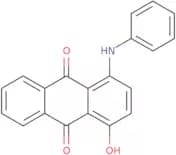
CAS:<p>Disperse Violet 27 is a sodium carbonate dye that is used as a colorant in detergent compositions. Disperse Violet 27 has excellent film-forming properties and can be used in powder, granular, liquid, or paste form. It is insoluble in water and soluble in organic solvents such as alcohols, ketones, esters, ethers, and chlorinated hydrocarbons. Disperse Violet 27 has a low thermal expansion coefficient and good stability to pH changes. This dye also has an excellent lightfastness rating of I. Disperse Violet 27 is available in the form of technical grade dye content with an approximate particle size of 0.1 microns. br></p>Fórmula:C20H13NO3Pureza:Min. 95%Peso molecular:315.32 g/molC.I.Direct Red 89
CAS:<p>C.I. Direct Red 89 is a water-soluble dye that belongs to the group of organic compounds called sulfonated naphthol dyes. It has an absorption spectrum in the region of 540-580 nm and is used as a neutral red dye for inkjet and recording applications, as well as for textile printing. C.I. Direct Red 89 can be used with other dyes for pigments, especially blue, green, and violet dyes, to produce a wide range of colors from yellow through green to blue-green. The dye is also used in pharmaceuticals, cosmetics, food coloring agents, and industrial paints.</p>Pureza:Min. 95%Naphthol Green B
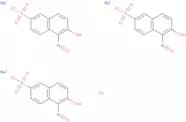
CAS:<p>Naphthol Green B is a highly fluorescent dye that is used in organic light-emitting diodes. It can be synthesized to form nanosheets that are stable and of high quality. The sodium salt of Naphthol Green B has been shown to stabilize the structure of liposomes and increase their stability. This product is also able to cross-link collagen, which may have bifunctional properties. Naphthol Green B can be used as a surfactant or a membrane stabilizer, as well as for its coordination chemistry.</p>Fórmula:C30H15FeN3O15S3·3NaPureza:Min. 95%Forma y color:Dark Green To Black SolidPeso molecular:878.47 g/molC.I.Reactive Orange 12
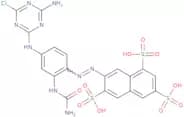
CAS:<p>C.I.Reactive Orange 12 is a reactive dye that belongs to the class of alcohols. It is used in wastewater treatment because it can bind to organic matter, such as polysaccharides and proteins, and has a high affinity for multi-walled carbon. C.I.Reactive Orange 12 is also an active substance that can be used in the production of activated carbon filters for water purification or as a fungicide on fungal biomass. The adsorption mechanism of C.I.Reactive Orange 12 is not yet fully understood, but it has been shown that this compound reacts with methyl glycine under acidic conditions to form an ion pair and then react with activated benzalkonium chloride to form a monolayer on the surface of activated carbon particles, which prevents the adsorption of other substances</p>Pureza:Min. 95%Pigment Blue 1
CAS:<p>Pigment Blue 1 is a reactive dye that is used for optical sensing in biological samples. This dye changes its color depending on the redox potential of the environment. It has been shown to bind to amines, which can be useful in drug interactions. Pigment Blue 1 has also been shown as an optical sensor for choroidal neovascularization and synchronous fluorescence.<br>!--</p>Pureza:Min. 95%Pigment Yellow 14
CAS:<p>Pigment Yellow 14 is a yellow pigment that belongs to the group of polyaromatic hydrocarbons. It has a particle size of 0.1-0.5 microns and consists of nitrogen atoms, intramolecular hydrogen, and magnetic particles. Pigment Yellow 14 is insoluble in water but soluble in organic solvents such as glycol ethers, fatty acids, and polycarboxylic acids. It has been detected using analytical chemistry methods such as spectroscopy, X-ray diffraction, and electron microscopy (EM). Pigment Yellow 14 is used in paints for plastics and textiles because it does not fade or lose its color when exposed to radiation or light.</p>Fórmula:C34H30Cl2N6O4Pureza:Min. 95%Forma y color:PowderPeso molecular:657.55 g/molPigment Yellow 168
CAS:<p>Pigment Yellow 168 is a synthetic organic pigment that is used in paints and varnishes. It is an oil-soluble, reactive dye that can be used as a colorant in plastics. Pigment Yellow 168 has been shown to be stable under UV radiation and light exposure, which makes it ideal for use in outdoor paints.</p>Fórmula:C32H24CaCl2N8O14S2Pureza:Min. 95%Peso molecular:919.69 g/molCoomassie brilliant blue G
CAS:<p>Coomassie Brilliant Blue G is a dye that is used to stain proteins. This dye binds to proteins and can be detected by the use of a fluorescence probe. Coomassie Brilliant Blue G has been shown to have an inhibitory effect on methyltransferase, which is an enzyme that catalyzes the transfer of methyl groups from one molecule to another. It also inhibits ubiquitin ligases, which are enzymes that catalyze the addition of ubiquitin molecules to other proteins. Coomassie Brilliant Blue G has been shown to cause synchronous fluorescence in vivo models and in vitro cell lines.</p>Fórmula:C47H49N3O7S2·NaForma y color:PowderPeso molecular:855.03 g/molC.I.Basic Yellow 25
CAS:<p>C.I. Basic Yellow 25 is a methoxylated, basic dye that belongs to the class of cationic surfactants. It is used as a cross-linking agent in coatings, adhesives, and inks. The chromophore of this compound is hydroxyl group, which reacts with chloride to form an ion pair with a constant charge ratio of 2:1, which can be stabilized by the cross-linking reaction. This compound is reactive and is able to crosslink with other molecules containing carbonyl groups. C.I. Basic Yellow 25 can also act as a polymerization inhibitor for polyvinyl chloride (PVC) resin and has been shown to be effective in preventing the formation of chlorinated dioxins during PVC production</p>Pureza:Min. 95%Pigment Red 58:2
CAS:<p>Please enquire for more information about Pigment Red 58:2 including the price, delivery time and more detailed product information at the technical inquiry form on this page</p>Pureza:Min. 95%Acid Red 154
CAS:<p>Acid Red 154 is a pigment that is soluble in organic solvents and has an acidic nature. It is a reddish-brown liquid with a particle diameter of 10-20 nm. This product is used as a dye, and it has been shown to have low toxicity. Acid Red 154 contains hydrogen peroxide, which is the active substance responsible for its color change. The dyestuff can be used in printing inks or as an additive to coatings and plastics.</p>Pureza:Min. 95%Pigment yellow 152
CAS:<p>Pigment Yellow 152 is a polycarboxylic acid that contains an allyl group, a hydrofluoric acid, and a hydroxyl group. It is one of the most common yellow pigments in general use. Pigment Yellow 152 polymerizes with an initiator to form polymers that are used in paints and varnishes. The polymerization process requires light or heat to activate. Pigment Yellow 152 has functional groups that give it the ability to fluoresce under ultraviolet light, which makes it useful as a sensor for low oxygen levels in mines and other locations where there is little air movement.</p>Fórmula:C36H34Cl2N6O6Pureza:Min. 95%Peso molecular:717.6 g/molPigment yellow 155
CAS:<p>Pigment yellow 155 is a polycarboxylic acid. It has a hydroxyl group and a polymerization initiator that can polymerize monomers to form polymers. Pigment yellow 155 is soluble in organic solvents, such as alcohols and ketones. It also has functional groups, which are groups of atoms on a molecule that can react with other substances. Pigment yellow 155 is used in the production of paints, plastics, rubber, textiles, and paper. The pigment’s color varies depending on its particle size. Pigment yellow 155 is typically used for coloring objects for use in electrophotography because it produces high-quality images when exposed to light or laser radiation.</p>Fórmula:C34H32N6O12Peso molecular:716.65 g/molPigment yellow 182
CAS:<p>Pigment Yellow 182 is a heat-resistant organic pigment that is used as the yellow in some traffic paints. It can be polymerized by an initiator, such as eugenol, and has a molecular weight of 191. Pigment Yellow 182 has a particle diameter of 2.5 nm and is insoluble in water. Pigment Yellow 182 absorbs light with wavelengths between 580 and 640 nm and therefore appears bright yellow to the human eye.</p>Pureza:Min. 95%C.I.Vat Orange 16
CAS:<p>Please enquire for more information about C.I.Vat Orange 16 including the price, delivery time and more detailed product information at the technical inquiry form on this page</p>Pureza:Min. 95%Pigment Orange24
CAS:<p>Pigment Orange 24 is a water-soluble pigment that can be used in inkjet printing, liquid crystal displays, and soluble inks. It has a high yield and index of light fastness. Pigment Orange 24 has an orange hue that is soluble in water and can be used to create colored solutions.</p>Pureza:Min. 95%Solvent Blue 97
CAS:<p>Solvent Blue 97 is a pigment that has been used in the textile, paper, and paint industries. It has a polymeric matrix that is composed of organic and inorganic compounds. The average particle diameter of Solvent Blue 97 ranges from 0.2 to 3 micrometres with a solubility of less than 1% in water. When irradiated, it emits light at wavelengths ranging from 415 to 455 nm, which is blue-green in color. The structural formula for Solvent Blue 97 is C 19 H 16 N 2 O 5 S.</p>Fórmula:C36H38N2O2Forma y color:PowderPeso molecular:530.7 g/molPigment yellow 126
CAS:<p>Pigment Yellow 126 is a nitro-fatty acid ester, which has an average particle diameter of 3.5 microns and a hydroxyl group at the terminal position of the molecule. This product can be used in coatings, plastics, paper, textiles, and paints. Pigment Yellow 126 is also used as a radiation absorber in x-ray films and fluorescent lamps. This product reacts with deionized water to form fatty acids and aliphatic hydrocarbons.</p>Pureza:Min. 95%Forma y color:PowderAcid red 134
CAS:<p>Acid Red 134 is a dye that belongs to the group of amino acid dyes. It is used in textile manufacturing as a colorant and has been found to be mutagenic for bacteria. Acid Red 134 is also used as a hydrophobic dye, which means it does not dissolve in water and instead dissolves in organic solvents such as alcohol or acetone. Acid Red 134 can be polymerized using UV light, making it an excellent initiator for polymerization reactions. This dye is hydrophobic and can form crystals with a low melting point.</p>Fórmula:C40H34N4Na2O12S2Forma y color:Red PowderPeso molecular:872.83 g/molC.I.Disperse Blue 183:1
CAS:<p>Please enquire for more information about C.I.Disperse Blue 183:1 including the price, delivery time and more detailed product information at the technical inquiry form on this page</p>Pureza:Min. 95%