Cumarinas
Se han encontrado 1124 productos de "Cumarinas"
7-Ethoxycoumarin
CAS:7-Ethoxycoumarin is a fluorescent substrate used in biochemical research, which is derived synthetically. It undergoes biotransformation primarily via oxidative dealkylation, catalyzed by cytochrome P450 enzymes, resulting in the formation of 7-hydroxycoumarin. By monitoring the fluorescent 7-hydroxycoumarin, researchers can assess enzymatic activity and study metabolic pathways.Fórmula:C11H10O3Pureza:Min. 95%Forma y color:PowderPeso molecular:190.2 g/mol5,7-Dihydroxy-4-methylcoumarin monohydrate
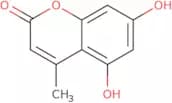
CAS:5,7-Dihydroxy-4-methylcoumarin monohydrate is an organic chemical compound, specifically a type of coumarin derivative. Coumarins are a class of naturally occurring aromatic compounds that are found in various plant sources, such as tonka beans, sweet clover, and other botanicals. This particular compound, with its distinct hydroxyl and methyl groups, falls under the broader category of hydroxycoumarins, which are of significant interest in biochemical research due to their various functional properties.Fórmula:C10H8O4•H2OPureza:Min. 95%Forma y color:Off-White Yellow PowderPeso molecular:210.18 g/molRef: 3D-M-3330
25gA consultar50gA consultar100gA consultar250gA consultar500gA consultar-Unit-ggA consultarFraxidin
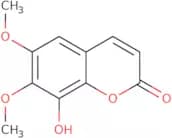
CAS:Fraxidin is a naturally occurring compound, specifically an O-methylated coumarin, which is derived from certain plant sources such as the fruits of the ash tree. It is primarily obtained through the processing of various plant materials within the Rutaceae family. The mode of action of Fraxidin involves the inhibition of oxidative damage due to its capacity to scavenge free radicals, thus leading to potential antioxidant properties in biological systems.Fórmula:C11H10O5Pureza:Min. 98 Area-%Forma y color:PowderPeso molecular:222.19 g/molDecursinol angelate
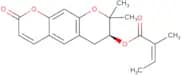
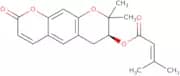
CAS:Decursinol angelate is a bioactive compound, which is derived from the roots of plants such as Angelica gigas, a species commonly used in traditional Asian medicine. This compound is a coumarin derivative, known for its potential pharmacological properties. Decursinol angelate’s mode of action involves the modulation of inflammatory pathways, particularly through the inhibition of key enzymes and cytokines involved in inflammatory responses, such as COX-2 and TNF-alpha. This modulation leads to a reduction in the synthesis of pro-inflammatory mediators, which can be beneficial in managing inflammation-related conditions.Fórmula:C19H20O5Pureza:Min. 95%Forma y color:PowderPeso molecular:328.36 g/molCalycanthoside
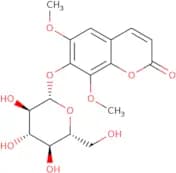
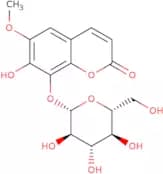
CAS:Calycanthoside is a phenolic glycoside, which is a type of natural compound characterized by a glycosidic bond linking a phenolic moiety. It is derived from the plant Calycanthus chinensis, known for its rich array of bioactive compounds. The extraction and isolation processes of Calycanthoside involve sophisticated chromatographic techniques to ensure its purity and activity.Fórmula:C17H20O10Pureza:Min. 95%Forma y color:PowderPeso molecular:384.33 g/molFraxin
CAS:Fraxin is a naturally occurring anticoagulant, which is derived from the bark of certain species of the Fraxinus tree. It functions by inhibiting thrombin and other key enzymes in the coagulation cascade, thus preventing the formation of blood clots. This mode of action makes it particularly valuable in research settings focused on cardiovascular diseases, as well as in the development of therapeutic agents targeting coagulopathies.Fórmula:C16H18O10Pureza:Min. 95%Forma y color:PowderPeso molecular:370.31 g/mol4-Methylesculetin
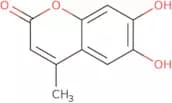
CAS:4-Methylesculetin is a coumarin derivative, which is a type of organic compound. This compound is primarily sourced from various plant species, where it occurs naturally as a secondary metabolite. Known for its bioactive properties, 4-Methylesculetin exhibits significant antioxidant activity by scavenging free radicals and protecting against oxidative stress.Fórmula:C10H8O4Pureza:Min. 95%Forma y color:PowderPeso molecular:192.17 g/mol6-Hydroxy-4-methylcoumarin
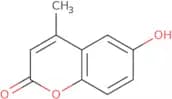
CAS:6-Hydroxy-4-methylcoumarin is a chemical compound that serves as a lactone derivative. It is commonly derived from synthetic sources through various organic reactions involving resorcinol and ethyl acetoacetate. The compound functions primarily through its ability to absorb ultraviolet light and fluoresce, making it highly valuable in spectroscopic analyses.Fórmula:C10H8O3Pureza:Min. 95%Peso molecular:176.17 g/molScopoletin
CAS:Scopoletin is a naturally occurring coumarin derivative, which is primarily isolated from plants such as those in the Solanaceae and Asteraceae families. It exhibits a diverse range of biological activities due to its multifaceted mode of action, which includes antioxidant, anti-inflammatory, and antimicrobial properties. As a phytochemical, scopoletin can modulate various biochemical pathways, influencing both enzymatic and receptor-mediated processes.Fórmula:C10H8O4Pureza:Min. 95%Forma y color:Slightly Yellow PowderPeso molecular:192.17 g/molDecursin
CAS:MAO inhibitor; neuro-protective and cognitive enhancement effects
Fórmula:C19H20O5Pureza:Min. 98 Area-%Forma y color:White PowderPeso molecular:328.36 g/molOxypeucedanin hydrate acetate
Oxypeucedanin hydrate acetate is a furanocoumarin, primarily classified as a phytochemical. It is derived from various plant sources, particularly from species in the Apiaceae family, such as Peucedanum and Angelica. These compounds are typically isolated through advanced extraction and chromatographic techniques.Pureza:Min. 95%Esculetin dibenzyl ether
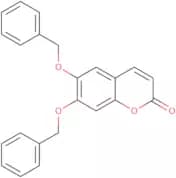
CAS:Esculetin dibenzyl ether is a chemical compound, which is a derivative of esculetin, a natural coumarin obtained chiefly from plant sources such as the bark of horse chestnut and other similar species. The source of esculetin dibenzyl ether is typically synthesized from natural precursors through chemical modifications, allowing for the exploration of its structural analogs.Fórmula:C23H18O4Pureza:Min. 95%Peso molecular:358.39 g/molEsculin hydrate
CAS:Fluorescent dye used in diagnostic culture media
Fórmula:C15H16O9·xH2OPureza:Min. 98 Area-%Forma y color:White PowderPeso molecular:340.28 g/mol(-)-Oxypeucedanin
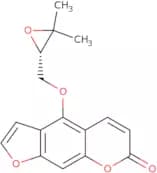
CAS:(-)-Oxypeucedanin is a natural furanocoumarin, which is a type of organic compound. Furanocoumarins are derived from specific plants and are known for their complex structures and biological activities. (-)-Oxypeucedanin is sourced primarily from plants belonging to the Apiaceae family, such as Peucedanum species.Fórmula:C16H14O5Pureza:Min. 95%Forma y color:White PowderPeso molecular:286.28 g/molScopolin
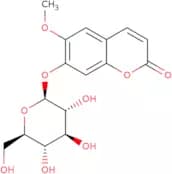
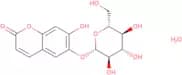
CAS:Scopolin is a coumarin glucoside, which is derived from the plant secondary metabolism. It originates predominantly from species within the Solanaceae family, including tobacco and potato plants. Its biosynthesis involves the conversion of scopoline, a precursor molecule, through glucosylation. This process is catalyzed by glucosyltransferases, which facilitate the attachment of a glucose moiety.
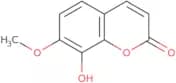
Fórmula:C16H18O9Pureza:Min. 98 Area-%Forma y color:White PowderPeso molecular:354.31 g/mol8-Hydroxy-7-methoxycoumarin
CAS:8-Hydroxy-7-methoxycoumarin is a fluorescent compound, which is a derivative of the coumarin family. This compound is typically sourced through synthetic organic chemistry processes involving the modification of natural coumarin compounds. Its mode of action involves the ability to absorb ultraviolet light and re-emit it as visible light, a characteristic feature of fluorescent molecules. This property makes it particularly useful in scientific research.
Fórmula:C10H8O4Pureza:Min. 95%Forma y color:PowderPeso molecular:192.17 g/molScoparone
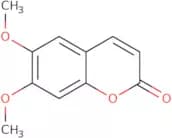
CAS:Scoparone is a bioactive natural compound, which is primarily derived from plants in the Rutaceae family, such as Artemisia species. It is a coumarin derivative, known for its therapeutic properties due to its diverse biological activities. The mode of action of scoparone is multifaceted, involving the modulation of various enzymes and signaling pathways. It acts as an inhibitor of cytochrome P450 enzymes and influences pathways involving nitric oxide and reactive oxygen species, contributing to its anti-inflammatory and hepatoprotective effects.Fórmula:C11H10O4Pureza:Min. 95%Forma y color:PowderPeso molecular:206.19 g/molNordalbergin
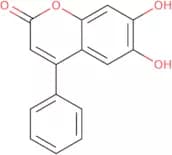
CAS:Please enquire for more information about Nordalbergin including the price, delivery time and more detailed product information at the technical inquiry form on this pageFórmula:C15H10O4Peso molecular:254.24 g/molEsculin sesquihydrate
CAS:Fluorescent dye used in diagnostic culture mediaFórmula:C15H16O9•(H2O)1Pureza:(Uv) Min. 97.5%Forma y color:White Off-White PowderPeso molecular:367.31 g/mol