Cumarinas
Se han encontrado 1124 productos de "Cumarinas"
Esculetin
CAS:Esculetin is a naturally occurring coumarin compound, which is predominantly derived from various plant sources, such as the bark and leaves of certain trees and shrubs. As a member of the coumarin family, it is characterized by its benzopyrone structure and is often isolated from botanicals through organic solvent extraction methods.
Its mode of action primarily involves its ability to scavenge free radicals and chelate metal ions, contributing to its notable antioxidant capacity. Furthermore, Esculetin exerts anti-inflammatory effects by inhibiting the activity of enzymes such as cyclooxygenase and lipoxygenase, which are integral to the inflammatory pathway.
Common applications of Esculetin are found in scientific research where it is utilized for its potential therapeutic properties. Studies have investigated its role in modulating oxidative stress, its protective effects in neurodegenerative disorders, and its capability to inhibit the proliferation of certain cancer cell lines. Additionally, it serves as a useful biochemical tool in elucidating the pathways of inflammation and oxidative stress within cellular models. Scientists continue to explore its potential as a lead compound in drug discovery and development.Fórmula:C9H6O4Pureza:Min. 98.0 Area-%Peso molecular:178.15 g/molRutaretin
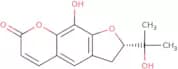
CAS:Rutaretin is a polyphenolic compound, which is a derivative of natural flavonoids extracted from plant sources. It functions primarily as an antioxidant by scavenging free radicals and inhibiting oxidative stress at the cellular level. Its molecular structure allows it to interact with reactive oxygen species, mitigating the damaging effects on cellular components such as DNA, proteins, and lipids.Fórmula:C14H14O5Pureza:Min. 98 Area-%Forma y color:PowderPeso molecular:262.26 g/mol7-Methylcoumarin
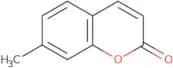
CAS:7-Methylcoumarin is an organic compound classified as a coumarin derivative, which is sourced from various plants and synthesized chemically. Its basic structure consists of a benzopyrone, with a methyl group at the seventh position on the coumarin core, distinguishing it from naturally occurring coumarins.Fórmula:C10H8O2Pureza:Min. 95%Forma y color:White PowderPeso molecular:160.17 g/molCoumarin
CAS:Coumarin is an organic chemical compound, which is a naturally occurring substance found in various plants, including tonka beans, sweet clover, and cinnamon. Structurally, it is a benzopyrone, characterized by a benzene ring fused to a lactone. Coumarin acts primarily as an anticoagulant by inhibiting the synthesis of vitamin K-dependent clotting factors in the liver. This mode of action disrupts the coagulation cascade, reducing the blood’s ability to clot effectively.Fórmula:C9H6O2Pureza:Min. 95%Forma y color:White PowderPeso molecular:146.14 g/mol7-Hydroxycoumarin
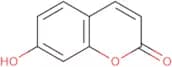
CAS:7-Hydroxycoumarin is a fluorescent compound, known as a coumarin derivative, which is a naturally occurring chemical found in many plants. Derived from the umbelliferone compound family, it exhibits strong blue fluorescence under UV light due to its unique structural properties. This fluorescence is a result of its molecular conjugation and the electron-donating nature of the hydroxyl group, allowing it to absorb and emit light efficiently.
Fórmula:C9H6O3Pureza:90%Forma y color:Off-White PowderPeso molecular:162.14 g/molGlycocoumarin - Glycyrrhiza uralensis (liquorice)
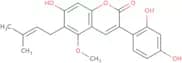
CAS:Glycocoumarin is a phytochemical compound that is primarily categorized as a bioactive flavonoid. It is derived from Glycyrrhiza uralensis, commonly known as liquorice, a plant renowned for its diverse pharmacological properties. The mode of action of glycocoumarin involves the modulation of various biological pathways, including its potential to influence inflammatory responses and antioxidant activity. This compound is known to interact with cellular signaling mechanisms, which could mediate its effects on immune modulation and cellular protection.Fórmula:C21H20O6Pureza:Min. 98 Area-%Forma y color:PowderPeso molecular:368.38 g/molIsoscopoletin
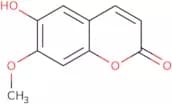
CAS:Isoscopoletin is a naturally occurring coumarin derivative, which is typically sourced from various plants, including some medicinal herbs. This compound is found in a variety of plant species, where it plays a role in the plant's defense mechanisms against pathogens. It is known for its characteristic chemical structure that belongs to the coumarin family, which is widespread in the plant kingdom.Fórmula:C10H8O4Pureza:Min. 95%Forma y color:PowderPeso molecular:192.17 g/mol(+/-)-Heraclenin
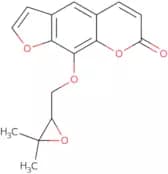
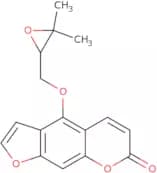
CAS:(+/-)-Heraclenin is a naturally occurring coumarin, which is a class of organic compounds notable for diverse biological activities. This compound is primarily sourced from various plant species belonging to the family Apiaceae, such as Heracleum species. Coumarins like (+/-)-heraclenin are known for their ability to modify biological responses due to their chemical structure.Fórmula:C16H14O5Pureza:Min. 98 Area-%Forma y color:PowderPeso molecular:286.28 g/molBergaptol
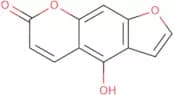
CAS:Bergaptol is a naturally occurring furanocoumarin, which is a compound derived from plants, particularly from the Rutaceae family such as bergamot and other citrus species. It is primarily characterized by its chemical structure containing a furan ring fused to a coumarin moiety. Bergaptol acts primarily through its interaction with biological systems by inhibiting certain enzymatic activities and interfering with the biological pathways that involve reactive oxygen species. This compound exhibits antioxidant properties, reducing oxidative stress by scavenging free radicals and thereby protecting cells from damage.Fórmula:C11H6O4Pureza:Min. 95%Forma y color:Off-White PowderPeso molecular:202.16 g/mol5-Methoxypsoralen
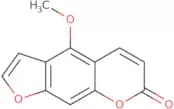
CAS:5-Methoxypsoralen is a light-activated compound, which is a naturally derived organic substance found in certain plants, particularly from the Apiaceae family. This compound functions as a furocoumarin that interacts with DNA through photoactivation, forming cross-links upon exposure to ultraviolet A (UVA) light. These cross-links disrupt DNA replication, ultimately inhibiting cell proliferation.
Fórmula:C12H8O4Pureza:Min. 98 Area-%Forma y color:White PowderPeso molecular:216.19 g/mol7-Methoxy-4-methylcoumarin
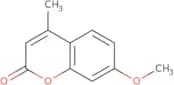
CAS:7-Methoxy-4-methylcoumarin is a synthetic organic compound, which is a derivative of coumarins—a class of compounds widely found in plants. This compound is primarily synthesized through organic chemical reactions rather than extracted directly from natural sources. Its mode of action involves exhibiting fluorescence, which makes it a valuable probe in various scientific studies.Fórmula:C11H10O3Pureza:Min. 95%Forma y color:PowderPeso molecular:190.2 g/mol5-Geranyloxy-7-methoxycoumarin
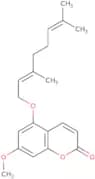
CAS:5-Geranyloxy-7-methoxycoumarin is a naturally occurring compound known as a coumarin derivative, which is primarily sourced from specific plant species such as those within the Rutaceae family. This compound is characterized by its unique chemical structure that incorporates both geranyloxy and methoxy functional groups, conferring specific biological activities.Fórmula:C20H24O4Pureza:Min. 95%Forma y color:PowderPeso molecular:328.4 g/mol6-Hydroxy-7-methoxy-4-phenylcoumarin
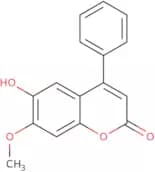
CAS:6-Hydroxy-7-methoxy-4-phenylcoumarin is a synthetic chemical compound classified as a coumarin derivative. Derived from natural coumarin structures, this compound is often synthesized through organic chemistry techniques involving the hydroxylation and methoxylation of coumarin backbones, with the addition of a phenyl group.Fórmula:C16H12O4Pureza:Min. 95%Forma y color:PowderPeso molecular:268.26 g/mol4-Hydroxy-3-phenylcoumarin
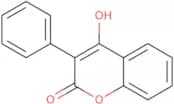
CAS:4-Hydroxy-3-phenylcoumarin is an organic compound, which is a derivative of coumarin. It is synthetically derived through chemical modification processes that introduce a hydroxy group and a phenyl ring to the coumarin core structure. Its mechanism of action involves the inhibition of vitamin K epoxide reductase, an enzyme critical for the cyclic conversion of vitamin K. This inhibition prevents the activation of vitamin K-dependent clotting factors, thereby exerting its anticoagulant effects.
Fórmula:C15H10O3Pureza:Min. 98 Area-%Forma y color:PowderPeso molecular:238.24 g/molDaphnetin dimethyl ether
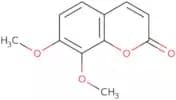
CAS:Daphnetin dimethyl ether is a synthetic chemical compound, which is a derivative of the naturally occurring coumarin scaffold. It is primarily sourced through chemical synthesis rather than extraction from natural compounds, allowing for precise control over purity and structural modifications that are otherwise challenging to achieve through natural means.Fórmula:C11H10O4Pureza:Min. 95%Forma y color:PowderPeso molecular:206.19 g/mol8-Geranyloxypsoralen
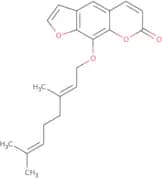
CAS:8-Geranyloxypsoralen is a natural furanocoumarin, which is a secondary metabolite typically derived from plants, particularly those in the Rutaceae family. Its source lies predominantly in certain fruits and herbs, where it functions as a natural defense compound.
Fórmula:C21H22O4Pureza:Min. 95 Area-%Forma y color:Off-White PowderPeso molecular:338.4 g/molAlloisoimperatorin
CAS:Alloisoimperatorin is a naturally occurring furanocoumarin compound, which is extracted from certain plant species, primarily those belonging to the Apiaceae family. As a type of coumarin derivative, it is synthesized through intricate plant metabolic pathways involving the precursors umbelliferone and isopentenyl pyrophosphate, among others.Fórmula:C16H14O4Pureza:Min. 95%Peso molecular:270.28 g/molOxypeucedanin
CAS:Oxypeucedanin is a furanocoumarin compound, which is derived from various plant sources, most notably those in the Apiaceae family such as Peucedanum and Angelica species. It functions primarily as a photoreactive agent, capable of interacting with DNA under ultraviolet (UV) light through a process called photoactivation. Upon UV exposure, it forms covalent bonds with DNA, leading to cross-linking that can disrupt cellular functions.Fórmula:C16H14O5Pureza:Min. 95%Forma y color:Clear LiquidPeso molecular:286.28 g/molOroselol
CAS:Oroselol is an innovative beta-adrenergic blocker, which is a synthetic derivative with unique cardiovascular targeting properties. It is sourced from engineered chemical synthesis, utilizing advanced molecular design to enhance selectivity for beta-adrenergic receptors. The mode of action of Oroselol involves competitive antagonism of beta-1 and beta-2 adrenergic receptors, leading to a decrease in heart rate and myocardial contractility. This blockade of adrenergic stimulation results in reduced cardiac output and lower blood pressure.
Fórmula:C14H12O4Pureza:Min. 95%Forma y color:PowderPeso molecular:244.24 g/molOsthole
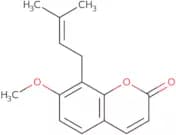
CAS:Osthole is a coumarin derivative, which is a type of natural compound. It is predominantly sourced from the Cnidium monnieri plant, as well as other Apiaceae family members. Osthole exerts its effects primarily through modulation of various molecular pathways, including the suppression of inflammatory mediators and the modulation of calcium channels, which results in vasodilation and various other physiological effects.Fórmula:C15H16O3Pureza:Min. 95%Forma y color:PowderPeso molecular:244.29 g/mol