Ligandos organometálicos
En esta categoría, encontrará un gran número de moléculas organometálicas utilizadas como ligandos en biomoléculas. Estos ligandos organometálicos pueden usarse en química orgánica y síntesis en el laboratorio. Desempeñan un papel crucial en la formación de complejos de coordinación y la catálisis de diversas reacciones químicas. En CymitQuimica, ofrecemos una selección diversa de ligandos organometálicos de alta calidad para apoyar sus investigaciones y necesidades industriales.
Subcategorías de "Ligandos organometálicos"
- Ligandos de Buchwald(22 productos)
- DPEN(4 productos)
- DPHEN(4 productos)
- JOSIPHOS(4 productos)
- Fosfina(497 productos)
- Porfirinas(75 productos)
Se han encontrado 2888 productos de "Ligandos organometálicos"
Ordenar por
Pureza (%)
0
100
|
0
|
50
|
90
|
95
|
100
KT-474
CAS:KT-474 is an oral small molecule protein degrader, which is derived from targeted protein degradation technology. This compound functions as an investigational agent specifically designed to degrade IRAK4, a key kinase involved in the signaling pathways of pro-inflammatory cytokines such as IL-1 and IL-18, which are crucial in the regulation of innate and adaptive immunity. The mode of action is based on hijacking the cell's ubiquitin-proteasome system to selectively bind to and degrade IRAK4, thereby reducing inflammation at the molecular level.Fórmula:C44H49F2N11O6Pureza:Min. 95%Peso molecular:865.93 g/molChlorpropamide
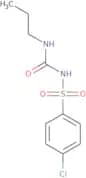
CAS:<p>Hypoglycemic agent</p>Fórmula:C10H13ClN2O3SPureza:Min. 95%Forma y color:White Off-White PowderPeso molecular:276.74 g/molL 690330
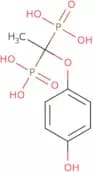
CAS:Inositol monophosphatase (IMPase) inhibitorFórmula:C8H12O8P2Pureza:Min. 95%Peso molecular:298.12 g/molMEDICA16
CAS:MEDICA16: GPR40 agonist, GPR120 partial agonist, ATP-citrate lyase inhibitor, lowers TG, boosts insulin sensitivity in muscle.Fórmula:C20H38O4Pureza:99.62% - 99.87%Forma y color:White SolidPeso molecular:342.51Ref: TM-T22967
5mg60,00€10mg92,00€25mg168,00€50mg289,00€100mg419,00€500mg874,00€1mL*10mM (DMSO)80,00€AR-AO 14418
CAS:Inhibitor of GSK3β kinaseFórmula:C12H12N4O4SPureza:Min. 95%Forma y color:PowderPeso molecular:308.31 g/molMethyl-d3-magnesium iodide solution, 1.0 M in diethyl ether
CAS:Producto controlado<p>Methyl-d3-magnesium iodide solution, 1.0 M in diethyl ether, is a specialized organometallic reagent used extensively in synthetic chemistry. This compound is a labeled Grignard reagent, where the methyl group is fully deuterated. It is sourced through the synthesis involving the reaction of deuterated methyl iodide with magnesium in an anhydrous diethyl ether solvent.</p>Fórmula:CD3IMgPureza:Min. 95%Peso molecular:169.26 g/molRosuvastatin
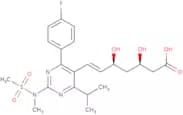
CAS:Rosuvastatin is a synthetic lipid-lowering agent, which is a product of pharmaceutical manufacturing derived from extensive research in cardiovascular pharmacology. It functions as an HMG-CoA reductase inhibitor, effectively blocking the enzyme responsible for cholesterol biosynthesis in the liver. By inhibiting this enzyme, Rosuvastatin reduces the production of cholesterol, especially low-density lipoprotein (LDL) cholesterol, which is known to contribute to atherosclerosis.Fórmula:C22H28FN3O6SPureza:Min. 95%Peso molecular:481.54 g/molTNO155
CAS:TNO155 is an innovative therapeutic agent, commonly classified as a small-molecule inhibitor, which is derived from rational drug design based on precision oncology principles. Its mode of action involves selective inhibition of a specific protein tyrosine phosphatase, which plays a critical role in cellular signaling pathways that are often dysregulated in cancer. This inhibition effectively disrupts aberrant signaling, thereby suppressing tumor cell proliferation and inducing apoptosis in malignant cells.Fórmula:C18H24ClN7OSPureza:Min. 95%Peso molecular:421.9 g/molAG 14361
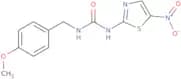
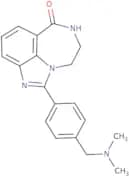
CAS:AG 14361 is a potent inhibitor designed to target the interaction between the tumor suppressor protein p53 and the murine double minute 2 (MDM2) oncoprotein. It is synthetically derived, offering researchers a tool to perturb a critical protein-protein interaction involved in the regulation of the cell cycle and apoptosis. The mode of action involves the disruption of the p53-MDM2 interaction, leading to the stabilization and activation of p53. This results in the induction of p53-dependent transcriptional activity, facilitating cell cycle arrest and apoptosis in cancerous cells.Fórmula:C19H20N4OPureza:Min. 98 Area-%Forma y color:PowderPeso molecular:320.39 g/molLY 294002
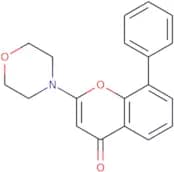
CAS:<p>First generation PI 3-kinase inhibitor</p>Fórmula:C19H17O3NPureza:Min. 95%Forma y color:White To Off-White SolidPeso molecular:307.12084BMY 7378 Dihydrochloride
CAS:<p>BMY 7378 Dihydrochloride is a selective 5-HT1A receptor antagonist, which is synthetically derived for specialized research purposes. This compound is known for its ability to bind exclusively to the 5-HT1A receptor, inhibiting the action of serotonin. Its mechanism of action involves a high-affinity blockade of serotonin at this receptor site, making it a valuable tool for understanding serotonergic signaling pathways.</p>Fórmula:C22H33Cl2N3O3Pureza:Min. 95%Peso molecular:458.42 g/mol1-(7Z-Pentadecenoyl)-rac-glycerol
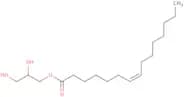
CAS:1-(7Z-Pentadecenoyl)-rac-glycerol is a glycerol derivative, which is typically synthesized or isolated from natural fats and oils. This compound is part of the monoacylglycerol family, characterized by a glycerol backbone esterified with a single fatty acid chain. The source of 1-(7Z-Pentadecenoyl)-rac-glycerol can be varied, stemming from enzymatic processes that occur in biological systems, or through chemical synthesis that mimics these natural interactions.Fórmula:C18H34O4Pureza:Min. 95%Peso molecular:314.46 g/molBerubicin
CAS:<p>Berubicin is an anthracycline-based chemotherapeutic agent, which is a semi-synthetic derivative sourced primarily from the bacterium Streptomyces peucetius. It operates by intercalating into DNA strands, disrupting the replication and transcription processes, which ultimately induces apoptosis in rapidly dividing tumor cells.</p>Fórmula:C34H35NO11Pureza:Min. 95%Forma y color:PowderPeso molecular:633.6 g/molc18:1 Ceramide (d17:1/18:1(9Z))
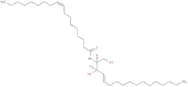
CAS:<p>C18:1 Ceramide (d17:1/18:1(9Z)) is a sphingolipid, which is originally sourced from plant or synthetic lipid precursors. Ceramides are integral components of the cellular lipid bilayer and are crucial for maintaining the integrity and function of the skin barrier. Their mode of action involves participating in cell signaling pathways that regulate cellular differentiation, proliferation, and apoptosis.</p>Fórmula:C35H67NO3Pureza:Min. 95%Peso molecular:549.91 g/molGLP-1 (1-37) (human, bovine, guinea pig, mouse, rat) trifluoroacetate salt
CAS:GLP-1 (1-37) (human, bovine, guinea pig, mouse, rat) trifluoroacetate salt is a posttranslational modification of the endogenous human hormone GLP-1. It is a synthetic form of this hormone that has been modified to allow for improved stability and solubility. This peptide is found in the pancreatic alpha cells and intestinal L cells and stimulates the release of insulin from pancreatic beta cells. GLP-1 (1-37) (human, bovine, guinea pig, mouse, rat) trifluoroacetate salt has also been shown to increase glucose uptake by muscle tissue as well as stimulate the release of incretin hormones such as glucagon-like peptide 1 and gastric inhibitory polypeptide. GLP-1 (1-37) (human, bovine, guinea pig, mouse, rat) trifluoroacetate saltFórmula:C186H275N51O59Pureza:Min. 95%Peso molecular:4,169.48 g/molAR-13324 mesylate
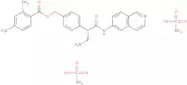
CAS:<p>AR-13324 mesylate is a pharmaceutical compound, which is a selective Rho kinase inhibitor derived from chemical synthesis with a specific mode of action targeting the modulation of aqueous humor outflow in the eye. Structurally, it is designed to inhibit the Rho-associated protein kinase (ROCK) pathway, which plays a crucial role in controlling various cellular functions including contraction, motility, proliferation, and apoptosis, specifically affecting the trabecular meshwork and uveoscleral pathway in ocular tissues.</p>Fórmula:C29H31N3O6SPureza:Min. 95%Peso molecular:549.64 g/molImidazole ketone erastin
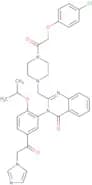
CAS:Imidazole ketone erastin is a small molecule compound, which is a synthetic analog derived from erastin. The origin of this compound is rooted in the study of ferroptosis, a form of regulated cell death characterized by iron-dependent lipid peroxidation. Imidazole ketone erastin functions by inhibiting the cystine/glutamate antiporter system Xc–, leading to the accumulation of lethal reactive oxygen species (ROS) within cells.Fórmula:C35H35ClN6O5Pureza:Min. 95%Peso molecular:655.14 g/molUprifosbuvir
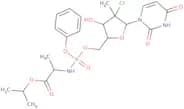
CAS:Uprifosbuvir is an investigational antiviral compound, which is a nucleotide analog prodrug of uridine. It functions by targeting the hepatitis C virus (HCV) NS5B RNA-dependent RNA polymerase, an essential enzyme for viral RNA replication. As an uridine nucleotide analog, Uprifosbuvir interferes with the viral replication process by incorporating itself into the viral RNA, leading to chain termination.Fórmula:C22H29ClN3O9PPureza:Min. 95%Peso molecular:545.9 g/molGanetespib
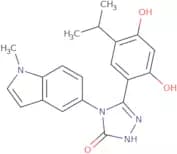
CAS:Heat shock protein 90 (HSP90) inhibitorFórmula:C20H20N4O3Pureza:Min. 95%Forma y color:White PowderPeso molecular:364.4 g/molAZD5069
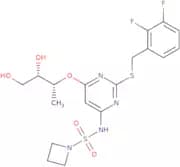
CAS:<p>AZD5069 is a small molecule that serves as a potent and selective antagonist of the CXC chemokine receptor 2 (CXCR2). It is derived from synthetic pharmaceutical research efforts aimed at targeting key signaling pathways in inflammatory diseases. This compound functions by inhibiting the CXCR2 receptor, which plays a critical role in the recruitment and activation of neutrophils, a type of white blood cell involved in inflammation and immune responses.</p>Fórmula:C18H22F2N4O5S2Pureza:Min. 95%Peso molecular:476.52 g/mol