Compuestos deuterados
Los compuestos deuterados son moléculas orgánicas en las que uno o más átomos de hidrógeno son reemplazados por deuterio, un isótopo estable del hidrógeno. Estos compuestos son esenciales en varios campos científicos, incluyendo la espectroscopía de RMN, la espectrometría de masas y los estudios cinéticos de isótopos. Los compuestos deuterados mejoran la claridad y precisión de las señales en los análisis al reducir el ruido de fondo y proporcionar información única sobre los mecanismos de reacción y las estructuras moleculares. En CymitQuimica, encontrarás una amplia gama de compuestos deuterados diseñados específicamente para apoyar tu investigación en química analítica y estudios moleculares.
Se han encontrado 4233 productos de "Compuestos deuterados"
Ordenar por
Pureza (%)
0
100
|
0
|
50
|
90
|
95
|
100
Deoxycholic acid-D4
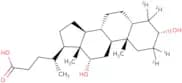
CAS:Producto controladoDeoxycholic acid-D4 is a bile acid that is produced by the liver. It has been shown to be an indicator of insulin resistance in women with breast cancer. Deoxycholic acid-D4 has also been found to have significant interactions with other drugs, such as phenytoin, carbamazepine, and penicillin. The concentration of deoxycholic acid-D4 in the serum may be reduced by taking these drugs. This drug has a detection time of 3 hours and can be detected by liquid chromatography. Deoxycholic acid-D4 is metabolized through the human metabolism pathway, which includes dietary and logistic regression models.Fórmula:C24H36D4O4Pureza:Min. 95%Peso molecular:396.6 g/molrac 1,2-Bis-palmitoyl-3-chloropropanediol-D5
CAS:Producto controlado<p>Rac-1,2-Bis-palmitoyl-3-chloropropanediol (rac1,2BPC) is a dispersive compound that has been used in the experimental phase of extraction. It has been shown to be efficient in the quantification and screening of fatty acids. Rac1,2BPC has also been used as a spiking agent for food samples to identify contaminants. The recoveries have been validated and linearity has been demonstrated. Rac1,2BPC is an anion that can be quantified by liquid chromatography with wavelength detection at 202 nm.</p>Fórmula:C35H62D5ClO4Pureza:Min. 95%Peso molecular:592.38 g/molAMOZ-d5
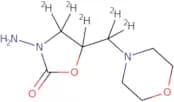
CAS:Producto controladoAMOZ-d5 is a new analytical method for the determination of drug metabolites in animal muscle tissue. The sample preparation process involves hydrolysis with aqueous acid and subsequent extraction into methanol. AMOZ-d5 has been validated using a range of different samples, such as drugs, food supplements, and animals. This method is an improvement over other techniques due to its speed and sensitivity.Fórmula:C8H10D5N3O3Pureza:Min. 95%Peso molecular:206.25 g/molDiethyl oxalate-¹³C2
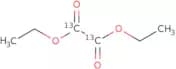
CAS:Please enquire for more information about Diethyl oxalate-¹³C2 including the price, delivery time and more detailed product information at the technical inquiry form on this pageFórmula:C4C2H10O4Pureza:Min. 95%Peso molecular:148.13 g/molBromoacetic acid-13C2
CAS:Please enquire for more information about Bromoacetic acid-13C2 including the price, delivery time and more detailed product information at the technical inquiry form on this pageFórmula:C2H3BrO2Pureza:Min. 95%Forma y color:PowderPeso molecular:140.95 g/molGlycidyl oleate-d5
CAS:Producto controladoGlycidyl oleate-d5 is a high-performance liquid chromatography (HPLC) stationary phase. Glycerolysis of soybean oil yields glycidyl oleate, which can be used as a stationary phase for HPLC separations. This stationary phase has been shown to be compatible with different solvents and mobile phases, including chlorinated solvents such as methylene chloride or chloroform. The temperature range in which this stationary phase is stable is between 0°C and 100°C. This stationary phase has been validated for use with the separation of glycerolipids from soybean oilseeds.Fórmula:C21H33D5O3Pureza:Min. 95%Peso molecular:343.55 g/molProgesterone-d9
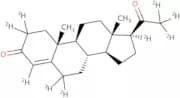
CAS:Producto controladoProgesterone-d9 is a compound that is used in the diagnosis of adrenocortical carcinoma. It can be extracted from the serum of patients with this cancer using an acetate extraction technique. Progesterone-d9 has been shown to be a useful biomarker for short-term exposure to water contaminated with nomegestrol acetate, and it has also been shown to be a useful tool for wastewater treatment. The use of Progesterone-d9 as a biomarker is limited by its instability in human serum and its susceptibility to matrix effects. This compound can be analyzed by liquid chromatography mass spectrometry (LC-MS/MS) methods, which are sensitive and specific. A drawback of this analytical method is that it requires extensive sample preparation. The LC-MS/MS method can also be used to measure prosteroid levels, which have been found to correlate with levels of camp in humans.Fórmula:C21H21O2D9Pureza:Min. 95%Forma y color:Off-White To Yellow SolidPeso molecular:323.51 g/molChloroacetic Acid-13C2
CAS:Please enquire for more information about Chloroacetic Acid-13C2 including the price, delivery time and more detailed product information at the technical inquiry form on this pagePureza:Min. 95%1-Amino-2,4-imidazolidinedione-13C3
CAS:1-Amino-2,4-imidazolidinedione-13C3 is an antibiotic that belongs to the group of nitrofurans. It is used for the treatment of infections caused by bacteria that are resistant to other antibiotics. The LC-MS/MS analysis showed that 1-aminohydantoin was formed as a degradation product of chloramphenicol and that this metabolite had been detected in urine samples from patients treated with chloramphenicol. Nitrofuran is also a possible degradation product. A reaction monitoring experiment using ionization monitoring and monitoring on the precursor ion at m/z 287 confirmed the presence of 1-aminohydantoin in a sample containing both chloramphenicol and nitrofuran. Quantification was performed using calibration curves obtained from pure standards.Fórmula:C3H5N3O2Pureza:Min. 95%Peso molecular:118.12 g/mol4-Aminobiphenyl-D9
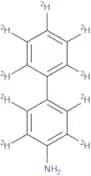
CAS:Producto controlado<p>4-Aminobiphenyl is a chemical compound that belongs to the group of aromatic amines. It is a human carcinogen and has been shown to cause cancer in animals. 4-Aminobiphenyl has been detected in the environment as an environmental pollutant and can be found in small quantities at low levels in food, air, and water. 4-Aminobiphenyl can be hydrolyzed by acid or alkaline hydrolysis to form its hydrolysate, which contains nitroarenes that are not present in the original compound. The DNA modification caused by 4-aminophenol may be due to its ability to modify DNA bases through reactive metabolites such as nitroarenes.</p>Fórmula:C12H2D9NPureza:Min. 95%Peso molecular:178.27 g/molDimethyl sulfoxide-d6
CAS:Producto controlado<p>Dimethyl sulfoxide-d6, commonly called deuterated DMSO or DMSO-d6, differs isotopically from dimethyl sulfoxide (DMSO), in that the hydrogen atoms have been substituted by deuterium isotopes (2D). Dimethylsulfoxide-d6 is extensively used as an NMR solvent, which shows a characteristic shift observed at 2.50 ppm in 1H-NMR.</p>Fórmula:C2D6OSPureza:95%MinPeso molecular:84.17 g/mol7-Hydroxy-4-cholesten-3-one-D7
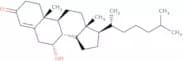
CAS:Producto controlado<p>7-Hydroxy-4-cholesten-3-one-D7 (7OHCD7) is a metabolite of the bile acid, cholic acid. It is generated by the action of cholesterol 7α hydroxylase on cholesterol in the liver. It is excreted in bile, which is then absorbed back into the body from the gut and used for energy metabolism. 7OHCD7 has been shown to be an inhibitor of histone deacetylases, which are enzymes that regulate gene transcription. This inhibition leads to increased transcriptional regulation and reduced inflammatory responses in bowel disease models. 7OHCD7 has also been shown to increase cholesterol levels and reduce inflammation in humans with metabolic syndrome.</p>Fórmula:C27H44O2Pureza:Min. 95%Peso molecular:400.64 g/molAllopurinol-d2
CAS:<p>Allopurinol-d2 is an inhibitor of xanthine oxidase, which is an enzyme that catalyzes the conversion of hypoxanthine to xanthine and then to uric acid. Allopurinol-d2 is used for the treatment of gout and hyperuricemia. The compound was expressed in Escherichia coli and purified by electrospray ionization mass spectrometry. It has been shown to inhibit methyltransferase activity, thereby decreasing the production of urate. Allopurinol-d2 has also been shown to decrease disease activity in animal models of colitis and ulcerative colitis.</p>Fórmula:C5H2D2N4OPureza:Min. 95%Peso molecular:138.12 g/mol1a,25-Dihydroxy vitamin D2
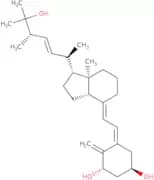
CAS:<p>1a,25-Dihydroxy vitamin D2 is a compound that exhibits various characteristics and applications. It is known for its bioavailability and water-soluble properties, making it easily absorbed by the body. This compound has been extensively studied in the field of research chemicals. One of the notable features of 1a,25-Dihydroxy vitamin D2 is its potential therapeutic effects on ganglioside GM2-related disorders. It has been shown to interact with GM2 activator proteins and fatty acids, which are involved in the metabolism of GM2 gangliosides. This interaction may have implications for the treatment of certain neurological conditions. Additionally, 1a,25-Dihydroxy vitamin D2 has been investigated for its role in modulating immune responses and inflammatory processes. Studies have suggested that this compound can inhibit the production of pro-inflammatory substances like prostaglandins, offering potential anti-inflammatory benefits. Moreover, 1a,25-Dihydroxy vitamin D</p>Fórmula:C28H44O3Pureza:Min. 95%Forma y color:White PowderPeso molecular:428.65 g/molOxaloacetic acid-13C4
CAS:A labelled form of the oxalacetic acid (FO12113).Fórmula:C4H4O5Pureza:Min. 95%Peso molecular:136.04 g/molCodeine-D3 solution
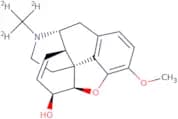
CAS:Producto controladoPlease enquire for more information about Codeine-D3 solution including the price, delivery time and more detailed product information at the technical inquiry form on this pagePureza:Min. 95%Vitamin D3-d6
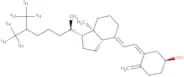
CAS:Producto controladoVitamin D3-d6 is a vitamin that has ionizable properties. It is available in the form of an oil and can be used as a dietary supplement for infants, as well as adults. Vitamin D3-d6 has been validated by various assays, including those based on chemical ionization, high-performance liquid chromatography, and gas chromatography. Sample preparation procedures include saponification and extraction with isooctane. The analytical method involves detection by UV light at 254 nm or fluorescence at 365 nm. The efficiency of this vitamin is low because it easily degrades when exposed to light or air.Fórmula:C27H38D6OPureza:Min. 95%Forma y color:PowderPeso molecular:390.67 g/molTrideuteriomethylbenzene
CAS:Producto controlado<p>Trideuteriomethylbenzene is a chemical compound that contains three deuterium atoms. It is a member of the class of compounds called alkyl-deuteriomethylbenzenes, which are used as proton donors in chemical reactions. It has been shown to be an effective supercritical solvent for the separation of long-chain alcohols from hydrocarbons. Trideuteriomethylbenzene may also be used as a photoelectron donor for the determination of time constants and depression constants by electron diffraction.</p>Fórmula:C7H5D3Pureza:Min. 95%Peso molecular:95.16 g/molAniline D5
CAS:Producto controladoAniline D5 is a metabolic probe used to study the activation of carcinogens. Aniline D5 inhibits the growth of cancer cells by binding to amines, which are present in epidermal growth factor and other growth factors. When an anhydrous sodium hydrogen bond forms between the amines and the aniline, it causes a frequency shift in the aromatic ring that leads to a change in its physical properties. This change can be detected using high-resolution NMR spectroscopy. The sensitivity of this technique has been improved by adding activated charcoal as a matrix effect.Fórmula:C6H2D5NPureza:Min. 95%Peso molecular:98.15 g/molTetrabenazine-d6
CAS:Producto controlado<p>Tetrabenazine is a drug that is used to treat Parkinson's disease. It decreases the release of dopamine, which can reduce symptoms such as tremors and rigidity. Tetrabenazine has been shown to be an effective treatment for Parkinson's disease in clinical trials with long-term efficacy. Tetrabenazine also has a number of side effects, including hypotension, hallucinations, and depression.br>Tetrabenazine can interact with other drugs or medications such as monoamine oxidase inhibitors, antidepressants, or antipsychotics. This medication should not be taken by people who have liver impairment, because it may lead to liver damage. br>Tetrabenazine is a drug that belongs to the class of pharmacological agents known as selective monoamine reuptake inhibitors (SSRIs). These agents work by blocking the reuptake of serotonin (5-HT), dopamine (DA), or norepinephrine (NE) into the pres</p>Fórmula:C19H21D6NO3Pureza:Min. 95%Peso molecular:323.46 g/mol