Haluros orgánicos
Subcategorías de "Haluros orgánicos"
Se han encontrado 20442 productos de "Haluros orgánicos"
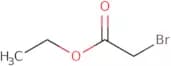
Ethyl bromoacetate
CAS:Ethyl bromoacetate is an ethyl ester of bromoacetic acid. It is a precursor to a number of pharmaceuticals, including the anti-inflammatory drug bromoacetate and the radioprotective agent dibromopropane. Ethyl bromoacetate is used in analytical chemistry as a reagent for the detection and identification of coumarin derivatives, which have been detected in biological samples such as wastewater. The compound has also been shown to be effective against certain strains of bacteria and fungi that are responsible for bowel diseases. Ethyl bromoacetate can act as an antimicrobial agent by disrupting bacterial cell membranes and inhibiting their metabolic pathways.
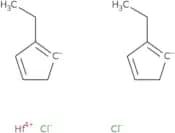
Fórmula:C4H7BrO2Pureza:Min. 95%Peso molecular:167 g/molBis(ethylcyclopentadienyl)hafniumdichloride
CAS:Producto controladoPlease enquire for more information about Bis(ethylcyclopentadienyl)hafniumdichloride including the price, delivery time and more detailed product information at the technical inquiry form on this pageFórmula:C14H18Cl2HfPureza:Min. 95%Peso molecular:435.69 g/molNorpseudoephedrine hydrochloride
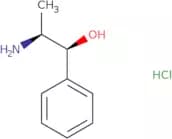
CAS:Producto controladoNorpseudoephedrine hydrochloride is a natural drug that has been used for many years as a decongestant. It is an active metabolite of ephedrine, which is found in the natural drug ephedra. Norpseudoephedrine hydrochloride is used to treat nasal and sinus congestion, but also has a number of other uses. The matrix effect of this drug has been shown with locomotor activity in mice. The enzyme activities have been shown using an analytical method on human urine samples. This drug can cause dopamine to be released into the synapse and may increase the release of other monoamine neurotransmitters such as serotonin and norepinephrine if taken in high doses. Norpseudoephedrine hydrochloride can also have negative effects on fetal development when taken by pregnant women, so should be avoided during pregnancy or breastfeeding.Fórmula:C9H13NO•HClPureza:Min. 95%Peso molecular:187.67 g/mol1,3-Dibromoacetone
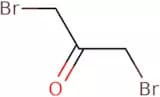
CAS:1,3-Dibromoacetone (1,3-DB) is a chemical compound that is used in analytical chemistry to separate peptides and proteins by hydrophilic interaction chromatography. 1,3-DB reacts with the cysteine residues in the protein to form a disulfide bond. The complex formed can be detected using a fluorescent dye such as fluorescein. This compound has been used to characterize the urine samples of patients with α subunit amyloidosis who have increased levels of adenine nucleotides. It has also been used for detection sensitivity testing for the histidine residues on the enzyme synthetase and subunits of streptavidin.Fórmula:C3H4Br2OPureza:Min. 95%Forma y color:Clear LiquidPeso molecular:215.87 g/mol[3-(1-Isopropyl-1H-benzimidazol-2-yl)propyl]amine dihydrochloride
CAS:Producto controladoPlease enquire for more information about [3-(1-Isopropyl-1H-benzimidazol-2-yl)propyl]amine dihydrochloride including the price, delivery time and more detailed product information at the technical inquiry form on this pageFórmula:C13H19N3Pureza:Min. 95%Peso molecular:217.31 g/molOlodaterol hydrochloride
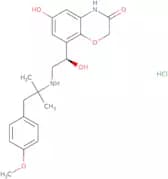
CAS:Producto controladoOlodaterol hydrochloride is a long-acting β2-agonist (LABA) used to treat asthma. It is a prodrug that is hydrolyzed in vivo to olodaterol, its active form. Olodaterol hydrochloride binds to the β2 receptor and activates adenylyl cyclase, resulting in increased levels of cAMP. This drug has been shown to have statistically significant improvement in lung function and bronchial responsiveness in vivo models. The most common adverse effects include headache, dizziness, and cough. Olodaterol hydrochloride has been shown to be effective for short-term treatment of asthma but does not show long-term efficacy or reduced need for pharmacological treatments.Fórmula:C21H26N2O5·HClPureza:Min. 95%Forma y color:PowderPeso molecular:422.9 g/mol2-Bromo-5-methylbenzoic acid
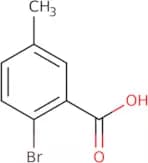
CAS:2-Bromo-5-methylbenzoic acid is an organic compound that can be synthesized in the laboratory. It is used as a starting material for synthesis of various quinazolinones, which are ionic liquid catalysts. 2-Bromo-5-methylbenzoic acid has also been shown to inhibit ethylene production from glycols and to act as a potential catalyst for the conversion of trifluoromethane into ionic liquids. The synthesis of 2-bromo-5-methylbenzoic acid is not well documented, but it can be made by reacting methyl bromide with benzaldehyde or acetone in the presence of sodium hydroxide or potassium hydroxide. This reaction produces bromobenzene, which reacts with phosphorus pentachloride to produce 2-bromo-5-methylbenzoic acid.
Fórmula:C8H7BrO2Pureza:Min. 95%Forma y color:PowderPeso molecular:215.04 g/mol[5-(Trifluoromethyl)-1,2-Oxazol-3-Yl]Methanol
CAS:Please enquire for more information about [5-(Trifluoromethyl)-1,2-Oxazol-3-Yl]Methanol including the price, delivery time and more detailed product information at the technical inquiry form on this pageFórmula:C5H4F3NO2Pureza:Min. 95%Peso molecular:167.09 g/mol1-Cyclopropyl-7-(2,8-diazabicyclo[4.3.0]non-8-yl)-6-fluoro-8-methoxy-4-oxoquinoline-3-carboxylic acid
CAS:This is a broad-spectrum antibacterial agent that inhibits bacterial DNA gyrase. It is active against atypical bacterial species, such as Chlamydia and Mycoplasma, and has been shown to be effective against certain strains of the methicillin-resistant Staphylococcus aureus (MRSA) bacteria. This drug also inhibits the growth of other bacteria by binding to their DNA. The drug is used in combination with other antibiotics to treat infections caused by Clostridium difficile, Helicobacter pylori, Borrelia burgdorferi, and Salmonella enterica. However, this drug does not work against Pseudomonas aeruginosa or Enterobacteriaceae infections.Fórmula:C21H24FN3O4Pureza:Min. 95%Forma y color:PowderPeso molecular:401.43 g/mol2-[(4-fluorophenyl)methyl]-4,4,5,5-tetramethyl-1,3,2-dioxabo
CAS:2-[(4-fluorophenyl)methyl]-4,4,5,5-tetramethyl-1,3,2-dioxaborolane is a chemical compound with the molecular formula C10H14FNO. It can be synthesized by Suzuki cross-coupling of 4-fluorobenzaldehyde and resorcinol. This process is catalyzed by palladium acetate and copper iodide in an organic solvent such as ethanol. The reaction is followed by acidification to remove the catalyst and the product is extracted with dichloromethane. 2-[(4-fluorophenyl)methyl]-4,4,5,5-tetramethyl-1,3,2-dioxaborolane has been shown to have affinity for Grp94. This affinity may be due to its ability to modify proteins in cancer cells or its regioselectivity due to its susceptibility to hydrolysis at theFórmula:C13H18BFO2Pureza:Min. 95%Peso molecular:236.09 g/mol4-Chloro-3-(trifluoromethyl)phenyl isocyanate
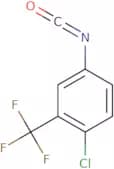
CAS:4-Chloro-3-(trifluoromethyl)phenyl isocyanate (4CTFPI) is a phenoxy that has significant antiproliferative activity and can be used to treat cancer. It can inhibit the growth of tumor cells by suppressing the production of growth factors and binding to the receptor for these factors, which leads to inhibition of cell division. 4CTFPI also inhibits tumor growth through its ability to induce apoptosis in cancer cells. 4CTFPI has been shown to have antitumor effects on sarcoma cells in vitro and in vivo with a low toxicity profile. This compound is not active against bacterial infections or fungi, but it does not show any carcinogenic effects.Fórmula:C8H3ClF3NOPureza:Min. 95%Forma y color:PowderPeso molecular:221.56 g/mol2-Chloro-3,4-dimethoxyphenethylamine HCl
CAS:Producto controlado2-Chloro-3,4-dimethoxyphenethylamine is an intermediate in the synthesis of zepines. It can be synthesized by reduction of borohydride with 2-chloro-1,2,3,4-tetrahydrobenzaldehyde.Pureza:Min. 95%7-Bromo-1-methyl-1H-imidazo[4,5-c]pyridine
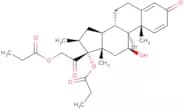
CAS:Please enquire for more information about 7-Bromo-1-methyl-1H-imidazo[4,5-c]pyridine including the price, delivery time and more detailed product information at the technical inquiry form on this pageFórmula:C7H6BrN3Pureza:Min. 95%Peso molecular:212.05 g/mol9-Deschloro-9-bromo beclomethasone dipropionate
CAS:Producto controladoPlease enquire for more information about 9-Deschloro-9-bromo beclomethasone dipropionate including the price, delivery time and more detailed product information at the technical inquiry form on this pageFórmula:C28H37BrO7Pureza:Min. 95%Peso molecular:565.49 g/mol1-(Bromomethyl)-2-(trifluoromethyl)-4-nitrobenzene
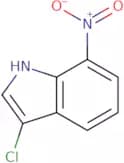
CAS:Please enquire for more information about 1-(Bromomethyl)-2-(trifluoromethyl)-4-nitrobenzene including the price, delivery time and more detailed product information at the technical inquiry form on this pageFórmula:C8H5BrF3NO2Pureza:Min. 95%Forma y color:PowderPeso molecular:284.03 g/mol3-Chloro-7-nitro-1H-indole
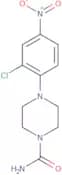
CAS:3-Chloro-7-nitro-1H-indole is a chemical compound that has been shown to have antitumor activity in clinical trials. It is catalysed by the addition of chloride ions to the nitro group, yielding an aminocarbonyl intermediate. This intermediate reacts with hydrogen chloride to form a chlorinating agent that can react with DNA and protein bases. The chlorinating agent has been shown to be efficient in screening for anticancer drugs. 3-Chloro-7-nitro-1H-indole is currently being tested for efficacy against colon carcinoma cells and human colon carcinoma xenografts.Fórmula:C8H5ClN2O2Pureza:Min. 95%Peso molecular:196.59 g/mol4-(2-Chloro-4-nitrophenyl)piperazine-1-carboxamide
CAS:Please enquire for more information about 4-(2-Chloro-4-nitrophenyl)piperazine-1-carboxamide including the price, delivery time and more detailed product information at the technical inquiry form on this pageFórmula:C11H13ClN4O3Pureza:Min. 95%Peso molecular:284.7 g/mol1-(4-Chloro-3-Trifluoromethylphenyl)Piperazine
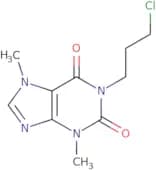
CAS:Producto controladoPlease enquire for more information about 1-(4-Chloro-3-Trifluoromethylphenyl)Piperazine including the price, delivery time and more detailed product information at the technical inquiry form on this pageFórmula:C11H12ClF3N2Pureza:Min. 95%Peso molecular:264.67 g/mol1-(3-Chloropropyl)theobromine
CAS:Producto controlado1-(3-Chloropropyl)theobromine is the reaction product of acetylacetone with carbonate and water. It is a high-yielding remedy for cerebral thrombosis and other alkali burns. The chemical formula for 1-(3-chloropropyl)theobromine is C10H14ClO2. It is soluble in water, which makes it an excellent antidote for alkali burns. Acetylacetone reacts with carbonate to produce the alkanol, which then reacts with water to form 1-(3-chloropropyl)theobromine. This chemical has been found to be an effective treatment for cerebral thrombosis and other alkali burns due to its ability to react with both water and blood clots.
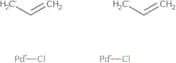
Fórmula:C10H13ClN4O2Pureza:Min. 95%Peso molecular:256.69 g/molAllylpalladium(II) chloride dimer
CAS:Allylpalladium(II) chloride dimer is a homogeneous catalyst that can be used for the asymmetric synthesis of organosilicon compounds. It is an allylation agent and has been shown to react with certain nitrogen-containing compounds to form a palladium nitride complex. This compound is also a good transport agent, due to its high solubility in organic solvents. Allylpalladium(II) chloride dimer has been shown to be effective in the production of cancer chemotherapeutic agents, including chlorambucil, as well as anti-inflammatory drugs such as ibuprofen. This catalyst has also been used for cross-coupling reactions with alkyl bromides and iodides. A major drawback of this catalyst is that it often leads to an isolated yield of the product, which can be improved by using a solvent or by adding water or alcohols.
Fórmula:C6H10Cl2Pd2Pureza:95%NmrPeso molecular:365.89 g/mol

![[3-(1-Isopropyl-1H-benzimidazol-2-yl)propyl]amine dihydrochloride](/_next/image/?url=https%3A%2Fstatic.cymitquimica.com%2Fproducts%2F3D%2Fthumb-webp%2FFI126427.webp&w=3840&q=75)
![[5-(Trifluoromethyl)-1,2-Oxazol-3-Yl]Methanol](/_next/image/?url=https%3A%2Fstatic.cymitquimica.com%2Fproducts%2F3D%2Fthumb-webp%2FFT89239.webp&w=3840&q=75)
![1-Cyclopropyl-7-(2,8-diazabicyclo[4.3.0]non-8-yl)-6-fluoro-8-methoxy-4-oxoquinoline-3-carboxylic a…](/_next/image/?url=https%3A%2Fstatic.cymitquimica.com%2Fproducts%2F3D%2Fthumb-webp%2FFC102529.webp&w=3840&q=75)
![2-[(4-fluorophenyl)methyl]-4,4,5,5-tetramethyl-1,3,2-dioxabo](/_next/image/?url=https%3A%2Fstatic.cymitquimica.com%2Fproducts%2F3D%2Fthumb-webp%2FFF105786.webp&w=3840&q=75)

![7-Bromo-1-methyl-1H-imidazo[4,5-c]pyridine](/_next/image/?url=https%3A%2Fstatic.cymitquimica.com%2Fproducts%2F3D%2Fthumb-webp%2FFB155304.webp&w=3840&q=75)