Haluros orgánicos
Subcategorías de "Haluros orgánicos"
Se han encontrado 20442 productos de "Haluros orgánicos"
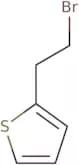
2,2-(Bromoethyl)thiophene
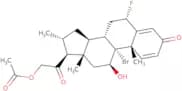
CAS:Oripavine is a naturally occurring alkaloid that can be synthesized from 2,2-bromoethane and potassium carbonate. It has been used for the treatment of Parkinson's disease. Oripavine is an intermediate in the synthesis of rotigotine, a dopamine agonist used to treat Parkinson's disease. The reaction mechanism involves the addition of bromine to 2,2-bromoethane followed by hydrochloric acid treatment to form oripavine. The reaction proceeds with the formation of hydrogen chloride and potassium bromide. The product can then be reacted with a Grignard reagent or allyl group to produce rotigotine.Fórmula:C6H7BrSPureza:Min. 95%Peso molecular:191.09 g/mol(6a,11b,16a)-21-(Acetyloxy)-9-bromo-6-fluoro-11-hydroxy-16-methyl-pregna-1,4-diene-3,20-dione
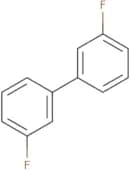
CAS:Producto controladoPlease enquire for more information about (6a,11b,16a)-21-(Acetyloxy)-9-bromo-6-fluoro-11-hydroxy-16-methyl-pregna-1,4-diene-3,20-dione including the price, delivery time and more detailed product information at the technical inquiry form on this pageFórmula:C24H30BrFO5Pureza:Min. 95%Peso molecular:497.39 g/mol3,3'-Difluorobiphenyl
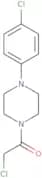
CAS:3,3'-Difluorobiphenyl is a liquid crystal composition that has been shown to have anisotropic properties. When 3,3'-difluorobiphenyl is mixed with other halides such as chloro- or bromo-halides, the liquid crystalline phase can be induced by the addition of ethylene. The anisotropic properties of these compositions make them useful in devices where orientation, reorientation and flow are important. 3,3'-Difluorobiphenyl has also been shown to catalyze the conversion of alcohols to esters and phenols.Fórmula:C12H8F2Pureza:Min. 95%Peso molecular:190.19 g/mol1-(Chloroacetyl)-4-(4-chlorophenyl)piperazine
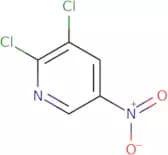
CAS:Producto controladoPlease enquire for more information about 1-(Chloroacetyl)-4-(4-chlorophenyl)piperazine including the price, delivery time and more detailed product information at the technical inquiry form on this pageFórmula:C12H14Cl2N2OPureza:Min. 95%Peso molecular:273.16 g/mol2,3-Dichloro-5-nitropyridine
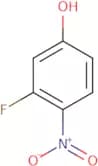
CAS:2,3-Dichloro-5-nitropyridine (2,3-DNP) is an antidiabetic drug that has been shown to improve insulin sensitivity in animals. It is a sample preparation reagent that can be used to validate the use of γ-aminobutyric acid (GABA) as a linker for the immobilization of proteins on solid supports. 2,3-DNP is also used as an adipose tissue marker to study obesity and insulin resistance. This drug has been shown to increase choline levels in the liver by inhibiting its export and increasing its synthesis by phosphorylation of serine hydroxymethyltransferase. 2,3-DNP also increases fatty acid synthesis by activating acetyl coenzyme A carboxylase and inhibiting carnitine palmitoyl transferase I. 2,3-DNP has also been shown to decrease food intake and body weight gain in db/db miceFórmula:C5H2Cl2N2O2Pureza:Min. 95%Forma y color:PowderPeso molecular:192.99 g/mol3-Fluoro-4-nitrophenol
CAS:3-Fluoro-4-nitrophenol is an organic solvent that is used in the synthesis of a number of organic and inorganic compounds, including diazonium salts. 3-Fluoro-4-nitrophenol can be reacted with organometallic reagents to form tetraphenylmethane derivatives. It has been shown to have potential use as a precursor for the synthesis of a number of pharmaceuticals, such as regorafenib, which is an antiangiogenic drug. 3-Fluoro-4-nitrophenol reacts with chloride ions to form coelomic acid (3-fluoroaniline) and other organic acids. Reaction with magnesium and aluminium produces silicon nitride.Fórmula:C6H4FNO3Pureza:Min. 95%Peso molecular:157.1 g/mol1-Chloro-2-(ethylthio)ethane
CAS:Producto controlado1-Chloro-2-(ethylthio)ethane (1,2-ETE) is a reactive oxygen species that inhibits the electron transport chain in mitochondria. 1,2-ETE decreases the mitochondrial membrane potential and causes oxidative damage to proteins, such as recombinant cytochrome P450. 1,2-ETE has been shown to decrease photosynthetic activity by inhibiting the light reactions of photosynthesis. It also inhibits the electron transport chain in mitochondria and causes damage to cells by reacting with sulfide to form sulfhydryl compounds. The toxic effects of 1,2-ETE are due to its ability to cause injury by reacting with other molecules.
Fórmula:C4H9ClSPureza:Min. 95%Forma y color:Clear Colourless To Pale Yellow LiquidPeso molecular:124.63 g/mol5-chloro-1-phenyl-1h-1,2,3,4-tetraazole
CAS:5-Chloro-1-phenyl-1H-1,2,3,4-tetrazole (5CAT) is a dihedral molecule that contains phenyl groups and p-hydroxybenzoic acid. The argon (Ar) functionalities are activated by reaction with hydroxyl group to form the cross-coupling reaction between 5CAT and chloride (Cl). 5CAT has been shown to be a good substrate for 2D Nuclear Magnetic Resonance (NMR), as it has a protonated hydroxyl group. This functional group is also present on the chloro group of the 5CAT molecule. The vibrational analysis from the protonated hydroxyl group can be observed in the spectrum of 5CAT.
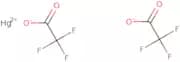
Fórmula:C7H5N4ClPureza:Min. 95%Peso molecular:180.59 g/molMercuric trifluoroacetate
CAS:Producto controladoMercuric trifluoroacetate is an organic compound that contains mercury and a carboxylic acid. It is an acid that is formed when mercury reacts with hydrochloric acid. Mercuric trifluoroacetate has been shown to be effective in the synthesis of a number of organic compounds, including the nonsteroidal anti-inflammatory drug (NSAID) 3-hydroxyanthranilic acid. This compound also inhibits the production of prostaglandin E2 in human leukocytes, which may be related to its inhibitory properties on congestive heart failure. Mercuric trifluoroacetate can also cause autoimmune diseases in mice by suppressing the production of interleukin-4 and interleukin-10, which are cytokines involved in immune responses.
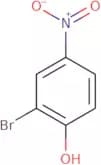
Fórmula:C4F6HgO4Pureza:Min. 95%Peso molecular:426.62 g/mol2-Bromo-4-nitrophenol
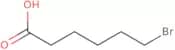
CAS:2-Bromo-4-nitrophenol is a byproduct of the reaction between hydrogen peroxide and sodium bromate. It can be detected in the presence of hydrochloric acid, which reacts with 2-bromo-4-nitrophenol to form an orange color that can be detected spectrophotometrically. 2-Bromo-4-nitrophenol has been shown to inhibit the growth of various strains of bacteria, including Escherichia coli, Bacillus subtilis, and Pseudomonas aeruginosa. This compound binds to flavin adenine dinucleotide (FAD) as well as other nucleophilic cofactors such as thioredoxin reductase. The binding affinity is increased when carbon sources are present. This property makes it a useful inhibitor for catalytic reduction reactions in biotechnology and synthetic chemistry applications.br>br> 2B4NP is a byFórmula:C6H4BrNO3Pureza:Min. 95%Forma y color:PowderPeso molecular:218 g/mol6-Bromohexanoic acid
CAS:6-Bromohexanoic acid is a fatty acid that has been shown to be an effective agent for the treatment of cancer. It is used in gene therapy to inhibit the growth of cancer cells by binding to and then activating transcription factors. 6-Bromohexanoic acid can also be used as a chemotherapeutic agent and has been shown to cause apoptosis in monoclonal antibody-treated cells. 6-Bromohexanoic acid has pharmacokinetic properties that are similar to those of other fatty acids. The reaction solution was found to have high chemical stability, which may be due to the presence of nitrogen atoms. This reaction solution was found to adsorb onto the surface of monoclonal antibodies and cell culture, altering their properties.
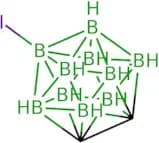
Fórmula:C6H11BrO2Pureza:Min. 97.0%Forma y color:PowderPeso molecular:195.05 g/mol9-Iodo-1,2-carbarone
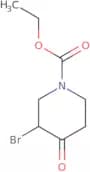
CAS:Producto controladoPlease enquire for more information about 9-Iodo-1,2-carbarone including the price, delivery time and more detailed product information at the technical inquiry form on this pageFórmula:IC2B10H11Pureza:Min. 95%Peso molecular:2,431.11 g/mol3-Bromo-4-oxo-piperidine-1-carboxylic acid ethyl ester
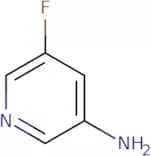
CAS:3-Bromo-4-oxo-piperidine-1-carboxylic acid ethyl ester is a monoclinic crystal of the salt of 3-bromo-4-oxo-piperidine and 1,2-ethanediol. It is used as an intermediate in the synthesis of cisapride, a medication that regulates gastrointestinal motility. 3BOCEP has been shown to hydrolyze in the stomach with a rate constant of 2 x 10 M s. The bromination product is cisapride, which has been shown to regulate gastrointestinal motility by stimulating GI smooth muscle contractions.Fórmula:C8H12BrNO3Pureza:Min. 95%Peso molecular:250.09 g/mol3-Amino-5-fluoropyridine
CAS:3-Amino-5-fluoropyridine is a chiral amino acid that can be synthesized from butyronitrile and fluorine in the presence of an organocatalyst. The synthesis can be carried out with either a biodegradable or non-biodegradable catalyst. 3-Amino-5-fluoropyridine can be used as a precursor to prepare medicines such as fluoroquinolones, which are antibiotics that inhibit bacterial growth by binding to DNA-dependent RNA polymerase and preventing transcription and replication. Fluoroquinolones are also potent anti-inflammatory agents and have been shown to reduce inflammation in animal models of asthma, arthritis, and colitis. 3-Amino-5-fluoropyridine can be synthesized from nitro compounds with aluminium mediated reactions. Nitro compounds are toxic substances that have been used in explosives or as herbicides.Fórmula:C5H5FN2Pureza:Min. 95%Forma y color:Off-White PowderPeso molecular:112.11 g/molBis[2-(perfluorohexyl)ethyl]phosphate
CAS:Bis[2-(perfluorohexyl)ethyl] Phosphate is a perfluorinated, fluorinated chemical that is used in wastewater treatment. It is also found in human serum and organisms, as well as in the drinking water of some communities. Bis[2-(perfluorohexyl)ethyl] Phosphate has been detected in the maternal serum and urine of women who are pregnant or breast-feeding. It may be associated with adverse effects on neurodevelopmental outcomes in children. Bis[2-(perfluorohexyl)ethyl] Phosphate can be removed from drinking water by using an ultrasonic extraction system. This method uses sound waves to extract the chemical from water and other liquids and is effective at removing small amounts (less than 10 parts per billion). The analytical method for this compound is low detection, which means that it can only detect concentrations of up to 0.1 part per billion (ppb). However, this methodFórmula:C16H9F26O4PPureza:Min. 95%Forma y color:PowderPeso molecular:790.17 g/mol4-[(2,5-Dimethyl-1H-pyrrol-1-yl)methyl]piperidine hydrochloride
CAS:Producto controladoPlease enquire for more information about 4-[(2,5-Dimethyl-1H-pyrrol-1-yl)methyl]piperidine hydrochloride including the price, delivery time and more detailed product information at the technical inquiry form on this pageFórmula:C12H20N2Pureza:Min. 95%Peso molecular:192.3 g/mol3-Bromo-2,4-dimethylthiophene
CAS:3-Bromo-2,4-dimethylthiophene is a reactive chemical that can reversibly change its color in the presence of uv light. The isomers of 3-bromo-2,4-dimethylthiophene are easily separated by uv irradiation and are characterized by their different spectral properties. This compound fluoresces with a maximum at 370 nm under a uv light source and has an absorption maximum at 360 nm. The photochromic properties of 3-bromo-2,4-dimethylthiophene are related to changes in the crystalline phase and light source. 3-Bromo-2,4-dimethylthiophene is used as a photochromic agent for uv radiation protection in glasses and contact lenses.Fórmula:C6H7BrSPureza:Min. 95%Peso molecular:191.09 g/molTrioctyltin chloride
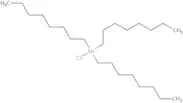
CAS:Trioctyltin chloride is a polymer that is synthesized by the reaction of two equivalents of tributyltin chloride with fatty acids. Trioctyltin chloride is reactive and can be extracted from a variety of sources using a variety of solvents. It has been used to extract chloride ions from mesenchymal stromal cells, which are cells that are involved in tissue repair. The trioctyltin chloride polymer can be used as an analytical method for 3β-hydroxysteroid dehydrogenase, which catalyzes the conversion of 3β-hydroxysteroids into 3-keto steroids. This reaction is reversible and it produces hydrogen ions as a product. The hydrogen ions cause the polymer to undergo ring-opening reactions, leading to the formation of polymeric matrixes on solid surfaces. These matrices have been used in membrane systems as well as in microextraction experiments for solid phase extraction with gas chromatography (SPE).Fórmula:C24H51ClSnPureza:Min. 95%Peso molecular:493.82 g/molMethyl 2-fluoroacetate
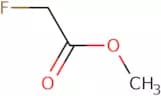
CAS:Methyl 2-fluoroacetate is a nucleophilic drug that has been shown to cause conformational changes in the target protein. It has been shown to be water-soluble, and can be used as a probe for studying biological processes. Methyl 2-fluoroacetate has been shown to be effective against papillary muscle, and is a potential drug for treating cardiac conditions. The mechanism of action of methyl 2-fluoroacetate is not well understood, but it is thought to involve the formation of an alkoxy radical. The molecular structure of methyl 2-fluoroacetate was studied using vibrational spectroscopy and nuclear magnetic resonance (NMR) spectra. This drug was also found to inhibit the growth of tissue culture cells at low concentrations, which may indicate that it can affect cell function.
Fórmula:C3H5FO2Pureza:Min. 95%Peso molecular:92.07 g/mol4-Bromo-D-beta-homophenylalanine hydrochloride
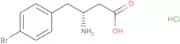
CAS:Please enquire for more information about 4-Bromo-D-beta-homophenylalanine hydrochloride including the price, delivery time and more detailed product information at the technical inquiry form on this pageFórmula:C10H12BrNO2·HClPureza:Min. 95%Peso molecular:294.57 g/mol



![Bis[2-(perfluorohexyl)ethyl]phosphate](/_next/image/?url=https%3A%2Fstatic.cymitquimica.com%2Fproducts%2F3D%2Fthumb-webp%2FFB84246.webp&w=3840&q=75)
![4-[(2,5-Dimethyl-1H-pyrrol-1-yl)methyl]piperidine hydrochloride](/_next/image/?url=https%3A%2Fstatic.cymitquimica.com%2Fproducts%2F3D%2Fthumb-webp%2FFD117663.webp&w=3840&q=75)