Haluros orgánicos
Subcategorías de "Haluros orgánicos"
Se han encontrado 20442 productos de "Haluros orgánicos"
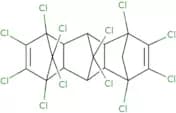
Dechlorane 603
CAS:Dechlorane 603 is a polychlorinated biphenyl (PCB) that has chlorine atoms in the 2, 3, and 4 positions. It is produced as an unintentional byproduct of the production of polychlorinated biphenyls (PCBs). The analytical method for Dechlorane 603 is gel permeation chromatography. It can be found in human populations with higher levels in infants than adults. Levels have been shown to be lower in those who eat more fish or who have a high fat diet. Dechlorane 603 levels are higher in pregnant women than non-pregnant women. Animal experiments have shown that it can impair development of the brain and reproductive organs.
Fórmula:C17H8Cl12Pureza:Min. 95%Forma y color:PowderPeso molecular:637.68 g/mol2-Bromobenzo[d]thiazol-6-ol
CAS:2-Bromobenzo[d]thiazol-6-ol is a diagnostic agent that is used in positron emission tomography (PET) scans to detect Alzheimer's disease. 2-Bromobenzo[d]thiazol-6-ol binds to amyloid plaques and deposits of beta amyloid peptide, the hallmark of Alzheimer's disease. It can be synthesized by cross coupling nitro compounds with aminoacids or by alkylation of nitro compounds with alkenes. Other methods for its synthesis include the microwave irradiation of bromobenzene and thiourea in a nitric acid medium. This compound undergoes metabolism via cytochrome P450 enzymes to form benzo[d]thiazole-2,6(3H)-diol, which is then oxidized by NADPH to form benzo[e]thiazole-2,6(3H)-quinone.Fórmula:C7H4BrNOSPureza:Min. 95%Peso molecular:230.08 g/moltert-Butyl 4-(2-bromophenyl)piperazine-1-carboxylate
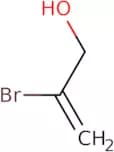
CAS:Producto controladoPlease enquire for more information about tert-Butyl 4-(2-bromophenyl)piperazine-1-carboxylate including the price, delivery time and more detailed product information at the technical inquiry form on this pagePureza:Min. 95%2-Bromoallyl alcohol
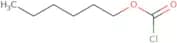
CAS:2-Bromoallyl alcohol is a halogenated aromatic hydrocarbon that is an analyte in the chemical analysis of soil. It is also used as a reagent for the debromination of 2-bromopropane and as a dehalogenating agent for the removal of bromine from organic compounds. 2-Bromoallyl alcohol can be distilled at high temperatures, but it will volatilize if heated to 80°C or higher. It has been reported that 2-bromoallyl alcohol was found to be present in all replicates analyzed. The recovery of this compound ranged from 83% to 114%. 2-Bromoallyl alcohol is used as a reagent in organic synthesis, such as in palladium catalyzed couplings with boronic acids and esters. This compound may also be used to synthesize N-(2-hydroxyethyl)hydroxylamines by reacting with sodium hydroxideFórmula:C3H5BrOPureza:Min. 95%Peso molecular:136.98 g/molHexyl carbonochloridate
CAS:Hexyl carbonochloridate is a chemical that has been used as a detergent additive. It is also an antimicrobial agent, which has been shown to inactivate enzymes in human serum. Hexyl carbonochloridate is active against hepatitis and other infectious diseases. This compound is also known to be an agonist of toll-like receptor 4 (TLR4), which is a protein that recognizes lipopolysaccharides from gram-negative bacteria. Hexyl carbonochloridate has been shown to have anti-inflammatory properties, possibly due to its hydroxyl group. The analytical method for this compound utilizes gas chromatography with flame ionization detection (GC-FID).Fórmula:C7H13ClO2Pureza:Min. 95%Peso molecular:164.63 g/mol4-(Methylthio)benzylchloride
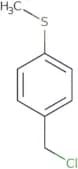
CAS:4-(Methylthio)benzylchloride is a molecule that belongs to the group of dendrons. It is a synthetic molecule with an acid chloride functional group. This compound has been synthesized by decarboxylation of 4-methylthiobenzaldehyde and then chlorination of the resulting alcohol. The microextraction technique was used to extract 4-(methylthio)benzylchloride from acidic solutions. In this technique, a small amount of solvent is absorbed on a solid phase and then eluted into another solvent in a laboratory instrument called the headspace. The headspace technique is used to extract 4-(methylthio)benzylchloride from acidic solutions because it has better sensitivity and selectivity than liquid-liquid extraction. The fluorescence properties of 4-(methylthio)benzylchloride allow it to be detected using luminescence spectroscopy at wavelengths between 400 nm and 700 nm, which makes it useful asFórmula:C8H9ClSPureza:Min. 95%Peso molecular:172.68 g/mol3-Nitro-4-chloro-benzotrifluoride
CAS:3-Nitro-4-chloro-benzotrifluoride is a nucleophilic reagent that reacts with aryl chlorides, such as phenoxazine and chloride, to give the corresponding nitro compounds. The reaction yield is dependent on the solvent, with higher yields obtained in n-dimethyl formamide than in dichloromethane. 3-Nitro-4-chloro-benzotrifluoride has been investigated for its potential use in cancer therapy. It inhibits the proliferation of a number of cancer cells, including resistant mutants. The deuterium isotope effect has also been used to determine the mechanism of action of 3-nitro-4-chloro benzo trifluoride.Fórmula:C7H3ClF3NO2Pureza:Min. 98.0%Forma y color:Clear LiquidPeso molecular:225.55 g/mol9-Ethyl-8-iodo-6,6-dimethyl-11-oxo-6,11-dihydro-5H-benzo[b]carbazole-3-carbonitrile
CAS:Alectinib intermediateFórmula:C21H17IN2OPureza:Min. 95%Forma y color:White PowderPeso molecular:440.28 g/mol(5-Carboxypentyl)triphenylphosphonium bromide
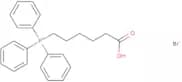
CAS:5-Carboxypentyl)triphenylphosphonium bromide (5CPPBr) is an activated form of the drug taxol. It is a potent anticancer agent that binds to microtubules and stabilizes them. This prevents the microtubules from dissociating, which disrupts the cell’s ability to divide. 5CPPBr also has high uptake in cells and mitochondria, which are important sites for anticancer activity. The drug has shown efficacy in humans and animals, with few side effects. 5CPPBr has been shown to inhibit tumor growth by inducing apoptosis and inhibiting angiogenesis. Further research is needed on its effect on human morphology and hyaluronic acid production.Fórmula:C24H26BrO2PPureza:Min. 95%Peso molecular:457.34 g/mol5-Chlorothiophene-2-carbonyl chloride
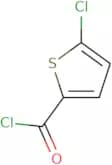
CAS:Intermediate in the synthesis of rivaroxabanFórmula:C5H2Cl2OSPureza:Min. 95%Forma y color:Clear LiquidPeso molecular:181.04 g/mol2-(2,3-Difluorophenyl)ethan-1-amine hydrochloride
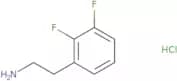
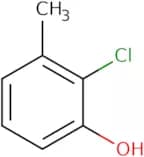
CAS:Producto controladoPlease enquire for more information about 2-(2,3-Difluorophenyl)ethan-1-amine hydrochloride including the price, delivery time and more detailed product information at the technical inquiry form on this pageFórmula:C8H10ClF2NPureza:Min. 95%Peso molecular:193.62 g/mol2-Chloro-3-hydroxytoluene
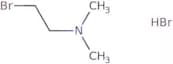
CAS:2-Chloro-3-hydroxytoluene is a binder that is used in the treatment of filamentous fungi. It binds to the surface of the filamentous cell and prevents it from growing. 2-Chloro-3-hydroxytoluene has been shown to bind to muscle cells, which may be due to its acidic nature. This chemical also has a disinfectant effect on reticulum cells and muscle fibers.Fórmula:C7H7ClOPureza:Min. 95%Peso molecular:142.58 g/mol2-Bromo-N,N-dimethylethanamine hydrobromide
CAS:2-Bromo-N,N-dimethylethanamine hydrobromide is a quaternary ammonium salt that is used as an excipient in pharmaceutical formulations. It has been used to prepare conjugates for clinical diagnostics and can be used as a substrate in phosphorus pentoxide assays. This product is also an intermediate in the synthesis of paracyclophanes, which are stereoisomers of cyclopentane. 2-Bromo-N,N-dimethylethanamine hydrobromide has been shown to have anti-inflammatory properties and may be useful for the treatment of respiratory diseases. The drug also has potential in the treatment of Alzheimer's disease due to its ability to inhibit β-amyloid aggregation.Fórmula:C4H11Br2NPureza:Min. 95%Forma y color:White PowderPeso molecular:232.94 g/molcis-[2-(2,4-Dichlorophenyl)-2-(1H-imidazol-1-ylmethyl)-1,3-dioxolan-4-yl]methyl p-tolylsulfonate
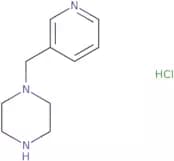
CAS:Please enquire for more information about cis-[2-(2,4-Dichlorophenyl)-2-(1H-imidazol-1-ylmethyl)-1,3-dioxolan-4-yl]methyl p-tolylsulfonate including the price, delivery time and more detailed product information at the technical inquiry form on this pageFórmula:C21H20Cl2N2O5SPureza:Min. 95%Peso molecular:483.37 g/mol1-(Pyridin-3-ylmethyl)piperazineHydrochloride
CAS:Producto controladoPlease enquire for more information about 1-(Pyridin-3-ylmethyl)piperazineHydrochloride including the price, delivery time and more detailed product information at the technical inquiry form on this pageFórmula:C10H16ClN3Pureza:Min. 95%Peso molecular:213.71 g/mol3-Bromopyridine
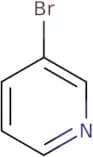
CAS:3-Bromopyridine is a colorless liquid that is soluble in water and methanol. It has a chemical ionization mass spectrum with hydrogen bonding interactions, which are shown by the nitrogen atoms. 3-Bromopyridine reacts with amines to form nitroso compounds and has transport properties that are dependent on pH. 3-Bromopyridine has been shown to be a metastable substance, which means it can be isolated in a yield of greater than 50%. 3-Bromopyridine is soluble in alkaline solutions, but decomposes at high temperatures. The solution turns red when phosphotungstic acid is added and it gives an orange precipitate when hydrochloric acid is added. The solution turns yellow when sodium hydroxide is added. 3-Bromopyridine can be detected by its nmr spectra and kinetic energy measurements.Fórmula:C5H4NBrPureza:Min. 95%Peso molecular:158 g/molDesmethyl chlorpheniramine maleate salt
CAS:Please enquire for more information about Desmethyl chlorpheniramine maleate salt including the price, delivery time and more detailed product information at the technical inquiry form on this pageFórmula:C19H21ClN2O4Pureza:Min. 95%Peso molecular:376.83 g/molCyclobutanecarboxylic acid chloride
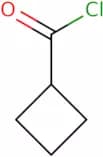
CAS:Cyclobutanecarboxylic acid chloride is an acyl halide that is a reactive chemical intermediate. Cyclobutanecarboxylic acid chloride reacts with naphthalene to produce cyclobutane, which can undergo a Friedel-Crafts reaction to form a benzene ring. The compound also has been shown to inhibit the growth of human cervical carcinoma cells by inhibiting the production of growth factors and interferon, as well as by inducing apoptosis. Cyclobutanecarboxylic acid chloride has been used in the treatment of infectious diseases such as tuberculosis, leprosy, and malaria. This drug was originally synthesized for use as a protein inhibitor, but it has not been found to be active in this application.Fórmula:C5H7ClOPureza:Min. 95%Forma y color:Clear LiquidPeso molecular:118.56 g/mol4-Iodobenzyl bromide
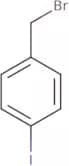
CAS:4-Iodobenzyl bromide is an aromatic hydrocarbon that inhibits the activity of aromatic hydroxylase, an enzyme responsible for the metabolism of aromatic compounds. It is a synthetic compound that has been used in research to study the metabolism of aromatic amino acids. 4-Iodobenzyl bromide has been shown to be effective in inhibiting the synthesis of diphenyl sulfoxide and chloride by human kidney cells in vitro. The inhibition of this reaction leads to a decrease in the concentration of these substances in urine samples. It also inhibits silver trifluoromethanesulfonate, which may be due to its ability to react with chloride ions. This product is soluble in organic solvents such as chloroformate and can be used as a functional group.
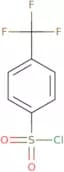
Fórmula:C7H6BrIPureza:Min. 95%Forma y color:PowderPeso molecular:296.93 g/mol4-Trifluoromethylbenzene sulfonyl chloride
CAS:4-Trifluoromethylbenzene sulfonyl chloride (TFB) is a functional group that is used as a ligand in some chemical reactions. TFB has been shown to be fluorescent, and can be used as a cancer cell marker. It also inhibits the growth of cancer cells by binding to their surface and inhibiting protein synthesis. 4-Trifluoromethylbenzene sulfonyl chloride can be synthesized by reacting ethylene with salicylic acid, followed by the reaction of the resulting ester with chloroform. This process yields TFB and chloride ions, which are then neutralized with sodium hydroxide to yield TFB sulfonate salt.Fórmula:C7H4ClF3O2SPureza:Min. 95%Forma y color:Colourless Or White To Light (Or Pale) Yellow To Brown SolidPeso molecular:244.62 g/mol

![2-Bromobenzo[d]thiazol-6-ol](/_next/image/?url=https%3A%2Fstatic.cymitquimica.com%2Fproducts%2F3D%2Fthumb-webp%2FFB144121.webp&w=3840&q=75)


![9-Ethyl-8-iodo-6,6-dimethyl-11-oxo-6,11-dihydro-5H-benzo[b]carbazole-3-carbonitrile](/_next/image/?url=https%3A%2Fstatic.cymitquimica.com%2Fproducts%2F3D%2Fthumb-webp%2FFE137738.webp&w=3840&q=75)
![cis-[2-(2,4-Dichlorophenyl)-2-(1H-imidazol-1-ylmethyl)-1,3-dioxolan-4-yl]methyl p-tolylsulfonate](/_next/image/?url=https%3A%2Fstatic.cymitquimica.com%2Fproducts%2F3D%2Fthumb-webp%2FFD21680.webp&w=3840&q=75)