Compuestos y reactivos bioquímicos
Subcategorías de "Compuestos y reactivos bioquímicos"
- Biomoléculas(98.564 productos)
- Por objetivo biológico(101.024 productos)
- Según efectos farmacológicos(6.952 productos)
- Crioconservantes(21 productos)
- Desinfectantes y compuestos relacionados(28 productos)
- Hormonas(531 productos)
- Biología Vegetal(6.903 productos)
- Metabolitos secundarios(14.369 productos)
Se han encontrado 130609 productos de "Compuestos y reactivos bioquímicos"
LOC653186 Blocking Peptide
A synthetic peptide for use as a blocking control in assays to test for specificity of LOC653186 antibody, catalog no. 70R-1184
Pureza:Min. 95%IL13 antibody
IL13 antibody was raised in rabbit using highly pure recombinant human IL-13 as the immunogen.Pureza:Min. 95%Hoxb9 Blocking Peptide
A synthetic peptide for use as a blocking control in assays to test for specificity of Hoxb9 antibody, catalog no. 70R-7888
Pureza:Min. 95%Chicken anti Rabbit IgG (H + L) (HRP)
This antibody reacts with heavy (gamma) chains on rabbit IgG and light chains on all rabbit immunoglobulins.Pureza:Min. 95%PEBP1 Blocking Peptide
A synthetic peptide for use as a blocking control in assays to test for specificity of PEBP1 antibody, catalog no. 70R-1036
Pureza:Min. 95%Aurora A inhibitor II
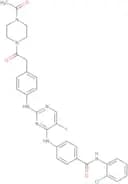
CAS:Aurora A inhibitor II is a drug that inhibits the activity of Aurora A. It has been shown to inhibit tumor growth in cancer models, as well as to prevent the formation of new blood vessels (angiogenesis). Aurora A inhibitor II is being developed for the treatment of cancers, including colon carcinoma and melanoma. The drug has also been shown to inhibit bile acid transport, which may be responsible for its antitumor activity. This drug binds to regulatory proteins and growth factors, blocking their interactions with target molecules, which leads to inhibition of cell growth and proliferation. Aurora A inhibitor II has also been shown to bind to human colon carcinomas in vitro and in vivo.
Fórmula:C31H29ClFN7O3Pureza:Min. 95%Peso molecular:602.1 g/molRef: 3D-IWB83843
Producto descatalogadoC1GALT1 Blocking Peptide
A synthetic peptide for use as a blocking control in assays to test for specificity of C1GALT1 antibody, catalog no. 70R-7429
Pureza:Min. 95%Monkey C3 ELISA Kit
Complement C3 is a protein that plays a crucial role in the immune system as part of the complement system. The complement system is a complex network of proteins that work together to enhance the immune response against pathogens such as bacteria and viruses. Complement C3 is one of the central components of this system.
When the complement system is activated, C3 is cleaved into two fragments: C3a and C3b. C3b plays a key role in opsonization, a process in which pathogens are marked for destruction by phagocytic cells, such as macrophages. Additionally, C3b participates in the formation of the membrane attack complex (MAC), which can directly lyse and kill certain pathogens.
The complement system is an essential part of the immune defense mechanism, contributing to the body's ability to recognize and eliminate foreign invaders. Dysregulation of the complement system has been associated with various autoimmune diseases and inflammatory conditions.Pureza:Min. 95%PBTTT-c12
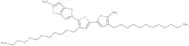
CAS:PBTTT-c12 is a dodecyl unipolar semiconductor that can be used as a material for electronic devices. PBTTT-c12 has low molecular weight, high solubility, and transport properties. This material crystallizes at room temperature and exhibits a hexagonal crystal structure with a lattice constant of 1.8 Å. It is also soluble in organic solvents such as chloroform or acetone. The optical absorption spectrum shows two bands in the visible region: one near 400 nm, which corresponds to the π* orbital; and another at 600 nm, which corresponds to the π* orbital and the σ* orbital. In addition, PBTTT-c12 semiconductors have been shown to exhibit diffraction patterns at low temperatures (below -200°C).
Fórmula:(C38H54S4)nPureza:Min. 95%Ref: 3D-NKB49118
Producto descatalogadoSPARC antibody
The SPARC antibody is a highly reactive and neutralizing monoclonal antibody used in Life Sciences research. It is designed to specifically target and bind to the SPARC protein, which plays a crucial role in various cellular processes such as cell adhesion, migration, and proliferation. This antibody can be used for intraocular applications, as well as in vitro experiments involving chemokine signaling pathways, fatty acid metabolism, fibroin synthesis, and telomerase activity. Additionally, the SPARC antibody has been shown to have potential therapeutic applications in regenerative medicine due to its ability to interact with mesenchymal stem cells and modulate their behavior. Whether you need a recombinant antigen or polyclonal antibodies for your research, the SPARC antibody is an essential tool that can provide valuable insights into cellular mechanisms and contribute to advancements in the field of Life Sciences.