Compuestos y reactivos bioquímicos
Los bioquímicos y reactivos son sustancias fundamentales para la investigación y el desarrollo en campos como la biotecnología, la biología molecular, la farmacología y la medicina. Estos productos son esenciales para una variedad de aplicaciones, incluyendo la síntesis de compuestos, el análisis de muestras biológicas, la investigación de procesos metabólicos y la producción de medicamentos. En CymitQuimica, ofrecemos una amplia selección de bioquímicos y reactivos de alta calidad y pureza, adecuados para diversas necesidades científicas e industriales. Nuestro catálogo incluye enzimas, anticuerpos, ácidos nucleicos, aminoácidos, y muchos otros productos, todos diseñados para apoyar a los investigadores y profesionales en sus proyectos de investigación y desarrollo, asegurando resultados confiables y reproducibles.
Subcategorías de "Compuestos y reactivos bioquímicos"
- Biomoléculas(99.197 productos)
- Por objetivo biológico(100.313 productos)
- Según efectos farmacológicos(6.790 productos)
- Crioconservantes(21 productos)
- Desinfectantes y compuestos relacionados(28 productos)
- Hormonas(346 productos)
- Biología Vegetal(6.835 productos)
- Metabolitos secundarios(14.348 productos)
Se han encontrado 130603 productos de "Compuestos y reactivos bioquímicos"
Ordenar por
Pureza (%)
0
100
|
0
|
50
|
90
|
95
|
100
β-Hydroxy Thyroxine (>90%)
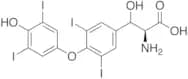
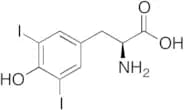
CAS:Producto controlado<p>Impurity Levothyroxine beta-Hydroxy Impurity / Levothyroxine beta-Hydroxy T4 Impurity<br>Applications It has been prepared for testing as possible antithyroid. It showed some thyromimetic activity.<br>References Wawzone, S., et al.: J. Med. Chem., 6, 442 (1963),<br></p>Fórmula:C15H11I4NO5Pureza:>90%Forma y color:NeatPeso molecular:792.87(2S,4R)-4-Hydroxy-L-glutamic Acid
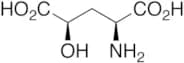
CAS:Producto controlado<p>Applications (2S,4R)-4-Hydroxy-L-glutamic Acid is a metabolite of Glutamic acid (G596960).<br>References Hampson, D., et al.: J. Biol. Chem., 274, 33488 (1999), Jensen, A., et al.: Eur. J. Pharmacol., 397, 247 (2000),<br></p>Fórmula:C5H9NO5Forma y color:NeatPeso molecular:163.13(1S,4S)-N-Desmethyl Sertraline Hydrochloride
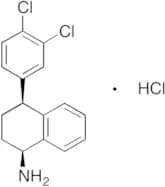
CAS:Fórmula:C16H15Cl2N·ClHForma y color:White SolidPeso molecular:328.661,5-Pentanediyl Bismethanethiosulfonate
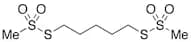
CAS:Producto controlado<p>Applications A sulfhydryl cross-linking reagent.<br>References Loo, T., et al.: J. Biol. Chem., 276, 40, 36877 (2001)<br></p>Fórmula:C7H16O4S4Forma y color:NeatPeso molecular:292.46O-Phospho-L-tyrosine
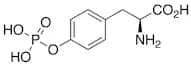
CAS:<p>Applications Useful in the study of tyrosine-phosphorylation, which has been linked with the malignant transformation of cells by some RNA tumour viruses.<br>References Sefton, B.M., et al.: Cell, 20, 807 (1980), Erikson, R., et al.: Perspect. Virol., 11, 93 (1981), Lee, E-S, et al.: J. Org. Chem., 59, 2086 (1994)<br></p>Fórmula:C9H12NO6PForma y color:NeatPeso molecular:261.17Poly(ethylene Glycol) ~600
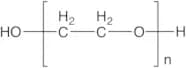
CAS:Producto controlado<p>Applications Poly(ethylene Glycol) molecules of an average molecular mass of 600. Poly(ethylene Glycol) is used in various applications from industrial chemistry to biological chemistry. Recent research has shown PEG maintains the ability to aid the spinal cord injury recovery process, helping the nerve impulse conduction process in animals. In rats, it has been shown to aid in the repair of severed sciatic axons, helping with nerve damage recovery. It is industrially produced as a lubricating substance for various surfaces to reduce friction. PEG is also used in the preparation of vesicle transport systems in with application towards diagnostic procedures or drug delivery methods.<br>References Borgens, R. et al.: J. Neurosci. Res., 66, 1179 (2001); Stavisky, R. et al.: Neurosci. Lett., 376, 98 (2005); Nalam, P. et al.: Tribiol. Lett., 37, 541 (2010); Steinmetz, N. et al.: J. Am. Chem. Soc., 131, 17093 (2009); Li, X. et al.: J. Am. Chem. Soc., 133, 11147 (2011); Li, L. et al.: Int. J. Pharm., 447, 192 (2013);<br></p>Fórmula:H2O(C2H4O)nForma y color:Colourless To Off-WhitePeso molecular:62.07Poly(ethylene Glycol) ~2000
CAS:<p>Applications Poly(ethylene Glycol) molecules of an average molecular mass of 2000. Poly(ethylene Glycol) is used in various applications from industrial chemistry to biological chemistry. Recent research has shown PEG maintains the ability to aid the spinal cord injury recovery process, helping the nerve impulse conduction process in animals. In rats, it has been shown to aid in the repair of severed sciatic axons, helping with nerve damage recovery. It is industrially produced as a lubricating substance for various surfaces to reduce friction. PEG is also used in the preparation of vesicle transport systems in with application towards diagnostic procedures or drug delivery methods.<br>References Borgens, R. et al.: J. Neurosci. Res., 66, 1179 (2001); Stavisky, R. et al.: Neurosci. Lett., 376, 98 (2005); Nalam, P. et al.: Tribiol. Lett., 37, 541 (2010); Steinmetz, N. et al.: J. Am. Chem. Soc., 131, 17093 (2009); Li, X. et al.: J. Am. Chem. Soc., 133, 11147 (2011); Li, L. et al.: Int. J. Pharm., 447, 192 (2013);<br></p>Fórmula:H2O(C2H4O)nForma y color:White To Off-WhitePeso molecular:62.072,5-Diaminotoluene (>80%)
CAS:Producto controlado<p>Applications 2,5-Diaminotoluene is an aromatic compound that is commonly used in permanent hair-dye formulations. 2,5-Diaminotoluene is weakly mutagenic and is also partially responsible for causing allergic contact dermatitis in humans.<br> Not a dangerous good if item is equal to or less than 1g/ml and there is less than 100g/ml in the package<br>References Chung, K., et al.: Mutat. Res./Rev. Mutat. Res., 387, 1 (1997); Inouye, M. & Murakami, U.: Food Cosm. Toxicol., 15, 447 (1977); Yazer, K., et al.: Cont. Derm., 66, 27 (2012)<br></p>Fórmula:C7H10N2Pureza:>80%Forma y color:Grey CrystallinePeso molecular:122.17Vitamin D4
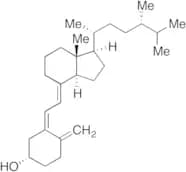
CAS:<p>Stability Hygroscopic, Temperature Sensitive<br>Applications Vitamin D4 is the active analogue of Vitamin D.<br> Not a dangerous good if item is equal to or less than 1g/ml and there is less than 100g/ml in the package<br>References Holick, M., et al.: J. Biochemistry, 10, 2799 (1971), Haddad, J., et al.: J. Bone Miner. Res., 4, 243 (1989), Palmieri, G., et al.: J. Clin. Endocrin. Metab., 82, 3516 (1997),<br></p>Fórmula:C28H46OForma y color:NeatPeso molecular:398.66L-Phenylalanine-d7
CAS:Producto controlado<p>Applications Labelled analogue of L-Phenylalanine, an essential amino acid.<br>References Hollunger, G. et al.: Acta Pharmacol. Toxicol., 34, 391 (1974); Bagchi, S.P. et al.: Biochem. Pharmacol., 26, 900 (1977);<br></p>Fórmula:C9H4D7NO2Forma y color:NeatPeso molecular:172.23Oleanolic Acid
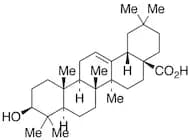
CAS:<p>Applications A triterpenoid known for its anti-inflammatory properties, is commonly present in several medicinal plants. Inhibits secretory phospholipase A2.<br>References Andrikopoulos, N., et al.: J. Med. Food, 5, 1 (2002), Lanteri, S., et al.: Food Chem., 76, 501 (2002), Rodriguez-Rodriguez, R., et al.: Br. J. Pharmacol., 155, 535 (2008), Sotiroudis, T., et al.: Eur. J. Nutr, 47, 69 (2008),<br></p>Fórmula:C30H48O3Forma y color:White To Off-WhitePeso molecular:456.7019-Hydroxy Cholesterol
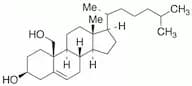
CAS:<p>Applications A metabolite of Cholesterol. Cholesterol oxidation product having cytotoxicity effects.<br>References Higley, N., et al.: Food Chem. Toxicol., 22, 983 (1984), Emanuel, H., et al.: J. Food Sci., 56, 843 (1991), Kilsdonk, E., et al.: J. Lipid Res., 36, 505 (1995), Cantwell, H., et al.: Cell Biol. Toxicol., 14, 401 (1998),<br></p>Fórmula:C27H46O2Forma y color:NeatPeso molecular:402.655b-Cholanic Acid-3a,6b-diol
CAS:Producto controlado<p>Applications 5β-Cholanic Acid-3α, 6β-Diol is a cholesterol derivative; Plasma lipophilic biomarkers in rats. Also, it is one of two major metabolites from the hydroxylation of hepatic lithocholic acid catalyzed by Cyp3a/Cyp3a11 enzymes in mice.<br>References Mayengbam, S., et al.: Eur. J. Nutr., 55, 1213-1223 (2016); Hrycay, E., et al.: Mol. Cell. Biochem., 389, 119-132 (2014)<br></p>Fórmula:C24H40O4Forma y color:White To Off-WhitePeso molecular:392.58Vitamin K1 2,3-Epoxide
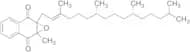
CAS:Producto controlado<p>Applications Vitamin K1 2,3-Epoxide is a metabolite of Vitamin K1 (V676080), which is occurs widely in green plants, algae, and photosynthetic bacteria.<br>References Smee, D.F., et al.: Antimicrob. Agents Chemother., 23, 676 (1983), Miyamoto, T., et al.: Biochem. Pharmacol., 35, 839 (1986); Hassan, M.M.A., et al.: Anal. Profiles Drug Subs., 17, 449 (1988), Breton, J., et al.: Biochemistry, 33, 12405 (1994), Dowd, P., et al.: Science, 269, 1684 (1995);<br></p>Fórmula:C31H46O3Forma y color:Light YellowPeso molecular:466.707ß-Hydroxycholesterol-d7
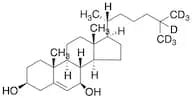
CAS:Producto controlado<p>Applications 7ß-Hydroxycholesterol-d7 is a standard used in the simultaneous measurement of F2-isoprostane, hydroxyoctadecadienoic acid, hydroxyeicosatetraenoic acid, and hydroxycholesterols in plasma and liver of hepatitis patients.<br>References Yoshida, Yasukazu., Analytical Biochemistry, 379, 105-115, (2008)<br></p>Fórmula:C272H7H39O2Forma y color:NeatPeso molecular:409.70rac Tenofovir-d6
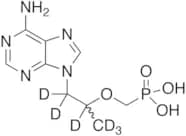
CAS:Producto controlado<p>Applications A deuterated acyclic phosphonate nucleotide analogue, reverse transcriptase inhibitor. Used as an anti-HIV agent. Antiviral.<br> Not a dangerous good if item is equal to or less than 1g/ml and there is less than 100g/ml in the package<br>References Shaw, J.-P., et al.: Pharm. Res., 14, 1824 (1997), Wyles, D., et al.: Clin Infect. Dis., 40, 174 (2005), Peng, J., et al.: J. Clin. Pharmacol., 46, 265 (2006), Seminari, E., et al.: J. Antimicrob. Chemother., 60, 831 (2007),<br></p>Fórmula:C92H6H8N5O4PForma y color:Off White SolidPeso molecular:293.25MTT
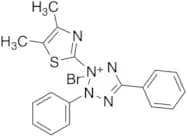
CAS:<p>Applications MTT (cas# 298-93-1) is a useful research chemical. Dyes and metabolites.<br></p>Fórmula:C18H16N5SBrForma y color:NeatPeso molecular:414.32Sarcosine-d3 Hydrochloride
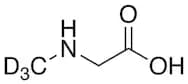
CAS:Producto controladoFórmula:C32H3H4NO2·ClHForma y color:NeatPeso molecular:128.57