Compuestos y reactivos bioquímicos
Los bioquímicos y reactivos son sustancias fundamentales para la investigación y el desarrollo en campos como la biotecnología, la biología molecular, la farmacología y la medicina. Estos productos son esenciales para una variedad de aplicaciones, incluyendo la síntesis de compuestos, el análisis de muestras biológicas, la investigación de procesos metabólicos y la producción de medicamentos. En CymitQuimica, ofrecemos una amplia selección de bioquímicos y reactivos de alta calidad y pureza, adecuados para diversas necesidades científicas e industriales. Nuestro catálogo incluye enzimas, anticuerpos, ácidos nucleicos, aminoácidos, y muchos otros productos, todos diseñados para apoyar a los investigadores y profesionales en sus proyectos de investigación y desarrollo, asegurando resultados confiables y reproducibles.
Subcategorías de "Compuestos y reactivos bioquímicos"
- Biomoléculas(99.115 productos)
- Por objetivo biológico(99.160 productos)
- Según efectos farmacológicos(6.787 productos)
- Crioconservantes(21 productos)
- Desinfectantes y compuestos relacionados(28 productos)
- Hormonas(346 productos)
- Biología Vegetal(6.722 productos)
- Metabolitos secundarios(14.222 productos)
Se han encontrado 130582 productos de "Compuestos y reactivos bioquímicos"
Ordenar por
Pureza (%)
0
100
|
0
|
50
|
90
|
95
|
100
Azido-dPEG®12-OH
CAS:<p>Azido-dPEG®12-OH is a PEG polymer categorised as monofunctional (OH-PEG-X). Used as a linker, azido-dPEG®12-OH is used to attached PEG to proteins, peptides, oligonucleotides, nanoparticles and small molecules via pegylation, a bioconjugation technique.</p>Pureza:Min. 95%Peso molecular:742.94 g/molMAL-dPEG®4-Lys(TFA-)-NH-m-dPEG®24
CAS:<p>MAL-dPEG®4-Lys(TFA-)-NH-m-dPEG®24 is a peptide containing polyethylene glycol (PEG) as spacer to alter their pharmacokinetic properties and pharmodynamics.</p>Fórmula:C75H140F3N5O35Pureza:Min. 95%Peso molecular:1,728.94 g/molAmino-dPEG®8-t-boc-hydrazide
CAS:<p>Amino-dPEG®8-t-boc-hydrazide is a PEG compound with two different functional groups (also known as heterobifunctional). Unlike homobifunctional PEG compounds (same functional group on both ends), this type of compounds are more versatile as have two different anchor points. Amino-dPEG®8-t-boc-hydrazide is used as a linker and spacer to add a PEG moiety, via pegylation (a bioconjugation technique) to proteins, peptides, oligonucleotides, small molecules and nanoparticles.</p>Fórmula:C24H49N3O11Pureza:Min. 95%Peso molecular:555.66 g/molHydroxy-dPEG®12-t-Butyl Ester
CAS:<p>Hydroxy-dPEG®12-t-Butyl Ester is a PEG polymer categorised as monofunctional (OH-PEG-X). Used as a linker, hydroxy-dPEG®12-t-Butyl Ester is used to attached PEG to proteins, peptides, oligonucleotides, nanoparticles and small molecules via pegylation, a bioconjugation technique.</p>Fórmula:C73H148O37Pureza:Min. 95%Peso molecular:1,617.93 g/molLipoamido-dPEG®8-TFP Ester
CAS:<p>Lipoamido-dPEG®8-TFP Ester is a PEG molecule conjugated with a lipid moiety. Lipoamido-dPEG®8-TFP Ester, conjugated to this lipid constituent, is very important especially in drug delivery and vaccine development as it helps improve the stability and circulation time of lipid nanoparticles (LNPs) and liposomes.</p>Fórmula:C55H110O27Pureza:Min. 95%Peso molecular:1,203.45 g/molm-dPEG®24-TFP Ester
CAS:<p>m-dPEG®24-TFP Ester is a PEG compound with two different functional groups (also known as heterobifunctional). Unlike homobifunctional PEG compounds (same functional group on both ends), this type of compounds are more versatile as have two different anchor points. m-dPEG®24-TFP Ester is used as a linker and spacer to add a PEG moiety, via pegylation (a bioconjugation technique) to proteins, peptides, oligonucleotides, small molecules and nanoparticles.</p>Fórmula:C49H101NO24Pureza:Min. 95%Peso molecular:1,088.32 g/molHydroxy-dPEG®4 t-Butyl Ester
CAS:<p>Hydroxy-dPEG®4 t-Butyl Ester is a PEG polymer categorised as monofunctional (OH-PEG-X). Used as a linker, hydroxy-dPEG®4 t-Butyl Ester is used to attached PEG to proteins, peptides, oligonucleotides, nanoparticles and small molecules via pegylation, a bioconjugation technique.</p>Pureza:Min. 95%Peso molecular:322.39 g/molm-dPEG®24-Amine
CAS:<p>m-dPEG®24-Amine is a PEG compound with two different functional groups (also known as heterobifunctional). Unlike homobifunctional PEG compounds (same functional group on both ends), this type of compounds are more versatile as have two different anchor points. m-dPEG®24-Amine is used as a linker and spacer to add a PEG moiety, via pegylation (a bioconjugation technique) to proteins, peptides, oligonucleotides, small molecules and nanoparticles.</p>Pureza:Min. 95%Peso molecular:1,088.32 g/molm-dPEG®8-Thiol
CAS:<p>m-dPEG®8-Thiol is a PEG compound with two different functional groups (also known as heterobifunctional). Unlike homobifunctional PEG compounds (same functional group on both ends), this type of compounds are more versatile as have two different anchor points. m-dPEG®8-Thiol is used as a linker and spacer to add a PEG moiety, via pegylation (a bioconjugation technique) to proteins, peptides, oligonucleotides, small molecules and nanoparticles.</p>Fórmula:C34H66N4O13SPureza:Min. 95%Peso molecular:770.97 g/molm-dPEG®15-Amine
CAS:<p>m-dPEG®15-Amine is a PEG compound with two different functional groups (also known as heterobifunctional). Unlike homobifunctional PEG compounds (same functional group on both ends), this type of compounds are more versatile as have two different anchor points. m-dPEG®15-Amine is used as a linker and spacer to add a PEG moiety, via pegylation (a bioconjugation technique) to proteins, peptides, oligonucleotides, small molecules and nanoparticles.</p>Fórmula:C59H109NO28Pureza:Min. 95%Peso molecular:1,280.49 g/molAmino-dPEG®6-acid
CAS:<p>Amino-dPEG®6-acid is a PEG compound with two different functional groups (also known as heterobifunctional). Unlike homobifunctional PEG compounds (same functional group on both ends), this type of compounds are more versatile as have two different anchor points. Amino-dPEG®6-acid is used as a linker and spacer to add a PEG moiety, via pegylation (a bioconjugation technique) to proteins, peptides, oligonucleotides, small molecules and nanoparticles.</p>Fórmula:C15H31NO8Pureza:Min. 95%Peso molecular:353.41 g/molAzido-dPEG®8-Acid
CAS:<p>Azido-dPEG®8-Acid is a PEG compound with two different functional groups (also known as heterobifunctional). Unlike homobifunctional PEG compounds (same functional group on both ends), this type of compounds are more versatile as have two different anchor points. Azido-dPEG®8-Acid is used as a linker and spacer to add a PEG moiety, via pegylation (a bioconjugation technique) to proteins, peptides, oligonucleotides, small molecules and nanoparticles.</p>Pureza:Min. 95%Peso molecular:467.51 g/molm-dPEG®12-Thiol
CAS:<p>m-dPEG®12-Thiol is a PEG compound with two different functional groups (also known as heterobifunctional). Unlike homobifunctional PEG compounds (same functional group on both ends), this type of compounds are more versatile as have two different anchor points. m-dPEG®12-Thiol is used as a linker and spacer to add a PEG moiety, via pegylation (a bioconjugation technique) to proteins, peptides, oligonucleotides, small molecules and nanoparticles.</p>Fórmula:C37H69N3O16SPureza:Min. 95%Peso molecular:844.02 g/molAmino-dPEG®24-OH
CAS:<p>Amino-dPEG®24-OH is a PEG polymer categorised as monofunctional (OH-PEG-X). Used as a linker, Amino-dPEG®24-OH is used to attached PEG to proteins, peptides, oligonucleotides, nanoparticles and small molecules via pegylation, a bioconjugation technique.</p>Fórmula:C48H99NO24Pureza:Min. 95%Peso molecular:1,074.29 g/molFmoc-N-Amido-dPEG®12-Acid
CAS:<p>Fmoc-N-Amido-dPEG®12-Acid is a PEG compound with two different functional groups (also known as heterobifunctional). Unlike homobifunctional PEG compounds (same functional group on both ends), this type of compounds are more versatile as have two different anchor points. Fmoc-N-Amido-dPEG®12-Acid is used as a linker and spacer to add a PEG moiety, via pegylation (a bioconjugation technique) to proteins, peptides, oligonucleotides, small molecules and nanoparticles.</p>Pureza:Min. 95%Peso molecular:839.96 g/molCarboxyl-dPEG®4-(m-dPEG®4)3
CAS:<p>Carboxyl-dPEG®4-(m-dPEG®4)3 is a PEG compound with two different functional groups (also known as heterobifunctional). Unlike homobifunctional PEG compounds (same functional group on both ends), this type of compounds are more versatile as have two different anchor points. Carboxyl-dPEG®4-(m-dPEG®4)3 is used as a linker and spacer to add a PEG moiety, via pegylation (a bioconjugation technique) to proteins, peptides, oligonucleotides, small molecules and nanoparticles.</p>Fórmula:C180H350N6O88Pureza:Min. 95%Peso molecular:4,006.69 g/molAzido-dPEG®12-NHS ester
CAS:<p>Azido-dPEG®12-NHS ester is a PEG compound with two different functional groups (also known as heterobifunctional). Unlike homobifunctional PEG compounds (same functional group on both ends), this type of compounds are more versatile as have two different anchor points. Azido-dPEG®12-NHS ester is used as a linker and spacer to add a PEG moiety, via pegylation (a bioconjugation technique) to proteins, peptides, oligonucleotides, small molecules and nanoparticles.</p>Fórmula:C16H34N4O7Pureza:Min. 95%Peso molecular:394.46 g/molm-dPEG®23-OH
CAS:<p>m-dPEG®23-OH is a PEG polymer categorised as monofunctional (OH-PEG-X). Used as a linker, m-dPEG®23-OH is used to attached PEG to proteins, peptides, oligonucleotides, nanoparticles and small molecules via pegylation, a bioconjugation technique.</p>Fórmula:C47H96O24Pureza:Min. 95%Peso molecular:1,045.25 g/molm-dPEG®4-Tosylate
CAS:<p>m-dPEG®4-Tosylate is a PEG compound with two different functional groups (also known as heterobifunctional). Unlike homobifunctional PEG compounds (same functional group on both ends), this type of compounds are more versatile as have two different anchor points. m-dPEG®4-Tosylate is used as a linker and spacer to add a PEG moiety, via pegylation (a bioconjugation technique) to proteins, peptides, oligonucleotides, small molecules and nanoparticles.</p>Fórmula:C26H44N2O13Pureza:Min. 95%Peso molecular:592.63 g/molBiotin-dPEG®7-NH2
CAS:<p>Biotin-dPEG®7-NH2 is a PEG compound with two different functional groups (also known as heterobifunctional). Unlike homobifunctional PEG compounds (same functional group on both ends), this type of compounds are more versatile as have two different anchor points. Biotin-dPEG®7-NH2 is used as a linker and spacer to add a PEG moiety, via pegylation (a bioconjugation technique) to proteins, peptides, oligonucleotides, small molecules and nanoparticles.</p>Fórmula:C26H50N4O9SPureza:Min. 95%Peso molecular:594.76 g/moldPEG®48-Biotin Acid
CAS:<p>dPEG®48-Biotin Acid is a PEG compound with two different functional groups (also known as heterobifunctional). Unlike homobifunctional PEG compounds (same functional group on both ends), this type of compounds are more versatile as have two different anchor points. dPEG®48-Biotin Acid is used as a linker and spacer to add a PEG moiety, via pegylation (a bioconjugation technique) to proteins, peptides, oligonucleotides, small molecules and nanoparticles.</p>Fórmula:C112H218N4O53SPureza:Min. 95%Peso molecular:2,500.99 g/molm-dPEG®2-NHS Ester
CAS:<p>m-dPEG®2-NHS Ester is a PEG compound with two different functional groups (also known as heterobifunctional). Unlike homobifunctional PEG compounds (same functional group on both ends), this type of compounds are more versatile as have two different anchor points. m-dPEG®2-NHS Ester is used as a linker and spacer to add a PEG moiety, via pegylation (a bioconjugation technique) to proteins, peptides, oligonucleotides, small molecules and nanoparticles.</p>Fórmula:C18H28N2O9Pureza:Min. 95%Peso molecular:416.42 g/molBis-dPEG®5-PFP Ester
CAS:<p>Bis-dPEG®5-PFP Ester is a PEG polymer categorised as homobifunctional PEG (X-PEG X). Used as a linker, bis-dPEG®5-PFP Ester is used to attached PEG to proteins, peptides, oligonucleotides, nanoparticles and small molecules via pegylation, a bioconjugation technique.</p>Fórmula:C26H24F10O9Pureza:Min. 95%Peso molecular:670.45 g/molBiotin-dPEG®4-Hydrazide
CAS:<p>Biotin-dPEG®4-Hydrazide is a PEG compound with two different functional groups (also known as heterobifunctional). Unlike homobifunctional PEG compounds (same functional group on both ends), this type of compounds are more versatile as have two different anchor points. Biotin-dPEG®4-Hydrazide is used as a linker and spacer to add a PEG moiety, via pegylation (a bioconjugation technique) to proteins, peptides, oligonucleotides, small molecules and nanoparticles.</p>Fórmula:C22H25NO6Pureza:Min. 95%Peso molecular:399.44 g/molAzido-dPEG®11-amine
CAS:<p>Azido-dPEG®11-amine is a PEG compound with two different functional groups (also known as heterobifunctional). Unlike homobifunctional PEG compounds (same functional group on both ends), this type of compounds are more versatile as have two different anchor points. Azido-dPEG®11-amine is used as a linker and spacer to add a PEG moiety, via pegylation (a bioconjugation technique) to proteins, peptides, oligonucleotides, small molecules and nanoparticles.</p>Fórmula:C49H99N3O24Pureza:Min. 95%Peso molecular:1,114.32 g/molm-dPEG®12-Amine
CAS:<p>m-dPEG®12-Amine is a PEG compound with two different functional groups (also known as heterobifunctional). Unlike homobifunctional PEG compounds (same functional group on both ends), this type of compounds are more versatile as have two different anchor points. m-dPEG®12-Amine is used as a linker and spacer to add a PEG moiety, via pegylation (a bioconjugation technique) to proteins, peptides, oligonucleotides, small molecules and nanoparticles.</p>Pureza:Min. 95%Peso molecular:559.69 g/moldPEG®4 Biotin Acid
CAS:<p>dPEG®4 Biotin Acid is a PEG compound with two different functional groups (also known as heterobifunctional). Unlike homobifunctional PEG compounds (same functional group on both ends), this type of compounds are more versatile as have two different anchor points. dPEG®4 Biotin Acid is used as a linker and spacer to add a PEG moiety, via pegylation (a bioconjugation technique) to proteins, peptides, oligonucleotides, small molecules and nanoparticles.</p>Pureza:Min. 95%Peso molecular:491.6 g/molNHS-dPEG®4 Biotin
CAS:<p>NHS-dPEG®4 Biotin is a PEG compound with two different functional groups (also known as heterobifunctional). Unlike homobifunctional PEG compounds (same functional group on both ends), this type of compounds are more versatile as have two different anchor points. NHS-dPEG®4 Biotin is used as a linker and spacer to add a PEG moiety, via pegylation (a bioconjugation technique) to proteins, peptides, oligonucleotides, small molecules and nanoparticles.</p>Pureza:Min. 95%Peso molecular:588.67 g/molHydroxy-dPEG®8-t-Butyl Ester
CAS:<p>Hydroxy-dPEG®8-t-Butyl Ester is a PEG polymer categorised as monofunctional (OH-PEG-X). Used as a linker, hydroxy-dPEG®8-t-Butyl Ester is used to attached PEG to proteins, peptides, oligonucleotides, nanoparticles and small molecules via pegylation, a bioconjugation technique.</p>Pureza:Min. 95%Peso molecular:498.6 g/molAmino-dPEG®24-t-Butyl Ester
CAS:<p>Amino-dPEG®24-t-Butyl Ester is a PEG compound with two different functional groups (also known as heterobifunctional). Unlike homobifunctional PEG compounds (same functional group on both ends), this type of compounds are more versatile as have two different anchor points. Amino-dPEG®24-t-Butyl Ester is used as a linker and spacer to add a PEG moiety, via pegylation (a bioconjugation technique) to proteins, peptides, oligonucleotides, small molecules and nanoparticles.</p>Fórmula:C18H36O10Pureza:Min. 95%Peso molecular:412.47 g/molMAL-dPEG®4-(m-dPEG®24)3
CAS:<p>MAL-dPEG®4-(m-dPEG®24)3 is a PEG compound with two different functional groups (also known as heterobifunctional). Unlike homobifunctional PEG compounds (same functional group on both ends), this type of compounds are more versatile as have two different anchor points. MAL-dPEG®4-(m-dPEG®24)3 is used as a linker and spacer to add a PEG moiety, via pegylation (a bioconjugation technique) to proteins, peptides, oligonucleotides, small molecules and nanoparticles.</p>Fórmula:C23H40N4O12Pureza:Min. 95%Peso molecular:564.58 g/molm-dPEG®-Acid (MW = 412)
CAS:<p>m-dPEG®-Acid (MW = 412) is a PEG compound with two different functional groups (also known as heterobifunctional). Unlike homobifunctional PEG compounds (same functional group on both ends), this type of compounds are more versatile as have two different anchor points. m-dPEG®-Acid (MW = 412) is used as a linker and spacer to add a PEG moiety, via pegylation (a bioconjugation technique) to proteins, peptides, oligonucleotides, small molecules and nanoparticles.</p>Pureza:Min. 95%Peso molecular:412.47 g/molLipoamido-dPEG®36-TFP Ester
CAS:<p>Lipoamido-dPEG®36-TFP Ester is a PEG molecule conjugated with a lipid moiety. Lipoamido-dPEG®36-TFP Ester, conjugated to this lipid constituent, is very important especially in drug delivery and vaccine development as it helps improve the stability and circulation time of lipid nanoparticles (LNPs) and liposomes.</p>Fórmula:C16H20N2O10Pureza:Min. 95%Peso molecular:400.34 g/molCBZ-N-Amido-dPEG®36-Acid
CAS:<p>CBZ-N-Amido-dPEG®36-Acid is a PEG compound with two different functional groups (also known as heterobifunctional). Unlike homobifunctional PEG compounds (same functional group on both ends), this type of compounds are more versatile as have two different anchor points. CBZ-N-Amido-dPEG®36-Acid is used as a linker and spacer to add a PEG moiety, via pegylation (a bioconjugation technique) to proteins, peptides, oligonucleotides, small molecules and nanoparticles.</p>Fórmula:C83H157NO40Pureza:Min. 95%Peso molecular:1,809.12 g/molFmoc-N-Amido-dPEG®36-Acid
CAS:<p>Fmoc-N-Amido-dPEG®36-Acid is a PEG compound with two different functional groups (also known as heterobifunctional). Unlike homobifunctional PEG compounds (same functional group on both ends), this type of compounds are more versatile as have two different anchor points. Fmoc-N-Amido-dPEG®36-Acid is used as a linker and spacer to add a PEG moiety, via pegylation (a bioconjugation technique) to proteins, peptides, oligonucleotides, small molecules and nanoparticles.</p>Fórmula:C90H161NO40Pureza:Min. 95%Peso molecular:1,897.22 g/molAzido-dPEG®8-Acid
CAS:<p>Azido-dPEG®8-Acid is a PEG compound with two different functional groups (also known as heterobifunctional). Unlike homobifunctional PEG compounds (same functional group on both ends), this type of compounds are more versatile as have two different anchor points. Azido-dPEG®8-Acid is used as a linker and spacer to add a PEG moiety, via pegylation (a bioconjugation technique) to proteins, peptides, oligonucleotides, small molecules and nanoparticles.</p>Fórmula:C72H146N4O35Pureza:Min. 95%Peso molecular:1,627.94 g/molAmino-dPEG®4-(m-dPEG®8)3
CAS:<p>Amino-dPEG®4-(m-dPEG®8)3 is a PEG compound with two different functional groups (also known as heterobifunctional). Unlike homobifunctional PEG compounds (same functional group on both ends), this type of compounds are more versatile as have two different anchor points. Amino-dPEG®4-(m-dPEG®8)3 is used as a linker and spacer to add a PEG moiety, via pegylation (a bioconjugation technique) to proteins, peptides, oligonucleotides, small molecules and nanoparticles.</p>Fórmula:C178H346N6O86Pureza:Min. 95%Peso molecular:3,946.64 g/molBis-dPEG®4-Acid
CAS:<p>Bis-dPEG®4-Acid is a PEG polymer categorised as homobifunctional PEG (X-PEG X). Used as a linker, bis-dPEG®4-Acid is used to attached PEG to proteins, peptides, oligonucleotides, nanoparticles and small molecules via pegylation, a bioconjugation technique.</p>Fórmula:C10H18O7Pureza:Min. 95%Peso molecular:250.25 g/molS-Acetyl-dPEG®12-OH
CAS:<p>S-Acetyl-dPEG®12-OH is a PEG polymer categorised as monofunctional (OH-PEG-X). Used as a linker, S-Acetyl-dPEG®12-OH is used to attached PEG to proteins, peptides, oligonucleotides, nanoparticles and small molecules via pegylation, a bioconjugation technique.</p>Fórmula:C26H52O13SPureza:Min. 95%Peso molecular:604.75 g/mol4-Formyl-Benzamido-dPEG®12-TFP Ester
<p>4-Formyl-Benzamido-dPEG®12-TFP Ester is a PEG compound with two different functional groups (also known as heterobifunctional). Unlike homobifunctional PEG compounds (same functional group on both ends), this type of compounds are more versatile as have two different anchor points. 4-Formyl-Benzamido-dPEG®12-TFP Ester is used as a linker and spacer to add a PEG moiety, via pegylation (a bioconjugation technique) to proteins, peptides, oligonucleotides, small molecules and nanoparticles.</p>Fórmula:C41H59F4NO16Pureza:Min. 95%Peso molecular:897.9 g/molSPDP-dPEG®36-Acid
CAS:<p>SPDP-dPEG®36-Acid is a PEG compound with two different functional groups (also known as heterobifunctional). Unlike homobifunctional PEG compounds (same functional group on both ends), this type of compounds are more versatile as have two different anchor points. SPDP-dPEG®36-Acid is used as a linker and spacer to add a PEG moiety, via pegylation (a bioconjugation technique) to proteins, peptides, oligonucleotides, small molecules and nanoparticles.</p>Fórmula:C83H158N2O39S2Pureza:Min. 95%Peso molecular:1,872.26 g/molFmoc-Amido-dPEG®24-Amido-dPEG®24-Acid
<p>Fmoc-Amido-dPEG®24-Amido-dPEG®24-Acid is a PEG compound with two different functional groups (also known as heterobifunctional). Unlike homobifunctional PEG compounds (same functional group on both ends), this type of compounds are more versatile as have two different anchor points. Fmoc-Amido-dPEG®24-Amido-dPEG®24-Acid is used as a linker and spacer to add a PEG moiety, via pegylation (a bioconjugation technique) to proteins, peptides, oligonucleotides, small molecules and nanoparticles.</p>Fórmula:C117H214N2O53Pureza:Min. 95%Peso molecular:2,496.96 g/molDOTA-tris(Acid)-Amido-dPEG®3-Bromoacetamide
<p>DOTA-tris(Acid)-Amido-dPEG®3-Bromoacetamide is a PEG compound with two different functional groups (also known as heterobifunctional). Unlike homobifunctional PEG compounds (same functional group on both ends), this type of compounds are more versatile as have two different anchor points. DOTA-tris(Acid)-Amido-dPEG®3-Bromoacetamide is used as a linker and spacer to add a PEG moiety, via pegylation (a bioconjugation technique) to proteins, peptides, oligonucleotides, small molecules and nanoparticles.</p>Pureza:Min. 95%Peso molecular:927.64 g/molGAP19 Trifluoroacetate
CAS:<p>Gap19 is a protein that regulates cell growth and has been implicated in cancer. Gap19 is a member of the myosin II family of proteins, which are involved in muscle contraction. Gap19 binds to calmodulin and is localized to the sarcomere region of cardiac ventricular myocytes. Gap19 has been shown to be a specific ligand for toll-like receptor 4 (TLR4). The binding of Gap19 leads to an increase in intracellular reactive oxygen species (ROS) levels, activation of transcription factors, and induction of inflammatory responses. These findings suggest that Gap19 plays an important role in regulating inflammatory diseases. Gap19 also has a biochemical function as a specific antibody for collagen, which is used to study cellular reactions involving collagen.</p>Fórmula:C55H96N14O13•(C2HF3O2)xPureza:Min. 95%Forma y color:PowderPeso molecular:1,161.45 g/molNHS-dPEG®4-( m-dPEG®8)3-Este
<p>NHS-dPEG®4-( m-dPEG®8)3-Este is a PEG compound with two different functional groups (also known as heterobifunctional). Unlike homobifunctional PEG compounds (same functional group on both ends), this type of compounds are more versatile as have two different anchor points. NHS-dPEG®4-( m-dPEG®8)3-Este is used as a linker and spacer to add a PEG moiety, via pegylation (a bioconjugation technique) to proteins, peptides, oligonucleotides, small molecules and nanoparticles.</p>Fórmula:C182H347F4N5O86Pureza:Min. 95%Peso molecular:4,057.72 g/molm-dPEG®24-Amido-dPEG®24-DSPE
<p>m-dPEG®24-Amido-dPEG®24-DSPE is a PEG compound with two different functional groups (also known as heterobifunctional). Unlike homobifunctional PEG compounds (same functional group on both ends), this type of compounds are more versatile as have two different anchor points. m-dPEG®24-Amido-dPEG®24-DSPE is used as a linker and spacer to add a PEG moiety, via pegylation (a bioconjugation technique) to proteins, peptides, oligonucleotides, small molecules and nanoparticles.</p>Fórmula:C142H281N2O58PPureza:Min. 95%Peso molecular:2,975.7 g/molMAL-dPEG®4-Glu(TFP e=Ester)-NH-m-dPEG®24
<p>MAL-dPEG®4-Glu(TFP Ester)-NH-m-dPEG®24 is a peptide containing polyethylene glycol (PEG) as spacer to alter their pharmacokinetic properties and pharmodynamics.</p>Fórmula:C78H134F4N4O35Pureza:Min. 95%Peso molecular:1,763.9 g/molAmino-dPEG®12-Tris (m-dPEG®24)3
<p>Amino-dPEG®12-Tris (m-dPEG®24)3 is a PEG compound with two different functional groups (also known as heterobifunctional). Unlike homobifunctional PEG compounds (same functional group on both ends), this type of compounds are more versatile as have two different anchor points. Amino-dPEG®12-Tris (m-dPEG®24)3 is used as a linker and spacer to add a PEG moiety, via pegylation (a bioconjugation technique) to proteins, peptides, oligonucleotides, small molecules and nanoparticles.</p>Fórmula:C187H373N5O91Pureza:Min. 95%Peso molecular:4,147.94 g/molCH3O-PEG-NH2
<p>CH3O-PEG-NH2 is a PEG compound with two different functional groups (also known as heterobifunctional). Unlike homobifunctional PEG compounds (same functional group on both ends), this type of compounds are more versatile as have two different anchor points. CH3O-PEG-NH2 is used as a linker and spacer to add a PEG moiety, via pegylation (a bioconjugation technique) to proteins, peptides, oligonucleotides, small molecules and nanoparticles.</p>Pureza:Min. 95%Amino-dPEG®12-Tris (-dPEG®24-t-butyl Ester)3
<p>Amino-dPEG®12-Tris (-dPEG®24-t-butyl Ester)3 is a PEG compound with two different functional groups (also known as heterobifunctional). Unlike homobifunctional PEG compounds (same functional group on both ends), this type of compounds are more versatile as have two different anchor points. Amino-dPEG®12-Tris (-dPEG®24-t-butyl Ester)3 is used as a linker and spacer to add a PEG moiety, via pegylation (a bioconjugation technique) to proteins, peptides, oligonucleotides, small molecules and nanoparticles.</p>Pureza:Min. 95%Peso molecular:4,490.37 g/molCarboxyl-dPEG®4-(m-dPEG®12)3
CAS:<p>Carboxyl-dPEG®4-(m-dPEG®12)3 is a PEG compound with two different functional groups (also known as heterobifunctional). Unlike homobifunctional PEG compounds (same functional group on both ends), this type of compounds are more versatile as have two different anchor points. Carboxyl-dPEG®4-(m-dPEG®12)3 is used as a linker and spacer to add a PEG moiety, via pegylation (a bioconjugation technique) to proteins, peptides, oligonucleotides, small molecules and nanoparticles.</p>Pureza:Min. 95%Peso molecular:2,323.73 g/molFmoc-N-Lys-(dPEG®12-Biotin)-OH-(Acid)
CAS:<p>Please enquire for more information about Fmoc-N-Lys-(dPEG®12-Biotin)-OH-(Acid) including the price, delivery time and more detailed product information at the technical inquiry form on this page</p>Fórmula:C12H22O8Pureza:Min. 95%Peso molecular:294.3 g/mol(R)-Funapide
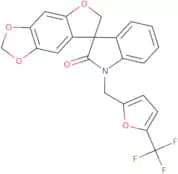
CAS:<p>(R)-Funapide is a ligand that binds to the activator site of the nicotinic acetylcholine receptor (nAChR) and has been shown to activate this receptor. It is used as a research tool in cell biology, ion channels, peptides, and antibodies. (R)-Funapide has also been shown to inhibit protein interactions with a number of different receptors.</p>Fórmula:C22H14F3NO5Pureza:Min. 95%Peso molecular:429.3 g/molm-dPEG®8-DSPE
<p>m-dPEG®8-DSPE is a PEG compound with two different functional groups (also known as heterobifunctional). Unlike homobifunctional PEG compounds (same functional group on both ends), this type of compounds are more versatile as have two different anchor points. m-dPEG®8-DSPE is used as a linker and spacer to add a PEG moiety, via pegylation (a bioconjugation technique) to proteins, peptides, oligonucleotides, small molecules and nanoparticles.</p>Fórmula:C59H116NO17PPureza:Min. 95%Peso molecular:1,142.52 g/molH-Asp-Glu-OH
CAS:<p>H-Asp-Glu-OH is a molecule that may be a potential biomarker for prostate cancer cells. It was found to affect the brain functions, including the growth of brain cells and neurotransmitter release. H-Asp-Glu-OH has been shown to inhibit the growth of tumor cells in mice, but it is not as potent as other molecules in this class. This compound has also been shown to enhance hematopoietic cell proliferation and suppress the production of Th2 cytokines. Magnetic resonance spectroscopy studies have indicated that H-Asp-Glu-OH binds with low potency to GABA receptors in brain tissue, which may be associated with its ability to regulate neuronal excitability and inhibit epileptic seizures.</p>Fórmula:C9H14N2O7Pureza:Min. 95 Area-%Forma y color:White Off-White PowderPeso molecular:262.22 g/molBicalutamide-d4
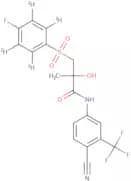
CAS:Producto controlado<p>Bicalutamide-d4 is a monocarboxylic acid that is a competitive inhibitor of androgens. It binds to the cytosolic receptor and blocks the action of dihydrotestosterone (DHT). Bicalutamide-d4 has been shown to be effective in reducing prostate cancer tumour growth, but not in treating prostate cancer. This drug is non-steroidal and acts as an antagonist of androgen receptors. Bicalutamide-d4 has been shown to induce the production of monocarboxylic acid metabolites such as sulfone and amide, which have anti-inflammatory effects on tissues.</p>Fórmula:C18H10D4F4N2O4SPureza:Min. 95%Peso molecular:434.4 g/molMAL-dPEG®2-TFP Ester
<p>MAL-dPEG®2-TFP Ester is a PEG compound with two different functional groups (also known as heterobifunctional). Unlike homobifunctional PEG compounds (same functional group on both ends), this type of compounds are more versatile as have two different anchor points. MAL-dPEG®2-TFP Ester is used as a linker and spacer to add a PEG moiety, via pegylation (a bioconjugation technique) to proteins, peptides, oligonucleotides, small molecules and nanoparticles.</p>Fórmula:C81H149F4N3O38Pureza:Min. 95%Peso molecular:1,849.04 g/molt-boc-NH-dPEG®24-Tris (-TFP Ester)3
<p>t-boc-NH-dPEG®24-Tris (-TFP Ester)3 is a PEG compound with two different functional groups (also known as heterobifunctional). Unlike homobifunctional PEG compounds (same functional group on both ends), this type of compounds are more versatile as have two different anchor points. t-boc-NH-dPEG®24-Tris (-TFP Ester)3 is used as a linker and spacer to add a PEG moiety, via pegylation (a bioconjugation technique) to proteins, peptides, oligonucleotides, small molecules and nanoparticles.</p>Fórmula:C87H132F12N2O36Pureza:Min. 95%Peso molecular:2,009.97 g/molDOTA-tris(Acid)-Amido-dPEG®23-Bromoacetamide
<p>DOTA-tris(Acid)-Amido-dPEG®23-Bromoacetamide is a PEG compound with two different functional groups (also known as heterobifunctional). Unlike homobifunctional PEG compounds (same functional group on both ends), this type of compounds are more versatile as have two different anchor points. DOTA-tris(Acid)-Amido-dPEG®23-Bromoacetamide is used as a linker and spacer to add a PEG moiety, via pegylation (a bioconjugation technique) to proteins, peptides, oligonucleotides, small molecules and nanoparticles.</p>Pureza:Min. 95%Peso molecular:1,808.69 g/molDOTA-tris(TBE)-Amido-dPEG®12-TFP Ester
<p>DOTA-tris(TBE)-Amido-dPEG®12-TFP Ester is a PEG compound with two different functional groups (also known as heterobifunctional). Unlike homobifunctional PEG compounds (same functional group on both ends), this type of compounds are more versatile as have two different anchor points. DOTA-tris(TBE)-Amido-dPEG®12-TFP Ester is used as a linker and spacer to add a PEG moiety, via pegylation (a bioconjugation technique) to proteins, peptides, oligonucleotides, small molecules and nanoparticles.</p>Pureza:Min. 95%Peso molecular:1,320.5 g/molm-dPEG®24-Propionaldehyde
<p>m-dPEG®24-Propionaldehyde is a PEG compound with two different functional groups (also known as heterobifunctional). Unlike homobifunctional PEG compounds (same functional group on both ends), this type of compounds are more versatile as have two different anchor points. m-dPEG®24-Propionaldehyde is used as a linker and spacer to add a PEG moiety, via pegylation (a bioconjugation technique) to proteins, peptides, oligonucleotides, small molecules and nanoparticles.</p>Fórmula:C63H113N3O29S2Pureza:Min. 95%Peso molecular:1,440.7 g/molH-Ala-Pro-OH
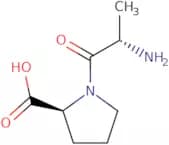
CAS:<p>H-Ala-Pro-OH is a molecule that has the ability to bind to the active site of enzymes. It inhibits the activity of esterases and proteases by binding to their active sites and blocking access to substrates. This drug also inhibits the uptake of drugs in cells by competitively inhibiting membrane transport proteins, such as P-glycoprotein. H-Ala-Pro-OH binds to gamma-aminobutyric acid receptors and shows a kinetic effect on this neurotransmitter’s activity. The conformational properties of H-Ala-Pro-OH are not fully understood, but it is thought that its low energy allows it to bind to intracellular proteins more easily than other molecules.</p>Fórmula:C8H14N2O3Pureza:Min. 95%Forma y color:White Off-White PowderPeso molecular:186.21 g/molDOTA-tris(TBE)-Amido-dPEG®24-TFP Ester
<p>DOTA-tris(TBE)-Amido-dPEG®24-TFP Ester is a PEG compound with two different functional groups (also known as heterobifunctional). Unlike homobifunctional PEG compounds (same functional group on both ends), this type of compounds are more versatile as have two different anchor points. DOTA-tris(TBE)-Amido-dPEG®24-TFP Ester is used as a linker and spacer to add a PEG moiety, via pegylation (a bioconjugation technique) to proteins, peptides, oligonucleotides, small molecules and nanoparticles.</p>Pureza:Min. 95%Peso molecular:1,320.5 g/molNSC16168
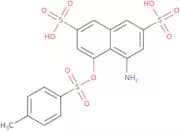
CAS:<p>NSC16168 is a molecule that has been shown to inhibit the influenza virus neuraminidase. It binds to the monoadducts of the viral neuraminidase and cisplatin, preventing them from binding to their cellular targets. This prevents viral replication and may also inhibit the dna methylation process in mammalian cells. NSC16168 can be used as a cancer therapy for cancer cells that express influenza virus neuraminidase on their surface.</p>Fórmula:C17H15NO9S3Pureza:Min. 95%Peso molecular:473.5 g/molAS 1892802
CAS:<p>AS 1892802 is a molecule that binds to the transcriptional regulator protein, C/EBPβ, and inhibits its ability to bind DNA. AS 1892802 has inhibitory effects on morphogenetic proteins (e.g., bone morphogenetic protein-2) and autoimmune diseases (e.g., diabetes). It also has an inhibitory effect on guanylate cyclase, which is an enzyme involved in the production of nitric oxide. AS 1892802 is also antinociceptive and anti-inflammatory in pain models. This compound also blocks angiotensin receptors as well as cyclase enzymes</p>Fórmula:C20H19N3O2Pureza:Min. 95%Peso molecular:333.38 g/molNHS-dPEG®4-( m-dPEG®12)3-Ester
CAS:<p>NHS-dPEG®4-( m-dPEG®12)3-Ester is a PEG compound with two different functional groups (also known as heterobifunctional). Unlike homobifunctional PEG compounds (same functional group on both ends), this type of compounds are more versatile as have two different anchor points. NHS-dPEG®4-( m-dPEG®12)3-Ester is used as a linker and spacer to add a PEG moiety, via pegylation (a bioconjugation technique) to proteins, peptides, oligonucleotides, small molecules and nanoparticles.</p>Fórmula:C58H106N6O26Pureza:Min. 95%Peso molecular:1,303.49 g/molML390
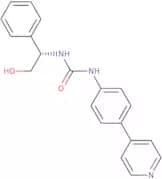
CAS:<p>ML390 is a potent and selective inhibitor of the enzyme 3-phosphoglycerate dehydrogenase (3PGDH). This enzyme catalyzes the conversion of 3-phosphoglycerate to glyceraldehyde-3-phosphate, which is an important step in the synthesis of pyrimidine nucleotides. ML390 inhibits this enzyme with high selectivity and potency. It has been shown to be effective against glioblastoma cells, which may be due to its ability to inhibit their growth by targeting enzymes involved in pyrimidine biosynthesis.</p>Fórmula:C21H21F3N2O3Pureza:Min. 95%Peso molecular:406.4 g/molZ-Asn-Gly-OH
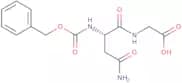
CAS:<p>Please enquire for more information about Z-Asn-Gly-OH including the price, delivery time and more detailed product information at the technical inquiry form on this page</p>Fórmula:C14H17N3O6Pureza:Min. 95%Forma y color:PowderPeso molecular:323.3 g/molDOTA-tris(TBE)-Amido-dPEG®11-Maleimide
<p>DOTA-tris(TBE)-Amido-dPEG®11-Maleimide is a PEG compound with two different functional groups (also known as heterobifunctional). Unlike homobifunctional PEG compounds (same functional group on both ends), this type of compounds are more versatile as have two different anchor points. DOTA-tris(TBE)-Amido-dPEG®11-Maleimide is used as a linker and spacer to add a PEG moiety, via pegylation (a bioconjugation technique) to proteins, peptides, oligonucleotides, small molecules and nanoparticles.</p>Pureza:Min. 95%Peso molecular:1,250.52 g/molBI-7273
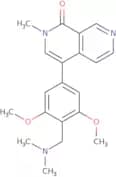
CAS:<p>BI-7273 is a novel compound that is designed to treat wastewater. It has been shown to bind to mammalian cells and inhibit their growth, as well as prevent the formation of viscosity in wastewater. BI-7273 inhibits the activity of NADPH cytochrome P450 reductase (CPR) and prevents the formation of reactive oxygen species. It also binds to DNA polymerase, thereby inhibiting transcription and replication. The effects of BI-7273 on cancer cells have been investigated in vitro and in vivo. BI-7273 has also been shown to inhibit cell migration by interacting with specific proteins that are involved in cellular processes such as filament assembly.</p>Pureza:Min. 95%Thiocarbamyl nitro blue tetrazolium
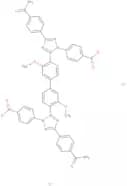
CAS:<p>Thiocarbamyl nitro blue tetrazolium (TNT) is a stain that is used to identify the location of sarcoplasmic proteins in redox potentials. TNT is also used to identify the localization of proteins in isolated hearts, as well as during cancer research. The reaction products are phosphatase-based and can be detected visually. TNT can be used for functional assays that determine the mitochondrial activity of fatty acids and nitrosamines. TNT stains cellular organelles such as mitochondria, lysosomes, peroxisomes, and Golgi bodies.</p>Pureza:Min. 95%Peso molecular:935.82 g/molAzido-dPEG®12-TFP Ester
<p>Azido-dPEG®12-TFP Ester is a PEG compound with two different functional groups (also known as heterobifunctional). Unlike homobifunctional PEG compounds (same functional group on both ends), this type of compounds are more versatile as have two different anchor points. Azido-dPEG®12-TFP Ester is used as a linker and spacer to add a PEG moiety, via pegylation (a bioconjugation technique) to proteins, peptides, oligonucleotides, small molecules and nanoparticles.</p>Pureza:Min. 95%Peso molecular:791.78 g/molBiotin-dPEG®24-TFP Ester
<p>Biotin-dPEG®24-TFP Ester is a PEG compound with two different functional groups (also known as heterobifunctional). Unlike homobifunctional PEG compounds (same functional group on both ends), this type of compounds are more versatile as have two different anchor points. Biotin-dPEG®24-TFP Ester is used as a linker and spacer to add a PEG moiety, via pegylation (a bioconjugation technique) to proteins, peptides, oligonucleotides, small molecules and nanoparticles.</p>Fórmula:C67H117F4N3O28SPureza:Min. 95%Peso molecular:1,520.71 g/molMethoxytrityl-S-dPEG®4 Acid
CAS:<p>Methoxytrityl-S-dPEG®4 Acid is a PEG compound with two different functional groups (also known as heterobifunctional). Unlike homobifunctional PEG compounds (same functional group on both ends), this type of compounds are more versatile as have two different anchor points. Methoxytrityl-S-dPEG®4 Acid is used as a linker and spacer to add a PEG moiety, via pegylation (a bioconjugation technique) to proteins, peptides, oligonucleotides, small molecules and nanoparticles.</p>Pureza:Min. 95%Peso molecular:554.7 g/molMAL-dPEG®4-Lys(-5(6)-Carboxyfluorescein)-NH-m-dPEG®24
<p>MAL-dPEG®4-Lys(-5(6)-Carboxyfluorescein)-NH-m-dPEG®24 is a PEG compound containing a fluorescein dye used for tagging biomolecules, and serving as fluorescent probe for bioimaging applications.</p>Fórmula:C94H149N5O39Pureza:Min. 95%Peso molecular:1,973.2 g/molAmino-dPEG®4-(m-dPEG®12)3
CAS:<p>Amino-dPEG®4-(m-dPEG®12)3 is a PEG compound with two different functional groups (also known as heterobifunctional). Unlike homobifunctional PEG compounds (same functional group on both ends), this type of compounds are more versatile as have two different anchor points. Amino-dPEG®4-(m-dPEG®12)3 is used as a linker and spacer to add a PEG moiety, via pegylation (a bioconjugation technique) to proteins, peptides, oligonucleotides, small molecules and nanoparticles.</p>Fórmula:C56H107N5O26Pureza:Min. 95%Peso molecular:1,266.47 g/molNHS-m-dPEG®(MW = 1214)
CAS:<p>NHS-m-dPEG®(MW = 1214) is a PEG compound with two different functional groups (also known as heterobifunctional). Unlike homobifunctional PEG compounds (same functional group on both ends), this type of compounds are more versatile as have two different anchor points. NHS-m-dPEG®(MW = 1214) is used as a linker and spacer to add a PEG moiety, via pegylation (a bioconjugation technique) to proteins, peptides, oligonucleotides, small molecules and nanoparticles.</p>Pureza:Min. 95%Peso molecular:1,214.39 g/molDBCO-dPEG®12-TFP Ester
<p>DBCO-dPEG®12-TFP Ester is a PEG compound with two different functional groups (also known as heterobifunctional). Unlike homobifunctional PEG compounds (same functional group on both ends), this type of compounds are more versatile as have two different anchor points. DBCO-dPEG®12-TFP Ester is used as a linker and spacer to add a PEG moiety, via pegylation (a bioconjugation technique) to proteins, peptides, oligonucleotides, small molecules and nanoparticles.</p>Pureza:Min. 95%Peso molecular:1,067.12 g/molFmoc-N-Amido-dPEG®24-TFP Ester
<p>Fmoc-N-Amido-dPEG®24-TFP Ester is a PEG compound with two different functional groups (also known as heterobifunctional). Unlike homobifunctional PEG compounds (same functional group on both ends), this type of compounds are more versatile as have two different anchor points. Fmoc-N-Amido-dPEG®24-TFP Ester is used as a linker and spacer to add a PEG moiety, via pegylation (a bioconjugation technique) to proteins, peptides, oligonucleotides, small molecules and nanoparticles.</p>Fórmula:C72H113F4NO28Pureza:Min. 95%Peso molecular:1,516.67 g/molMAL-dPEG®36-TFP Ester
<p>MAL-dPEG®36-TFP Ester is a PEG compound with two different functional groups (also known as heterobifunctional). Unlike homobifunctional PEG compounds (same functional group on both ends), this type of compounds are more versatile as have two different anchor points. MAL-dPEG®36-TFP Ester is used as a linker and spacer to add a PEG moiety, via pegylation (a bioconjugation technique) to proteins, peptides, oligonucleotides, small molecules and nanoparticles.</p>Fórmula:C25H35F4NO7S2Pureza:Min. 95%Peso molecular:601.67 g/molm-dPEG®24-Propionaldehyde
CAS:<p>m-dPEG®24-Propionaldehyde is a PEG compound with two different functional groups (also known as heterobifunctional). Unlike homobifunctional PEG compounds (same functional group on both ends), this type of compounds are more versatile as have two different anchor points. m-dPEG®24-Propionaldehyde is used as a linker and spacer to add a PEG moiety, via pegylation (a bioconjugation technique) to proteins, peptides, oligonucleotides, small molecules and nanoparticles.</p>Fórmula:C50H100O25Pureza:Min. 95%Peso molecular:1,101.31 g/molFmoc-N-Amido-dPEG®8-TFP Ester
<p>Fmoc-N-Amido-dPEG®8-TFP Ester is a PEG compound with two different functional groups (also known as heterobifunctional). Unlike homobifunctional PEG compounds (same functional group on both ends), this type of compounds are more versatile as have two different anchor points. Fmoc-N-Amido-dPEG®8-TFP Ester is used as a linker and spacer to add a PEG moiety, via pegylation (a bioconjugation technique) to proteins, peptides, oligonucleotides, small molecules and nanoparticles.</p>Fórmula:C40H49F4NO12Pureza:Min. 95%Peso molecular:811.82 g/molt-boc-NH-dPEG®12-Tris(-TFP Ester)3
<p>t-boc-NH-dPEG®12-Tris(-TFP Ester)3 is a PEG compound with two different functional groups (also known as heterobifunctional). Unlike homobifunctional PEG compounds (same functional group on both ends), this type of compounds are more versatile as have two different anchor points. t-boc-NH-dPEG®12-Tris(-TFP Ester)3 is used as a linker and spacer to add a PEG moiety, via pegylation (a bioconjugation technique) to proteins, peptides, oligonucleotides, small molecules and nanoparticles.</p>Fórmula:C63H84F12N2O24Pureza:Min. 95%Peso molecular:1,481.32 g/molCRANAD 2
CAS:<p>Please enquire for more information about CRANAD 2 including the price, delivery time and more detailed product information at the technical inquiry form on this page</p>Fórmula:C23H25BF2N2O2Pureza:Min. 95%Peso molecular:410.27 g/molMAL-dPEG®4-Glu(OH)-NH-m-dPEG®24
<p>MAL-dPEG®4-Glu(OH)-NH-m-dPEG®24 is a peptide containing polyethylene glycol (PEG) as spacer to alter their pharmacokinetic properties and pharmodynamics.</p>Fórmula:C72H134N4O35Pureza:Min. 95%Peso molecular:1,615.84 g/molNampt inhibitor-linker 1
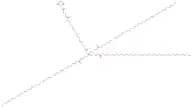
CAS:<p>The protein Nampt inhibitor-linker 1 is a member of the NAMPT family. It is an enzyme that converts nicotinamide to nicotinamide mononucleotide in cells. Nampt inhibitor-linker 1 has been shown to be an activator of the receptor for amyloid precursor protein (APP) and may play a role in Alzheimer's disease. This protein is also involved in the regulation of ion channels, such as potassium channels, and ligand-gated ion channels, such as NMDA receptors.</p>Fórmula:C36H37FN6O6Pureza:Min. 95%Peso molecular:668.7 g/molBromoacetamido-dPEG®24-Amido-DBCO
<p>Bromoacetamido-dPEG®24-Amido-DBCO is a PEG compound with two different functional groups (also known as heterobifunctional). Unlike homobifunctional PEG compounds (same functional group on both ends), this type of compounds are more versatile as have two different anchor points. Bromoacetamido-dPEG®24-Amido-DBCO is used as a linker and spacer to add a PEG moiety, via pegylation (a bioconjugation technique) to proteins, peptides, oligonucleotides, small molecules and nanoparticles.</p>Pureza:Min. 95%Peso molecular:1,525.6 g/molLipoamido-dPEG®12-TFP Ester
CAS:<p>Lipoamido-dPEG®12-TFP Ester is a PEG molecule conjugated with a lipid moiety. Lipoamido-dPEG®12-TFP Ester, conjugated to this lipid constituent, is very important especially in drug delivery and vaccine development as it helps improve the stability and circulation time of lipid nanoparticles (LNPs) and liposomes.</p>Fórmula:C28H50N4O6S3Pureza:Min. 95%Peso molecular:634.91 g/molm-dPEG®48-NH-CO(CH2)3CO-TFP Ester
<p>m-dPEG®48-NH-CO(CH2)3CO-TFP Ester is a PEG compound with two different functional groups (also known as heterobifunctional). Unlike homobifunctional PEG compounds (same functional group on both ends), this type of compounds are more versatile as have two different anchor points. m-dPEG®48-NH-CO(CH2)3CO-TFP Ester is used as a linker and spacer to add a PEG moiety, via pegylation (a bioconjugation technique) to proteins, peptides, oligonucleotides, small molecules and nanoparticles.</p>Fórmula:C108H203F4NO51Pureza:Min. 95%Peso molecular:2,407.76 g/molPeptide YY (3-36) (canine, mouse, porcine, rat)
<p>Catalogue peptide; min. 95% purity</p>Fórmula:C190H288N54O57Peso molecular:4,240.64 g/molWM 1119
CAS:<p>Selective and potent inhibitor of lysine acetyltransferases KAT6A and KAT6B with IC50 values in low nanomolar range. The compound is a reversible competitor of acetyl coenzyme A domain of KAT6A/B enzymes. It inhibits MYST-catalysed histone acetylation and was shown to arrest lymphoma progression in mice models. The compound opened the door to a new class of cancer therapeutics that could potentially direct the cancer cells in senescence or permanent dormancy.</p>Fórmula:C18H13F2N3O3SPureza:Min. 95%Forma y color:White/Off-White SolidPeso molecular:389.38 g/mol15:0 Lyso PC
CAS:<p>15:0 Lyso PC is a lipid with a fatty acid backbone. It is found in the blood and tissue of mammals, such as humans and cows. 15:0 Lyso PC is produced by the liver, where it plays an important role in cholesterol metabolism. This lipid can be used as a diagnostic marker for chronic kidney disease and heart disease. It also has been shown to have a positive correlation with blood pressure levels. Hippuric acid is another potential diagnostic marker for cirrhosis diagnosis and prognosis.</p>Fórmula:C23H48NO7PPureza:Min. 95%Peso molecular:481.6 g/molH-Glu-Ala-OH
CAS:<p>H-Glu-Ala-OH is a human protein that belongs to the family of glycosylated proteins. It is expressed in the cells of the ovary and is a member of the insulin-like growth factor (IGF) superfamily. H-Glu-Ala-OH binds to lectins in mammalian cells, which may be due to its sulfoxide group. This protein has been shown to have dehydrogenase activity and polymerase chain reaction (PCR) amplification properties. H-Glu-Ala-OH has also been shown to inhibit growth in cell culture and promote apoptosis, which may be due to its ability to regulate IGF levels in mammalian cells.br>br><br>br>br><br>This protein is found at high levels in ovarian cancer cells and serum from patients with ovarian cancer. The sequence of this protein has been determined using mass spectrometry analysis on ovary extracts and on cDNA derived from human embryonic kidney (</p>Fórmula:C8H14N2O5Pureza:Min. 95 Area-%Forma y color:PowderPeso molecular:218.21 g/mol[D-Ala2,Hyp4,Tyr5]-β-Casomorphin (1-5) amide
<p>Catalogue peptide; min. 95% purity</p>Fórmula:C35H42N6O8Peso molecular:674.76 g/molNeuromedin (B-30)
<p>Catalogue peptide; min. 95% purity</p>Fórmula:C157H243N51O38SPeso molecular:3,484.98 g/molGRF (1-29) amide (human) acetate salt
CAS:<p>Growth hormone-releasing factor (GRF) is a peptide fragment of amino acids 1–2 from GHRH (growth hormone-releasing hormone). This 1-29 region is the shortest fully functional fragment of GHRH. GRF is also known as sermorelin. Sermorelin binds to the growth hormone-releasing hormone receptor (GHRH-R), and acts as a surrogate for GHRH, causing growth hormone secretion.human: H-YADAIFTNSYRKVLGQLSARKLLQDIMSR-NH2rat: H-HADAIFTSSYRR I LGQLYARKLLHEIMNR-NH2</p>Fórmula:C149H246N44O42SPureza:Min. 95%Peso molecular:3,357.88 g/molCLIP(85-99)
<p>Catalogue peptide; min. 95% purity</p>Fórmula:C75H135N23O19S3Peso molecular:1,759.25 g/molNES Topoisomerase II α (1017-1028)
<p>Catalogue peptide; min. 95% purity</p>Fórmula:C73H117N19O19Peso molecular:1,564.86 g/molC-Myc peptide epitope
<p>Catalogue peptide; min. 95% purity</p>Fórmula:C51H86N12O21Peso molecular:1,203.32 g/molLys-(Tyr8)-Bradykinin
<p>Catalogue peptide; min. 95% purity</p>Fórmula:C56H85N17O13Peso molecular:1,204.41 g/molFibrinopeptide B, Bovine
<p>Catalogue peptide; min. 95% purity</p>Fórmula:C101H154N30O36Peso molecular:2,364.53 g/molBiotin-Exendin 4
<p>Catalogue peptide; min. 95% purity</p>Fórmula:C194H296N52O62S2Peso molecular:4,412.96 g/molProinsulin C-peptide (55-89), human
<p>Catalogue peptide; min. 95% purity</p>Fórmula:C153H259N49O52Peso molecular:3,616.98 g/molBiotin-LC-Neurogranin (28-43)
<p>Catalogue peptide; min. 95% purity</p>Fórmula:C94H159N31O20S2Peso molecular:2,139.48 g/molBiotin-MBP Derivatized Peptide
<p>Catalogue peptide; min. 95% purity</p>Fórmula:C105H166N28O25Peso molecular:2,252.73 g/mol[D-Asp1]-Amyloid-β-Protein (1-42)
<p>Catalogue peptide; min. 95% purity</p>Fórmula:C203H311N55O60SPeso molecular:4,514.14 g/mol[Tyr0]-Neurokinin B
<p>Catalogue peptide; min. 95% purity</p>Fórmula:C64H88N14O16S2Peso molecular:1,373.63 g/molPrésure. 10. 145-148
<p>Catalogue peptide; min. 95% purity</p>Fórmula:C46H59N7O12Peso molecular:902.02 g/molβ-Lipotropin (61-64)
<p>Catalogue peptide; min. 95% purity</p>Fórmula:C22H26N4O6Peso molecular:442.48 g/molβ-Amyloid/A4 Protein Precusor (APP) (319-335)
<p>Catalogue peptide; min. 95% purity</p>Fórmula:C86H151N31O26S2Peso molecular:2,099.48 g/mol[Ala2] Met-Enkephalin, amide
<p>Catalogue peptide; min. 95% purity</p>Fórmula:C28H38N6O6SPeso molecular:586.72 g/mol[Pyr11]-Amyloid β-Protein (11-40)
<p>Catalogue peptide; min. 95% purity</p>Fórmula:C143H226N38O39SPeso molecular:3,133.71 g/molβ-Amyloid(1-16), mouse, rat
<p>Catalogue peptide; min. 95% purity</p>Fórmula:C80H116N26O26Peso molecular:1,857.98 g/molβ-Endorphin (1-27), human
<p>Catalogue peptide; min. 95% purity</p>Fórmula:C139H217N33O40SPeso molecular:3,022.54 g/mol[Tyr5,D-Trp6,8,9,Arg-NH210]-Neurokinin A (4-10)
<p>Catalogue peptide; min. 95% purity</p>Fórmula:C57H68N14O10Peso molecular:1,109.3 g/molBiotin-Phosphorylated MBP (94-102)
<p>Catalogue peptide; min. 95% purity</p>Fórmula:C49H85N20O15SPeso molecular:1,273.41 g/molMMP-3 Substrate I, fluorogenic
<p>Catalogue peptide; min. 95% purity</p>Fórmula:C44H61N13O13SPeso molecular:1,012.13 g/molInfluenza A M2 coat protein (22-46)
<p>Catalogue peptide; min. 95% purity</p>Fórmula:C129H215N31O33Peso molecular:2,728.34 g/molCaspase 3 Substrate, chromogenic
<p>Catalogue peptide; min. 95% purity</p>Fórmula:C27H39N7O10Peso molecular:621.66 g/molTNF-α(10-36) (human)
<p>Catalogue peptide; min. 95% purity</p>Fórmula:C131H211N43O38Peso molecular:2,996.41 g/molOrcokinin
CAS:<p>Orcokinin H-Asn-Phe-Asp-Glu-Ile-Asp-Arg-Ser-Gly-Phe-Gly-Phe is a peptide that was synthesized in the laboratory. It has been shown to have receptor activity and to stimulate locomotor activity in experimental models. Orcokinin H is a member of the family of peptide hormones that are present in mammals. The peptide sequence contains six amino acids, four of which are hydrophobic and two polar, with a single hydroxyl group. These features make this molecule an excellent candidate for use as a model system for studying amyloid protein aggregation and its physiological function.</p>Fórmula:C67H92N18O23Pureza:Min. 95%Peso molecular:1,517.55 g/molEGF Receptor Substrate 1
<p>Catalogue peptide; min. 95% purity</p>Fórmula:C72H100N15O26PPeso molecular:1,622.68 g/molβ-Amyloid/A4 Protein Precursor (APP) (96-110), analog
<p>Catalogue peptide; min. 95% purity</p>Fórmula:C81H128N32O19S2Peso molecular:1,918.25 g/mol[D-Ala2, DArg6] Dynorphin A, (1-13), porcine
<p>Catalogue peptide; min. 95% purity</p>Fórmula:C76H128N24O15Peso molecular:1,618.02 g/molMyristoylated ADP-Ribosylation Factor 6, myr-ARF6 (2-13)
<p>Catalogue peptide; min. 95% purity</p>Fórmula:C74H128N16O18Peso molecular:1,529.95 g/molPrepro-Atrial Natriuretic Factor (104-116), human
<p>Catalogue peptide; min. 95% purity</p>Fórmula:C61H113N21O20Peso molecular:1,460.7 g/molAc-a-Endorphin
<p>Catalogue peptide; min. 95% purity</p>Fórmula:C79H122N18O27SPeso molecular:1,788.02 g/molNeurotrophic Factor for Retinal Cholinergic Neurons
<p>Catalogue peptide; min. 95% purity</p>Fórmula:C53H84N12O16Peso molecular:1,145.33 g/mol[Trp7,β-Ala8]-Neurokinin A (4-10)
<p>Catalogue peptide; min. 95% purity</p>Fórmula:C41H57N9O10SPeso molecular:868.03 g/mol[Des-Arg30,Des-Pro31]-Dendroaspis Natriuretic Peptide
<p>Catalogue peptide; min. 95% purity</p>Fórmula:C169H263N51O54S2Peso molecular:3,937.42 g/molInsulin-like Growth Factor I (57-70)
<p>Catalogue peptide; min. 95% purity</p>Fórmula:C65H104N15O23SPeso molecular:1,495.7 g/molβ-MSH, porcine
<p>Catalogue peptide; min. 95% purity</p>Fórmula:C98H138N26O29SPeso molecular:2,176.36 g/molPRRS-PQGAB-N
<p>Catalogue peptide; min. 95% purity</p>Fórmula:C54H76N12O24SPeso molecular:1,309.33 g/molP61 (343-355), M. leprae
<p>Catalogue peptide; min. 95% purity</p>Fórmula:C62H107N21O24Peso molecular:1,530.67 g/molC-Reactive Protein (CRP) (77-82)
<p>Catalogue peptide; min. 95% purity</p>Fórmula:C23H40N6O10Peso molecular:560.61 g/mol[Cys(Acm)20,31]-EGF (20-31)
<p>Catalogue peptide; min. 95% purity</p>Fórmula:C63H98N16O23S3Peso molecular:1,543.77 g/mol[D-Ser13]-Somatostatin-14
<p>Catalogue peptide; min. 95% purity</p>Fórmula:C76H104N18O19S2Peso molecular:1,637.91 g/molProtein Kinase C Substrate
<p>Catalogue peptide; min. 95% purity</p>Fórmula:C51H100N22O11Peso molecular:1,197.5 g/molβ-Lactoglobulin B, from bovine milk
CAS:<p>Beta-Lactoglobulin B is the major whey protein in cow and sheep milk. Also the main component of milk skin, coagulating and denaturing when the milk boils.</p>Pureza:≥90% By Page.Forma y color:PowderGIP, mouse, rat
<p>Catalogue peptide; min. 95% purity</p>Fórmula:C226H343N61O66SPeso molecular:5,002.69 g/molCC Chemokine Receptor 3 Fragment II
<p>Catalogue peptide; min. 95% purity</p>Fórmula:C114H174N24O43S2Peso molecular:2,632.91 g/mol[Nle21,Tyr32] Corticotropin Releasing Factor, ovine
<p>Catalogue peptide; min. 95% purity</p>Fórmula:C209H343N57O64Peso molecular:4,678.29 g/mol[Gln144]-PLP (139-151), Q144-PLP(139-151)
<p>Catalogue peptide; min. 95% purity</p>Fórmula:C66H102N20O18Peso molecular:1,463.67 g/molSynaptobrevin-2 (73-79) (human, bovine, mouse, rat)
<p>Catalogue peptide; min. 95% purity</p>Fórmula:C32H48N8O14Peso molecular:768.78 g/mol[Ser25]-PKC (19-31)
<p>Catalogue peptide; min. 95% purity</p>Fórmula:C67H118N26O17Peso molecular:1,559.85 g/molBiotin-(Leu8,D-Trp22,Tyr25)-Somatostatin-28
<p>Catalogue peptide; min. 95% purity</p>Fórmula:C148H223N43O42S3Peso molecular:3,372.88 g/mol[Lys8]-Vasotocin (free acid)
<p>Catalogue peptide; min. 95% purity</p>Fórmula:C43H66N12O13S2Peso molecular:1,023.21 g/molNeuropeptide FF Morphine Modulating Neuropeptide F-8-F-NH2
CAS:<p>Catalogue peptide; min. 95% purity</p>Fórmula:C54H76N14O10Pureza:Min. 95%Peso molecular:1,081.3 g/molOsteostatin (1-5) (human, bovine, dog, horse, mouse, rabbit, rat)
<p>Catalogue peptide; min. 95% purity</p>Fórmula:C27H41N9O8Peso molecular:619.7 g/mol[Des-Ala1,des-Gly2,His4,5,D-Trp8]-Somatostatin-14
<p>Catalogue peptide; min. 95% purity</p>Fórmula:C73H92N18O16S2Peso molecular:1,541.79 g/mol[Tyr0]-Hypercalcemia Malignancy Factor (1-40)
<p>Catalogue peptide; min. 95% purity</p>Fórmula:C216H343N67O60Peso molecular:4,838.43 g/molCAP-18, rabbit
<p>Catalogue peptide; min. 95% purity</p>Fórmula:C202H356N64O47Peso molecular:4,433.49 g/molUrocortin (rat) (free acid)
<p>Catalogue peptide; min. 95% purity</p>Fórmula:C206H337N61O65Peso molecular:4,708.35 g/molLL-37, reverse sequence
<p>Catalogue peptide; min. 95% purity</p>Fórmula:C205H340N60O53Peso molecular:4,493.37 g/molUru-TK II, Urechistachykinin II
<p>Catalogue peptide; min. 95% purity</p>Fórmula:C44H66N14O10SPeso molecular:983.17 g/molCripto-1, CR-1
<p>Catalogue peptide; min. 95% purity</p>Fórmula:C86H129N27O27S2Peso molecular:2,037.26 g/molIDR-1 trifluoroacetate salt
CAS:<p>IDR-1 is a peptide that is derived from the sequence of the human typhimurium protein. IDR-1 has been shown to have anti-inflammatory properties and modulates immune responses in mice. In particular, IDR-1 inhibits neutrophil chemotaxis by inhibiting formyl peptide receptor signaling. This peptide also inhibits bacterial chemokines, which are important for the recruitment of neutrophils. IDR-1 also has been shown to be effective against methicillin-resistant Staphylococcus aureus (MRSA) and pertussis.</p>Fórmula:C65H118N18O15Pureza:Min. 95%Peso molecular:1,391.74 g/mol[Sar1]-Angiotensin I/II (1-7) amide
<p>Catalogue peptide; min. 95% purity</p>Fórmula:C40H63N13O8Peso molecular:854.02 g/molLeucokinin VII
<p>Catalogue peptide; min. 95% purity</p>Fórmula:C40H52N10O12Peso molecular:864.9 g/mol[Tyr11]-Somatostatin-14
<p>Catalogue peptide; min. 95% purity</p>Fórmula:C76H104N18O20S2Peso molecular:1,653.91 g/molScrambled TRAP Fragment
<p>Catalogue peptide; min. 95% purity</p>Fórmula:C34H57N11O8Peso molecular:747.90 g/molNeuron Specific Peptide
<p>Catalogue peptide; min. 95% purity</p>Fórmula:C161H262N52O51S4Peso molecular:3,870.44 g/molLytic Peptide, SB - 37
<p>Catalogue peptide; min. 95% purity</p>Fórmula:C188H320N54O45SPeso molecular:4,088.94 g/mol[Nle13]-Motillin
<p>Catalogue peptide; min. 95% purity</p>Fórmula:C121H190N34O35Peso molecular:2,681 g/molProtein Kinase C Substrate, Glycogen Synthase (1-8)
<p>Catalogue peptide; min. 95% purity</p>Fórmula:C56H104N18O15Peso molecular:1,269.6 g/molBiotin-[Gln1]-Gastrin I (human)
<p>Catalogue peptide; min. 95% purity</p>Fórmula:C107H140N22O34S2Peso molecular:2,342.51 g/molα-Conotoxin GS
<p>Catalogue peptide; min. 95% purity</p>Fórmula:C139H232N52O47S7Peso molecular:3,608.1 g/molApelin-15 (63-75)
<p>Catalogue peptide; min. 95% purity</p>Fórmula:C67H119N29O16SPeso molecular:1,618.94 g/molHIV-gp120-41-N-A
<p>Catalogue peptide; min. 95% purity</p>Fórmula:C99H146N20O20Peso molecular:1,936.39 g/molSalusin-β
<p>Catalogue peptide; min. 95% purity</p>Fórmula:C115H176N32O21Peso molecular:2,342.89 g/molFibrinogen β-Chain (24-42)
<p>Catalogue peptide; min. 95% purity</p>Fórmula:C86H135N25O27Peso molecular:1,951.19 g/molbFGF Inhibitory Peptide II
<p>Catalogue peptide; min. 95% purity</p>Fórmula:C94H148N30O28SPeso molecular:2,178.48 g/molACTH (6-24), human
<p>Catalogue peptide; min. 95% purity</p>Fórmula:C111H175N35O21Peso molecular:2,335.79 g/molNeurokinin Receptor (393-407), rat
<p>Catalogue peptide; min. 95% purity</p>Fórmula:C67H87N15O14Peso molecular:1,326.53 g/molPRRS-RSAB-C
<p>Catalogue peptide; min. 95% purity</p>Fórmula:C77H102N20O23Peso molecular:1,675.79 g/molCa-4948
CAS:<p>CA-4948 is a potent small molecule inhibitor, specifically targeting interleukin-1 receptor-associated kinase 4 (IRAK4), which plays a critical role in the Toll-like receptor (TLR) and interleukin-1 receptor (IL-1R) signaling pathways. This compound originates from targeted drug discovery efforts aimed at modulating immune-mediated pathways crucial for inflammatory responses.</p>Fórmula:C24H25N7O5Pureza:Min. 95%Peso molecular:491.5 g/mol[Ile34]-β-Amyloid (25-34)
<p>Catalogue peptide; min. 95% purity</p>Fórmula:C40H72N12O13Peso molecular:929.09 g/mol[Met2]-Deltorphin
<p>Catalogue peptide; min. 95% purity</p>Fórmula:C44H62N10O10S2Peso molecular:955.17 g/molAc-Endothelin-1 (16-21), human
<p>Catalogue peptide; min. 95% purity</p>Fórmula:C41H59N9O10Peso molecular:837.98 g/molParathyroïd Hormone(1-34), bovine
<p>Catalogue peptide; min. 95% purity</p>Fórmula:C183H288N54O50S2Peso molecular:4,108.7 g/molβ-Casomorphin (1-4), amide (bovine)
<p>Catalogue peptide; min. 95% purity</p>Fórmula:C28H35N5O5Peso molecular:521.62 g/mol[Tyr15]-Fibrinopeptide B
<p>Catalogue peptide; min. 95% purity</p>Fórmula:C75H102N20O27Peso molecular:1,715.78 g/molScyliorhinin I, Scy I
<p>Catalogue peptide; min. 95% purity</p>Fórmula:C59H86N12O14SPeso molecular:1,219.48 g/molabIII probe
<p>Catalogue peptide; min. 95% purity</p>Fórmula:C87H115N23O24SPeso molecular:1,899.09 g/mol[D-Arg1,D-Phe5,D-Trp7,11]-Substance P
<p>Catalogue peptide; min. 95% purity</p>Fórmula:C75H101N19O12Peso molecular:1,460.76 g/mol[Phe1376]-Fibronectin Fragment (1371-1382)
<p>Catalogue peptide; min. 95% purity</p>Fórmula:C63H103N25O19Peso molecular:1,514.68 g/mol[Leu144,Arg147]-Myelin Proteolipid Protein(139-151)
<p>Catalogue peptide; min. 95% purity</p>Fórmula:C67H110N20O17Peso molecular:1,467.75 g/molAGRP (25-51)
<p>Catalogue peptide; min. 95% purity</p>Fórmula:C130H221N37O35SPeso molecular:2,894.43 g/molCys-Gly-Lys-Lys-Gly-Amyloid β-Protein (35-40)
<p>Catalogue peptide; min. 95% purity</p>Fórmula:C43H79N13O12S2Peso molecular:1,034.31 g/molSH2 Domain Ligand (4)
<p>Catalogue peptide; min. 95% purity</p>Fórmula:C40H51N5O18P2Peso molecular:951.86 g/molKeratinocyte Growth Factor, from E. coli
CAS:<p>Please enquire for more information about Keratinocyte Growth Factor, from E. coli including the price, delivery time and more detailed product information at the technical inquiry form on this page</p>Pureza:Min. 95%Fmoc-Leu-Cys(Psi(Dmp,H)pro)-OH
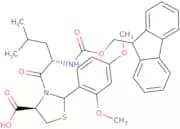
CAS:<p>Please enquire for more information about Fmoc-Leu-Cys(Psi(Dmp,H)pro)-OH including the price, delivery time and more detailed product information at the technical inquiry form on this page</p>Fórmula:C33H36N2O7SPureza:Min. 95%Peso molecular:604.71 g/molL-α-Phosphatidylserine sodium, porcine brain
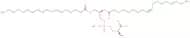
CAS:<p>L-alpha-Phosphatidylserine sodium salt, derived from porcine brain, is a research chemical that has shown promising potential in various fields. It has been studied for its role in HIV-1 infection, where it has been found to inhibit the fusion of the virus with host cells. Additionally, L-alpha-Phosphatidylserine sodium salt has shown positive effects on spermatozoa motility and fertility. In cancer research, L-alpha-Phosphatidylserine sodium salt has been investigated for its ability to enhance the efficacy of certain anti-cancer drugs. It is believed to work by increasing the uptake of these drugs into cancer cells, thereby improving their effectiveness. This compound also plays a role in neurological health. It is involved in the synthesis of steroidal hormones and neurotransmitters such as dopamine. Studies have suggested that L-alpha-Phosphatidylserine sodium salt may support cognitive function and memory. Furthermore, L-alpha-Ph</p>Pureza:Min. 95%FITC-Tyr-Val-Ala-Asp-Ala-Pro-Lys(Dnp)-OH (Contains FITC isomer I)
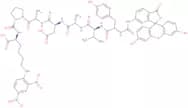
CAS:<p>Please enquire for more information about FITC-Tyr-Val-Ala-Asp-Ala-Pro-Lys(Dnp)-OH (Contains FITC isomer I) including the price, delivery time and more detailed product information at the technical inquiry form on this page</p>Fórmula:C62H67N11O20SPureza:Min. 95%Peso molecular:1,318.32 g/mol



























![[D-Ala2,Hyp4,Tyr5]-β-Casomorphin (1-5) amide](/_next/image/?url=https%3A%2Fstatic.cymitquimica.com%2Fproducts%2F3D%2Fthumb-webp%2FVAC-00824.webp&w=3840&q=75)





![[D-Asp1]-Amyloid-β-Protein (1-42)](/_next/image/?url=https%3A%2Fstatic.cymitquimica.com%2Fproducts%2F3D%2Fthumb-webp%2FVAC-00138.webp&w=3840&q=75)
![[Tyr0]-Neurokinin B](/_next/image/?url=https%3A%2Fstatic.cymitquimica.com%2Fproducts%2F3D%2Fthumb-webp%2FVAC-00860.webp&w=3840&q=75)


![[Ala2] Met-Enkephalin, amide](/_next/image/?url=https%3A%2Fstatic.cymitquimica.com%2Fproducts%2F3D%2Fthumb-webp%2FVAC-00854.webp&w=3840&q=75)
![[Pyr11]-Amyloid β-Protein (11-40)](/_next/image/?url=https%3A%2Fstatic.cymitquimica.com%2Fproducts%2F3D%2Fthumb-webp%2FVAC-00202.webp&w=3840&q=75)


![[Tyr5,D-Trp6,8,9,Arg-NH210]-Neurokinin A (4-10)](/_next/image/?url=https%3A%2Fstatic.cymitquimica.com%2Fproducts%2F3D%2Fthumb-webp%2FVAC-00356.webp&w=3840&q=75)




![[D-Ala2, DArg6] Dynorphin A, (1-13), porcine](/_next/image/?url=https%3A%2Fstatic.cymitquimica.com%2Fproducts%2F3D%2Fthumb-webp%2FVAC-00836.webp&w=3840&q=75)


![[Trp7,β-Ala8]-Neurokinin A (4-10)](/_next/image/?url=https%3A%2Fstatic.cymitquimica.com%2Fproducts%2F3D%2Fthumb-webp%2FVAC-00349.webp&w=3840&q=75)
![[Des-Arg30,Des-Pro31]-Dendroaspis Natriuretic Peptide](/_next/image/?url=https%3A%2Fstatic.cymitquimica.com%2Fproducts%2F3D%2Fthumb-webp%2FVAC-00379.webp&w=3840&q=75)


![[Cys(Acm)20,31]-EGF (20-31)](/_next/image/?url=https%3A%2Fstatic.cymitquimica.com%2Fproducts%2F3D%2Fthumb-webp%2FVAC-00265.webp&w=3840&q=75)
![[D-Ser13]-Somatostatin-14](/_next/image/?url=https%3A%2Fstatic.cymitquimica.com%2Fproducts%2F3D%2Fthumb-webp%2FVAC-00217.webp&w=3840&q=75)



![[Nle21,Tyr32] Corticotropin Releasing Factor, ovine](/_next/image/?url=https%3A%2Fstatic.cymitquimica.com%2Fproducts%2F3D%2Fthumb-webp%2FVAC-00739.webp&w=3840&q=75)
![[Gln144]-PLP (139-151), Q144-PLP(139-151)](/_next/image/?url=https%3A%2Fstatic.cymitquimica.com%2Fproducts%2F3D%2Fthumb-webp%2FVAC-00496.webp&w=3840&q=75)

![[Ser25]-PKC (19-31)](/_next/image/?url=https%3A%2Fstatic.cymitquimica.com%2Fproducts%2F3D%2Fthumb-webp%2FVAC-00659.webp&w=3840&q=75)

![[Lys8]-Vasotocin (free acid)](/_next/image/?url=https%3A%2Fstatic.cymitquimica.com%2Fproducts%2F3D%2Fthumb-webp%2FVAC-00301.webp&w=3840&q=75)


![[Des-Ala1,des-Gly2,His4,5,D-Trp8]-Somatostatin-14](/_next/image/?url=https%3A%2Fstatic.cymitquimica.com%2Fproducts%2F3D%2Fthumb-webp%2FVAC-00275.webp&w=3840&q=75)
![[Tyr0]-Hypercalcemia Malignancy Factor (1-40)](/_next/image/?url=https%3A%2Fstatic.cymitquimica.com%2Fproducts%2F3D%2Fthumb-webp%2FVAC-00857.webp&w=3840&q=75)


![[Sar1]-Angiotensin I/II (1-7) amide](/_next/image/?url=https%3A%2Fstatic.cymitquimica.com%2Fproducts%2F3D%2Fthumb-webp%2FVAC-00205.webp&w=3840&q=75)

![[Tyr11]-Somatostatin-14](/_next/image/?url=https%3A%2Fstatic.cymitquimica.com%2Fproducts%2F3D%2Fthumb-webp%2FVAC-00219.webp&w=3840&q=75)


![[Nle13]-Motillin](/_next/image/?url=https%3A%2Fstatic.cymitquimica.com%2Fproducts%2F3D%2Fthumb-webp%2FVAC-00402.webp&w=3840&q=75)


![Biotin-[Gln1]-Gastrin I (human)](/_next/image/?url=https%3A%2Fstatic.cymitquimica.com%2Fproducts%2F3D%2Fthumb-webp%2FVAC-00106.webp&w=3840&q=75)


![[Ile34]-β-Amyloid (25-34)](/_next/image/?url=https%3A%2Fstatic.cymitquimica.com%2Fproducts%2F3D%2Fthumb-webp%2FVAC-00451.webp&w=3840&q=75)
![[Met2]-Deltorphin](/_next/image/?url=https%3A%2Fstatic.cymitquimica.com%2Fproducts%2F3D%2Fthumb-webp%2FVAC-00898.webp&w=3840&q=75)


![[Tyr15]-Fibrinopeptide B](/_next/image/?url=https%3A%2Fstatic.cymitquimica.com%2Fproducts%2F3D%2Fthumb-webp%2FVAC-00181.webp&w=3840&q=75)


![[D-Arg1,D-Phe5,D-Trp7,11]-Substance P](/_next/image/?url=https%3A%2Fstatic.cymitquimica.com%2Fproducts%2F3D%2Fthumb-webp%2FVAC-00151.webp&w=3840&q=75)
![[Phe1376]-Fibronectin Fragment (1371-1382)](/_next/image/?url=https%3A%2Fstatic.cymitquimica.com%2Fproducts%2F3D%2Fthumb-webp%2FVAC-00679.webp&w=3840&q=75)
![[Leu144,Arg147]-Myelin Proteolipid Protein(139-151)](/_next/image/?url=https%3A%2Fstatic.cymitquimica.com%2Fproducts%2F3D%2Fthumb-webp%2FVAC-00722.webp&w=3840&q=75)