Electroforesis
En esta sección, puede encontrar todos los reactivos y materiales necesarios para realizar electroforesis, una técnica de laboratorio vital utilizada para separar proteínas según su masa molecular y carga. Esta técnica es esencial para analizar la composición y pureza de muestras de proteínas, así como para estudiar ácidos nucleicos y otras biomoléculas. Nuestra selección incluye tampones de electroforesis, geles, colorantes y marcadores de alta calidad, junto con aparatos y accesorios diseñados para garantizar una separación precisa y eficiente. Estos productos son cruciales para la investigación en biología molecular, bioquímica y genética, proporcionando resultados fiables para la caracterización de proteínas, el análisis de la expresión génica y otras aplicaciones. En CymitQuimica, proporcionamos todo lo necesario para realizar electroforesis, apoyando su investigación con precisión y consistencia.
Subcategorías de "Electroforesis"
Se han encontrado 298 productos para "Electroforesis".
Ordenar por
Pureza (%)
0
100
|
0
|
50
|
90
|
95
|
100
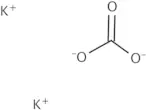
Potassium carbonate, anhydrous
CAS:Fórmula:CK2O3Pureza:≥ 99.5%Forma y color:White powderPeso molecular:138.21Bovine Serum Albumin, pH 5.2
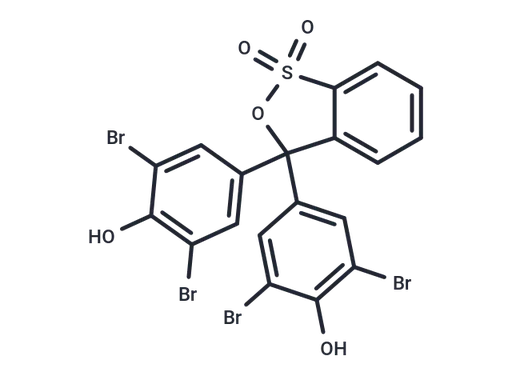
CAS:Pureza:≥ 96.0%Forma y color:Off-white to light-yellow or green powder or flakesPeso molecular:-Bromophenol Blue
CAS:Bromophenol Blue, an acid phthalein dye, is utilized both as a tracking dye for electrophoresis and as a pH indicator with a transition range of pH 3 to 4.6.Fórmula:C19H10Br4O5SPureza:99.59%Forma y color:Light Pink To Purple Crystalline PowderPeso molecular:669.96Hydrogen peroxide, 7.5% in water
CAS:Producto controladoFórmula:H2O2Pureza:7.0 - 8.0 %Forma y color:Clear, colourless liquidPeso molecular:34.02Bovine Serum Albumin, 98% by electrophoresis
CAS:Pureza:≥ 98%Forma y color:Off-white to pale yellow or green powder or flakesPeso molecular:-TRIS-Glycine-SDS Buffer 10X, GlenBiol™, suitable for molecular biology
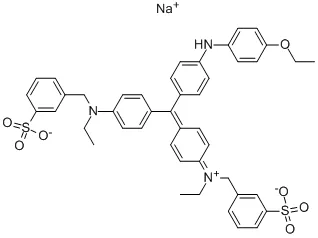
Forma y color:Clear, colourless liquidPeso molecular:-Brilliant Blue R-250 for molecular biology
CAS:Fórmula:C45H44N3NaO7S2Forma y color:Dark blue with reddish tinge, PowderPeso molecular:825.981X Phosphate Buffered Saline (PBS) for molecular biology
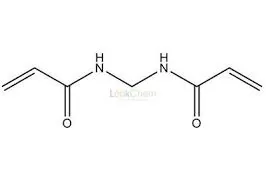
The pH of the buffer is typically maintained within a range of 7.4 ± 0.1, closely resembling the physiological pH found in many biological systems.Forma y color:Clear, Colourless, LiquidN,N-Methylene Bisacrylamide 3x cryst. for molecular biology, 99.5%
CAS:Fórmula:C7H10N2O2Pureza:min. 99.5%Forma y color:White, Crystalline powder, Clear, ColourlessPeso molecular:154.1710X Tris-Tricine-SDS Buffer for molecular biology
The Tris-Tricine-SDS Gel Running Buffer is specifically designed for separating proteins with molecular weights between 1 and 100 kDa, making it particularly effective for resolving proteins smaller than 30 kDa. This approach differs from traditional SDS-PAGE by substituting glycine (pK 9.6) with tricine (pK 8.15), which enhances the stacking and destacking of low molecular weight proteins and improves the resolution of smaller peptides due to the differing pK values. Incorporating urea into the stacking gel allows for the effective separation of two proteins that share the same molecular weight. Additionally, the lower acrylamide concentrations in Tricine gels facilitate the transfer of hydrophobic proteins during Western blotting. Tricine–SDS-PAGE is therefore commonly employed for the separation of lower molecular weight proteins.Forma y color:Clear, Colourless, LiquidTris Acetate for molecular biology, 99%
CAS:Fórmula:C4H11NO3·C2H4O2Pureza:min. 99%Forma y color:White, Crystalline powder, Clear, ColourlessPeso molecular:181.1910X Phosphate Buffered Saline Tween-20 (PBST) for molecular biology
Forma y color:Clear, Colourless with yellow tinted, Liquid10X TE Buffer pH-8.0 for molecular biology
TE buffer, often called T10E1 buffer is formulated from two primary components: Tris and EDTA. Tris serves to stabilize the pH, while EDTA protects DNA and RNA by chelating metal ions that are necessary for the activity of degrading enzymes, such as nucleases. This combination effectively preserves the integrity of nucleic acids. For optimal RNA protection, the solution should be maintained at a pH of 7.5, while DNA is best stored at a pH of 8.0. Importantly, a pH of 8.0 is also suitable for storing both DNA and RNA T10E1 bufferForma y color:Clear, Colourless, Liquid10X Tris Buffered Saline (TBS) for molecular biology
Tris, short for tris(hydroxymethyl)aminomethane, is a commonly used primary amine known for its effectiveness as a buffering agent, particularly in the pH range of about 7.4, with a tolerance of ±0.1. This compound is advantageous because it does not precipitate calcium salts and aids in keeping manganese salts soluble. Additionally, Tris has a low UV absorbance, making it suitable for various experimental applications, although it is notably sensitive to changes in temperature. These characteristics contribute to its widespread use in biochemical and molecular biology experiments.Forma y color:Clear, Colourless, Liquid