Electroforesis
En esta sección, puede encontrar todos los reactivos y materiales necesarios para realizar electroforesis, una técnica de laboratorio vital utilizada para separar proteínas según su masa molecular y carga. Esta técnica es esencial para analizar la composición y pureza de muestras de proteínas, así como para estudiar ácidos nucleicos y otras biomoléculas. Nuestra selección incluye tampones de electroforesis, geles, colorantes y marcadores de alta calidad, junto con aparatos y accesorios diseñados para garantizar una separación precisa y eficiente. Estos productos son cruciales para la investigación en biología molecular, bioquímica y genética, proporcionando resultados fiables para la caracterización de proteínas, el análisis de la expresión génica y otras aplicaciones. En CymitQuimica, proporcionamos todo lo necesario para realizar electroforesis, apoyando su investigación con precisión y consistencia.
Subcategorías de "Electroforesis"
Se han encontrado 298 productos para "Electroforesis".
Ordenar por
Pureza (%)
0
100
|
0
|
50
|
90
|
95
|
100
1M Tris Hydrochloride Buffer (1M Tris HCl) pH-8.0 for molecular biology
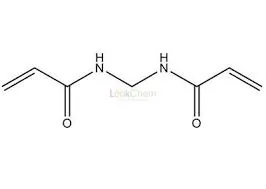
Forma y color:Clear, Colourless, LiquidN,N-Methylene Bisacrylamide (bis-Acrylamide) 3x cryst. extrapure AR, 99.5%
CAS:Fórmula:C7H10N2O2Pureza:min. 99.5%Forma y color:White, Crystalline powder, Clear, ColourlessPeso molecular:154.1710X Tris-Glycine-SDS Buffer for molecular biology
SDS-PAGE is a method for separating proteins according to their movement in an electrical current and their molecular mass, which relates to the length of their polypeptide chains. A widely recognized system for this technique is the Laemmli system, introduced in 1970. It employs Tris-Glycine gels made up of a stacking gel and a resolving gel, utilizing varying acrylamide concentrations to achieve separation based on molecular weight. This traditional system incorporates a discontinuous buffer setup, with different pH levels and ionic strengths for the buffers: the running buffer (10X Tris-Glycine-SDS Gel Running Buffer) is set at pH 8.3, while the stacking gel operates at pH 6.8, and the resolving gel is at pH 8.8.Forma y color:Clear, Colourless, Liquid10X Tris-Glycine pH-8.3 Tank Buffer for molecular biology
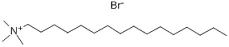
The 10X Tris-Glycine Buffer, with a pH of 8.3, is designed specifically for use in native PAGE gel electrophoresis. This buffer offers great convenience, as it can be diluted with distilled water or another suitable solvent according to the specific application prior to electrophoresis. Additionally, it is useful for the transfer of protein samples onto nitrocellulose membranes during western blotting. To prevent the gel from swelling during the transfer process and to enhance the binding of protein samples to nitrocellulose, the inclusion of methanol is essential.Forma y color:Clear, Colourless, LiquidCetyltrimethyl Ammonium Bromide (CTAB) for molecular biology, 99%
CAS:Fórmula:C19H42BrNPureza:min. 99.5%Forma y color:White, Crystalline powder, Clear, Colourless, Clear, ColourlessPeso molecular:364.45Cetyltrimethyl Ammonium Chloride (CTAC) for molecular biology, 99%
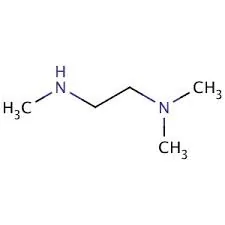
CAS:Fórmula:C19H42NClPureza:min. 99%Forma y color:White, Crystalline powder, Clear, ColourlessPeso molecular:320.00N,N,N-Trimethylethylenediamine pure, 97%
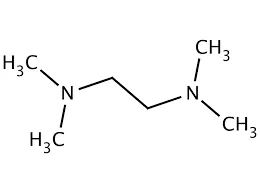
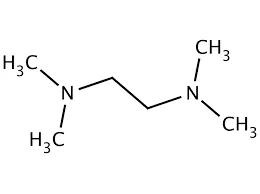
CAS:Fórmula:C5H14N2Pureza:min. 97%Forma y color:Clear, Colourless, LiquidPeso molecular:102.18N,N,N,N-Tetramethyl Ethylenediamine (TEMED) for molecular biology, 99.5%
CAS:Fórmula:C6H16N2Pureza:min. 99.5%Forma y color:Clear, Colourless, LiquidPeso molecular:116.21Ethidium Bromide Solution (10mg/ml)
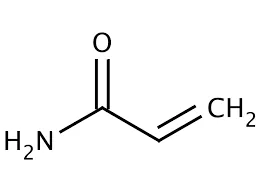
Fórmula:C21H20N3BrForma y color:Dark red, Clear, LiquidPeso molecular:394.32Acrylamide 3x cryst. extrapure AR, 99.9%
CAS:Producto controladoFórmula:C3H5NOPureza:min. 99.9%Forma y color:White, Crystalline powder, Clear, ColourlessPeso molecular:71.08Ref: SR-15657
Producto descatalogado30% Acrylamide / Bis-acrylamide Mix Solution (Ratio 29:1)
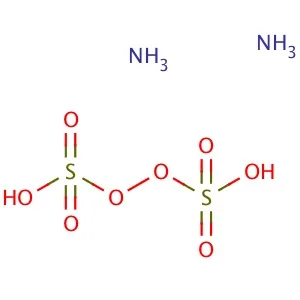
SDS-PAGE is a method employed for separating proteins via electrophoresis, based on the principle that charged molecules migrate through a matrix in response to an applied electric field. The matrix utilized for this separation is polyacrylamide, which is derived from acrylamide, a compound that can be hazardous. Polyacrylamide is commonly used for the size-based separation of proteins and nucleic acids. The gel matrix forms through the free radical polymerization of acrylamide along with a crosslinking agent known as N, N-Methylenebisacrylamide. In this process, acrylamide monomers polymerize into long chains, initiated by a free radical-generating system, and these chains are linked by the cross-linker, resulting in a gel structure. This gel is crucial for effective electrophoretic separation, facilitating the analysis of biomolecules based on size.Forma y color:Clear, Colourless, LiquidAmmonium Persulphate (APS) for electrophoresis, 99%
CAS:Fórmula:N2H8S2O8Pureza:min. 99%Forma y color:White, Crystalline powder, Clear, ColourlessPeso molecular:228.20Ethidium Bromide extrapure, 95%
CAS:Fórmula:C21H20N3BrPureza:min.95%Forma y color:Red, Crystalline Powder, Clear, RedPeso molecular:394.32Sodium Lauryl Sulphate (SDS, SLS) ACS, 99%
CAS:Fórmula:C12H25SO4NaPureza:min.99%Forma y color:White, Crystalline powder, Clear, ColourlessPeso molecular:288.38Ref: SR-54468
Producto descatalogadoN,N,N,N-Tetramethyl Ethylenediamine (TEMED) extrapure AR, ExiPlus, Multi-Compendial, 99%
CAS:Fórmula:C6H16N2Pureza:min. 99%Forma y color:Clear, Colourless, LiquidPeso molecular:116.21