Antibióticos
Los antibióticos son compuestos diseñados para destruir o inhibir el crecimiento de diversos microorganismos, desempeñando un papel crucial en el tratamiento de infecciones y en la prevención de la propagación de enfermedades. Esta categoría ofrece una gama diversa de ingredientes activos específicamente para la investigación en el campo bioquímico. Estos compuestos son herramientas esenciales en el estudio de los mecanismos bacterianos, los patrones de resistencia y el desarrollo de nuevos agentes terapéuticos. Los investigadores pueden explorar una amplia variedad de antibióticos para comprender sus efectos, optimizar su uso y desarrollar nuevos tratamientos para combatir amenazas microbianas emergentes. La disponibilidad de un espectro tan amplio de antibióticos apoya la investigación avanzada y la innovación en microbiología y ciencias farmacéuticas.
Subcategorías de "Antibióticos"
- Antibióticos macrólidos(26 productos)
- Antibióticos esteroides(31 productos)
- Antibióticos de tetraciclina(20 productos)
- Antibióticos β-lactámicos(11 productos)
Se han encontrado 4102 productos de "Antibióticos"
Ordenar por
Pureza (%)
0
100
|
0
|
50
|
90
|
95
|
100
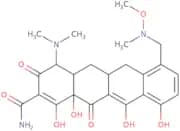
Sarecycline
CAS:<p>Sarecycline is a tetracycline-class antibiotic, which is derived from naturally occurring tetracycline antibiotics. Its mode of action involves inhibition of bacterial protein synthesis by binding to the 30S ribosomal subunit, thereby preventing the addition of amino acids to nascent peptide chains. This specific mechanism disrupts bacterial growth, making Sarecycline effective against certain strains of bacteria implicated in dermatological conditions.</p>Fórmula:C24H29N3O8Pureza:Min. 95 Area-%Peso molecular:487.5 g/molent NAP 226-90
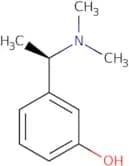
CAS:<p>ent NAP 226-90 is an organic compound functioning as an antibacterial agent, which is derived from a biologically active natural product. Its mode of action involves the inhibition of essential bacterial enzymes, leading to the disruption of cellular processes within susceptible microorganisms. This compound is particularly effective against a broad spectrum of gram-positive bacteria, making it valuable in medical microbiology research for understanding bacterial resistance mechanisms.</p>Fórmula:C10H15NOPureza:Min. 95%Peso molecular:165.23 g/molCefonicid
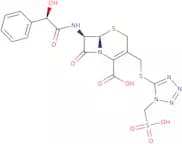
CAS:Cefonicid is a semisynthetic cephalosporin antibiotic, which is derived from the naturally occurring compound cephalosporin C, obtained from the mold *Cephalosporium acremonium*. Its mode of action involves inhibiting bacterial cell wall synthesis by binding to penicillin-binding proteins, leading to cell lysis and death, thereby exhibiting bactericidal activity.Fórmula:C18H16N6O8S3Pureza:Min. 95%Peso molecular:540.55 g/molErythromycylamine
CAS:<p>Erythromycylamine is a semisynthetic antibiotic, which is derived from the parent compound erythromycin. This compound is sourced from the fermentation product of the bacterium *Saccharopolyspora erythraea*. Erythromycylamine acts by inhibiting bacterial protein synthesis, specifically targeting the 50S ribosomal subunit, which ultimately leads to the disruption of bacterial cell growth and replication.</p>Fórmula:C37H70N2O12Pureza:Min. 95%Peso molecular:734.96 g/molBiotinamidocaproate tobramycin amide
CAS:<p>Biotinamidocaproate tobramycin amide is a chemical conjugate, serving as an innovative antimicrobial agent derived from the integration of biotin with tobramycin, an aminoglycoside antibiotic. This product embodies the amalgamation of tobramycin’s robust antibacterial properties with biotin’s ability to guide compounds specifically to targets through biotin-avidin interactions.</p>Fórmula:C34H62N8O12SPureza:Min. 95%Peso molecular:806.97 g/molVincristine
CAS:Vincristine, a microtubule disruptor, inhibits mitosis in cancer cells, useful in leukemia research.Fórmula:C46H56N4O10Pureza:98.46% - >99.99%Forma y color:SolidPeso molecular:824.96Sulbenicillin
CAS:<p>Sulbenicillin is a semi-synthetic penicillin antibiotic, which is derived from 6-aminopenicillanic acid, a natural precursor in the biosynthesis of penicillins. With its beta-lactam structure, Sulbenicillin disrupts bacterial cell wall synthesis by inhibiting penicillin-binding proteins, which are essential enzymes in the cross-linking of peptidoglycan layers. This disruption compromises the structural integrity of the bacterial cell wall, resulting in cell lysis and death, particularly in Gram-negative bacteria.</p>Fórmula:C16H18N2O7S2Pureza:Min. 95%Peso molecular:414.46 g/molPotassium clavulanate - 1:1 mixture with cellulose, Antibiotic for Culture Media Use Only
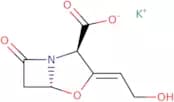
CAS:Potassium clavulanate is a beta-lactamase inhibitor and an antibacterial agent. The presence of potassium clavulanate in culture media inhibits the activity of beta-lactamases, which are enzymes that confer resistance to penicillin and other beta-lactam antibiotics. It also has been shown to be active against bacterial infections such as tuberculosis, sepsis, and pneumonia, where it can inhibit the growth of bacteria by interfering with their ability to form cell walls.Fórmula:C8H8KNO5Pureza:Min. 95.0 Area-%Peso molecular:237.25 g/molCloxacillin benzathine
CAS:Cloxacillin benzathine is a beta-lactam antibiotic, which is synthesized from Penicillium fungi-derived penicillins. It acts by inhibiting bacterial cell wall synthesis. The mechanism involves the irreversible inhibition of penicillin-binding proteins (PBPs). This disruption in the bacterial cell wall structure ultimately leads to cell lysis and death.Fórmula:C54H56Cl2N8O10S2Pureza:Min. 95 Area-%Forma y color:White PowderPeso molecular:1,112.11 g/molDeacetylanisomycin
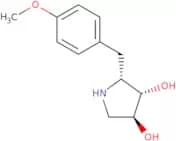
CAS:<p>Deacetylanisomycin is a bacterial metabolite, which is derived from the soil bacterium Streptomyces griseolus. It acts as an inhibitor of protein synthesis by binding to the 60S ribosomal subunit, thus interfering with peptide bond formation during translation. This mode of action is key to its effectiveness in studying the mechanisms of protein synthesis interruption.</p>Fórmula:C12H17NO3Pureza:Min. 95%Forma y color:White To Off-White SolidPeso molecular:223.27 g/molLysostaphin, from staphylococcus staphylolyticus
CAS:<p>Lysostaphin, from Staphylococcus staphylolyticus is a zinc metalloenzyme with action on bacterial cell walls by cleaving polyglycine cross-links and is used for treating staphylococcal infections and in research applications.</p>Pureza:Min. 95%Forma y color:Powder2'-O-Acetylspiramycin I
CAS:<p>2'-O-Acetylspiramycin I is a semi-synthetic derivative of spiramycin, which is a macrolide antibiotic originally sourced from the bacterium *Streptomyces ambofaciens*. The modification involves the acetylation at the 2'-hydroxyl group of spiramycin, enhancing certain pharmacokinetic properties.</p>Fórmula:C45H76N2O15Pureza:Min. 95%Peso molecular:885.09 g/molOxacillin sodium
CAS:<p>Oxacillin sodium is a beta-lactam antibiotic with action on bacterial cell wall synthesis and is used for treating infections caused by penicillin-resistant Staphylococcus aureus.</p>Fórmula:C19H18N3NaO5SPureza:Min. 95%Forma y color:PowderPeso molecular:423.42 g/mol25-Desacetyl rifapentin
CAS:<p>25-Desacetyl rifapentin is a derivative of rifapentin, an antibiotic belonging to the rifamycin class, sourced from the bacterial species *Amycolatopsis rifamycinica*. This compound functions by inhibiting bacterial DNA-dependent RNA polymerase, which is crucial for transcription in susceptible bacterial strains. By inhibiting this enzyme, 25-Desacetyl rifapentin effectively hampers RNA synthesis, ultimately leading to bacterial cell death.</p>Fórmula:C45H62N4O11Pureza:Min. 95%Forma y color:PowderPeso molecular:834.99 g/molPolymyxin B nonapeptide hydrochloride
CAS:<p>Polymyxin B nonapeptide hydrochloride is a potent antibiotic compound derived from the bacterium *Bacillus polymyxa*. As a cationic polypeptide, it exhibits its antibacterial activity by interacting with the lipopolysaccharides and phospholipids in the bacterial cell membrane, leading to increased permeability and ultimately causing cell lysis. The compound is specifically effective against a broad range of Gram-negative bacteria, making it crucial in studying antibiotic resistance mechanisms.</p>Fórmula:C43H74N14O11•(HCl)xPureza:Min. 95%Peso molecular:963.14 g/molErythromycin F
CAS:<p>Erythromycin F is an antibiotic, which is a naturally derived product obtained from the bacterium *Streptomyces erythreus*. It operates by inhibiting bacterial protein synthesis through binding to the 50S ribosomal subunit. This binding effectively blocks the translocation steps in protein elongation, thus preventing the growth and multiplication of susceptible bacteria.</p>Fórmula:C37H67NO14Pureza:Min. 95%Peso molecular:749.93 g/molAclacinomycin HCl
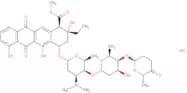
CAS:<p>Aclacinomycin HCl is a cytotoxic antibiotic that inhibits the growth of tumor cells. It has been shown to induce apoptosis in human leukemia cells by altering the transmembrane potential and inhibiting cell proliferation. Aclacinomycin HCl also induces DNA damage response, which leads to caspase activities and cell death. This drug is highly selective for tumor cells, with no effect on normal cells. It has been shown to be effective against primary liver cancer in animal models, as well as developmental disorders such as autism spectrum disorder (ASD).</p>Fórmula:C42H53NO15·HClPureza:Min. 95%Forma y color:Orange PowderPeso molecular:848.33 g/molThiostrepton
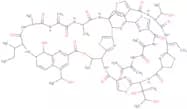
CAS:<p>Thiostrepton is a thiopeptide antibiotic with action on bacterial protein synthesis by binding to the ribosome and is used for treating bacterial infections in veterinary medicine and research applications.</p>Fórmula:C72H85N19O18S5Pureza:Min. 95%Forma y color:White To Light (Or Pale) Yellow SolidPeso molecular:1,664.89 g/mol