Antibióticos
Los antibióticos son compuestos diseñados para destruir o inhibir el crecimiento de diversos microorganismos, desempeñando un papel crucial en el tratamiento de infecciones y en la prevención de la propagación de enfermedades. Esta categoría ofrece una gama diversa de ingredientes activos específicamente para la investigación en el campo bioquímico. Estos compuestos son herramientas esenciales en el estudio de los mecanismos bacterianos, los patrones de resistencia y el desarrollo de nuevos agentes terapéuticos. Los investigadores pueden explorar una amplia variedad de antibióticos para comprender sus efectos, optimizar su uso y desarrollar nuevos tratamientos para combatir amenazas microbianas emergentes. La disponibilidad de un espectro tan amplio de antibióticos apoya la investigación avanzada y la innovación en microbiología y ciencias farmacéuticas.
Subcategorías de "Antibióticos"
- Antibióticos macrólidos(26 productos)
- Antibióticos esteroides(31 productos)
- Antibióticos de tetraciclina(20 productos)
- Antibióticos β-lactámicos(11 productos)
Se han encontrado 4102 productos de "Antibióticos"
Ordenar por
Pureza (%)
0
100
|
0
|
50
|
90
|
95
|
100
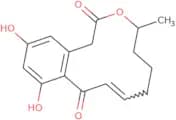
10, 11-Dehydrocurvularin
CAS:<p>10, 11-Dehydrocurvularin is a fungal phytotoxin with heat shock response and immune-modulatory activitie. Curvularins inhibit the expression of the inducible nitric oxide synthase (iNOS), thereby acting as anti-inflammatory agents and immune system modulators</p>Pureza:Min. 95%Forma y color:PowderPlazomicin sulfate
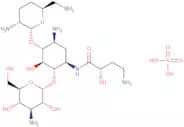
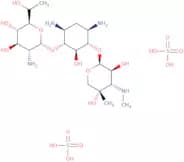
CAS:<p>An aminoglycoside antibiotic. Found applications in treatment of UTi's as it decreases the ability of bacteria to make protein.</p>Fórmula:C25H48N6O10·XH2SO4Pureza:Min. 85%Forma y color:PowderPeso molecular:592.69 g/molClindamycin sulfoxide
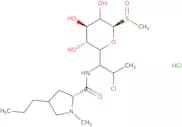
CAS:<p>Clindamycin sulfoxide is a potent metabolite of the lincosamide antibiotic clindamycin, which is derived from the fermentation product of *Streptomyces lincolnensis*. This compound acts by inhibiting bacterial protein synthesis through binding to the 50S ribosomal subunit, thereby interfering with the translocation steps in protein elongation. The mechanism effectively suppresses the growth of a broad range of Gram-positive bacteria, including *Staphylococcus aureus*, *Streptococcus pneumoniae*, and anaerobic microorganisms.</p>Fórmula:C18H33ClN2O6SPureza:Min. 95%Peso molecular:440.98 g/molCamptothecin
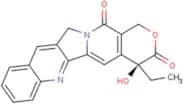
CAS:Camptothecin (CPT) belongs to the alkaloid group of natural products and is a specific DNA topoisomerase I (Topo I) inhibitor (IC50=679 nM) with specificity.Fórmula:C20H16N2O4Pureza:99.52% - 99.88%Forma y color:Solid PowderPeso molecular:348.35Streptidine dihydrochloride
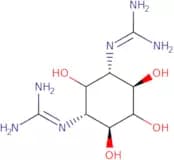
CAS:<p>Streptidine dihydrochloride is a biochemical compound, specifically a derivative of streptomycin, which is obtained through chemical modification of the aminoglycoside antibiotic streptomycin. It is composed of streptidine, a constituent sugar derivative, that is integral to the structure of streptomycin, rendered as a hydrochloride salt to enhance solubility and stability.</p>Fórmula:C8H18N6O4·2HClPureza:Min. 95%Arbekacin sulfate
CAS:<p>Inhibitor of DNA replication; aminoglycoside class</p>Fórmula:C22H44N6O10·xH2SO4Pureza:Min. 95%Forma y color:White PowderPeso molecular:650.7 g/molIclaprim
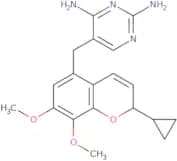
CAS:Iclaprim is an antibiotic, which is a synthetic diaminopyrimidine antimicrobial agent with a specific mechanism of action. It works by selectively inhibiting bacterial dihydrofolate reductase, a crucial enzyme in the bacterial folate synthesis pathway. This inhibition prevents the production of tetrahydrofolate, ultimately disrupting DNA, RNA, and protein synthesis in susceptible bacterial cells.Fórmula:C19H22N4O3Pureza:Min. 95%Peso molecular:354.4 g/molCefteram
CAS:<p>Cefteram is a third-generation cephalosporin antibiotic, which is synthesized through chemical processes starting from cephalosporin C, a compound derived from the fungus Acremonium. As a cephalosporin, it functions by inhibiting bacterial cell wall synthesis. This is achieved through the binding to penicillin-binding proteins (PBPs), which are critical in the formation of the bacterial cell wall. By disrupting this process, Cefteram leads to the lysis and death of the bacteria.</p>Fórmula:C16H17N9O5S2Pureza:Min. 95%Forma y color:White To Off-White SolidPeso molecular:479.5 g/molIonomycin
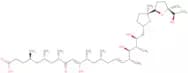
CAS:<p>Ionomycin is an ionophore compound with a mode of action that facilitates calcium ion transport across cell membranes. It is used in research to study calcium signaling and T-cell activation.</p>Fórmula:C41H72O9Pureza:Min. 98 Area-%Forma y color:PowderPeso molecular:709.01 g/molRolitetracycline
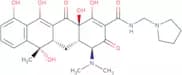
CAS:<p>Rolitetracycline is a semi-synthetic tetracycline antibiotic, which is derived from the natural compound tetracycline. It functions primarily by inhibiting protein synthesis in susceptible bacteria. This is achieved through the binding to the 30S ribosomal subunit, effectively blocking the attachment of aminoacyl-tRNA to the mRNA-ribosome complex, thereby preventing the addition of new amino acids to the nascent peptide chain. As a result, bacterial cell growth is inhibited, leading to bacteriostatic effects.</p>Fórmula:C27H33N3O8Pureza:Min. 95%Forma y color:PowderPeso molecular:527.57 g/molColistin sulfate, Antibiotic for Culture Media Use Only
CAS:<p>Antibacterial agent with the ability to permeate bacterial membranes and cause cell death. Colistin is a cationic peptide also known as polymyxin E. Colistin is effective in multidrug resistant Gram-positive bacteria such as P. aeruginosa, A. baumannii and K. pneumoniae.</p>Fórmula:C53H102N16O17SPeso molecular:1,266.73 g/molRef: 3D-Q-200890
1kgA consultar5kgA consultar10kgA consultar25kgA consultar2500gA consultar-Unit-kgkgA consultarCeftaroline fosamil acetate
CAS:<p>Cephalosporin antibiotic active against gram-positive bacteria including MRSA</p>Fórmula:C24H25N8O10PS4Pureza:Min. 98 Area-%Peso molecular:744.74 g/molClindamycin
CAS:<p>Inhibitor of protein synthesis; lincosamide class</p>Fórmula:C18H33ClN2O5SPureza:Min. 95%Peso molecular:424.98 g/molGeneticin Disulfate (G418), Antibiotic for Culture Media Use Only
CAS:Geneticin is very efficient against gram-negative bacteria, however it is not applied for treating infections due to high renal toxicity. Geneticin and its resistance genes found application in the selection of transgenic cell lines including yeasts such as P. pastoris and S. serevisiae, other eukaryotic cell lines such as CHO or HEK293, but also plant cells and bacterial cells.Fórmula:C20H44N4O18S2Pureza:Min. 97.0 Area-%Peso molecular:692.71 g/molRef: 3D-G-2400
10gA consultar25gA consultar50gA consultar100gA consultar250gA consultar-Unit-ggA consultar8-Fluoro erythromycin
CAS:<p>8-Fluoro erythromycin is a synthetic derivative of the macrolide antibiotic erythromycin. It is derived from the fermentation of *Streptomyces erythraeus*, a species known for producing erythromycin, which is chemically modified to include a fluorine atom at the eighth position. This modification enhances its pharmacokinetic properties, improving its stability and bioavailability compared to the parent compound.</p>Fórmula:C37H66FNO13Pureza:Min. 95%Peso molecular:751.92 g/molCefadroxil monohydrate, Antibiotic for Culture Media Use Only
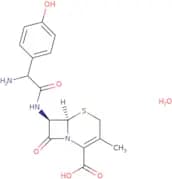
CAS:Cefadroxil is a broad-spectrum bactericidal antibiotic that belongs to the cephalosporin family. It is a semi-synthetic penicillin and inhibits bacterial cell wall synthesis through binding to one or more of the penicillin-binding proteins (PBPs). Cefadroxil monohydrate is used as an antibiotic for culture media and has been proven to be effective against methicillin-resistant Staphylococcus aureus (MRSA). In addition, the drug has been shown to have no significant effect on blood tests or microscopic studies.Fórmula:C16H19N3O6SPureza:Min. 97.0 Area-%Peso molecular:381.40 g/molSitafloxacin
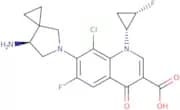
CAS:<p>Sitafloxacin is an antibacterial agent belonging to the fluoroquinolone class of antibiotics, which is synthetically derived from chemical processes involving fluorinated quinolones. Its mode of action involves the inhibition of bacterial DNA gyrase and topoisomerase IV, enzymes crucial for bacterial DNA replication and transcription. By interfering with these enzymes, Sitafloxacin effectively hampers bacterial DNA synthesis, leading to the eventual demise of the bacterial cell.</p>Fórmula:C19H18ClF2N3O3Pureza:Min. 95%Forma y color:SolidPeso molecular:409.81 g/molNafcillin sodium
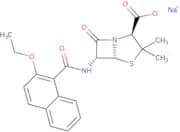
CAS:<p>Nafcillin sodium is a beta-lactam antibiotic, which is a semisynthetic derivative of the organic compound penicillin. It is specifically engineered to be resistant to the inactivation by penicillinase enzymes produced by certain bacteria. This feature allows it to remain effective against a range of penicillinase-producing staphylococcal infections.</p>Fórmula:C21H21N2NaO5SPureza:Min. 95%Forma y color:PowderPeso molecular:436.46 g/molNeomycin B
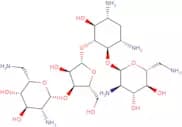
CAS:<p>Neomycin B is an aminoglycoside antibiotic, which is derived from the bacterium *Streptomyces fradiae*. It exerts its antibacterial effects by binding to the 30S subunit of bacterial ribosomes, leading to the inhibition of protein synthesis. This binding disrupts the translation process, thereby preventing the growth and proliferation of bacteria. Neomycin B is effective against a wide range of Gram-negative and some Gram-positive bacteria, making it a valuable tool in both medical and research settings.</p>Fórmula:C23H46N6O13Pureza:Min. 95%Peso molecular:614.64 g/molN'-Desmethyl azithromycin
CAS:<p>N'-Desmethyl azithromycin is a semi-synthetic derivative antibiotic, which is derived from the chemical modification of azithromycin, a macrolide antibiotic sourced originally from the bacterium *Streptomyces erythreus*. It functions primarily by inhibiting bacterial protein synthesis, binding specifically to the 50S ribosomal subunit, which results in the prevention of transpeptidation and translocation processes during translation. This action effectively halts bacterial growth, rendering it bacteriostatic.</p>Fórmula:C37H70N2O12Pureza:Min. 95%Peso molecular:734.96 g/mol