Compuestos y derivados alifáticos
Los compuestos alifáticos y sus derivados son compuestos orgánicos caracterizados por estructuras de cadena recta o ramificada, a diferencia de las estructuras en anillo encontradas en los compuestos aromáticos. Estos compuestos incluyen alcanos, alquenos, alquinos y sus derivados funcionalizados, desempeñando un papel vital en varios procesos químicos y aplicaciones industriales. En CymitQuimica, ofrecemos una diversa selección de compuestos alifáticos de alta pureza y sus derivados, meticulosamente seleccionados y probados para cumplir con los estrictos requisitos de las necesidades de investigación e industriales. Nuestro catálogo abarca una amplia gama de compuestos, incluyendo hidrocarburos, alcoholes, aldehídos, cetonas y ácidos, cada uno conocido por su reactividad y versatilidad en la síntesis orgánica, la farmacéutica y la ciencia de materiales. Al proporcionar compuestos alifáticos y derivados de alta calidad, apoyamos a los investigadores y profesionales en la consecución de transformaciones químicas precisas y eficientes, fomentando la innovación y los avances en múltiples campos científicos y tecnológicos.
Se han encontrado 8718 productos de "Compuestos y derivados alifáticos"
Ordenar por
Pureza (%)
0
100
|
0
|
50
|
90
|
95
|
100
3-Methyl-1-butanol
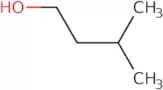
CAS:<p>Volatile compound with banana scent</p>Fórmula:C5H12OPureza:Min. 95%Forma y color:Clear LiquidPeso molecular:88.15 g/molMethanesulfonic anhydride
CAS:<p>Methanesulfonic anhydride is a white crystalline solid that is soluble in water and ethanol. It has been shown to be a potent inhibitor of acetaminophen metabolism and the formation of reactive metabolites. Methanesulfonic anhydride inhibits the metabolic activity of cytochrome P450 enzymes, which are responsible for the oxidation of acetaminophen. This inhibition leads to lower levels of toxic metabolites and less tissue damage. Methanesulfonic anhydride also modulates other assays, such as those for nitric oxide synthase and prostaglandin E2 receptors. Methanesulfonic anhydride is used as a catalyst in chemical reactions, including those that produce hydrogen sulfide gas for use in gold mining. It has also been used to study the localization of various proteins by using probes labeled with methanesulfonic anhydride. Methanesulfonic anhydride may cause hypertension due to its ability to inhibit the degradation of norepinephrine, leading to increased</p>Fórmula:C2H6O5S2Pureza:Min. 95%Forma y color:PowderPeso molecular:174.2 g/molMaleic acid
CAS:<p>Maleic acid is dicarboxylic acid. It is the cis isomer. The trans isomer is fumaric acid</p>Fórmula:C4H4O4Pureza:Min. 95%Forma y color:White Clear LiquidPeso molecular:116.07 g/molHydroxypropanedial
CAS:<p>Hydroxypropanedial is a hydroxy group-containing compound that is not found in natural sources. It has antioxidative properties, which may be due to its ability to scavenge reactive oxygen species or donate hydrogen atoms to free radicals. The compound also has cyclohexane ring and carbonyl groups, which are responsible for the hydroxyl and carboxylic acid functionalities respectively. This substance is used as a chromatographic reagent to measure second-order rate constants of reactions involving hydroxyl radicals. Hydroxypropanedial absorbs light strongly at wavelengths shorter than 300 nm, which is the most effective wavelength range for uv absorption in biological systems.</p>Fórmula:C3H4O3Pureza:Min. 95%Forma y color:Off-White To Light (Or Pale) Brown SolidPeso molecular:88.06 g/mol1-Bromo-3-chloropropane
CAS:<p>1-Bromo-3-chloropropane is a chemical that has been used in the synthesis of various organic compounds. It has been shown to exhibit neurotoxicity, as well as to be carcinogenic and mutagenic. The compound can also affect the central nervous system by decreasing locomotor activity. It has also been shown to cause respiratory problems in rats, and may be toxic if inhaled or ingested. 1-Bromo-3-chloropropane exhibits cytotoxic effects on human cells grown in vitro, which may be due to its ability to bind nucleophilic groups on proteins. This reaction is thought to yield an acylated product with a chloride ion at one terminus and a methyl anthranilate at the other terminus.</p>Fórmula:C3H6BrClPureza:Min. 98 Area-%Forma y color:Colorless Clear LiquidPeso molecular:157.44 g/molChlorobutanol
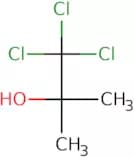
CAS:<p>Chlorobutanol is an antimicrobial agent that is used in the preservation of pharmaceuticals, cosmetics, and other products. It has been shown to be effective against a variety of bacterial and fungal organisms. Chlorobutanol is also used as a preservative in topical ophthalmic preparations. In addition, chlorobutanol has been found to be a potent inhibitor of histone deacetylase (HDAC) activity, which may be due to its ability to bind to the active site of HDACs. This binding prevents acetylation of lysine residues on histones, thereby preventing transcriptional activation.</p>Fórmula:C4H7OCl3Pureza:Min. 95%Forma y color:White To Off-White SolidPeso molecular:177.46 g/mol2,2,4,4,6,8,8-Heptamethylnonane
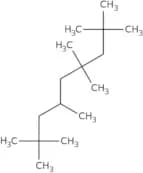
CAS:<p>2,2,4,4,6,8,8-Heptamethylnonane is a hydrogenated form of 2-methylnonane. It is used as a model system for fatty acids in order to study the kinetics of air entrainment and constant pressure distillation. The chemical stability of 2,2,4,4,6,8,8-heptamethylnonane has been shown to be excellent when heated at 200°C under nitrogen. This compound can also be used as an analytical method for ethylene diamine in pharmaceutical preparations of sodium salts and boron nitride. The use of 2-methylnonane as a starting material may lead to the production of chinese herb by reacting with acetic acid or formic acid.</p>Fórmula:C16H34Pureza:Min. 95%Forma y color:PowderPeso molecular:226.44 g/molN-Methyl-1,1,1-trifluoro-2-propylamine hydrochloride
CAS:<p>Please enquire for more information about N-Methyl-1,1,1-trifluoro-2-propylamine hydrochloride including the price, delivery time and more detailed product information at the technical inquiry form on this page</p>Fórmula:C4H9ClF3NPureza:Min. 95%Peso molecular:163.57 g/mol1,4,7-Triazacyclononane trihydrochloride
CAS:<p>1,4,7-Triazacyclononane trihydrochloride is a coordination compound that belongs to the class of ligands. It is a chelate ring with six phosphate groups and six nitrogen atoms. It has been shown to behave as an irreversible oxidation catalyst for carboxylate and amine molecules. This molecule also has redox potentials in the range of -0.35 to -0.5 volts and can reversibly oxidize inorganic acids with strong electron-donating properties such as phosphoric acid, nitric acid, and sulfuric acid. 1,4,7-Triazacyclononane trihydrochloride has been shown to be effective as a hydrogen bonding agent in x-ray crystal structures.</p>Fórmula:C6H15N3·3HClPureza:Min. 95%Forma y color:Off-White PowderPeso molecular:238.59 g/mol2-Benzyloxyethanol
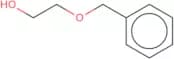
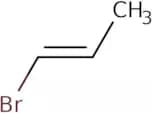
CAS:<p>Please enquire for more information about 2-Benzyloxyethanol including the price, delivery time and more detailed product information at the technical inquiry form on this page</p>Fórmula:C9H12O2Pureza:Min. 95%Forma y color:Colorless Clear LiquidPeso molecular:152.19 g/moltrans-1-Bromo-1-propene - stablised with Copper
CAS:<p>Trans-1-bromo-1-propene is a compound that has been stabilized by copper. It is used in the synthesis of quinoline derivatives and alkanoic acids. Trans-1-bromo-1-propene is an antimicrobial agent, which kills bacteria by interfering with the fatty acid synthesis. This substance also has antioxidant properties.</p>Fórmula:C3H5BrPureza:95%NmrForma y color:Clear LiquidPeso molecular:120.98 g/mol1H-Indol-2-ylmethanol
CAS:<p>1H-Indol-2-ylmethanol is a model compound for the synthesis of bioactive molecules. It is used in biological studies as an inhibitor of chronic lymphocytic leukemia, heart disease, and inflammatory pain. The nitro group on 1H-Indol-2-ylmethanol has been shown to activate various enzymes involved in the inflammatory response. The hydroxy group on 1H-Indol-2-ylmethanol has been shown to inhibit cyclooxygenase (COX) enzymes, which are responsible for the production of prostaglandins that cause inflammation.</p>Fórmula:C9H9NOPureza:Min. 95%Forma y color:PowderPeso molecular:147.17 g/mol9-Anthracenemethanol
CAS:<p>9-Anthracenemethanol is a carcinogenic, mutagenic, and teratogenic compound. It is metabolized by a number of enzymatic reactions, including oxidation by cytochrome P450 enzymes and reduction by glutathione reductase. The compound has been shown to be activated in acid conditions, with an activation energy of 10 kcal/mol. It also forms an acid when heated, which can cause damage to cells. 9-Anthracenemethanol has been shown to have photochemical properties that may be used for the production of dyes or pigments.</p>Fórmula:C15H12OPureza:Min. 95%Forma y color:Yellow PowderPeso molecular:208.26 g/molCyclobutanethiol
CAS:<p>Cyclobutanethiol is a 1-cyclopentene-1-carboxylic acid, which is a cyclic form of the alkylthio group. It is an organic solvent with a hydroxyl group at one end and an alkyl group at the other end. Cyclobutanethiol can be used as a sealant or as a solvent in organic chemistry. The compound has been shown to inhibit insulin resistance by binding to cb1 receptors on cells, thereby inhibiting the production of glucose. Cyclobutanethiol also absorbs ultraviolet light, so it can be used in photochemistry.</p>Fórmula:C4H8SPureza:90%Forma y color:Clear LiquidPeso molecular:88.17 g/mol6-Chlorohexanol
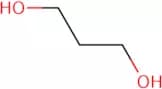
CAS:<p>6-Chlorohexanol is a fatty alcohol with a hydroxyl group. It is soluble in water and has a phase transition temperature of -114°C. 6-Chlorohexanol can be synthesized by reacting 2,6-dichlorophenol with hydrochloric acid and sodium hydroxide in the presence of azobenzene. The reaction solution is then heated to about 300°C for 3 hours. 6-Chlorohexanol is used as a model system for studying the photochemical reactions of fatty acids. Hydroxy groups are susceptible to light exposure, which leads to the formation of carbonyl compounds such as malonic acid and chloride monomers.</p>Fórmula:C6H13ClOPureza:Min. 95%Forma y color:PowderPeso molecular:136.62 g/mol1,3-Propanediol
CAS:<p>aliphatic diol. It has been shown to have an inhibitory effect on bacterial growth</p>Fórmula:C3H8O2Pureza:Min. 95%Forma y color:Colorless Clear LiquidPeso molecular:76.09 g/mol1,3-Bis(diphenylphosphino)propane
CAS:<p>1,3-Bis(diphenylphosphino)propane is a chelate ligand that forms complexes with a wide range of transition metal ions. It has been shown to be an effective catalyst for the conversion of aryl halides to acid derivatives. The compound has been found to have an excellent stability in aqueous solutions and does not hydrolyze readily in human serum or water. 1,3-Bis(diphenylphosphino)propane is also used as an additive in many industrial processes, such as the production of nylon and polyester fibers.</p>Fórmula:C27H26P2Pureza:Min 96.0%Forma y color:White Off-White PowderPeso molecular:412.44 g/molDibromoethane-d4
CAS:Producto controlado<p>Please enquire for more information about Dibromoethane-d4 including the price, delivery time and more detailed product information at the technical inquiry form on this page</p>Fórmula:C2H4Br2Pureza:Min. 95%Peso molecular:191.89 g/molα-Ketoglutaric acid disodium dihydrate
CAS:<p>α-Ketoglutaric acid (α-KGA) is a natural metabolite of glucose and is an intermediate in the citric acid cycle. α-KGA has been shown to have powerful anti-cancer properties, which may be due to its ability to inhibit glucose uptake and metabolism in tumor cells. α-KGA has also been shown to reduce locomotor activity, which may be due to its ability to induce transcriptional regulation of genes that are involved in glucose regulation. In addition, α-KGA has been shown to regulate fatty acid synthesis by inhibiting acetyl CoA carboxylase, which is an enzyme that catalyzes the production of malonyl CoA.</p>Fórmula:C5H4Na2O5•(H2O)2Pureza:Min. 95%Forma y color:PowderPeso molecular:226.09 g/molDiiodomethane
CAS:<p>Diiodomethane is a chemical compound with the molecular formula CHI. It is a colorless gas that can be obtained by reacting methyl ethyl and hydroxyl group in the presence of an oxidant such as boron nitride. Diiodomethane has been used as a substrate film for n-dimethyl formamide and reaction solution, which have been studied using spectroscopic data. The product of this reaction is water vapor that leaves the system due to its low boiling point. Reaction mechanism for this process is thought to be due to the kinetic energy of the particles that collide and produce diiodomethane molecules.</p>Fórmula:CH2I2Pureza:Min. 95%Forma y color:Yellow Clear LiquidPeso molecular:267.84 g/mol