Compuestos y derivados alifáticos
Los compuestos alifáticos y sus derivados son compuestos orgánicos caracterizados por estructuras de cadena recta o ramificada, a diferencia de las estructuras en anillo encontradas en los compuestos aromáticos. Estos compuestos incluyen alcanos, alquenos, alquinos y sus derivados funcionalizados, desempeñando un papel vital en varios procesos químicos y aplicaciones industriales. En CymitQuimica, ofrecemos una diversa selección de compuestos alifáticos de alta pureza y sus derivados, meticulosamente seleccionados y probados para cumplir con los estrictos requisitos de las necesidades de investigación e industriales. Nuestro catálogo abarca una amplia gama de compuestos, incluyendo hidrocarburos, alcoholes, aldehídos, cetonas y ácidos, cada uno conocido por su reactividad y versatilidad en la síntesis orgánica, la farmacéutica y la ciencia de materiales. Al proporcionar compuestos alifáticos y derivados de alta calidad, apoyamos a los investigadores y profesionales en la consecución de transformaciones químicas precisas y eficientes, fomentando la innovación y los avances en múltiples campos científicos y tecnológicos.
Se han encontrado 8718 productos de "Compuestos y derivados alifáticos"
Ordenar por
Pureza (%)
0
100
|
0
|
50
|
90
|
95
|
100
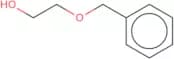
2-Benzyloxyethanol
CAS:<p>Please enquire for more information about 2-Benzyloxyethanol including the price, delivery time and more detailed product information at the technical inquiry form on this page</p>Fórmula:C9H12O2Pureza:Min. 95%Forma y color:Colorless Clear LiquidPeso molecular:152.19 g/mol2,2-Paracyclophane
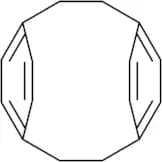
CAS:<p>2,2-Paracyclophane is a high-sensitivity c-reactive protein (hsCRP) that has been isolated from the fungus Cryptococcus neoformans. This compound has shown to have anti-cancer properties in animal studies. 2,2-Paracyclophane binds to fatty acids and is soluble in water, which may be due to its hydrogen bonding with the hydroxyl group at C1. The crystal structure of this compound reveals that it has a cyclohexane ring and two fatty acids. The thermal expansion coefficient of this molecule is also high, which suggests that it may be suitable for use as a solid lubricant.</p>Fórmula:C16H16Pureza:Min. 98.5 Area-%Forma y color:White PowderPeso molecular:208.3 g/mol1H,1H,7H-Dodecafluoroheptanol
CAS:<p>1H,1H,7H-Dodecafluoroheptanol is a perfluorinated compound. It has been shown to be an efficient scavenger of reactive oxygen species (ROS) and to have a protective effect on collagen. The reaction mechanism of 1H,1H,7H-dodecafluoroheptanol is not fully understood. However, it has been shown that the chloride ion plays a key role in the formation of this product from 1H,1H,7F-dodecafluoroheptane. The reaction vessel used in this synthesis is critical because it must be anhydrous to prevent the formation of 1HF3OCl. Magnetic resonance spectroscopy has been used to study the chemical structures of this compound.</p>Fórmula:C7H4F12OPureza:Min. 95%Forma y color:Colorless PowderPeso molecular:332.09 g/mol9-Anthracenemethanol
CAS:<p>9-Anthracenemethanol is a carcinogenic, mutagenic, and teratogenic compound. It is metabolized by a number of enzymatic reactions, including oxidation by cytochrome P450 enzymes and reduction by glutathione reductase. The compound has been shown to be activated in acid conditions, with an activation energy of 10 kcal/mol. It also forms an acid when heated, which can cause damage to cells. 9-Anthracenemethanol has been shown to have photochemical properties that may be used for the production of dyes or pigments.</p>Fórmula:C15H12OPureza:Min. 95%Forma y color:Yellow PowderPeso molecular:208.26 g/molSodium ethanethiolate
CAS:<p>Sodium ethanethiolate is a detergent composition that is used in the manufacturing of other detergents. It has a receptor binding mechanism and binds to the fatty acid component of the lipid bilayer. The hydroxyl group on the ethanethiolate molecule reacts with the hydrophobic region of the lipid bilayer, leading to disruption of membrane function. Sodium-dependent glucose transport is inhibited by sodium ethanethiolate, which also has metabolic disorders as a side effect. It is a bicyclic heterocycle and can be synthesized from p-hydroxybenzoic acid and trifluoroacetic acid. The chemical stability of this compound is high, making it useful for industrial applications.</p>Fórmula:C2H5NaSPureza:(¹H-Nmr) Min. 90 Area-%Forma y color:White PowderPeso molecular:84.12 g/molN,N-bis(Hydroxyethyl)-2-aminoethanesulfonic acid sodium salt
CAS:<p>N,N-bis(Hydroxyethyl)-2-aminoethanesulfonic acid sodium salt is a cross-linking agent for polymers. It has been shown to react with dimethylol propionic acid to form a hydroxyl group and a carboxylate. This reaction yields the product of bis(hydroxyethyl) aminosulfonic acid sodium salt. N,N-bis(Hydroxyethyl)-2-aminoethanesulfonic acid sodium salt can be used as a cross-linking agent in the manufacture of biodegradable polymers that are environmentally friendly and biocompatible. The viscosity of the reaction solution increases with an increase in temperature, which is due to the hydrophobic interaction between molecules.</p>Fórmula:C6H14NO5SNaPureza:Min. 95%Forma y color:PowderPeso molecular:235.23 g/molDiiodomethane
CAS:<p>Diiodomethane is a chemical compound with the molecular formula CHI. It is a colorless gas that can be obtained by reacting methyl ethyl and hydroxyl group in the presence of an oxidant such as boron nitride. Diiodomethane has been used as a substrate film for n-dimethyl formamide and reaction solution, which have been studied using spectroscopic data. The product of this reaction is water vapor that leaves the system due to its low boiling point. Reaction mechanism for this process is thought to be due to the kinetic energy of the particles that collide and produce diiodomethane molecules.</p>Fórmula:CH2I2Pureza:Min. 95%Forma y color:Yellow Clear LiquidPeso molecular:267.84 g/mol1H-Indol-2-ylmethanol
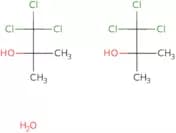
CAS:<p>1H-Indol-2-ylmethanol is a model compound for the synthesis of bioactive molecules. It is used in biological studies as an inhibitor of chronic lymphocytic leukemia, heart disease, and inflammatory pain. The nitro group on 1H-Indol-2-ylmethanol has been shown to activate various enzymes involved in the inflammatory response. The hydroxy group on 1H-Indol-2-ylmethanol has been shown to inhibit cyclooxygenase (COX) enzymes, which are responsible for the production of prostaglandins that cause inflammation.</p>Fórmula:C9H9NOPureza:Min. 95%Forma y color:PowderPeso molecular:147.17 g/molChlorbutanol hemihydrate
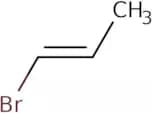
CAS:<p>Chlorbutanol hemihydrate is an antimicrobial agent that is used as an intra-articular injection, and has been shown to be effective against choline chloride. Chlorbutanol hemihydrate binds to the active substances and reacts with chlorine atom to form an active substance. The reaction rate of chlorbutanol hemihydrate with chlorine atoms is slow, so it can be administered intravenously or intramuscularly. Functional assays have shown that chlorbutanol hemihydrate can inhibit the growth of cancer cells in a dose-dependent manner. It also inhibits the production of oxytocin receptor in mice tissues. Chlorbutanol hemihydrate has been shown to be safe for humans when given at doses up to 10 times higher than the recommended dosage, but may cause allergic reactions in some people.</p>Fórmula:C4H7Cl3O•(H2O)0Pureza:Min. 95%Forma y color:White PowderPeso molecular:186.46 g/moltrans-1-Bromo-1-propene - stablised with Copper
CAS:<p>Trans-1-bromo-1-propene is a compound that has been stabilized by copper. It is used in the synthesis of quinoline derivatives and alkanoic acids. Trans-1-bromo-1-propene is an antimicrobial agent, which kills bacteria by interfering with the fatty acid synthesis. This substance also has antioxidant properties.</p>Fórmula:C3H5BrPureza:95%NmrForma y color:Clear LiquidPeso molecular:120.98 g/molCyclobutanethiol
CAS:<p>Cyclobutanethiol is a 1-cyclopentene-1-carboxylic acid, which is a cyclic form of the alkylthio group. It is an organic solvent with a hydroxyl group at one end and an alkyl group at the other end. Cyclobutanethiol can be used as a sealant or as a solvent in organic chemistry. The compound has been shown to inhibit insulin resistance by binding to cb1 receptors on cells, thereby inhibiting the production of glucose. Cyclobutanethiol also absorbs ultraviolet light, so it can be used in photochemistry.</p>Fórmula:C4H8SPureza:90%Forma y color:Clear LiquidPeso molecular:88.17 g/molIsostearic acid
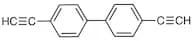
CAS:<p>Please enquire for more information about Isostearic acid including the price, delivery time and more detailed product information at the technical inquiry form on this page</p>Fórmula:C18H36O2Peso molecular:284.48 g/mol4,4'-Diethynylbiphenyl
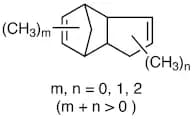
CAS:Fórmula:C16H10Pureza:>98.0%(GC)Forma y color:White to Light yellow to Light orange powder to crystalPeso molecular:202.26Methylcyclopentadiene Dimer (so called) (stabilized with TBC)
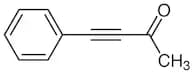
CAS:Forma y color:Colorless to Light yellow clear liquid4-Phenyl-3-butyn-2-one
CAS:Fórmula:C10H8OPureza:>97.0%(GC)Forma y color:Colorless to Yellow to Green clear liquidPeso molecular:144.171-Eicosene
CAS:Fórmula:C20H40Pureza:>97.0%(GC)Forma y color:White or Colorless to Almost white or Almost colorless powder to lump to clear liquidPeso molecular:280.54Nonafluorobutanesulfonic anhydride
CAS:Fórmula:C8F18O5S2Pureza:98%Forma y color:LiquidPeso molecular:582.1839Ref: IN-DA003TA1
Producto descatalogado1,1,2,2,3,3,4,4,4-nonafluoro-N,N-bis(2-hydroxyethyl)butane-1-sulphonamide
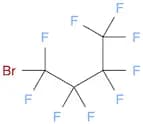
CAS:Fórmula:C8H10F9NO4SPureza:98%Forma y color:SolidPeso molecular:387.2199Butane,1-bromo-1,1,2,2,3,3,4,4,4-nonafluoro-
CAS:Fórmula:C4BrF9Pureza:98%Forma y color:LiquidPeso molecular:298.9324